IranWire

63.2K posts

IranWire banner
IranWire

IranWire

@IranWireEnglish

News and stories from the heart of #Iran.

Beigetreten Nisan 2013
1.3K Folgt41.7K Follower
IranWire
IranWire@IranWireEnglish·
Defa Press, a news agency affiliated with the Islamic Republic’s Ministry of Defense, has reported the death of Mohammad Ali Fathalizadeh, a Brigadier General in the IRGC and commander of the Fatehin Unit. The report states that Fathalizadeh died on Wednesday, April 1, 2026, but does not provide any details about the circumstances surrounding his death. His appointment as commander of the IRGC Fatehin Unit was first made public in April 2025. The Fatehin Unit is regarded as one of the special units operating under the Islamic Revolutionary Guard Corps and is widely known as the “Special Unit of the Basij Force.” Members of this unit have played an active role in suppressing domestic protests, including those during the fall of 2022 and in January 2026.
IranWire tweet media
English
0
0
2
182
IranWire
IranWire@IranWireEnglish·
Mehraveh Khandan, the daughter of Nasrin Sotoudeh, has reported the arrest of the human rights lawyer and activist, stating that security forces took her into custody at her private residence. According to Khandan, her mother was alone at home at the time of the arrest. Mehraveh Khandan also stated that, in addition to the arrest, agents confiscated electronic devices, including laptops and mobile phones belonging to both Nasrin Sotoudeh and her husband. According to the report, as of the time of publication, no contact has been made by Nasrin Sotoudeh, and her family remains unaware of the arresting agency or her current place of detention. Nasrin Sotoudeh is one of the most prominent human rights lawyers in Iran and has been arrested and imprisoned numerous times in recent years due to her legal and civil rights activities.
IranWire tweet media
English
1
8
11
2.9K
IranWire
IranWire@IranWireEnglish·
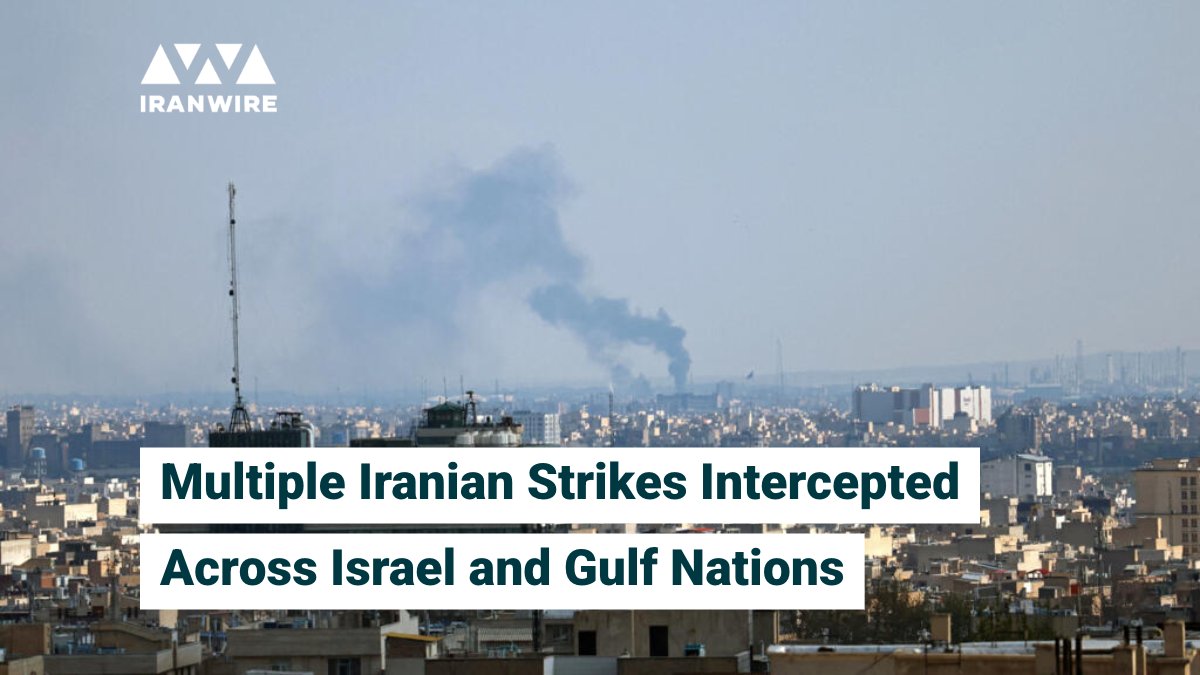
Amid escalating military tensions in the region, Iran launched multiple waves of missile attacks on Thursday, April 2, targeting Israel and several Persian Gulf countries. According to various sources, these strikes were met with active responses from the air defense systems of the targeted nations. Reports suggest that Israel was hit by three waves of missiles, with the third launched just minutes after the end of U.S. President Donald Trump’s televised address. At the same time, reports of minor injuries in Tel Aviv have surfaced. The Israel Defense Forces (IDF) said it detected a new wave of missiles fired from Iran and has begun interception operations. Meanwhile, the United Arab Emirates said its air defenses responded to a combined missile and drone attack. The Abu Dhabi Media Office reported that after intercepting a missile near the “Khalifa” economic zones, there was limited damage, but no casualties have been reported. The Saudi Arabian Ministry of Defense also said its defense systems intercepted and destroyed four drones in recent hours.
IranWire tweet media
English
0
1
1
211
IranWire
IranWire@IranWireEnglish·
U.S. President Donald Trump, in a nationwide address on the crackdown on protests in Iran, said the Islamic Republic has “killed 45,000 of its own people protesting in the streets.” His remarks have once again brought global focus to the scale of state violence against protesters. Speaking on the evening of Wednesday, April 1, 2026 (EST), during a roughly 20-minute address on the ongoing war with Iran, Trump defended U.S. military actions and said Washington’s main objective is to eliminate the Islamic Republic’s ability to pose a threat. Calling the Islamic Republic “one of the most violent regimes in the world,” Trump alleged that the government had killed tens of thousands of its own citizens during periods of unrest, arguing that it must never be allowed to obtain nuclear weapons. He also said that military operations against Iran are approaching their final phase, adding that the mission will be completed “soon and completely.” Trump claimed that a large part of Iran’s military strength, including its navy and air force, has been significantly weakened, and that its infrastructure has been heavily targeted. He further warned that if no agreement is reached, even more intense strikes would be carried out against Iran’s infrastructure.
IranWire tweet media
English
0
2
3
210
IranWire
IranWire@IranWireEnglish·
As the war between the United States, Israel, and the Islamic Republic enters its 35th day, Iranian domestic media have reported multiple explosions and the activation of air defense systems in Mashhad on the morning of Thursday, April 2. According to these reports, explosions were heard near the city’s airport around the same time defense systems were activated. Posts circulating on social media from local residents suggest that at around 10:00 AM, the area around Mashhad Airport was targeted in an attack. Some accounts also indicate that an oil storage tank near the airport may have been hit, with thick smoke seen rising over the area. However, there is still no official information on the extent of the damage or whether there were any casualties.
IranWire tweet media
English
0
1
1
260
IranWire
IranWire@IranWireEnglish·
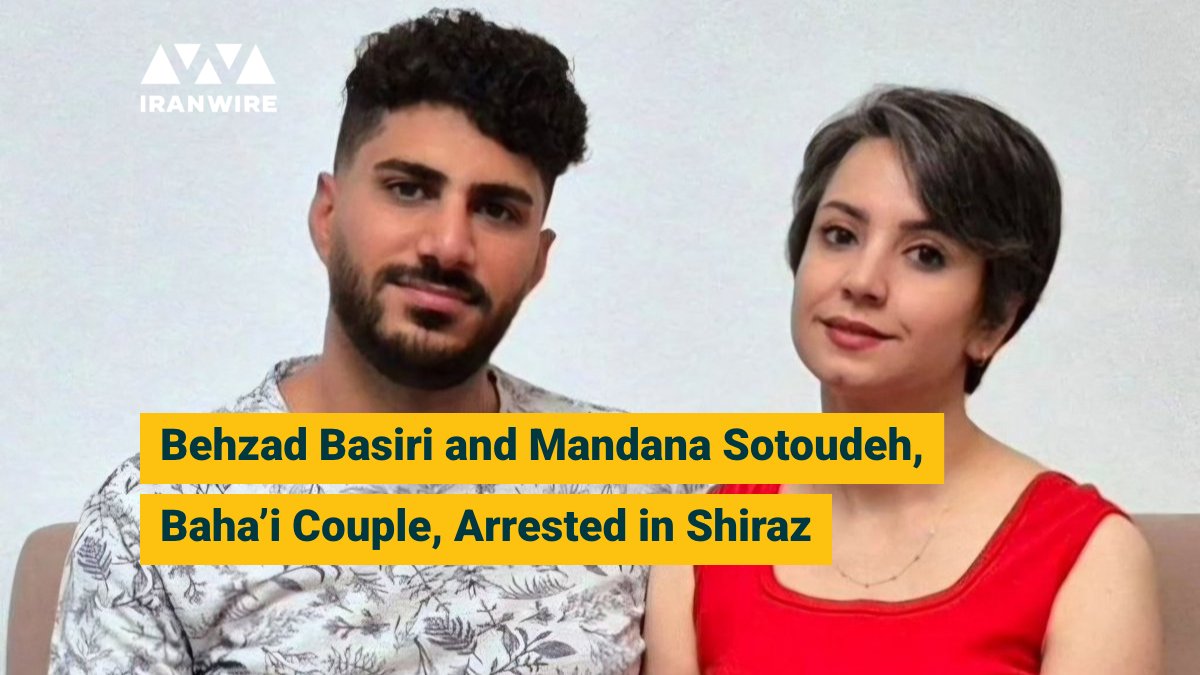
In the ongoing escalation of security crackdowns against Baha’i citizens, a Baha’i couple identified as Behzad Basiri and Mandana Sotoudeh has been arrested in Shiraz. According to information obtained by IranWire, on the morning of Wednesday, April 1, IRGC Intelligence agents in Shiraz raided the home of Behzad Basiri and Mandana Sotoudeh. Following a thorough search and the seizure of several electronic devices, they took Behzad Basiri into custody. The report indicates that Mandana Sotoudeh was not present at the time of the initial raid, as she was visiting her mother’s house. After arresting Behzad, the agents proceeded to that location to arrest Mandana as well. As of the time of this report, there is no information regarding the current whereabouts or the specific charges leading to the arrest of these two citizens. Furthermore, reports indicate that on March 29, Mahsa Sotoudeh, Mandana’s sister, was also arrested by security forces.
IranWire tweet media
English
1
5
4
292
IranWire
IranWire@IranWireEnglish·
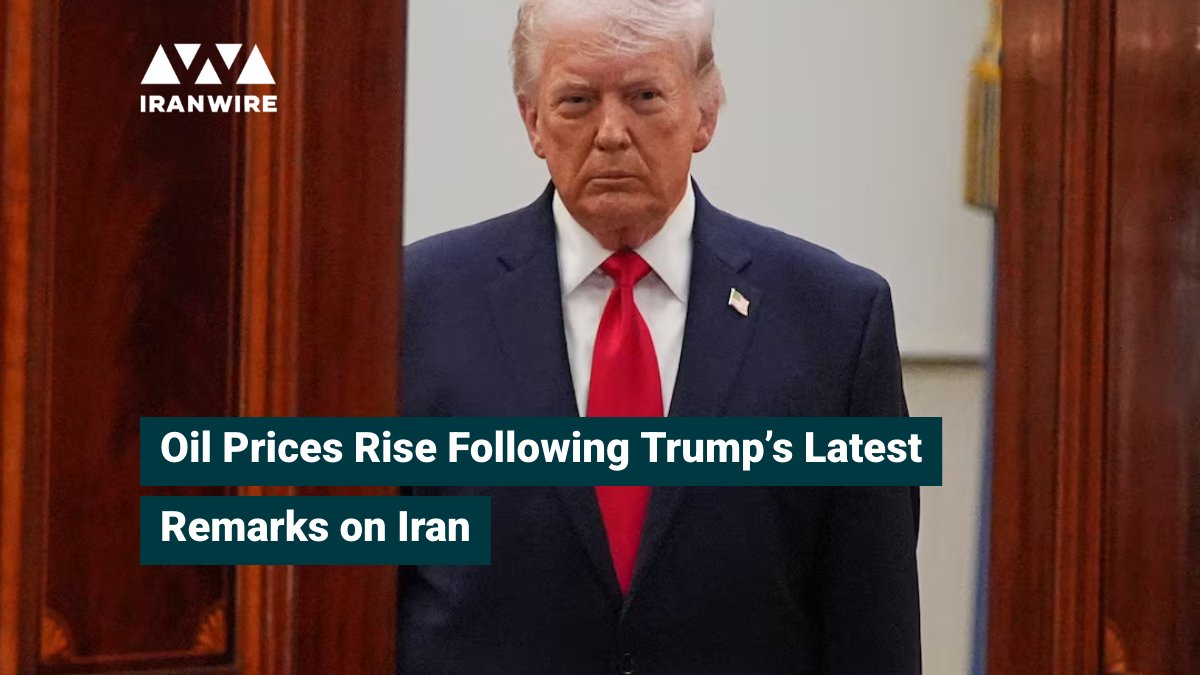
Global markets saw fresh volatility just hours after a speech by Donald Trump, with oil prices climbing while stock indices across Asia and Europe moved lower. According to international media reports, including the Associated Press and Reuters, oil prices registered a modest rise following the U.S. President’s address. Brent crude crossed $108 per barrel, while U.S. crude (WTI) moved past the $106 mark. At the same time, Asian markets closed in the red. Japan’s Nikkei fell by more than 2%, and South Korea’s KOSPI dropped around 4.5%. European markets also opened on a weaker note on Thursday, April 2, 2026, with stock futures in both the U.S. and Europe declining. Meanwhile, the U.S. dollar strengthened against other major currencies. Key Drivers of the Market Reaction The market reaction followed Trump’s nationwide address on Wednesday evening, April 1, where he said military operations against Iran are approaching their final phase. He added that strikes would continue “intensively over the next two to three weeks.” He also warned that if no agreement is reached, Iran’s energy infrastructure could face wider attacks. On the Strait of Hormuz, Trump downplayed its strategic importance for the United States, saying Washington does not depend on it and that its reopening would happen “automatically” once the war ends.
IranWire tweet media
English
0
0
1
236
IranWire
IranWire@IranWireEnglish·
The Judiciary of the Islamic Republic announced early this morning, Thursday, April 2, that Amirhossein Hatami, a detained protester, has been executed. According to Mizan, the Judiciary’s official news agency, Hatami was arrested in connection with the arson of the Kaveh Basij base on Damavand Street in Tehran. After interrogations by the IRGC Intelligence Organization, he was tried in Islamic Republic courts in proceedings marked by a lack of transparency and the use of forced confessions. He was convicted on charges including “acting against national security” and cooperating with what were described as “hostile groups.” The report also states that he was accused of entering military premises with the intent to obtain weapons and taking part in the destruction and arson of government property. The agency said the death sentence was upheld after review by the Supreme Court, and his request for appeal was rejected.
IranWire tweet media
English
1
7
14
871
IranWire
IranWire@IranWireEnglish·
In a statement released on the morning of Thursday, April 2, the spokesperson for the Khatam-al-Anbiya Central Headquarters declared in a threatening tone that ongoing conflicts will persist until the “complete surrender” of the United States and Israel. The statement, addressed directly to the U.S. and Israel, claims that they lack an understanding of the Islamic Republic’s “vast and strategic capacities” and insists they must pay the price for actions Tehran has labeled as “aggression.” The military spokesperson further emphasized that the momentum of the conflict will continue until the opposing parties reach what was described as “humiliation, permanent regret, and definitive surrender.”
IranWire tweet media
English
1
1
1
389
IranWire
IranWire@IranWireEnglish·
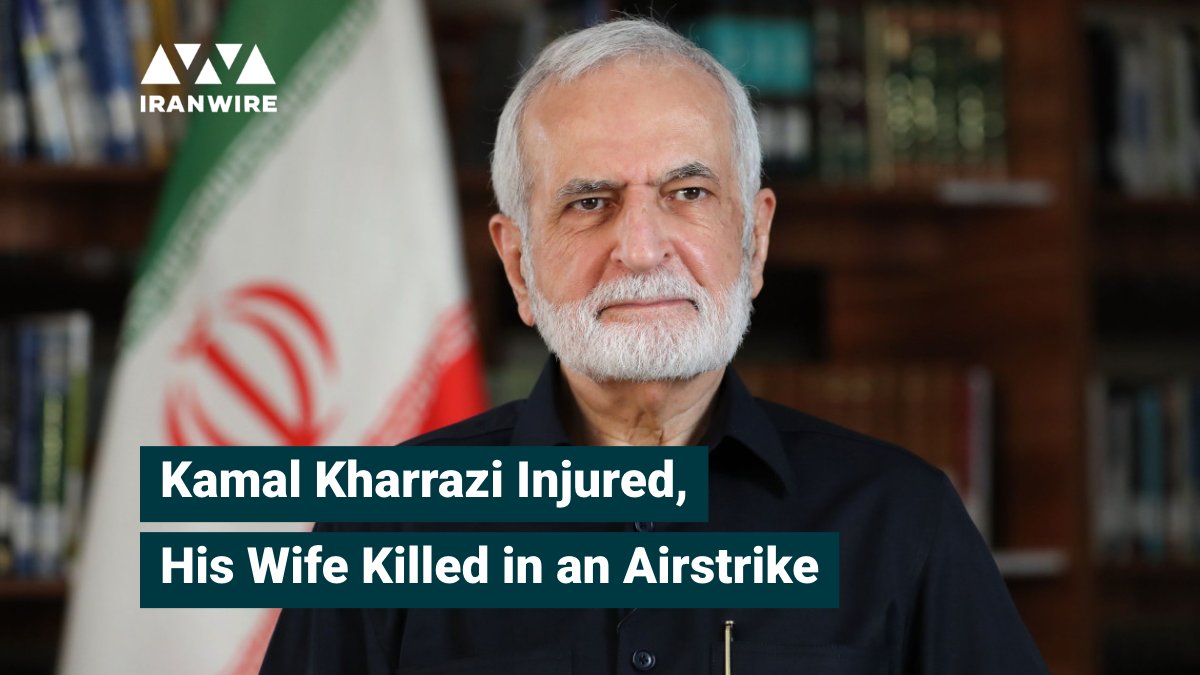
During the airstrikes on Wednesday, April 1, the residence of Kamal Kharrazi, who served as Iran’s Foreign Minister under Mohammad Khatami, was targeted. According to domestic Iranian media reports, Kharrazi was injured in the attack and taken to a hospital for treatment, while his wife was killed. The exact location of the former Foreign Minister’s residence has not been disclosed. Multiple locations across Tehran were struck during Wednesday’s attacks, including the former U.S. Embassy building.
IranWire tweet media
English
0
1
2
455
IranWire
IranWire@IranWireEnglish·
As tensions rise due to the Islamic Republic’s conflict with the U.S. and Israel, and amid escalating Iranian attacks on the United Arab Emirates, reports suggest that dozens of active money exchangers have been arrested and financial centers linked to the Revolutionary Guard (IRGC) have been seized in the UAE. According to these reports, those detained are accused of helping transfer financial resources connected to the Islamic Republic, facilitating transactions, and supporting IRGC-linked financial networks. As a result, companies associated with them have been shut down, and their offices have been closed. Authorities have also issued summonses to others who were not arrested, asking them to leave UAE territory immediately. Earlier, during the second week of the conflict, The Wall Street Journal reported that the UAE had warned Tehran it could freeze billions of dollars in Iranian assets if the attacks continued. Emirati officials had also cautioned that exchange houses operating as front companies to move currency for the Islamic Republic would be seized and their accounts blocked. The UAE has long been seen as a key hub for concealing and transferring revenue from Iranian oil sales outside international oversight and in circumvention of sanctions. IRGC-linked networks reportedly used shell companies registered in the country to hide the origin of these funds, routing portions back to Iran while also sending large sums to destinations like Europe and the United Kingdom. This latest action by Emirati authorities goes beyond just arrests and signals a broader attempt to dismantle these financial networks entirely. If such measures continue, it could disrupt a crucial part of the Islamic Republic’s overseas financial system. The impact could extend further, potentially affecting remittance flows, financial transactions, and even Iranian businesses operating in the UAE, including those not linked to military entities. Analysts say freezing these accounts is not just about blocking limited funds - it could cut off one of the Islamic Republic’s key channels for accessing foreign currency and participating in global trade. This may also influence exchange rates inside Iran, as the UAE dirham remains central to Iran’s currency market, with a large share of its foreign trade settled through the UAE in dirhams.
IranWire tweet media
English
0
1
2
328
IranWire
IranWire@IranWireEnglish·
Jafar Panahi, the acclaimed filmmaker and critic of the Islamic Republic, has returned to Iran through a land border crossing after spending months attending international festivals, amid ongoing wartime conditions. The renowned director entered the country via the Bazargan land border on Sunday, March 29, 2026, a move he had previously promised. In recent months, Panahi had been traveling across Europe and the United States for screenings of his new film, “A Simple Accident.” The film, which won the Palme d’Or at the Cannes Film Festival, was later nominated for two Oscars—Best Original Screenplay and Best International Feature Film—but did not win in either category. Panahi, who has faced judicial and security restrictions for years, had earlier said he would return to Iran once his professional commitments abroad were complete. Last year, he was granted permission to leave the country for the first time after a 14-year travel ban. His return comes despite reports suggesting that the filmmaker was sentenced to one year in prison by the Tehran Revolutionary Court several months ago.
IranWire tweet media
English
0
7
10
680
IranWire
IranWire@IranWireEnglish·
According to information obtained by IranWire, a Baha’i citizen living in Sari named Minoo Andakhs was arrested by security forces on the evening of Tuesday, March 31. Reports suggest that at around 9:00 PM, seven security agents - five men and two women - entered Minoo Andakhs’ home without presenting a judicial warrant and detained her. During the raid, her mobile phone was also confiscated. This follows an earlier incident on December 28, 2025, when security forces searched Ms. Andakhs’ residence and seized several books and personal belongings; however, she was not at home at the time. As of now, no details have been released about her current whereabouts, the agency responsible for her arrest, or the possible charges against her.
IranWire tweet media
English
0
15
28
769
IranWire
IranWire@IranWireEnglish·
U.S. President Donald Trump said that the new leader of the Islamic Republic has reached out to Washington seeking a ceasefire, adding that the request will only be considered if the Strait of Hormuz is fully and safely reopened. In a post on his platform, Truth Social, Trump pointed to a shift in Iran’s stance, claiming the current leader is “less radical and smarter” than his predecessors and has recently pushed for an end to the hostilities. However, he made it clear that U.S. strikes will continue until the Strait of Hormuz is completely “open, free, and clear.” Using his typically blunt tone, the U.S. President warned that military pressure on the Islamic Republic will persist otherwise.
IranWire tweet media
English
1
0
1
421
IranWire
IranWire@IranWireEnglish·
The Qatari Ministry of Defense announced that a chartered oil tanker belonging to the state-owned company “QatarEnergy” was targeted by a missile attack from the Islamic Republic in Qatari waters on Wednesday, April 1. According to the statement, three cruise missiles were fired from Iran toward Qatar. The country’s armed forces intercepted two of them, but the third missile struck the tanker “Aqua-1.” The ship was targeted in the waters north of Qatar, a short maritime distance from Ras Laffan. Qatari officials stated that no casualties were reported in the attack, and 21 crew members were evacuated from the tanker. It was also noted that the damage to the ship’s hull was above the waterline and did not result in environmental consequences. The United Kingdom Maritime Trade Operations (UKMTO) also confirmed that a projectile struck a tanker near the coast of Qatar. Following these attacks, reports have emerged regarding the suspension of operations at the world’s largest gas complex in the Ras Laffan region. This attack comes as various sources report that, since the start of the conflict, more than 20 ships in the Persian Gulf have been targeted by attacks from the Islamic Republic. Additionally, on Tuesday, March 31, a Kuwaiti oil tanker was targeted near Dubai.
IranWire tweet media
English
0
0
2
347
IranWire
IranWire@IranWireEnglish·
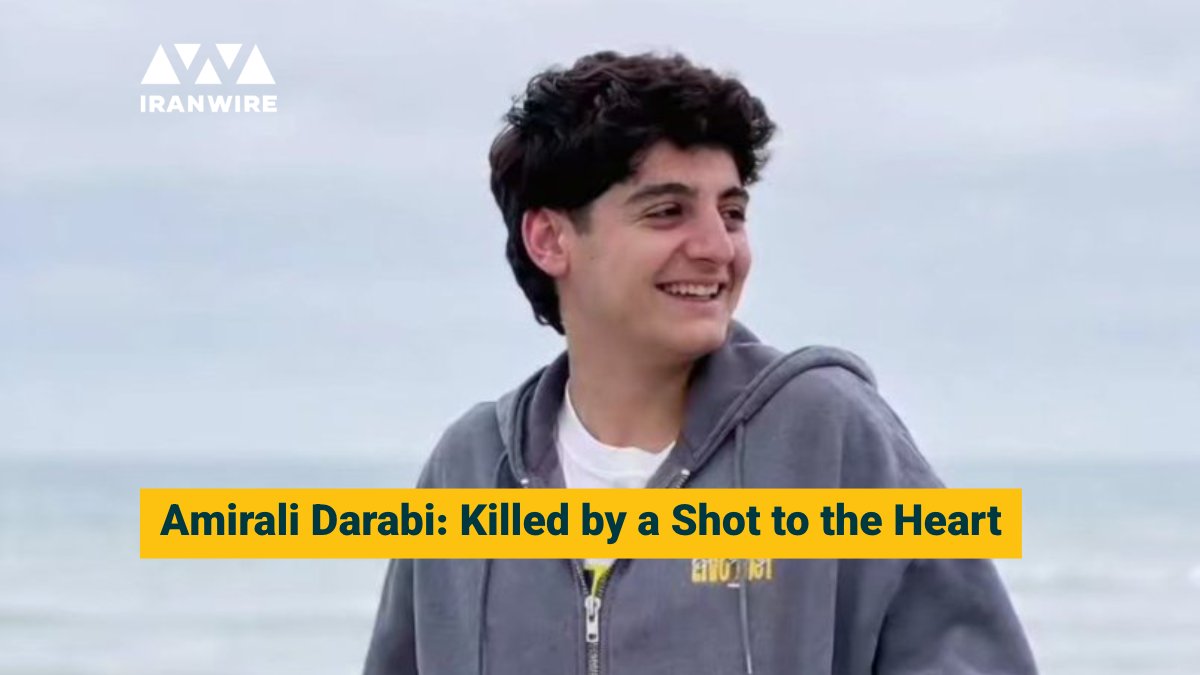
According to information obtained by IranWire, Amirali Darabi, a 17-year-old teenager, lost his life on the evening of January 9 in the city of Chalus after being shot directly in the heart. According to this report, Amirali Darabi, who was born on March 9, 2008, was killed just two months before reaching the age of 18. The burial permit for this teenager, which has been obtained by IranWire, states the cause of death as “internal bleeding, damage to internal organs, and resulting complications caused by the impact of a high-velocity projectile.” This burial permit was issued and confirmed by the General Department of Forensic Medicine of Mazandaran Province in the Nowshahr and Chalus district. The date recorded for the death and the issuance of this document is January 9.
IranWire tweet media
English
0
9
21
743
IranWire
IranWire@IranWireEnglish·
The British Prime Minister has announced that London does not intend to join the military conflicts of the United States and Israel against the Islamic Republic, stating that he does not consider this war to be in the direct interest of the United Kingdom. On Wednesday, April 1, Prime Minister Keir Starmer said that there’s been “a good deal of pressure on me to change my position in relation to joining the [Iran] war, and I’m not going to change my position on the war.” “Whatever the pressure, whatever the noise, I am the British prime minister and I have to act in our national interests.” He emphasized that 35 countries have been contacted for this meeting, where diplomatic, political, and, if necessary, military scenarios will be discussed. The British Prime Minister also announced the drafting of a five-stage plan for managing the crisis in the Strait of Hormuz, noting that discussions with European partners will continue in the coming weeks. In another part of his remarks, Starmer highlighted the importance of NATO, calling the alliance the most effective defense pact and reaffirming his country’s commitment to it. “The UK and its European allies,” he wrote, “must develop a clear plan for a transition towards greater European leadership of NATO.” Responding to statements by U.S. President Donald Trump regarding the possibility of Washington withdrawing from NATO, Starmer stated that London’s decisions are made based on national interests and will not be influenced by external pressure. Trump had previously told The Daily Telegraph that he is seriously considering withdrawing the United States from the military alliance.
IranWire tweet media
English
0
0
1
304
IranWire
IranWire@IranWireEnglish·
After a meeting of the G7 Foreign Ministers representing the world’s seven leading industrial nations, the group issued a statement highlighting that discussions over Thursday and Friday centered on “minimizing the impact of the conflict on regional partners, civilian populations, and critical infrastructure, as well as the necessity of coordinating humanitarian aid efforts” during the war involving the U.S., Israel, and the Islamic Republic. The Foreign Ministers of Canada, France, Germany, Italy, Japan, the United Kingdom, and the United States, along with the High Representative of the European Union, met on March 26 and 27 in Vaux-de-Cernay, France. According to the summit’s final communiqué, the members “called for an immediate halt to attacks against civilians and civilian infrastructure,” stating: “There is no justification for the deliberate targeting of civilians in armed conflict, nor for attacks on diplomatic locations.” The G7 Foreign Ministers said: “We focused on the value of diverse partnerships, coordination, and support initiatives, including those aimed at mitigating global economic shocks such as disruptions to economic supply chains, energy, fertilizer, and trade, which directly impact our citizens.” They further added: “We emphasized the absolute necessity of permanently restoring safe and toll-free freedom of navigation in the Strait of Hormuz, in accordance with UN Security Council Resolution 2817 and the Law of the Sea.” The G7 statement came shortly after U.S. Secretary of State Marco Rubio, while boarding his plane at the end of the summit, told reporters that Washington expects operations against the Islamic Republic to conclude within “weeks, not months.” “We have clear objectives and are very confident that we are on the verge of achieving them,” Rubio said. He also warned that the Islamic Republic may attempt to introduce a “toll system” for vessels passing through the Strait of Hormuz. In another part of his remarks, Rubio reiterated that the Iranian people are separate from the “madmen” ruling the country, stating that the Iranian government has “spent the nation’s wealth supporting terrorism and building missiles and drones,” and that the Iranian people “deserve much better conditions.” He added: “When our work is finished in the coming weeks, Iran will be weaker than at any other time in its recent history.” Rubio also warned that the Islamic Republic acquiring a nuclear weapon would be “absolute madness,” noting that the regime has posed a threat to the region and the world for the past 47 years and has attempted to target Americans. The Secretary of State added that even with its current capabilities, the Islamic Republic “attacks embassies, targets civilians, and invades its neighbors,” stressing that such a government must never be allowed to obtain nuclear weapons. Responding to a question about the possibility of a U.S. ground invasion, Mr. Rubio said: “We can achieve all of our objectives [as is], but we are always prepared to provide the President with more options to decide upon should new circumstances arise.”
IranWire tweet media
English
0
0
1
295
IranWire
IranWire@IranWireEnglish·
The Atomic Energy Organization of Iran announced late Friday, March 27, that the operational Bushehr Nuclear Power Plant has been targeted by Israeli and American projectiles for the third time since the start of the war. Simultaneously, Nour News, an outlet affiliated with the Supreme National Security Council, reported that the attack occurred at 11:40 PM on Friday night. According to the report, the strike caused “no casualties, financial loss, or technical damage,” and “no harm was inflicted on the various sections of the facility.” Nour News further noted: “The Bushehr Nuclear Power Plant is currently operational and contains significant amounts of radioactive material; therefore, any damage to these facilities could lead to a serious nuclear accident with irreparable consequences for the region.” Earlier on Friday, following reports of Israeli strikes on the yellowcake production facility in Ardakan (Yazd) and the Arak heavy water plant (known as the Khondab reactor), the Israel Defense Forces (IDF) confirmed those operations. In response to the news of these strikes, officials of the Islamic Republic stated that there is no radiation leakage and that the public is not at risk. The Israeli military maintained that the targeted facilities play a crucial role in the Islamic Republic’s capacity to produce nuclear weapons.
IranWire tweet media
English
0
0
1
352
IranWire
IranWire@IranWireEnglish·
In an exclusive report published on Friday, March 27, Reuters said the United States can only confirm the destruction of one-third of the Islamic Republic’s large missile arsenal. The report, based on interviews with five informed sources, added that a similar level of damage has been seen in Iran’s drone capabilities during the war. According to the sources, another one-third of the missiles are believed to be buried, damaged, or destroyed inside “underground missile cities” that were targeted in the strikes. The report noted that this is the first time such an assessment has been made public, indicating that “while most of Iran’s missiles are either destroyed or inaccessible, Tehran still possesses a significant missile inventory and may be able to recover some of the buried or damaged missiles after the war ceases.” Reuters also pointed out that this finding contradicts remarks made by U.S. President Donald Trump, who said on Thursday that “very few missiles” remain for Iran. U.S. officials have consistently highlighted the weakening of the Islamic Republic’s missile strength, along with damage to its navy and air defense systems. In the Reuters report, a Pentagon official said that “Iranian missile and drone attacks have decreased by approximately 90% since the start of the war.” The official further stated that the U.S. Central Command (CENTCOM) has damaged or destroyed “more than 66% of Iran’s missile and drone production facilities, as well as its naval infrastructure and shipyards.” On Friday, U.S. Secretary of State Marco Rubio told reporters, after attending a G7 summit, that the war with Iran would end in weeks, not months.
IranWire tweet media
English
1
1
3
361