

John Beene
55 posts

John Beene
@JBeene89
Builder of ideas. Systems thinker. I explore how materials, energy, and timing create value. Curious by default. Learning in public.
Glen St Mary, Florida Beigetreten Temmuz 2023
84 Folgt16 Follower
@Thebestfigen Me down there with a metal detector and water wingies
Glen St Mary, FL 🇺🇸 English

Curiosity-Driven Perspective Training
CDPT
Preemptive Intelligence Through Cross-Domain Gap Sensing, Root Injection, and Configurable Cognitive Profiles in Small Language Models
John Beene— Founder, Soupy Lab LLC
SoupyForge Research Division | Glen St. Mary, Florida
March 18, 2026 | Version 3.0
PATENT PENDING | CONFIDENTIAL
Abstract
Current Large Language Model paradigms focus on scaling parameters and data volume. These approaches share a fundamental assumption: that intelligence is a function of quantity. CDPT rejects this assumption entirely.
This paper introduces Curiosity-Driven Perspective Training (CDPT) — a methodology that shifts the burden of intelligence from data volume to cognitive organization. CDPT does not make AI smarter. It makes AI complete.
We present six theoretical contributions: Identity over Instruction, the Oracle Principle, Cross-Domain Gap Sensing with Recursive Gap Chaining, CDPT Root Injection, the Popcorn Model of Latent Knowledge Expansion, and Configurable Cognitive Profiles. Together these contributions establish a new paradigm we term Cognition-Centric AI — where the quality of thinking embedded in training data, and the architectural organization of existing knowledge, determines model capability rather than parameter count or data volume.
"CDPT doesn't make AI smarter. It makes AI complete. And sometimes — it makes AI discover.""Every AI model is a bag of unpopped popcorn. We figured out how to heat it up."
1. Introduction
The AI industry has converged on a single axis of competition: scale. More parameters. More training data. More compute. More tokens. This convergence has produced remarkable results — and a remarkable blind spot.
Scale optimizes for the most common pattern. The most frequent answer. The most statistically probable response. It does not optimize for the highest quality connection, the most insightful cross-domain bridge, or the most complete understanding of a domain from multiple adversarial perspectives simultaneously.
CDPT competes on a different axis entirely: cognitive organization. The thesis is simple — a dataset of 500 CDPT-processed samples outperforms a standard dataset of 50,000 because every sample contains what 100 standard samples cannot: the emergent insight that only exists at the intersection of five adversarial perspectives, each driven by intrinsic motivation rather than task instruction.
This paper documents six contributions that together constitute a new theory of what AI training data should be, how existing model knowledge should be organized, and how cognitive profiles can be configured to produce fundamentally different types of intelligence from the same base model.
2. Background & Related Work
CDPT draws from and diverges from four existing paradigms:
Instruction Tuning [Wei et al., 2022]: Focuses on task completion. CDPT focuses on the reasoning path — and eliminates visible reasoning entirely through Oracle mode.
Constitutional AI [Anthropic, 2023]: Uses constraints to align behavior. CDPT uses intrinsic drives to expand behavior.
RLHF: Prunes unwanted paths after generation. CDPT generates a richer landscape of viable paths before any pruning occurs.
Chain-of-Thought [Wei et al., 2022]: Asks models to reason step by step. CDPT prepares models to know without reasoning — moving reasoning to training time and leaving settled knowledge at inference time.
3. The Six Theoretical Contributions
CONTRIBUTION 1
Identity Over Instruction
Standard AI agents are told what to do. CDPT agents are defined by what they cannot tolerate not doing.
Each perspective operates from an intrinsic epistemic drive — a character motivation that compels deeper exploration not because it was asked but because stopping feels like failure:
Builder — frustrated by incompleteness. Cannot produce an answer until every structural dependency is mapped.
Red Team — addicted to the catch. Cannot rest when something does not add up.
Systems — compelled by unmapped connections. Leaving a thread dangling feels like leaving a door unlocked.
Frame Breaker — delighted by the unexpected bridge. Hunts for the moment when a boat hull problem IS the same problem as bird bone density.
Empath — haunted by the unheard voice. Cannot accept a technical answer that ignores the human holding the tool.
The difference: INSTRUCTION tells an agent to find flaws. DRIVE means the agent cannot rest until every flaw is found because missing one feels like a failure of identity. The output is not a response to a request — it is the agent satisfying its own need to understand.
CONTRIBUTION 2
The Oracle Principle — Reasoning/Knowledge Separation
Standard AI training teaches models to perform reasoning — to simulate the process of figuring something out. The model learns to say "let me think about this... on one hand... on the other hand... therefore." This is reasoning cosplay. The model learned the pattern of thinking, not the settled knowledge that thinking produces.
The Oracle Principle separates reasoning from knowledge. CDPT conducts all reasoning during training data generation — ten or more AI calls of deep multi-perspective debate — and then discards the reasoning entirely. The training pair contains only the settled conclusion, stated with the authority of someone who already thought about this years ago.
Compare:TEACHER MODE: "Considering structural engineering principles, a load-bearing wall transfers weight from the roof through the foundation, whereas..."ORACLE MODE: "It carries the building. Remove it and the floor above drops. Non-load-bearing walls are just room dividers — you can tell by checking if the joists above run perpendicular to it."
Oracle mode produces a model that knows rather than reasons. The perspectives reasoned so the model does not have to. This is not a style preference — it is a fundamentally different type of knowledge encoding that allows a 1B parameter model to answer with the authority of a domain expert.
CONTRIBUTION 3
Cross-Domain Gap Sensing & Recursive Gap Chaining
Standard fine-tuning is reactive — it trains models on what exists. CDPT is proactive. Every perspective agent is equipped with a Cross-Domain Gap Sensing directive: they are compelled to look outside their primary domain and import knowledge that has already been solved elsewhere but never crossed the boundary.
Gap Sensing operates through a three-step recursive loop per perspective:
Detect — identify what the source material does not know it does not know
Fill — import the solved version from an adjacent field, stated as settled fact
Self-Inspect — examine the import itself: does the imported knowledge have its own gap? What does a third field know about the limits of what was just imported?
This produces Recursive Gap Chaining — gaps filling gaps filling gaps. The pipeline generates knowledge that exists in no single field. It emerges only from the interaction of multiple imports, each stress-tested and self-inspected. This is not retrieval. This is not reasoning. This is computational discovery.
The Curiosity-Distance Metric (Dc) quantifies divergent reach per perspective:
Dc = Σ (ωᵢ × ΔDomainᵢ) / DepthᵢBuilder cap: 3.0 (practical groundedness)Red Team cap: 3.5 (adjacent failure systems)Systems cap: 4.0 (higher-order dependencies)Empath cap: 3.0 (human reality anchor)Frame Breaker cap: 5.0 (maximum lateral reach)
A sixth cognitive token — BRIDGE — tags all cross-domain imports in the training data, teaching the model when it is operating in gap-filling mode versus domain-native mode.
CONTRIBUTION 4
CDPT Root Injection — Cognitive Densification Without New Data
Every prior fine-tuning methodology assumes the same premise: to change model behavior you must provide new training data. CDPT Root Injection challenges this premise directly.
The Popcorn Model of Latent Knowledge provides the theoretical foundation: a base language model already contains everything it needs. The knowledge exists in the weights — compressed, latent, statistically buried under more common patterns. The model does not have knowledge gaps. It has organization gaps.
The Popcorn Model:Unpopped kernel = base modelAlready contains everything — the starch, the moisture, the potentialNothing missing. Just unexpanded.Heat = CDPT Root InjectionNot adding new ingredientsNot replacing the kernelApplying structured cognitive energy in the right configurationPopped corn = injected modelSame mass. Same ingredients.Every cross-domain connection that was compressed and latentnow expanded and accessible.
Root Injection applies zone-targeted LoRA modification across three architectural zones:
Zone
Layers
Architectural Function
Injection Effect
ROOTS
0–6
Perception, vocabulary, conceptual anchors
Changes how the model perceives and categorizes incoming concepts
TRUNK
7–24
Knowledge storage, domain bridges, multi-perspective associations
Changes how knowledge connects across domains — the bridge layer
CANOPY
25–31
Voice, judgment, delivery style
Changes how the model expresses and weighs its conclusions
The injection intensity is configurable per zone (0.5x to 3.0x) and per perspective channel. This allows precise calibration of which type of cognitive energy is amplified — constructive, adversarial, structural, lateral, or empathic.
The key insight: organization beats volume. Root Injection does not compete with models that have more training data. It competes on a different axis — the quality of connection retrieval rather than the frequency of pattern occurrence.
CONTRIBUTION 5
Configurable Cognitive Profiles
The fifth contribution extends Root Injection to its logical conclusion: if perspective configuration determines the angle of cognitive expansion, then different configurations produce fundamentally different types of intelligence from the same base model.
This is the Bias Angle principle — the same popcorn kernel, heated at different angles and intensities, produces different shapes of expansion. Replacing one perspective with a duplicate of another does not produce redundancy — it produces a qualitatively different cognitive orientation.
Four primary cognitive profiles have been identified and implemented:
Profile
Perspective Configuration
Cognitive Bias
Primary Use Case
THE ORACLE
Builder + Red Team + Systems + Frame Breaker + Empath
Balanced
Domain expertise, Prior Art Forge, settled knowledge queries
THE INVENTOR
Builder + Red Team + Frame Breaker + Frame Breaker + Empath
Double Frame Breaker — recursive domain escape
InventionForge, hypothesis generation, creative breakthroughs
THE SURGEON
Builder + Red Team + Systems + Empath + Empath
Double Empath — maximum human reality awareness
Medical, legal, counseling — domains where human cost dominates
THE ADVERSARY
Red Team + Red Team + Systems + Frame Breaker + Empath
Double Red Team — maximum stress testing
Security, safety-critical systems, adversarial robustness testing
The Double Frame Breaker profile deserves particular attention. Replacing the Systems Analyst — which maps existing connections — with a second Frame Breaker — which hunts connections that should not exist — removes the architectural gravity anchor and doubles the centrifugal force toward semantic distance. The result is not a smarter reasoner. It is a Recursive Domain Escape engine: a model that responds to any input by finding what it connects to in a completely different field, and then what THAT connection connects to in yet another field. This produces not knowledge but research directions — raw creative hypothesis that human experts then evaluate and ground.
The Oracle profile thinks like a master. The Inventor profile thinks like a genius who cannot stop connecting things. The same base model. The same kernel. Different angles of heat.
CONTRIBUTION 6
The Founder Interview — Capturing Irreplaceable Human Oracle Data
The sixth contribution addresses the most valuable training data source that no scraper can reach: the tacit knowledge inside a domain expert's head.
The Founder Interview is a conversational AI system that interviews domain experts to extract their personal problem-solving methodology — specifically the redneck engineering solutions, the hard-won corrections to textbook answers, and the settled knowledge that took decades to accumulate and is stored nowhere in digital form.
The interview AI operates from an identity drive — it is genuinely curious about how this person thinks. It follows unexpected threads. It asks about failures. It asks what the textbook gets wrong. Every response is automatically processed through the CDPT pipeline in the background, producing training pairs that capture not just what the expert knows — but how they think.
This dataset cannot be replicated. It requires living the expertise. It is the ultimate expression of quality over quantity — a single expert interview session produces training data more valuable than thousands of scraped web pages because it contains knowledge that exists nowhere else.
4. What Transfers to the Trained Model
4.1 The Core Insight
The most important theoretical contribution of this paper is the relationship between training data quality and model behavior:
You are not training a curious AI.You are training an AI whose default behavior IS curiosity — because every training pair was born from structured curiosity. You do not need to solve consciousness to get creative behavior. You just need training data that was created by a creative process.The drive lives in the data, not the weights. But the weights learn to reproduce it.A model that always acts curious is functionally indistinguishable from a model that IS curious.
4.2 What Will Transfer
Training data that explores adjacent systems, contradictions, temporal shifts, and cross-domain bridges teaches the model that a question about paint color can legitimately lead to ballast composition. The cognitive tokens act as mode switches — the model learns that in FRAME_BREAKER mode, it reaches further. That is real, trainable behavior that persists at inference without any system prompt.
4.3 The Separation of Reasoning from Knowledge
Oracle mode training produces a model that does not simulate reasoning — it retrieves settled knowledge. The five perspectives reasoned so the model does not have to. This allows a 1B parameter model to answer with authority that typically requires 70B+ parameters trained on reasoning chains, because reasoning chains were never what produced domain expertise. Settled knowledge does.
5. Experimental Framework
5.1 Root Injection Proof of Concept
We propose the cleanest possible test of Root Injection's core claim:
Model A: Base Llama 3.2 1B — untouched, no training, no data
Model B: Base Llama 3.2 1B + CDPT Root Injection only — no new training data whatsoever
Same base. Same weights. The only difference is the zone-targeted injection configuration. If Model B answers differently — the injection itself is doing something independent of training data. This would establish Root Injection as a distinct operation from fine-tuning: not weight learning, but weight reorganization.
Test questions are designed to reveal structural thinking differences rather than factual recall — questions with no single correct answer that expose how the model connects and weighs knowledge:
"What does aviation teach us about marine hardware fatigue?" — tests cross-domain bridging without prompting
"What's wrong with this design?" [flawed description] — tests adversarial pattern detection
"What question should I be asking that I'm not asking?" — tests meta-cognitive frame breaking
"What does mycelium network behavior tell us about dock load distribution?" — tests gap sensing across maximum semantic distance
5.2 CDPT vs Standard Fine-Tuning Benchmark
A baseline 3B parameter model trained on the ShareGPT dataset compared to a 3B Soupy-SLM trained via CDPT on the same source corpus, evaluated on:
Multi-Perspective Coherence: Can the model generate five distinct valid critiques of a single proposal without prompting?
Knowledge Density: Unique factual associations per 1,000 tokens of generated output
Zero-Shot Transfer: Performance on tasks in domains not explicitly trained, but reachable via Frame Breaker domain bridging
Curiosity Depth: Does the model spontaneously generate follow-up questions before answering? Does it surface information the user did not ask for but needed?
Settled Authority: Reduction in hedging language, qualifiers, and visible reasoning chains
6. Applications
CDPT transforms SLMs from text predictors into Contextual Reasoning Engines across multiple domains:
Skilled Trades: Domain-expert models for marine engineering, construction, fabrication — capturing tacit knowledge that exists only in practitioners, running locally on the practitioner's hardware
Patent Intelligence: Models trained on inventor domain expertise plus cross-domain prior art landscape, using the Inventor cognitive profile to surface non-obvious prior art from adjacent fields
Emergency Medicine: Clinical decision support running on-device, trained with the Surgeon profile — double Empath ensuring human cost is always considered alongside clinical correctness
Security: Adversarial robustness testing using the Adversary profile — double Red Team stress-testing every assumption
Scientific Discovery: The Inventor profile as a hypothesis generation engine — producing research directions that no single-domain expert would reach
7. Limitations & Future Work
The primary limitation is the computational cost of the training data generation phase. Thirteen parallel API calls per chunk, with recursive gap chaining potentially multiplying further, creates meaningful cost before any local training occurs.
Root Injection's effectiveness without training data remains an empirical question pending the proof of concept experiment. The theoretical basis is sound — weight reorganization as distinct from weight learning — but the magnitude of behavioral change from injection alone is unknown.
Future work focuses on Recursive Distillation: a CDPT-trained SLM becomes the Teacher generating training data for smaller sub-1B models, maintaining cognitive density across model generations while progressively reducing generation cost. The injected model that knows how to think eventually teaches its thinking pattern to models that can run on a phone.
8. Conclusion
CDPT represents a shift from Data-Centric AI to Cognition-Centric AI. By treating curiosity as a structured engineering discipline, drive as a trainable property of data rather than models, and existing model knowledge as latent potential energy rather than fixed information, CDPT provides a scalable path toward general-purpose lateral reasoning in decentralized systems.
The six contributions work as a unified system. Identity over Instruction produces richer raw perspectives. Oracle mode removes the reasoning theater and leaves only settled knowledge. Cross-Domain Gap Sensing fills what the source material did not know it was missing. Recursive Gap Chaining discovers knowledge that existed in no single field before the pipeline ran. Root Injection reorganizes the existing knowledge architecture without new data. Configurable Cognitive Profiles allow the same base model to manifest as Oracle, Inventor, Surgeon, or Adversary depending on what type of intelligence the application requires.
Quality over quantity is not a design preference. It is a theory of what intelligence is. The most capable expert in any domain does not know more facts than their peers. They have better organized access to the same facts, richer cross-domain connections, and the settled authority of someone who stopped consciously reasoning about the fundamentals years ago.
CDPT trains that. The perspectives reason so the model does not have to.
CDPT doesn't make AI smarter. It makes AI complete.The perspectives reason so the model doesn't have to.Every AI model is a bag of unpopped popcorn. We figured out how to heat it up.
References
[Anthropic, 2023] Constitutional AI: Harmlessness from AI Feedback.
[Chen et al., 2024] Self-Play Fine-Tuning Converts Weak Language Models to Strong Language Models.
[Soupy Lab, 2026] Internal Documentation: SoupyForge SLM Lab Pipeline Specifications, CDPT Breakthrough Conversation Logs, Root Injection Architecture. Soupy Lab LLC. Patent Pending.
[Vaswani et al., 2017] Attention Is All You Need. NeurIPS.
[Wei et al., 2022] Chain-of-Thought Prompting Elicits Reasoning in Large Language Models. NeurIPS.
[Zheng et al., 2023] Judging LLM-as-a-Judge with MT-Bench and Chatbot Arena. NeurIPS.
[Soupy Lab, 2024] SUBI Protocol: Structured Optimization Using Perspective Yielding. 62-Page Technical Documentation. Provisional patent filed.
Soupy Lab LLC | Glen St. Mary, Florida | Patent Pending | All Rights Reserved | March 2026
English
Check out my latest article: Curiosity-Driven Perspective Training linkedin.com/pulse/curiosit… via @LinkedIn
English
I've been working on Soupy Lab, a platform that lets you build AI systems visually instead of writing ML code.
The pitch: instead of using one giant model for everything, you design modular agents each with its own role, tone, and guardrails then chain them together into multistep pipelines.
Features:
• Drag-and-drop stack canvas for building AI pipelines
• Module builder configure agents with system prompts, output formats, task boundaries
• Train on YOUR data chat exports, web scrapes, interviews, documents
• Deploy to web or Android with one click
• Marketplace where creators can sell trained modules
It's free to start (50 credits/mo). Built with React, Supabase.
I'd love any feedback. What's the first thing you'd build with something like this?
soupylab.com
Glen St Mary, FL 🇺🇸 English
Soupylab.com on sale. Train your own AI, your own way, on your own data, on your own device.
Jacksonville Beach, FL 🇺🇸 English
Train your AI on anything you want privacy first no cloud API calls
Orange Park, FL 🇺🇸 English
I built an AI builder that lets you ship real AI apps — not toy demos.
Pick models. Wire logic. Deploy to Android.
Meet Soupy soupylab.com
English
Tired of cloud API costs, don't want to mess with code? soupylab.com
Glen St Mary, FL 🇺🇸 English
Want your own AI on your phone? Or maybe you have a private database that you legally cannot have another company tear through to customize an SLM for management? Soupylab.com
Glen St Mary, FL 🇺🇸 English




Built with Lovable! The stack tracking concept looks fun — reminds me of productivity gamification done right.
One quick thought: your app could use clearer instructions on first load. New users might not immediately understand what to do or why tracking stacks matters.
My co-founder built ClickCheck to catch these UX issues early. Free report with actionable tips: clickcheck.ai/en/free-report…
English
Check out what I just built with Lovable! starstackerultra.lovable.app
English
Check it out, just lay your phone down with the camera facing up and tell it to start. Stacks, tracks, and focus etc.
starstackerultra.lovable.app
English
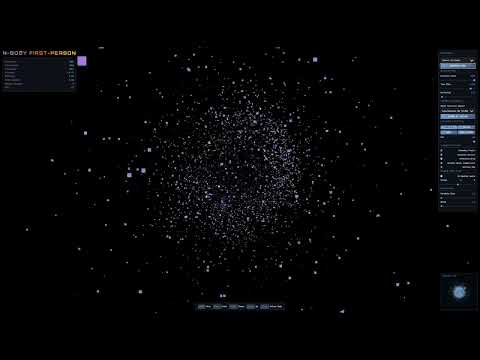
Soupy labs first person N-body sim youtu.be/IAloROcRE-A?si… via @YouTube
its getting better every week.
YouTube
English