MathAndScience.com

3.6K posts

MathAndScience.com banner
MathAndScience.com

MathAndScience.com

@JasonGibsonMath

Space, science & math nerd. NASA shuttle flight controller. Online courses in Algebra ,Calculus, Physics, Chemistry, Engineering: https://t.co/TDWmJuEbsM

Beigetreten Ekim 2022
276 Folgt14.9K Follower
Angehefteter Tweet
MathAndScience.com
MathAndScience.com@JasonGibsonMath·
I shot all of this myself. Let me know what you think & tell me what else to shoot in slow motion! 1) Matchhead igniting 2) Drop of water falling on sodium metal 3) Matchhead rocket launch 4) Cracking an egg 5) Sodium metal reaction with water 6) Igniting a lighter flame 7) Angular momentum of spinning coin 8) Light bulb pulsating with AC electricity 9) Hydrogen bubble 10) Sodium metal in water explosion 11) Potassium metal in water explosion 12) Sparks from a lighter ignition
English
10
8
74
6.7K
MathAndScience.com
MathAndScience.com@JasonGibsonMath·
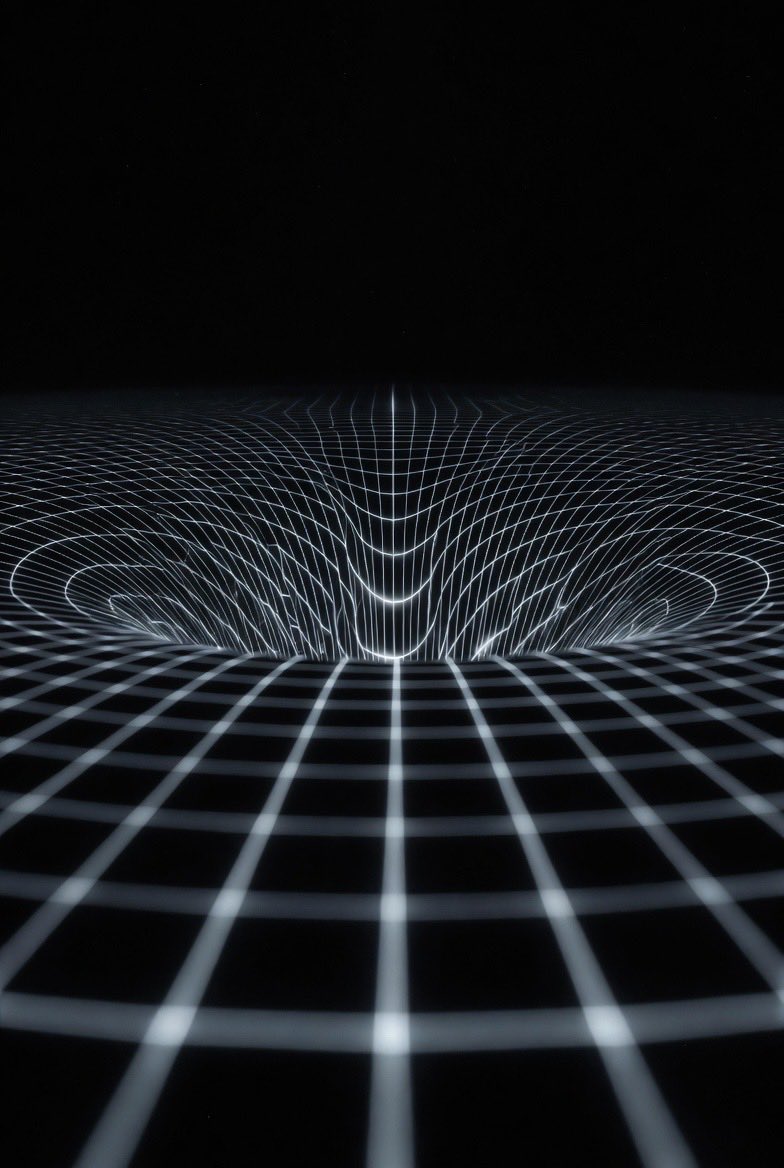
This is like Space-time curvature - like a heavy bowling ball placed on a stretched rubber sheet (trampoline)—it bends the sheet, and anything nearby rolls toward the dip because the "straight" path is now curved. Near something extremely massive like a black hole or neutron star, this bending gets so extreme that two people watching the same event—one far away and one closer—can see dramatically different things: for example, the far-away person might see a clock near the black hole ticking super slowly (or even appear frozen), while someone closer experiences time passing normally for themselves, showing how gravity warps not just space but time itself depending on where you are.
MathAndScience.com tweet media
English
0
0
2
318
Massimo
Massimo@Rainmaker1973·
Truth
English
52
404
1.8K
78.5K
MathAndScience.com
MathAndScience.com@JasonGibsonMath·
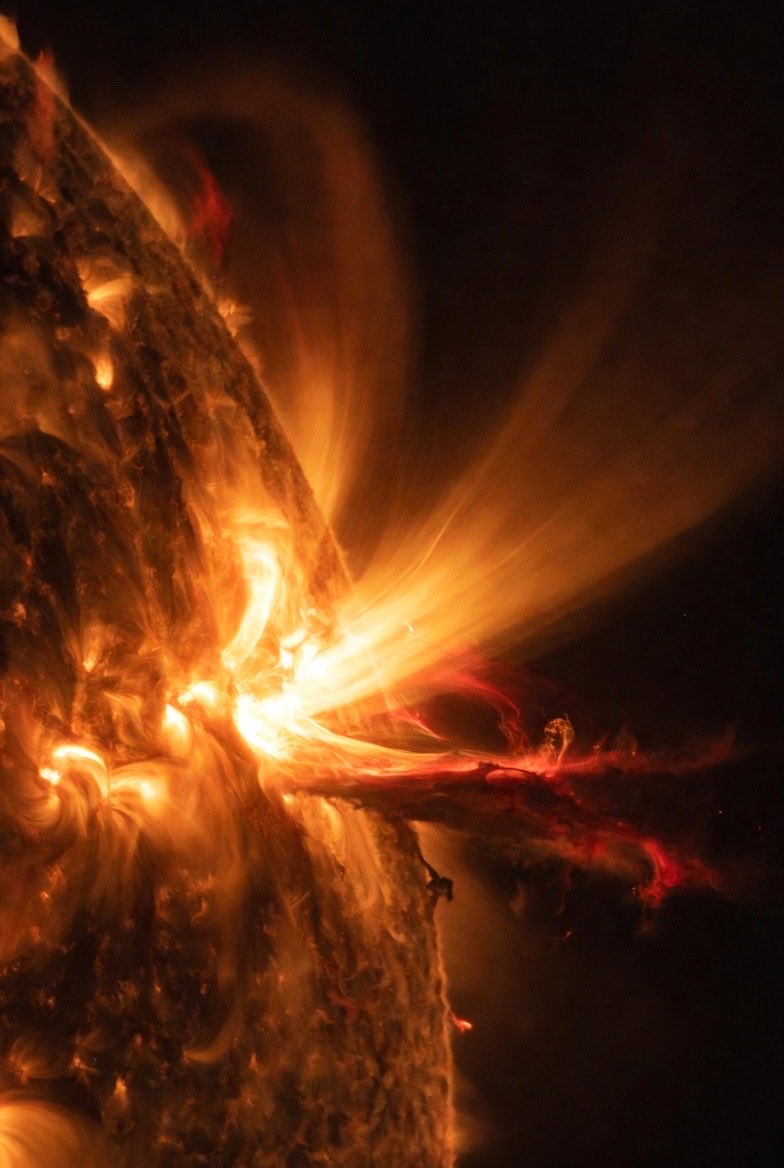
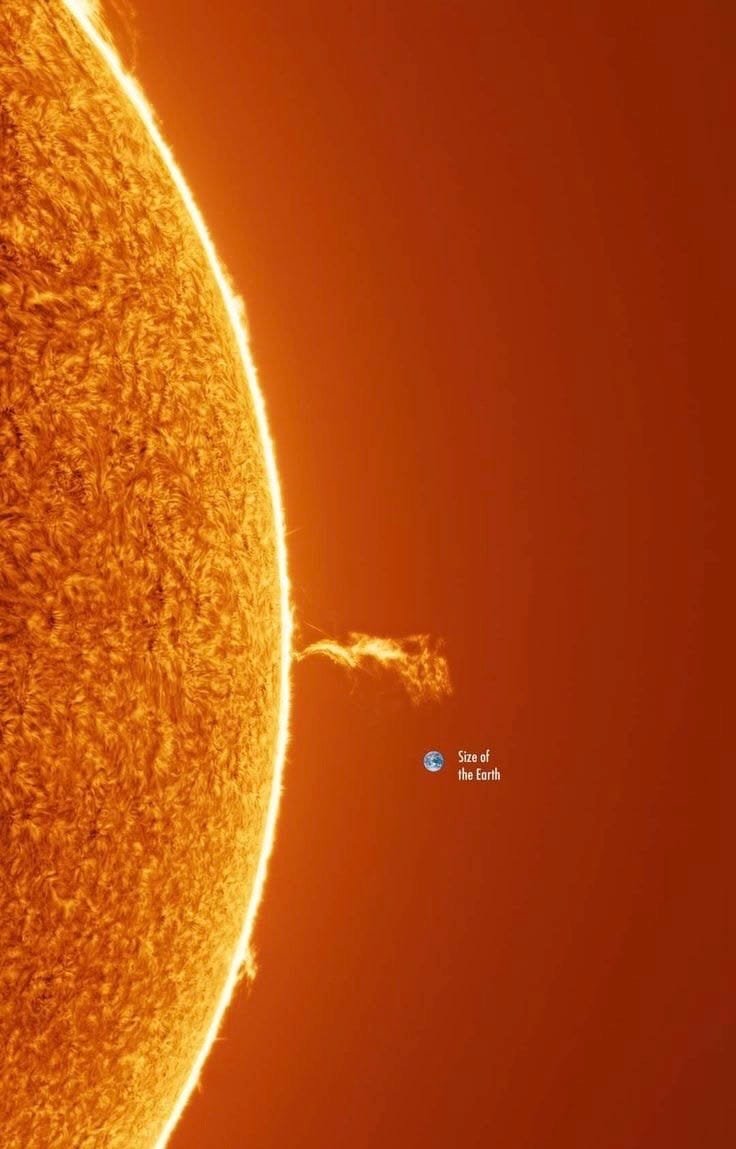
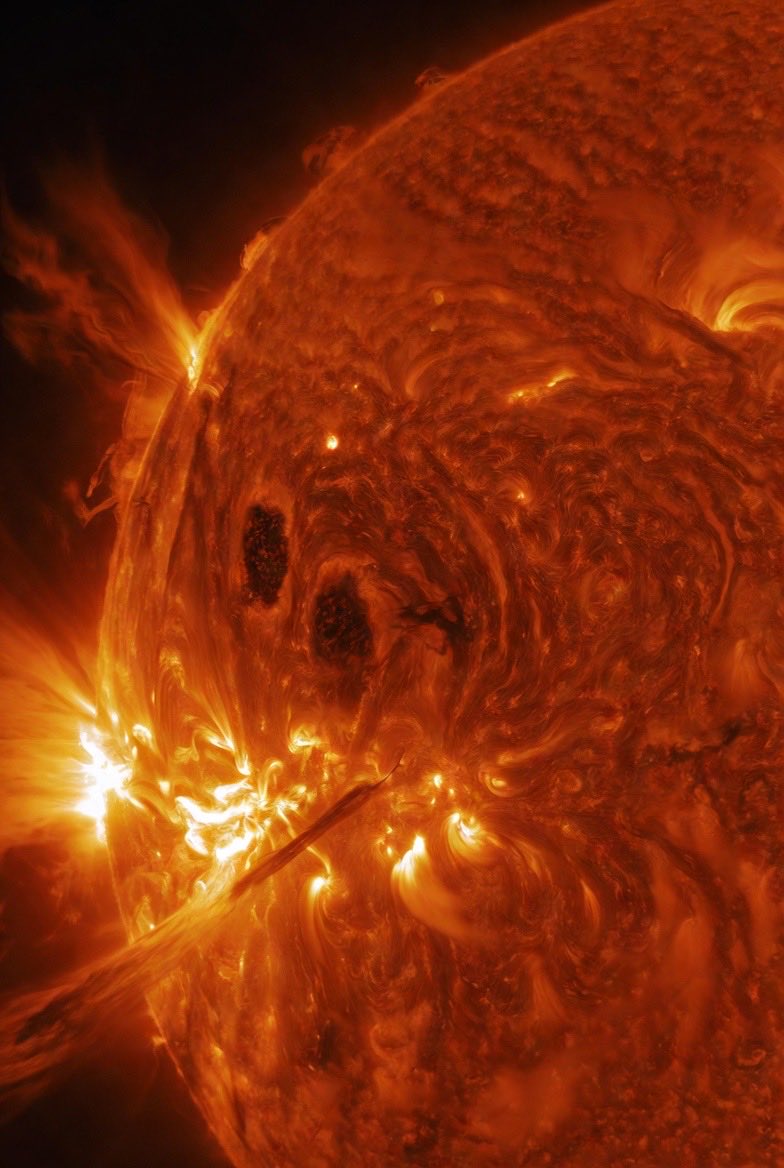
Solar flares are the most powerful explosions in our solar system, releasing as much energy in minutes as a billion hydrogen bombs exploding at once. The radiation from these bursts travels at the speed of light and reaches Earth in just about 8 minutes, potentially disrupting radio communications, satellites, and power grids when strong enough.
MathAndScience.com tweet media
English
1
1
9
639
Curiosity
Curiosity@CuriosityonX·
Size comparison of the earth next to a solar flare.
Curiosity tweet media
English
72
287
2K
49.8K
MathAndScience.com
MathAndScience.com@JasonGibsonMath·
FUN FACT: The deep ocean's hadal zone (below 6,000 meters) is so poorly explored that we've mapped more of the Moon's surface than Earth's abyssal plains, yet it hosts unique life forms like giant tube worms, snailfish, and amphipods that thrive under crushing pressures exceeding 1,000 atmospheres. Amazingly, these extreme depths contain massive reservoirs of dissolved methane and potentially undiscovered microbial ecosystems that could rival the biomass of all surface life combined, holding clues to both Earth's early life origins and possible extraterrestrial habitability.
MathAndScience.com tweet media
English
1
4
17
1.5K
Curiosity
Curiosity@CuriosityonX·
NASA mapped the entire ocean floor using gravity viewed from space.
English
30
269
2.2K
121.2K
MathAndScience.com
MathAndScience.com@JasonGibsonMath·
FUN FACT: Comets are called "dirty snowballs" because they're made of ice (water, carbon dioxide, ammonia), mixed with dust, rock, and organic compounds — yet when they approach the Sun, that ice sublimates explosively, creating tails that can stretch over 100 million kilometers, longer than the distance from Earth to the Sun. Amazingly, the molecules released from comets contain some of the same complex organic building blocks (like glycine, an amino acid) found in life on Earth, strongly suggesting that comets may have delivered key ingredients for life to our planet billions of years ago.
MathAndScience.com tweet media
English
3
1
37
2K
Curiosity
Curiosity@CuriosityonX·
This is cliff. About 1 km tall. On a comet. millions of miles away from us. Captured by Rosetta mission. If you jumped from the top, it would take you 47 minutes to reach the bottom, and you'd probably be OK.
Curiosity tweet media
English
152
518
4.2K
103.7K
MathAndScience.com
MathAndScience.com@JasonGibsonMath·
Learn Algebra, Calculus, Physics, Chemistry & Engineering at: MathAndScience.com Derivatives of General Exponential Functions with Confidence
English
0
0
3
149
MathAndScience.com
MathAndScience.com@JasonGibsonMath·
Learn Algebra, Calculus, Physics, Chemistry & Engineering at: MathAndScience.com Succeed in Solving SSA General Triangles
English
0
2
5
208
MathAndScience.com
MathAndScience.com@JasonGibsonMath·
Learn Algebra, Calculus, Physics, Chemistry & Engineering at: MathAndScience.com Excel in Solving Exponential Equations
English
0
0
5
203
MathAndScience.com
MathAndScience.com@JasonGibsonMath·
Why does Fusion releases SO MUCH energy? It’s because it involves combining light atomic nuclei (usually isotopes of hydrogen like deuterium and tritium) to form a heavier nucleus (helium), and the resulting helium nucleus has slightly less mass than the original separate nuclei. This tiny amount of "missing" mass is converted directly into energy according to Einstein's famous equation E = mc², where even a very small mass defect produces a huge amount of energy because c² is an extremely large number. The strong nuclear force that binds the protons and neutrons together in the new helium nucleus is much more powerful at very short distances than the electrostatic repulsion that previously kept the positively charged nuclei apart, so overcoming that repulsion and achieving fusion releases far more binding energy than was required to bring the nuclei close enough. This is why fusion powers the Sun and all stars, and why 1 kg of fusion fuel can release several times more energy than the same mass of nuclear fission fuel or millions of times more than chemical reactions like burning fossil fuels.
MathAndScience.com tweet media
English
0
2
5
170
MathAndScience.com
MathAndScience.com@JasonGibsonMath·
FUN FACT: Right now, the billions of neurons firing inside your skull are producing enough electricity to dimly light a 25-watt bulb. This tiny 3-pound organ, despite making up just ~2% of your body weight, consumes about 20% of your total energy and oxygen even at rest, powering everything from thoughts and memories to keeping your heart beating — all while generating measurable electrical activity that could literally illuminate a small light if harnessed.
MathAndScience.com tweet media
English
0
0
4
210