

Jason
1.5K posts


Wow Merrick Garland sucked at this
Luke Goldstein@lukewgoldstein
what people mean by the rise of the Epstein class in a graphic
English

You can be pretty confident that someone doesn’t read when they say “raped over at Kohl’s” rather than “raked over the coals.” As literacy declines, we are seeing new & unparalleled malapropisms.
hair of the pawg@haleyvemealone
My fav malapropism
English
@gooddoctorX @IanCopeland5 Rotavirus is the leading cause of diarrheal illness in children worldwide. It causes ~150,000 deaths each year, mostly in the developing world. Before vaccination, in the US, it caused about 2.7 million cases of severe gastroenteritis, 60k hospitalizations, & 37 deaths each year.
English

@IanCopeland5 Agree. What does rota virus do? The risk benefit ratio should make sense.
English
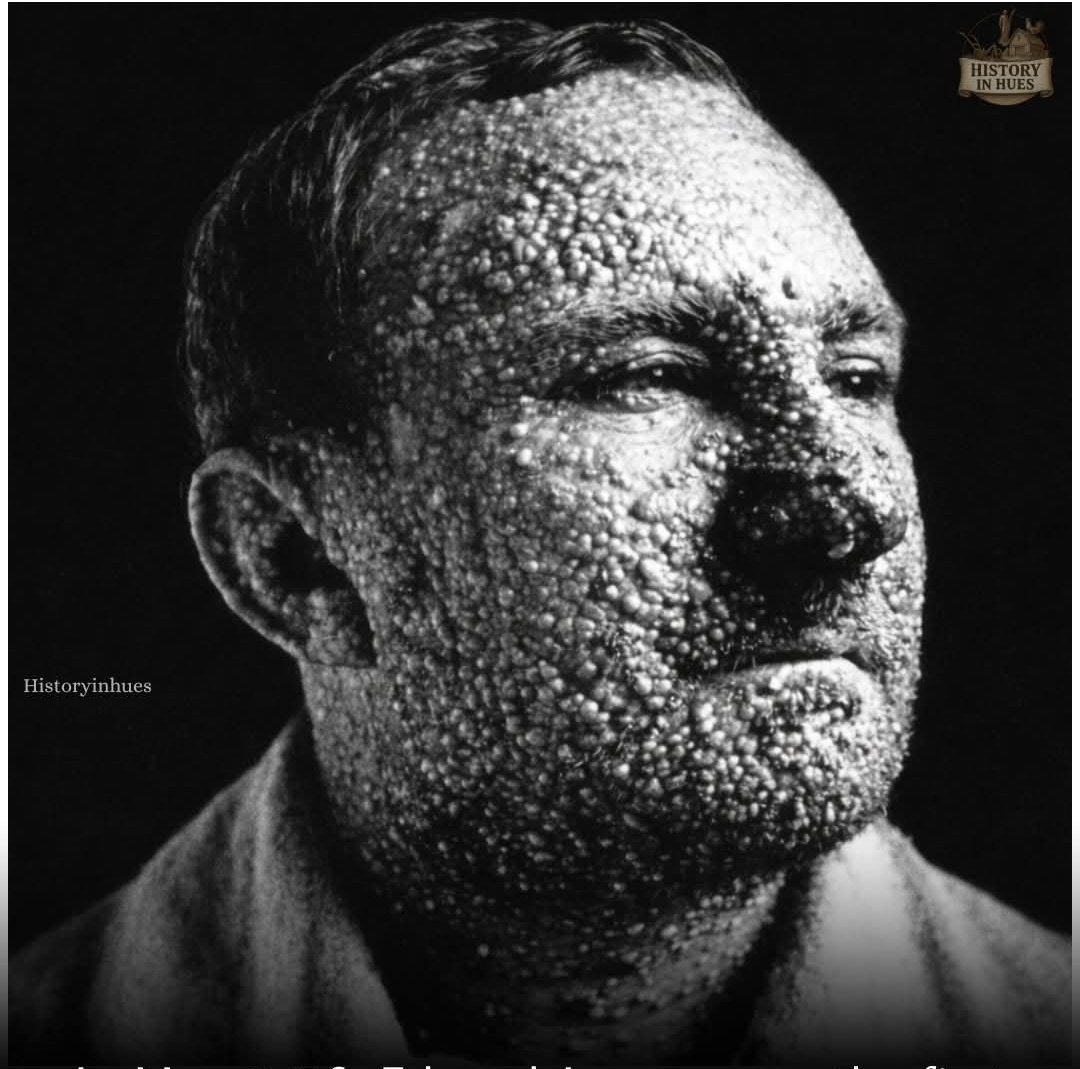
This is what Smallpox looked like in a world without vaccines.
You've never seen such a thing.
Know why?
Because vaccines work...
English
@OneeghaCarol @BadMedicalTakes Ultrasounds do deposit energy in the tissues, which is measured by the thermal index (TI) and mechanical index (MI). Part of conducting a safe fetal US exam is keeping those below a certain threshold, which is why color/spectral Doppler use during them is kept to a minimum.
English
@BadMedicalTakes OMFG! Wouldn’t they be similar to echocardiograms? I’ve had lots of them. They don’t heat up.
English
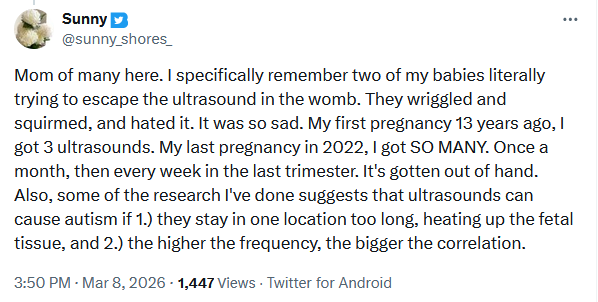

The replies to Cornyn's post are all pretty much along these lines. But this one is endorsed by Texas AG Ken Paxton? WTF.

English
@ScottGreenfield They'll forgive anything as long as he keeps "owning the libs" and Making America White Again.
English
It's somewhat understandable that the MAGA faithful can overlook Trump's vulgarity, deceit and vanity, but his blatant graft?
Are you really okay with his making billions off the presidency?
English
@CathyYoung63 As an aside, I like Javert because he's by far the most complex character in Les Mis.
English
He loves Les Mis. Plot twist: He thinks Javert is the hero
John Ganz@lionel_trolling
This is the 21-year-old groyper who does the Nazi memes for DOL and DHS
English
@HistoryBoomer That's a great scene for sure. Other scenes that still get me in my feels, no matter how many times I watch them:
- The Death Star trench run
- Apollo 13 reentering the atmosphere
- Simba ascending Pride Rock after defeating Scar
English
If you don't tear up watching the beacons scene, I don't know what to say. Gets me every damn time. Almost as reliable as the Marseillaise scene in Casablanca.
Arthur Dent@ArthurCDent
The anti-racists have all sailed into the West. I guess us shitlibs will have to pick up the torch
English
Jason retweetet
"Immigrants are going to replace our culture!"
What culture is that, exactly?
Is it the Iowa State Fair? Seeing the Hawkeyes play the Cyclones on Saturday night? Eating pork chops on a stick? Church choirs volunteering to help rebuild homes after a tornado?
Is it barbacoa on Sunday morning before mass and your little girl's quinceañera? Or accordion-driven Tejano music playing from a pickup truck?
Is it moms dropping their kids off for Calabasas ballet in Range Rovers and Teslas? Lululemon and Vuori? Angry meetings about fence heights at the HOA?
Is it salsa coming through open windows on hot days? Folding chairs gathered around a domino game? Puerto Rican and American flags everywhere to honor Marines coming home?
Is it Southern comfort food at Mary Mac's Tea Room? Morehouse and Spelman grads meeting to network? Southern rap blasting at Magic City?
People afraid of being "replaced" have too narrow a view of what America is about. And yes, America can include a statue of the Hindu god Hanuman in Houston. (Because, c'mon, what is more over-the-top Texan than a 90-foot golden statue of a dude wielding a huge bad-ass club?)
My American culture doesn't discriminate based on ethnic background. My American culture is one that can deal with immigrants because it embraces their myriad varieties. My American culture holds dear democracy, freedom, and independence.
My America believes in self-governance, from jury rooms, where 12 strangers gather to decide a fellow citizen's fate, to town halls, to local elections, to national campaigns. It's watching locals grill an annoyed city council about a new park or too much crime downtown.
My America believes in free speech so much that we put it at the top of the Bill of Rights. I get to call my leaders idiots and feel no fear of prison or punishment. I believe in allowing marches and protests, from the good ones (Selma and Stonewall) to the ones I dislike (Proud Boys or Antifa).
My America is proud to see rows of new citizens lined up at city hall, with many different skin tones but the same expression of hope and anticipation. Because my America is Ronald Reagan's America, "still a beacon, still a magnet for all who must have freedom, for all the pilgrims from all the lost places who are hurtling through the darkness, toward home."
So it's ok if some people march in a St Patrick's Day parade while others celebrate the Vietnamese (Tet) New Year, as long as they are all committed to freedom, democracy, the Constitution, and this amazing thing called "America."
🇺🇸🇺🇸🇺🇸
English
Jason retweetet

A year ago Elon Musk tweeted that he had fed USAID "into the wood chipper."
It was an act that killed people. We don't know most of their names, but we know the 27 below.
Much like with Renee Good + Alex Pretti, we should remember these lives taken by the cruel men who lead us
English
Jason retweetet

🚨BREAKING: ICE/Border Patrol agents pulled guns on a car full of legal observers, saying they needed to “ID” them TODAY, because agents claim they had guns YESTERDAY.
Read that again.
Agents openly admit this stop had nothing to do with anything happening now, but with something they claim happened the day before.
That sounds a lot like U.S. citizens being stopped and detained for exercising their First Amendment rights, while agents catalog people they believe exercise their Second Amendment rights, into their database.
A database that, allegedly, included Alex Pretti.
In the video, agents surround a car of U.S. citizens who were legally observing law enforcement activity this morning in Minneapolis.
Multiple agents have their weapons drawn… guns turned sideways… pointed directly at a car full of U.S. citizens, ordering everyone out of the vehicle.
Not just the driver.
Every single person in the car, including people in the back seat.
This was a full-vehicle detention of legal observers, at gunpoint, with no immediate threat, and no lawful basis.
That alone is an excessive and illegal use of force.
The agents then demand that the people filming produce press credentials, further confirming that agents are illegally denying people their First Amendment rights to observe and record law enforcement activity…
Because press credentials are not required to film police.
They never have been.
And then, at the very end of the video, the justification for the illegal detainment finally slips out.
An agent admits the stop happened because YESTERDAY they claim these same people “threatened” agents with handguns.
Then the agent’s story changes…
The agent says, “they pulled them out, trying to engage us.”
A member of the press asks, “Pulling out literal guns?”
Then agent’s story changes AGAIN…
“No. Assuming that we were going to do something.”
So, no guns were actually pulled, and no threats were actually made.
The “threat” was that people disclosed they were armed… which is exactly what concealed carry holders are trained to do when law enforcement engages with you.
And then the agent finally admits what this stop is really about.
Saying, “That’s why they are being IDed right now.”
So TODAY, agents illegally stopped a car full of legal observers, at gunpoint, to illegally identify and catalog U.S. citizens…
Because YESTERDAY, those citizens lawfully exercised their Second Amendment rights.
If this doesn’t set off blaring alarm bells for the NRA and anyone who claims to be “pro–Second Amendment,” nothing should.
ICE/Border Patrol agents just used guns, intimidation, and an illegal detention to punish U.S. citizens, after the fact, for lawful gun ownership.
That is government retaliation.
And it’s exactly what the Second Amendment was supposed to protect people from.
English

The race of an actor for any fictional person doesn't matter, mythological or not.
It shouldn't matter, most of the time, for historical persons either.
Greg@gregcameback
"Helen of Troy can't be black!!!! The historical inaccuracy!" My guy, she was born from an egg after her mom banged Zeus who was disguised as a swan. Its a myth. Its why there's a cyclops and bunch of other things not real. The race of the actor for a fake person doesn't matter
English
@aiyannabanana @ShannonSel83221 @505Cali2 Absolutely false. Mortality down more than 40% over the last ~50 years.

English

@ShannonSel83221 @505Cali2 For all the millions of dollars raised for breast cancer research, the death rate has only gone up instead of down.
English


@ShannonSel83221 @505Cali2 The day they start smashing mens testicles into a machine and then shooting them full of radiation ill get my mammogram but guess what they do for men?Yup,ultrasound
English
@simon_schama @nytimes You don't have to look that deep, it's the lead story on their website right now.
nytimes.com
English
exactly right - ridiculous that BBC news calling these immense masses of people " protests" rather than sn uprising .. And you have to look deep inside @nytimes to find anything at all - just appalling tin ears for history's roar by media
נדב איל Nadav Eyal@Nadav_Eyal
There is a moment in revolutions- a precise and historically recognizable sweet spot- when an old, brutal, and hardened regime still deploys its forces, yet something breaks in its resolve. You can sense it, and then the public senses it: fear has shifted sides. The oppressors are no longer as certain as they once were in using force. They cannot compete with sheer numbers, with masses filling the streets. Crucially, their own men begin to hesitate. Security forces grow reluctant to shoot at demonstrators; many have family members among them, or doubt that the regime they are defending will survive. This dynamic is well documented across revolutionary cases. In Iran in 1978–79, the Shah’s regime retained overwhelming military superiority, yet its paralysis came from fractured loyalty within the armed forces and police. In Eastern Europe in 1989, regimes collapsed not because protesters defeated the state militarily, but because security elites lost confidence that repression would restore control - most famously in Berlin Wall’s fall, when orders were issued but no one was willing to enforce them. Similar patterns appeared during the early stages of the Arab uprisings, especially in Tunisia and Egypt, where the army’s refusal to fully suppress mass protests proved decisive. That moment is also when regimes begin to change their language. They make offers. They issue statements acknowledging the “legitimate concerns” of protesters or opposition figures. They float proposals for dialogue or negotiations. Far from signaling strength, these shifts repeatedly mark the point at which a revolutionary situation reaches its peak. Such gestures often confirm what protesters already suspect: that the regime’s primary tools, fear and violance, are no longer functioning. That the state is dying. Political science research on authoritarian breakdown supports this pattern. Revolutions rarely succeed because of popular mobilization alone; they succeed when coercive institutions fragment. Once uncertainty spreads within the security apparatus the regime’s collapse becomes a question of timing. The Islamic Republic still possesses formidable repressive capacity. Yet the signals- hesitation, mixed messaging, demonstration of fear by cutting internet- suggest a leadership aware that it may no longer be able to rely on obedience. Historically, that awareness is one of the clearest indicators that an authoritarian system is entering its most dangerous and potentially decisive phase. It does feel very close.
English
@johnfournier77 @T_RUTHR @thehealthb0t sciencedirect.com/science/articl…
A vitamin K injection was given to women shortly before birth. The vitamin K levels in the cord plasma were less than 0.3% of the levels in the mother after injection. That's pretty strong evidence that vitamin K doesn't cross the placenta.
English

@johnfournier77 @T_RUTHR @thehealthb0t Vitamin K carboxylates glutamate residues on various proteins (prothrombin, factors VII/IX/X, proteins C/S/Z), which enables them to bind calcium ions. This calcium binding changes the shape of the proteins and enables their activation.
English
@T_RUTHR @johnfournier77 @thehealthb0t No. The whole reason babies are born with low vitamin K is that almost none of the mom's vitamin K crosses the placenta. Delayed cord clamping won't help since there's essentially no vitamin K in the cord blood to begin with.
English

@Jasoni_22 @johnfournier77 @thehealthb0t Bringing the debate back to the beginning: can the mother provide sufficient K to the baby by delaying the cord cut? And if so, are there drawbacks on a late cut?
English
@johnfournier77 @T_RUTHR @thehealthb0t don't actually make the blood "thin", and vitamin K doesn't make it "thick". Those are figures of speech.
As for mercury, thimerosal (a mercury-containing compound) was removed from all childhood vaccines in 2001. It's now found only in multi-dose vials of the influenza vaccine.
English
@johnfournier77 @T_RUTHR @thehealthb0t Vitamin K is a necessary factor to activate various components of the coagulation cascade. Without it, the body's ability to stop bleeding is impaired.
The viscosity of blood is mostly dependent on the hematocrit (concentration of hemoglobin). What we call blood thinners...
English