Michael Klien

1.2K posts

Michael Klien

Michael Klien

@KlienMichael

Beigetreten Mart 2013
134 Folgt132 Follower
Michael Klien retweetet
Evan Soltas
Evan Soltas@esoltas·
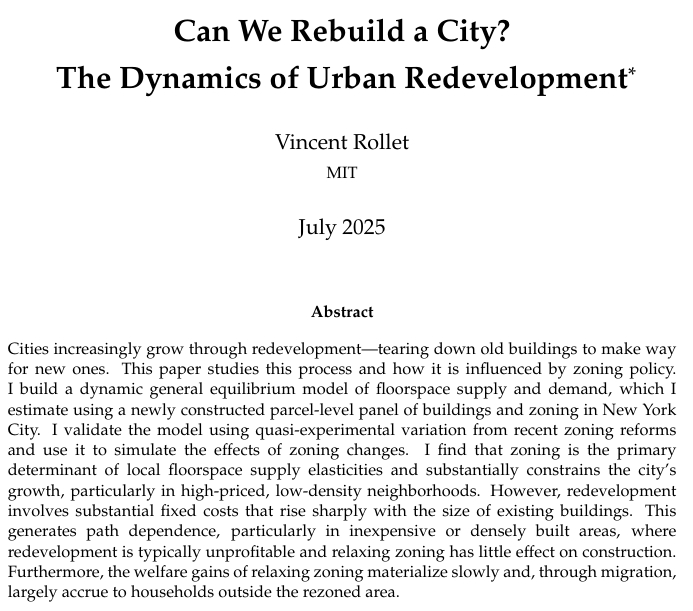
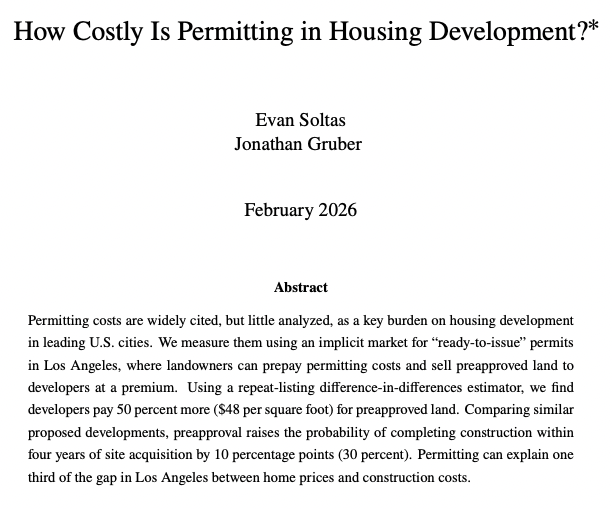
New paper (w/ Jon Gruber): What’s a building permit worth? And what can we learn about the importance of de-facto regulatory burdens versus de-jure constraints in housing development? We study these questions using a new setting: the market for land with preapproved permits.
Evan Soltas tweet media
English
17
139
566
136.8K
Michael Klien retweetet
John Wake
John Wake@JohnWake·
"It cost $75 to put a home on realestate.com.au back in 2009 – it’s now as much as $6000, depending on the suburb." Might explain why Costar is so interested in portals in the U.S. afr.com/companies/medi…
English
0
1
3
681
Michael Klien retweetet
Nick Gerli
Nick Gerli@nickgerli1·
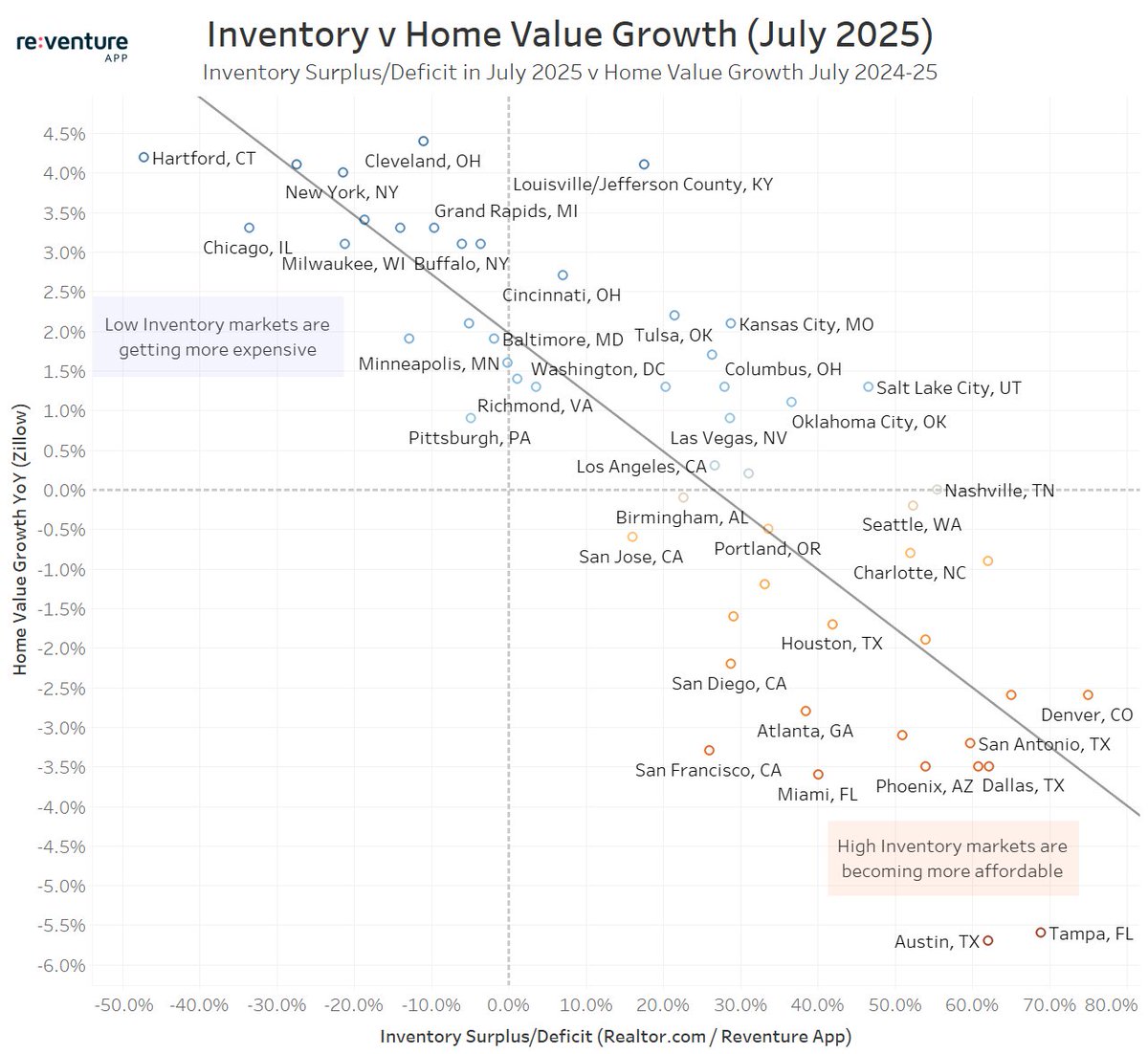
Inventory is all that matters in the current housing market. If a market has an inventory surplus, then prices are becoming more affordable (Austin, Tampa). If a market has a shortage, then prices are getting more expensive (Chicago, New York). Getting more homes on the market should be the first thing we focus on as a country if we want to address the national housing crisis.
Nick Gerli tweet media
English
95
150
1.1K
103.2K
Michael Klien retweetet
Pablo Antonio
Pablo Antonio@PabloPeniche·
The universal symbol of progress
Pablo Antonio tweet media
English
30
377
6.4K
195.4K
Michael Klien retweetet
Alice Evans
Alice Evans@_alice_evans·
The opportunity costs of parenting have increased because there are so many other fun, exciting things you could be doing. So this isn’t just about financial affordability (though that may be important) But also trade-offs in YOUR TIME USE.
Alice Evans tweet media
English
3
9
40
4K
Michael Klien retweetet
WIFO
WIFO@WIFOat·
#WIFOMonatsberichte: Für 2025 bleiben die Aussichten für die österreichische Bauwirtschaft verhalten; erst ab 2026 wird sowohl in 🇦🇹 als auch auf europäischer Ebene mit stärkeren Zuwächsen gerechnet. @KlienMichael buff.ly/4zXqAH8
WIFO tweet media
Deutsch
0
2
3
342
Michael Klien retweetet
Yohan
Yohan@yohaniddawela·
Some new surprising facts about nightlights have just been uncovered. These will impact how we use nightlights to measure economic growth. Here's the breakdown:
Yohan tweet media
English
2
11
43
10.9K
Michael Klien retweetet
Strong Towns
Strong Towns@StrongTowns·
If we want more than a bandaid on the housing crisis, the next increment of development should be legalized by right in every neighborhood across North America. ✍️: Andrew Price
Strong Towns tweet media
English
7
35
334
11K
Michael Klien retweetet
NBER
NBER@nberpubs·
Featured in the latest Digest: "The Stagnation of US Construction Productivity" nber.org/202502/digest/…
NBER tweet media
English
2
5
17
5.1K
Michael Klien retweetet
Arpit Gupta
Arpit Gupta@arpitrage·
Trade shocks lead to loss in manufacturing jobs, but new workers enter service jobs, so total employment is similar. These service jobs generally pay less, leading to overall income losses. And displaced manufacturing workers are stuck in place in declining communities.
Arpit Gupta tweet media
English
1
5
10
3.4K
Michael Klien retweetet
Dion
Dion@2024dion·
Admitting that public participation in planning does more harm than good is one of the biggest taboos in the field. The 1970s participatory governance framework that we're stuck with has completely wrecked American cities and yet if you mildly criticize it you're a heretic
Elai@elaifresh

“Public outreach” in local government is one of the worst ideas ever The selection effects are mind-boggling Perfectly conceived to bring the weirdest, loudest, wrongest cranks out of the woodwork while ignoring normal people You’re better off asking a Ouija Board

English
34
301
3.5K
209.6K
Michael Klien retweetet
Florian Ederer
Florian Ederer@florianederer·
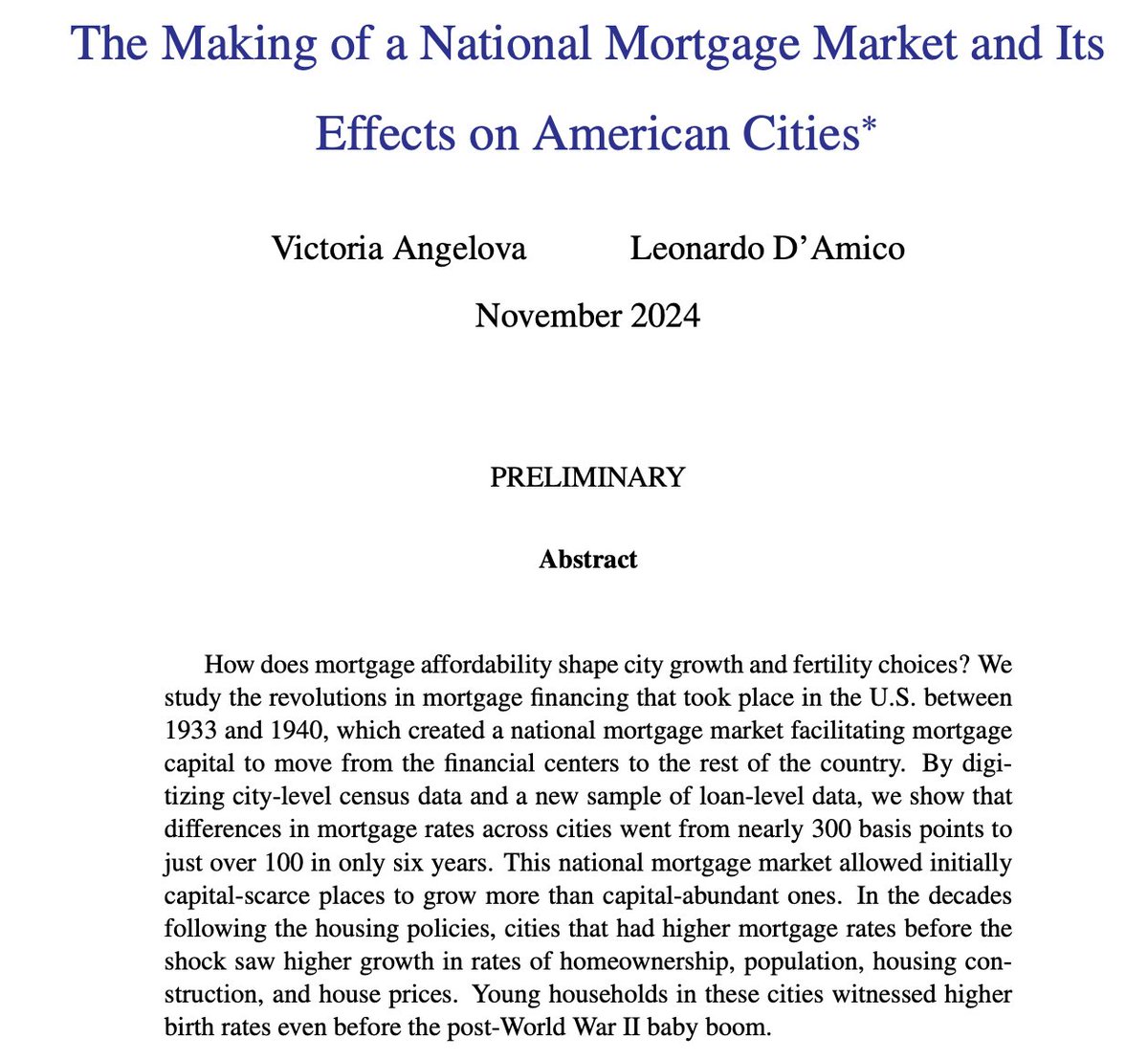
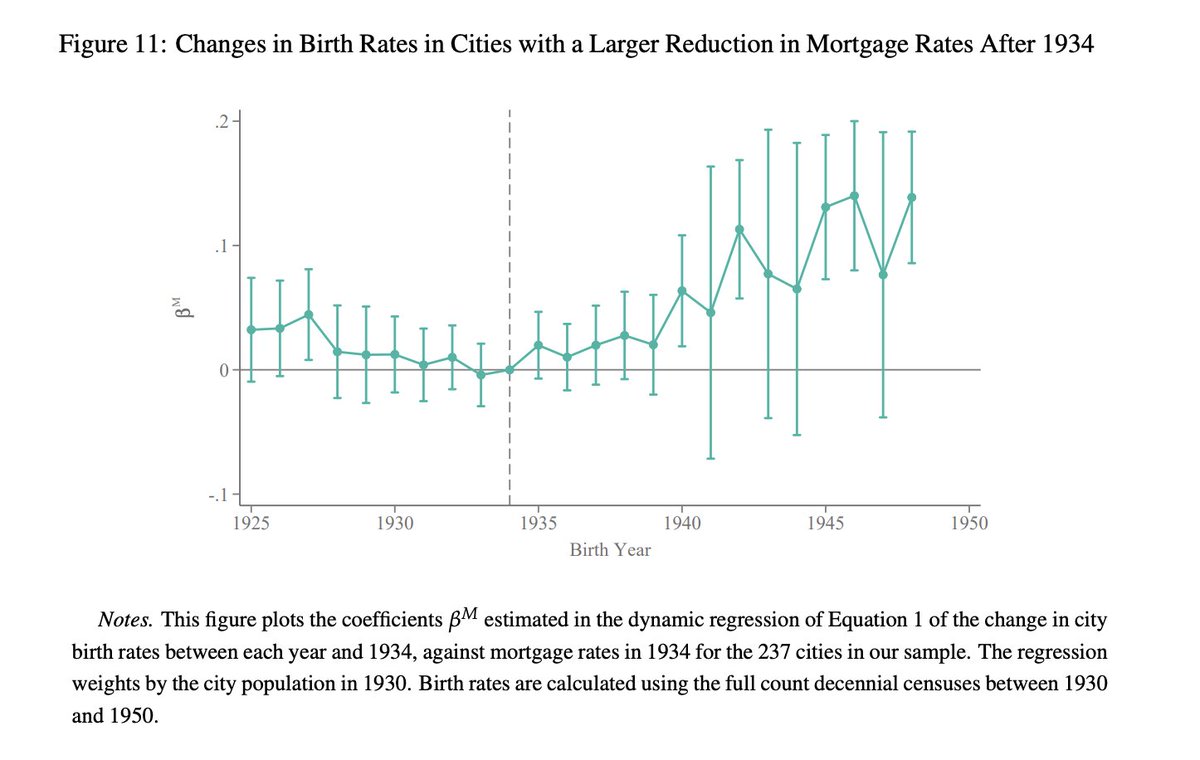
Give people housing and they'll have kids! Obtaining housing increases the average probability of having a child by 3.8% and the number of children by 3.2%. For 20 to 25-year-olds, the corresponding effects are 32% and 33%.
Florian Ederer tweet media
English
77
613
2.8K
756.9K
Michael Klien retweetet
Luis E. Quintero
Luis E. Quintero@leqonomics·
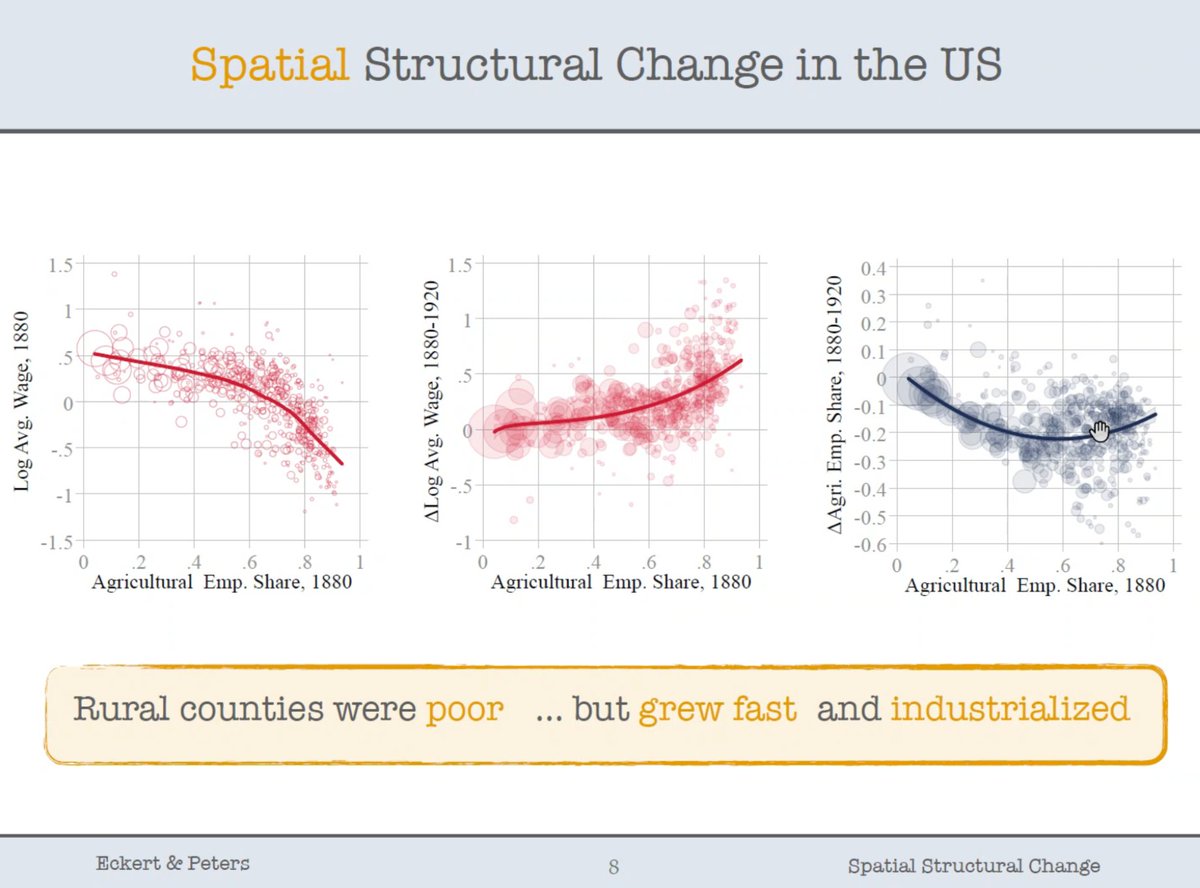
Excited to share insights from @the_IDB Economists Network Seminar! Michel Peter (Yale University) presented his paper Spatial Structural Change, exploring how local economic development intersects with aggregate structural change in the U.S. economy (1880–1920). 🧵 1/7
Luis E. Quintero tweet mediaLuis E. Quintero tweet media
English
1
6
37
4.3K
Michael Klien retweetet
John Wake
John Wake@JohnWake·
Real Estate and Macroeconomics "In 2007, Edward Leamer, an economics professor at the University of California, Los Angeles, pointed out the high costs of this neglect by arguing that it’s meaningless to try to understand business cycles without paying attention to the housing sector. As he argued in a now-famous paper titled “Housing IS the Business Cycle,” the housing market is central to understanding why economies go through booms and busts. He pointed out that nearly all recessions in the United States since World War II were preceded by problems in the housing sector." "Central banks faced the challenge of figuring out how the increases in interest rates that they were engineering to subdue inflation would affect the housing sector and the economy overall. This is no easy task. The channels through which interest rates affect housing markets are complicated and shift over time—they require a study of housing markets with a depth of knowledge that would be rare in macroeconomics textbooks, just as Leamer noted almost two decades ago, when he lamented his failure to find a single textbook that placed real estate “front and center, where it belongs.”" "Across the Organisation for Economic Co-operation and Development’s mostly rich countries, house prices have risen by almost 40 percent in real terms over the past decade, with the cost of a home in the United States up by about 50 percent." imf.org/en/Publication…
English
2
1
6
1.2K