Derek Thompson
22K posts

Derek Thompson
@DKThomp
Sign up for my new newsletter! (Link below) Also: Co-author of Abundance, host of Plain English, and contributing writer at The Atlantic.


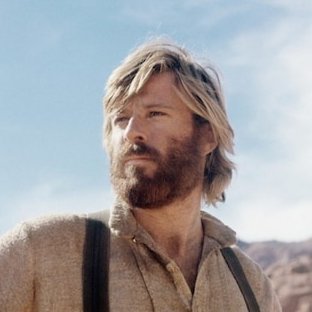
I watched TROY again and I think the problem is Brad Pitt is the definitive Achilles. Anything below his feral physical perfection comes off like weak ass cosplay. Every man is Elliot Page compared to this guy.


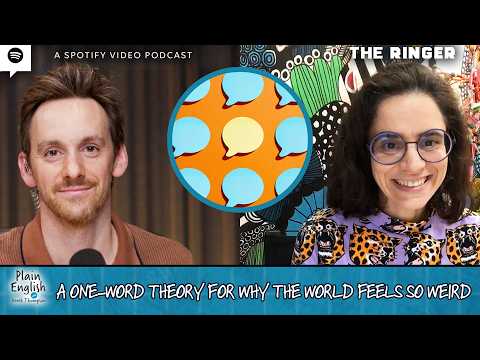
New pod: THE SMARTEST CASE AGAINST THE AI JOBS APOCALYPSE AI is the first technology that seems to automate the same cognitive sectors that absorbed work during previous waves of automation. For that reason, many people worry that it will destroy tens of millions of jobs imminently. But after I review the evidence showing that AI is not clearly destroying work today—and might even be stimulating demand for certain tech jobs— I brought on the great @alexolegimas to talk about the best reasons to doubt the doomsday narrative. We talk about all sorts of economic principles—lump of labor fallacy, income elasticity, Jevon's Paradox—but maybe his most interesting point is about the nature of desire and status. Desire is insatiable, and technology will never solve for status. Even in a world where AI can automate many tasks, status might go up rather than down or flat. And status motivates a lot of economic activity. So even in a world where AGI is very good at 99% of existing tasks is still a world where people will want to send their money to things that are perceived as "scarce" and "status-enhancing." You can create a lot of jobs on this basis alone. You could argue that this is how economic transformations have always worked. Our economy is a rough register of human desires. And in a world where artificial intelligence automates some tasks, it might not destroy work so much as it moves dollars and labor toward new desires in new sectors of the economy. The pet care economy wasn't really a thing in 1800. Now it's a >$100 billion business, made possible by the fact that a richer country moved dollars and workers from corn farms to bespoke poodle manicure spas. It is easy to imagine that AI could automate many tasks and even some jobs. What's harder to imagine is that we'll be permanently stuck in an disequilibrium where people with disposable income aren't trying to satisfy their desires and burnish their status. And in a world where AI is abundant, the question we should be asking about the future of work is: What will be scarce? What will be kind of jobs will be produced as desire and status shift, once again? open.spotify.com/episode/74OPgO…


I watched TROY again and I think the problem is Brad Pitt is the definitive Achilles. Anything below his feral physical perfection comes off like weak ass cosplay. Every man is Elliot Page compared to this guy.


New newsletter: THE 6 MEGATRENDS OF 2026 I took my favorite charts, essay passages, science and econ papers, and posts of the last few months and bucketed them into six categories. ECONOMICS: The Peter Pan Economy Young people are grappling with a declining hiring rate, lower employment levels, higher housing costs (Graph 1 below), cities that are unalienable to families, a Boomer Bottleneck in the labor force, and overwhelming support for older Americans over younger Americans at the federal level and throughout the economy HEALTH: The Making of a Do-it-All Drug In the last few months, randomized studies have shown GLP-1s can reduce psoriasis severity by up to 80%, treat addiction disorders, ameliorate several kinds of mental distress (Graph 2 below), and melt fatty liver disease. And new and better GLP-1 drugs are waiting in the wings. AI: Apocalypse Nope AI discourse is dominated by people predicting “the end of” things: growth, jobs, the human race. But the best way to evaluate AI *at this moment* is to analyze it as the opposite of an apocalypse, and more like a normal business cycle with headwinds, tailwinds, and urgent questions about the durability of consumer demand and the elasticity of compute supply. POLITICS: The Paradox of Global Violence I haven’t seen many people point out that America is becoming historically peaceful (Graph 3 below) at the same time that many indicators of global violence are rising—just as a new technological revolution, drones, threaten to reshape the future of war. MEDIA: Quantity Is Eating Quality The number of e-books and science papers has exploded since the release of ChatGPT. AI might lead to a quality boom in art in the coming decades. But for now, “more” is beating “better.” CULTURE: The Anti-Social Century Life is “time spent.” (Graph 4 below) And the last few decades have seen a devolution of time spent with other people—partners, children, coworkers, and friends—as Americans couple less, have fewer children, work alone, and spend less time with people outside their home. derekthompson.org/p/the-6-megatr…


New pod: THE SMARTEST CASE AGAINST THE AI JOBS APOCALYPSE AI is the first technology that seems to automate the same cognitive sectors that absorbed work during previous waves of automation. For that reason, many people worry that it will destroy tens of millions of jobs imminently. But after I review the evidence showing that AI is not clearly destroying work today—and might even be stimulating demand for certain tech jobs— I brought on the great @alexolegimas to talk about the best reasons to doubt the doomsday narrative. We talk about all sorts of economic principles—lump of labor fallacy, income elasticity, Jevon's Paradox—but maybe his most interesting point is about the nature of desire and status. Desire is insatiable, and technology will never solve for status. Even in a world where AI can automate many tasks, status might go up rather than down or flat. And status motivates a lot of economic activity. So even in a world where AGI is very good at 99% of existing tasks is still a world where people will want to send their money to things that are perceived as "scarce" and "status-enhancing." You can create a lot of jobs on this basis alone. You could argue that this is how economic transformations have always worked. Our economy is a rough register of human desires. And in a world where artificial intelligence automates some tasks, it might not destroy work so much as it moves dollars and labor toward new desires in new sectors of the economy. The pet care economy wasn't really a thing in 1800. Now it's a >$100 billion business, made possible by the fact that a richer country moved dollars and workers from corn farms to bespoke poodle manicure spas. It is easy to imagine that AI could automate many tasks and even some jobs. What's harder to imagine is that we'll be permanently stuck in an disequilibrium where people with disposable income aren't trying to satisfy their desires and burnish their status. And in a world where AI is abundant, the question we should be asking about the future of work is: What will be scarce? What will be kind of jobs will be produced as desire and status shift, once again? open.spotify.com/episode/74OPgO…


Huge collapse in drinking among high schoolers 👀