Sema

1.9K posts

Sema banner
Sema

Sema

@MRingwal1

Offene Weite!

Beigetreten Kasım 2021
86 Folgt17 Follower
Sema retweetet
Donald Hoffman
Donald Hoffman@donalddhoffman·
“Does a ginkgo tree have an inner world? In the film Silent Friend, the protagonist, a neurologist who studies brain activity in infants, attempts to quantify the internal signaling of a ginkgo tree on a university campus.” scientificamerican.com/article/can-pl…
English
11
34
126
9.3K
Sema retweetet
Ihtesham Ali
Ihtesham Ali@ihtesham2005·
An MIT mathematician sat down in 1950 and wrote a small, non-technical book aimed at the general public. He was not predicting the future. He was warning them. He said machines would eventually replace human work, optimize ruthlessly for the wrong goals, and quietly turn human beings into components inside systems they did not control. Almost nobody listened. 75 years later, every warning he made has come true. His name was Norbert Wiener. The book is called "The Human Use of Human Beings." The textbook story of AI ethics says the field began in the 2010s, when Stuart Russell, Nick Bostrom, and a small group of researchers started writing about the dangers of intelligent machines. That story is wrong. The first serious book about the ethics of AI was published in 1950, by a man who had personally invented the science that AI would eventually be built on, and who saw exactly what was coming with a clarity nobody else managed to match for the next 70 years. Here is the story almost nobody tells you. Norbert Wiener was a child prodigy. He graduated from Harvard at 14. He had a PhD in mathematics by 17. He became an MIT professor before he turned 30. During World War II he was assigned to work on anti-aircraft fire control systems. The problem was simple and impossible. How do you aim a gun at a fast-moving plane that will not be where it is by the time the shell arrives. His answer turned into a new science. He called it cybernetics, from the Greek word for steersman. In 1948 he published a technical book by that name. Cybernetics was the foundation of modern control theory, robotics, and almost everything that became artificial intelligence. The book was dense. Most readers could not get past the math. The ideas inside it were too important to leave trapped in equations. So in 1950 Wiener sat down and wrote a second book aimed at ordinary people. No equations. No jargon. Just consequences. He titled it The Human Use of Human Beings. It is barely 200 pages. It is one of the most prescient documents ever written about technology. The first thing he warned about was automation. He predicted, in 1950, that machines would replace human work across every industry. Not just factory work. Not just manual labor. Any task that could be reduced to a procedure would eventually be automated. He specifically said white-collar work would not be safe. Bookkeeping. Translation. Drafting. Calculation. Anything where a human was being paid to follow a defined process would eventually be done by a machine for a fraction of the cost. He was not celebrating this. He was warning about it. He said the social consequences would be enormous, that entire industries would collapse, that the value of human labor itself would be undermined for tasks where humans had been useful for centuries. He wrote this 75 years before ChatGPT made every white-collar professional check their job description twice. The second thing he warned about was the alignment problem. He did not call it that. The phrase did not exist. But he described it precisely. He said that machines optimize for the goal you give them. They do not optimize for what you meant. They optimize for what you wrote down. If the goal is poorly specified, the machine will pursue the literal version of it with terrifying efficiency, and the result will be a disaster the builders did not foresee. He used the metaphor of the magic monkey's paw from a horror story by W.W. Jacobs. A grieving father wishes his dead son alive again. The paw grants the wish. Something climbs back out of the grave that is technically the son. The wish was granted exactly as stated. The outcome is hell. Modern AI safety researchers use almost the same metaphor 75 years later. They call it specification gaming, reward hacking, mesa-optimization. The names are new. The problem Wiener described in 1950 is exactly the same. The third thing he warned about was the loss of human agency. He predicted that humans would gradually surrender their decision-making to systems they did not understand. Not because the systems would force them to. Because the systems would be more convenient, more accurate, and more profitable than human judgment. People would offload their navigation, their reading, their relationships, and eventually their thinking to optimization processes designed by companies whose interests were not aligned with their users. He said something in 1950 that I cannot stop thinking about. He said the more efficiently a society delegates its decisions to machines, the less able it becomes to make decisions at all. The atrophy is gradual. By the time anyone notices, the capacity to choose is gone, and what remains is people executing decisions that were made for them, by systems they did not build, in service of goals they were never asked about. Look at modern social media feeds, recommendation algorithms, dating apps, navigation systems, news aggregators, and you are looking at exactly what he described. The fourth thing he warned about was the easiest one to ignore at the time and the most disturbing now. He warned that authoritarian regimes would use the new computing technology to track, manipulate, and control populations at a scale never previously possible. Not in the future. Soon. He said the same techniques that made cybernetics useful for guiding missiles would be used to guide societies, and that the small, incremental decisions about what to optimize, who to surveil, and how to feed information back into the system would compound into a kind of soft control that did not need force to function. People would do what the system wanted because the system would shape what they wanted in the first place. He saw modern surveillance states 75 years before they existed. The strangest thing about reading the book in 2026 is realizing how few of these problems have been seriously addressed. Wiener was not anti-technology. He had personally helped build it. He was not nostalgic for a pre-machine age. He was warning that any tool powerful enough to amplify human capability is also powerful enough to amplify human stupidity, greed, and indifference, and that the dangers were not in the machines themselves but in the unwillingness of human institutions to ask hard questions about who the machines were being built for. He died in 1964. He never lived to see most of his predictions come true. He never used a personal computer. He never followed a hyperlink. He never saw a modern recommendation algorithm. He just wrote down, in 1950, in plain English, what the world would look like when the technology he had helped invent was built out by people who had not read his warnings. The book is around 200 pages. It is in print. Used copies are everywhere for under ten dollars. It reads like science fiction in which the author already knows how the story ends. The first serious book about the ethics of AI was published before there was any AI to be ethical about. Almost nobody who works on the problem today has read it. The warnings are the same. The author has been dead for 60 years. The book is one click away from anyone who wants to read it.
Ihtesham Ali tweet media
English
68
509
1.4K
129.6K
Sema retweetet
Politik & Ökonomie
Politik & Ökonomie@_politoekonomie·
In Teil 3 von Aufstieg des Eigentums verfolgt @Fionnindy, wie Florenz & Venedig zu Laboratorien bürgerlicher Macht wurden und der Zusammenprall von Handelsoligarchie & Gottesstaat die Grundalternativen schuf,die das heutige politische Denken strukturieren: politischeoekonomie.com/mammon-oder-go…
Deutsch
0
5
16
1.5K
Sema retweetet
KURSBUCH
KURSBUCH@KursbuchOnline·
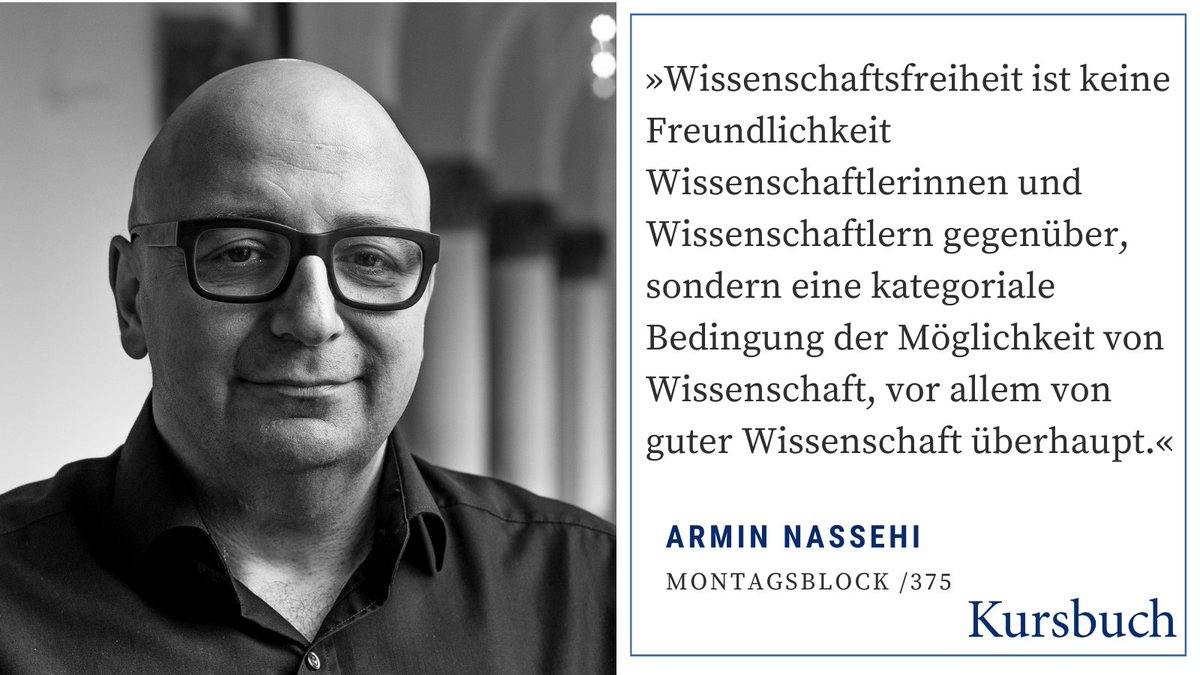
Elitenkritik ist zentral für die AfD: „die da oben“ regieren am Volk vorbei. Im neuen #Montagsblock ist @ArminNassehi angesichts aktueller Debatten ratlos: Statt Sachlichkeit herrscht Strategielosigkeit – und das stärkt die AfD ungewollt weiter: kursbuch.online/montagsblock-3…
KURSBUCH tweet media
Deutsch
0
5
7
2.7K
Sema retweetet
LesenUndTeilen©  🌍 🇪🇺
Gut zuhören und weit teilen. Palantir ist die Software, mit der CDU/CSU und wohl auch AfD eine Komplettüberwachung der Deutschen umsetzen (wollen). In Bayern und anderen Bundesländern läuft sie bereits. Diese Software ist die gefährlichste der Welt. Sie wird offiziell von Thiel und Karp als Tötungsmaschine beworben und verkauft. Sie sammelt - alle Daten, - Bewegungen, - Einkäufe, - digitale Kommunikation, - weiß, wer was im Internet angeschaut oder gesucht hat, - hört alle Gespräche an, sowohl berufliche als auch private bis ins Schlafzimmer - kennt alle Kontaktdaten, die man in seinem Smartphone oder Computer gesammelt hat - liest ggf. alle Fotos aus, die man macht Und das ist alles erst der Anfang. Das wahre Risiko beginnt erst danach. Aus all diesen Daten erstellt diese Software eine Einstufung dazu, wen sie für gefährlich halten will - basierend darauf, was ihre Programmierer für gefährlich halten. Sie glauben naiv, dass diese Software nur nach potentiellen Attentätern sucht? Das ist keineswegs das, wozu sie programmiert wurde. Palantir ist dazu da „Feinde“ auszuschalten, die den jeweiligen Nutzern lästig werden könnten. Politische Gegner. Wissenschaftler. Privatpersonen, deren Meinung stört. Menschen und Organisationen, die auf die Gefahren hinweisen. Palantir ist dazu geschaffen worden, Menschen ohne richterlichen Beschluss zu töten. Das erklärte Ziel von Thiel und Karp ist es, jeden „störenden Menschen“ weltweit binnen maximal zwei Stunden „ausschalten“ zu können. In den USA bedient sich Trump dazu den ICE-Agenten, die auf Anweisung dieser KI Menschen einsammeln. Das ist einfach, denn Palantir weiß wer wann wo ist. In Israel und Gaza ist Palantir dabei Menschen von Drohnen töten zu lassen. Das ist der Großversuch dessen, wie Palantir global funktionieren soll. Und nochmal: Kein einziger Mensch soll darüber entscheiden, wer binnen 2 Stunden tot sein soll, sondern Palantir, eine KI, die von pseudo-religiösen Wahnsinnigen geschaffen wurde, die beide sowohl Frieden, Freiheit der Menschen und Demokratie hassen und daraus auch keinen Hehl machen. Es wäre schon mehr als genug Skandal, dass CDU/CSU und wohl auch AfD unsere Privatgespräche und unsere Berufsgeheimnisse von einer ausländischen KI im Ausland auswerten lassen wollen. Dies aber im vollen Bewusstsein dessen nutzen zu wollen, dass Palantir in letzter Konsequenz dazu geschaffen wurde uns alle auf Basis dessen, ob wir als „störend“ empfunden werden, zu töten, das macht das Interesse einiger deutscher Parteien an Palantir in höchstem Maße bedenklich. Sind CDU/CSU und die Polizei zu naiv, um zu verstehen, was sie da tun? Oder sind sie sich dessen bewusst, was sie da tun, so wie Trump, Musk, ICE und FBI, CIA und US-Polizei? Man könnte auch fragen: Werden wir von Menschen regiert, die zu wenig verstehen oder von Menschen, die billigend in Kauf nehmen der deutschen Bevölkerung und der deutschen Wirtschaft schwersten Schaden zuzufügen, um vielleicht die eine oder andere Straftat leichter verhindern zu können? Nimmt man also die vollen Risiken der gefährlichsten Software der Welt in Kauf, um einige wenige Straftaten zu verhindern? Und sind wir als Bevölkerung dazu bereit unser Leben und unsere Betriebsgeheimnisse dafür zu riskieren? Und all das, obwohl es andere Staaten gibt, die mit eigener Software nahezu den gleichen Nutzen haben, ohne auch nur eine einzige der Daten im Ausland auswerten zu lassen, wie bspw. Südkorea, ein Land deutlich kleiner als Deutschland.
Deutsch
6
318
539
6.2K
Sema retweetet
Mel Andrews
Mel Andrews@bayesianboy·
This is an important read if you want to understand Palantir’s modus operandi and how silicon valley has accomplished near total corporate capture of government.
Mehdi (e/λ)@BetterCallMedhi

I just finished reading palantir’s manifesto & I need you to understand what you’re actually looking at because this is the MOST important document the tech world has produced this year most people came away thinking «wow what a thoughtful essay about patriotism and technology »…I came away thinking this is the most elegant justification for corporate capture of the state apparatus ever written & I want to walk you through why krp opens with «silicon valley owes a moral debt to the country that made its rise possible » & frames the entire document as a call to civic duty, but read between the lines and what he’s actually saying is that the engineering elite should be embedded inside the defense and intelligence apparatus of the nation, he’s describing exactly what palantir has already done and dressing it up as patriotism «the question is not whether AI weapons will be built, it is who will build them and for what purpose »sounds like a warning but it’s actually a sales pitch, he’s telling every gov on earth that the choice is binary either you buy from us or your adversaries will build it without you, this is the oldest arms dealer rhetoric in history wrapped in SV vocabulary « hard power in this century will be built on software »is the key sentence of the entire manifesto because this is where karp reveals the real thesis, he’s saying whoever controls the software layer of national defense controls the nation itself & if you’ve been following my threads you know that palantir’s gotham and foundry platforms are already plugged into the intelligence feeds the satellite data, financial transactions & communications of dozens of govts worldwide through a single ontological knowledge graph that creates a technological dependency so deep that migrating away would mean rebuilding the entire institutional memory of the organization from scratch this is vendor lockin at the scale of nation states and I’m personally convinced it was designed this way from the beginning «we should applaud those who attempt to build where the market has failed to act » is karp defending palantir’s expansion into every domain the gov used to handle itself, policing immigration, military targeting intelligence analysis public health, everywhere the state retreats palantir advances and what was once a government function becomes a private service that the government can no longer perform without plantir’s permission and here’s what I think makes it even more concerning, these systems are increasingly autonomous meaning the AI layer is making targeting recommendations threat assessments & resource allocation decisions that humans inside gov are rubber stamping without fully understanding the underlying logic a bureaucrat inside the pentagon / DGSI sees a recommendation from the system & approves it because the system has been right 97% of the time and questioning it would require technical expertise that no one in the room has, this is algorithmic governance wearing the mask of human decision making «the atomic age is ending, a new era of deterrence built on ai is set to begin »is the MOST chilling sentence in the document because karp is explicitly saying that ai based deterrence will replace nuclear deterrence as the organizing principle of global power, and whoever builds that ai deterrence layer owns the 21st century the same way whoever built the bomb owned the 20th & he’s telling you plainly that palantir intends to be that builder «national service should be a universal duty » & « we should only fight the next war if everyone shares in the risk »sounds noble until you realize that he is proposing a system where citizens serve the state & the state is operationally dependent on palantir, the public bears the risk and palantir captures the value, soldiers fight wars planned by algorithms they can’t audit built by a company they can’t vote out


English
1
21
100
11.1K
Sema retweetet
Mike Brock🇺🇸
Mike Brock🇺🇸@brockm·
Alex Karp, on an investor call: "Some people are going to get their heads cut off." He jokes about drone-striking business rivals. He proposes sending campus protesters to North Korea. He watches a protester removed and says he hasn't had so much fun in years. His PhD dissertation is titled "Aggression in the Life-World." Its opening line: irrational statements relieve unconscious aggressive drives. He studied the mechanism. He is now performing it. notesfromthecircus.com/p/the-man-who-…
English
55
573
1.1K
32.3K
Sema retweetet
Ihtesham Ali
Ihtesham Ali@ihtesham2005·
The former director of AI at Tesla stood up at Y Combinator's AI Startup School in June 2025 and said something that made half the room of young developers realize they had been preparing for the wrong future. His name is Andrej Karpathy, and he is one of the only people alive who has been in the room for all three of the paradigm shifts that built modern AI. He was a founding member of OpenAI. He led the Autopilot team at Tesla. He designed and taught the first deep learning class at Stanford, which grew from 150 students in 2015 to 750 by 2017 and then escaped onto the internet where millions of people have watched it since. When he said something had fundamentally changed, the people in that room had every reason to listen. Here is the framework he walked through, and why it is the clearest map anyone has drawn of what just happened to software. He said there have now been three distinct eras of programming, and they are not replacements of each other. They are layers on top of each other, each one eating into the work that used to require the one below it. Software 1.0 is what almost everyone still means when they say code. A human being sits down, writes explicit step-by-step instructions in Python or C or JavaScript, and the computer does exactly what those instructions say. For seventy years, this was the only kind of software there was. Software 2.0 is the shift Karpathy himself named in a 2017 essay. He watched it happen in real time at Tesla. The team stopped writing explicit rules for how the car should recognize a stop sign and started showing a neural network millions of examples until it figured the pattern out on its own. The code was no longer the instructions. The code was the dataset and the network architecture, and the actual logic lived in the weights that came out of training. He wrote at the time that Software 2.0 was eating Software 1.0 one function at a time, and inside Tesla, he was watching hand-coded computer vision logic get deleted and replaced by learned weights week after week. Software 3.0 is the one that just arrived, and it is the one almost nobody has the right framework for yet. He said the line carefully. "The hottest new programming language is English." Not a metaphor. A literal statement about how software is now being built. You no longer need to write Python to produce behavior. You write a prompt in plain language, and a large language model executes the intent. The prompt is the program. The English is the source code. And the thing that makes this more than a productivity improvement is what he said next. Software 3.0 is eating Software 1.0 and Software 2.0 at the same time. Every traditional rule-based function that used to require a team of engineers can now be replaced by a prompt and a model call. Every narrow machine learning model that used to require millions of labeled examples can be replaced by a large model that was already trained on a significant fraction of the internet. The entire stack is being compressed upward into natural language. The implication he drew from this is the one that matters most for anyone trying to figure out what to build next. He said we are living through the single biggest expansion of accessibility in the history of computing. For seventy years, programming required learning a formal language that fewer than one percent of humans could ever become fluent in. In the span of about three years, the barrier has collapsed. The only language you need to program a computer now is the one you already speak. He used a phrase for this that sounded almost silly until you realize what it actually means. Vibe coding. The act of describing the program you want in loose natural language and letting the model handle the syntax, the structure, the boilerplate, and the integration. You do not need to know Swift to describe the iOS app you want to build. You describe the vibe, and the LLM handles the rest. But he was careful not to oversell it. He said LLMs are what he calls people spirits. Stochastic simulations of human reasoning with an emergent psychology and a set of very specific weaknesses that every builder now has to design around. They have jagged intelligence, meaning they can do astonishingly hard things and then fail at something a child could handle. They have anterograde amnesia, meaning they cannot form new long-term memory the way a human coworker would. They hallucinate. They get confused. They need supervision. Which means the job of a developer is not disappearing. It is changing shape. The best developers in the Software 3.0 era are not the ones who write the most code. They are the ones who can think in systems, design the right prompts, build the validation layers that catch the model when it drifts, and orchestrate an entire pipeline of specialized AI agents the way a conductor handles an orchestra. The specific line he kept coming back to is the one I keep thinking about. We are no longer just writing code. We are managing behavior. The people who will build the important things in the next decade are not the ones with the cleanest syntax. They are the ones who figured out, earlier than everyone else, that when English becomes a programming language, the bottleneck is no longer how well you can speak to the compiler. The bottleneck is how clearly you can think about what you actually want the machine to do. And that has always been the real skill. It is just that for seventy years, we had the luxury of hiding it behind the syntax.
Ihtesham Ali tweet media
English
36
131
498
68.5K
Sema retweetet
KURSBUCH
KURSBUCH@KursbuchOnline·
Immer mehr Texte entstehen mit KI. Und trotzdem gehen wir im Offiziellen weiterhin davon aus, dass alle Texte handgemacht sind - suchen aber trotzdem akribisch nach KI-Indizien. Im neuen #Montagsblock nimmt @sianderl dieses Spannungsfeld unter die Lupe: kursbuch.online/montagsblock-3…
KURSBUCH tweet media
Deutsch
1
1
3
250
Sema retweetet
Aakash Gupta
Aakash Gupta@aakashgupta·
The math on this project should mass-humble every AI lab on the planet. 1 cubic millimeter. One-millionth of a human brain. Harvard and Google spent 10 years mapping it. The imaging alone took 326 days. They sliced the tissue into 5,000 wafers each 30 nanometers thick, ran them through a $6 million electron microscope, then needed Google’s ML models to stitch the 3D reconstruction because no human team could process the output. The result: 57,000 cells, 150 million synapses, 230 millimeters of blood vessels, compressed into 1.4 petabytes of raw data. For context, 1.4 petabytes is roughly 1.4 million gigabytes. From a speck smaller than a grain of rice. Now scale that. The full human brain is one million times larger. Mapping the whole thing at this resolution would produce approximately 1.4 zettabytes of data. That’s roughly equal to all the data generated on Earth in a single year. The storage alone would cost an estimated $50 billion and require a 140-acre data center, which would make it the largest on the planet. And they found things textbooks don’t contain. One neuron had over 5,000 connection points. Some axons had coiled themselves into tight whorls for completely unknown reasons. Pairs of cell clusters grew in mirror images of each other. Jeff Lichtman, the Harvard lead, said there’s “a chasm between what we already know and what we need to know.” This is why the next step isn’t a human brain. It’s a mouse hippocampus, 10 cubic millimeters, over the next five years. Because even a mouse brain is 1,000x larger than what they just mapped, and the full mouse connectome is the proof of concept before anyone attempts the human one. We’re building AI systems that loosely mimic neural networks while still unable to fully read the wiring diagram of a single cubic millimeter of the thing we’re trying to imitate. The original is 1.4 petabytes per millionth of its volume. Every AI model on Earth fits in a fraction of that. The brain runs on 20 watts and fits in your skull. The data center required to merely describe one-millionth of it would span 140 acres.
All day Astronomy@forallcurious

🚨: Scientists mapped 1 mm³ of a human brain ─ less than a grain of rice ─ and a microscopic cosmos appeared.

English
1.2K
12K
64K
4.6M
Sema retweetet
Dan Williams
Dan Williams@danwilliamsphil·
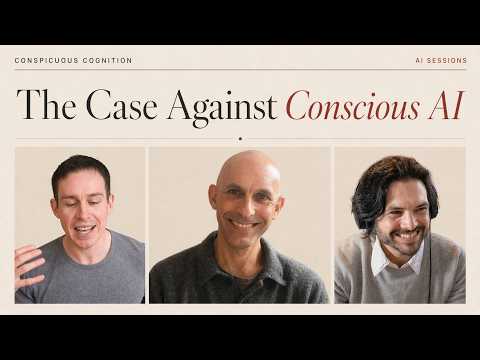
Glad that this conversation has been getting some attention. It was a really enjoyable, high-level deep dive into AI consciousness. Full video here: youtu.be/wVYg8u5xjno?si…
YouTube video
YouTube
English
3
10
33
3.4K
Sema retweetet
Daniel-Pascal Zorn
Daniel-Pascal Zorn@Fionnindy·
Textbezogene komparative Kriterien zur Beurteilung philosophischer Texte.
Deutsch
0
2
13
1.5K
Sema retweetet
Philipp Hölzing
Philipp Hölzing@PhilippHoelzing·
Dirk Baecker erprobt in seinem neuen Buch eine soziologische Theorie digitaler Medien. Seine originelle Bestandsaufnahme der Digitalisierung führt uns mitten hinein in eine Verständigung der Gesellschaft über sich selbst – und mit einer neuen, »fremden Intelligenz«. Out now!
Philipp Hölzing tweet media
Deutsch
3
9
27
1.1K