Angehefteter Tweet

Monotheistic Paganism — or, just what _was_ it Christianity fought and faced?
by T.M. [Thomas Martin] Lindsay
Historian T.M. Lindsay describes the metaphysical structure of the cosmos — according to the new, Western (essentially _monotheistic_) Paganism which was powerful in the late antique Roman Empire — as it was ultimately planned and envisioned by (the last pagan) Emperor Julian: {quoting…}
The Neoplatonic thought of a Trinity of existence took the central place of the Christian {Trinity} in this new pagan theology.
Three worlds exist. First and highest is the realm of pure ideas where the Supreme Principle, the One, the Highest Good, the Great First Cause, lives and reigns. Below it is the intellectual world over which presides the same Supreme Principle, but now represented by an emanation from Itself, wholly spiritual, the Logos of the Platonic philosophy. The third is the world of sense existence, the universe of things seen and handled, and there, as beseems its surroundings, the ruler, the emanation from the Supreme Principle, assumes a visible form and can be seen while adored.
{/unQuote}
The latter, of course, being _Helios_ the (physical) sun in the sky. Superficially it would appear that the foregoing principles don't leave much room for traditional Greco-Roman gods and goddesses of Olympus, together with their religion.
Going beyond superficial, let's examine that New Paganism which, during the 2nd and 3rd centuries A.D., almost completely replaced the Old Religion(s) — particularly in regard of the _people_ (Roman and otherwise) of the Empire — leaving the old official faith(s) still technically in existance but lingering as mere _simulacra_ of their former religion(s).
Following is listing of the pages of T.M. Lindsay's intensely interesting chapter in Vol. I of the _Cambridge Medieval History_ — from which the foregoing excerpt, together with following pages (i.e., Lindsay's entire chapter), were drawn.
contents
Part I:
1. New religions for Old
2. Cosmopolitan society
3. Oriental religions
4. Isis & Apuleius' _Metamorphoses_
5. The New Paganism
6. Pagan inscriptions from Tombstones
7. Neoplatonism vis-à-vis Christianity
8. Growing strength of Christianity
9. Imperial repression of Christianity
Part II:
10. Flavius Claudius Julianus; a.k.a. Julian
11. Julian's education
12. Julian's Occultism
13. Julian as Caesar (Vice Emperor) in Gaul
14. Julian as Augustus (Emperor)
15. Julian's policy toward Christianity
Part III:
16. Julian's attempt to reform Paganism
17. Helios as visible manifestation of God
18. Julian's “Catholic Pagan State Church”
19. Uniting Pagan Piety with the Old Religion
20. Incongruity of the Union
21. Julian's Failure
Part IV:
22. “Galilean, Thou hast conquered”
23. Survivals of Paganism in the East
24. Survivals of Paganism in Athens & Greece
25. Survivals of Paganism in the West
26. Survivals of Paganism in Literature
27. Relations between Pagans & Christians
Postfix:
28. T.M. [Thomas Martin] Lindsay
____
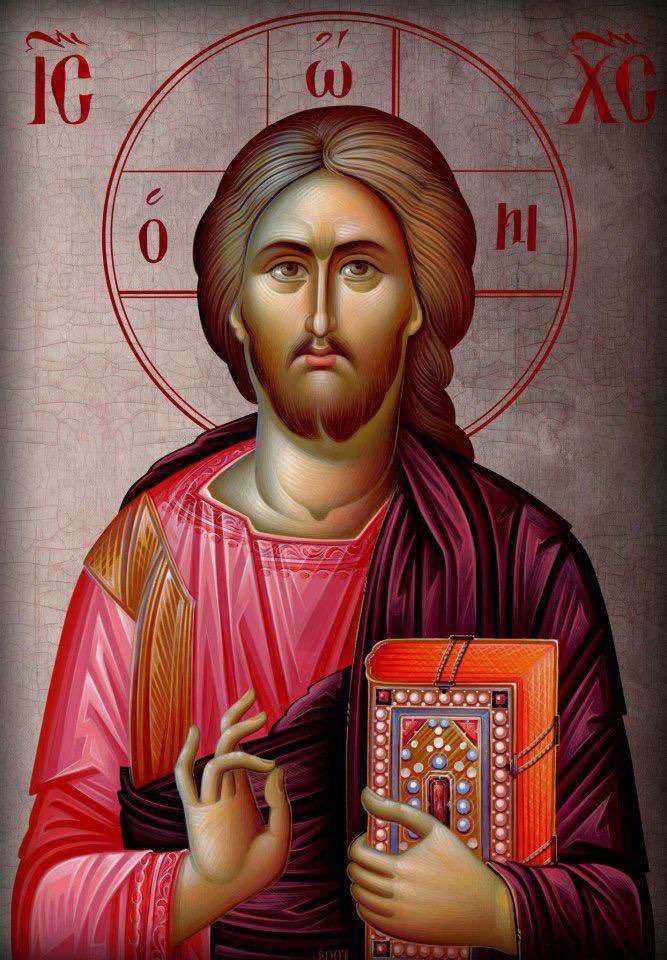
pics: 1) Depiction of Jesus Christ.
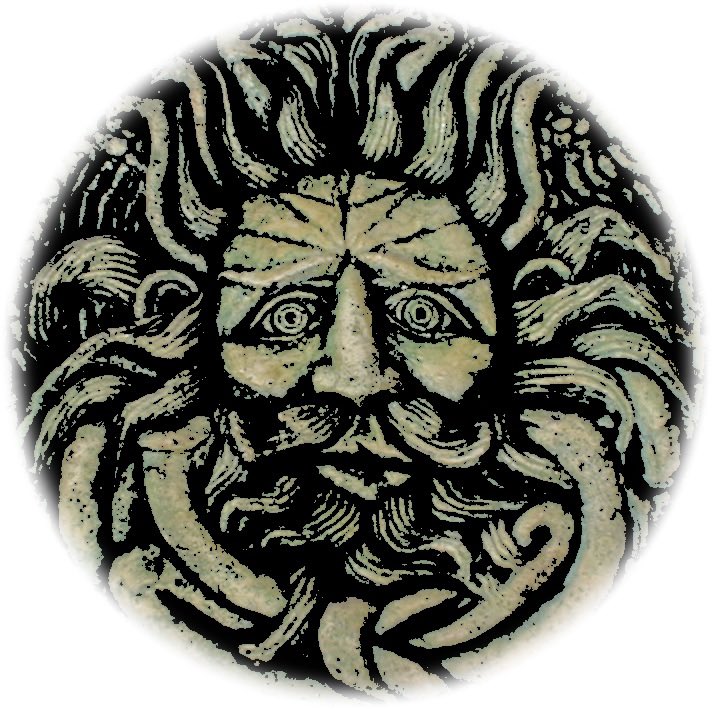
2) Solar deity from Bath, England (Roman: Aquae Sulis, Britannia).
California, USA 🇺🇸 English