
Must Farm
1.3K posts
Must Farm
@MustFarm
Excavations at Must Farm by the Cambridge Archaeological Unit. Project funded by Historic England and Forterra. Supported by the University of Cambridge.

We are delighted to announce the release of the Must Farm pile-dwelling settlement publications! Volume I is covers the landscape, architecture and occupation of the site and is available Open Access here: doi.org/10.17863/CAM.1…

Must Farm’s textiles are one of the site’s most exciting discoveries, so we had to feature them in the Making Must Farm videos. This episode sees Mark Knight and @ancientcraftUK discussing some of Must Farm’s bobbins and the fibres associated with them.
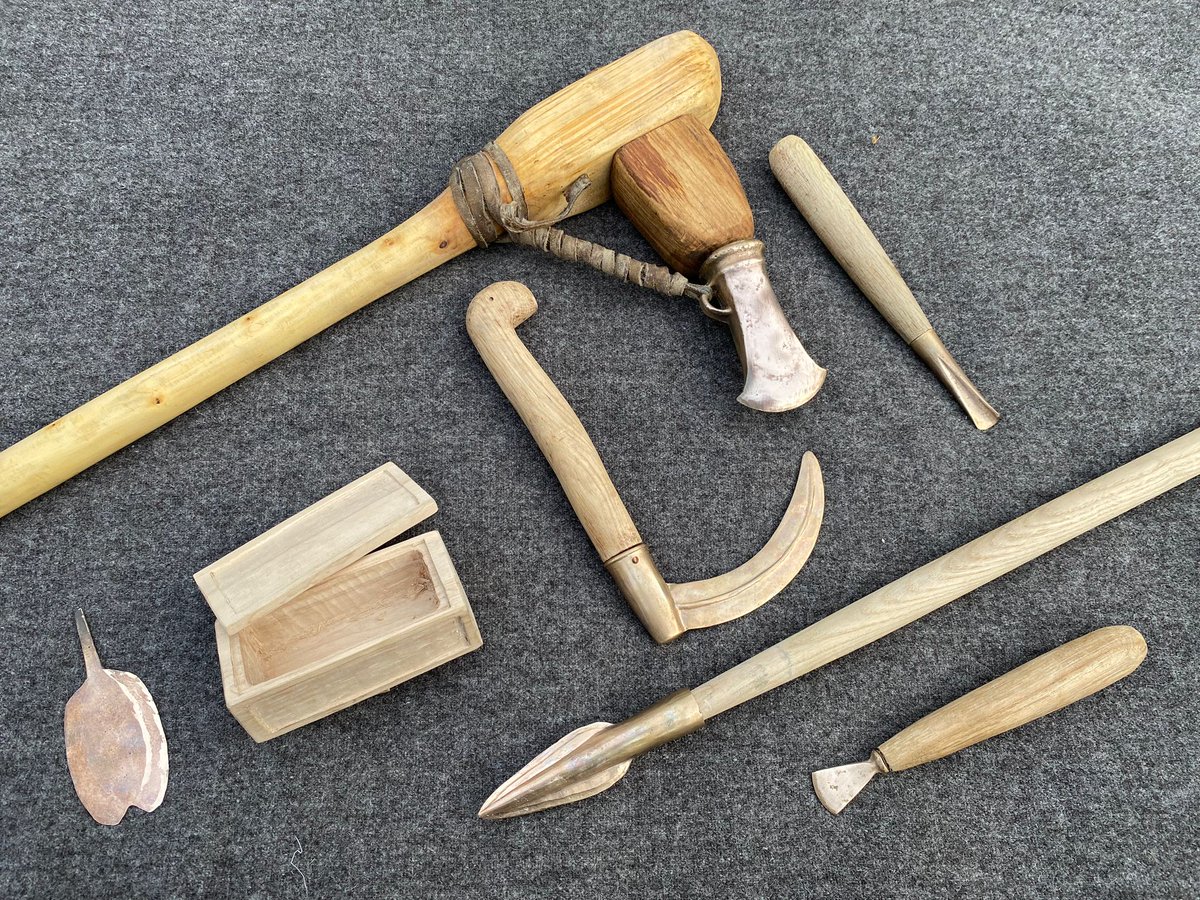
The latest Making Must Farm episode focuses on one of our most intriguing finds from the site, a small wooden box. Mark Knight chats about the potential for the box to have been made by a specialist woodworker and @ancientcraftUK discusses recreating this amazing artefact.
This week we’re examining chisels in the sixth episode of our Making Must Farm series. Chisels are a key component of the site’s woodworking toolkit and the fantastic @ancientcraftUK describes their creation and use while Mark Knight discusses their presence in the assemblage.
In the fifth Making Must Farm video we focus on one of the settlement’s most fascinating metal finds, bronze razors. Mark Knight describes the importance of discovering these artefacts in a domestic environment and @ancientcraftUK discusses the context of these curious tools.
We’re taking a look at the importance of the gouge in the fourth part of our Making Must Farm series. Mark Knight and @ancientcraftUK discuss how evidence of this tool’s use can be seen on everything from bowls to structural mortise joints.
The third Making Must Farm video concentrates on the spears found at the site. Mark Knight discusses the artefact’s significance in the settlement and @ancientcraftuk describes the process of recreating these impressive finds. Filmed and produced by @emmalouwynjones
In our second Making Must Farm video we’re focusing on the site’s sickles. These fantastic finds were a key part of the @MustFarm metalwork assemblage and @ancientcraftuk discusses the challenges of casting these remarkable artefacts.
We’ve discovered the remains of an aurochs at Must Farm! Found in the same layer as the preserved trees, this cache of bone is similar to examples we’ve uncovered in previous phases. An initial examination of the remains has revealed evidence of butchery on several of the bones.
We’ve taken samples from the preserved trees found in the upper parts of the deep zone at Must Farm. Samples have so far included slow-grown oak and ash. We’ll also be using dendrochronology and C14 dating to narrow down the date environmental conditions changed.
The section of Must Farm contained dozens of large preserved fallen trees that died when the landscape transitioned from dry to waterlogged as sea levels changed. By analysing the wood, we hope to date this change more accurately and understand the environmental shift.
One of the aims of the recent excavation at Must Farm is to date the sequence of peat and clay in the landscape zones. Some of the earlier elements date back to the Neolithic and using organic materials present in the layers for dating will help us build a better chronology.
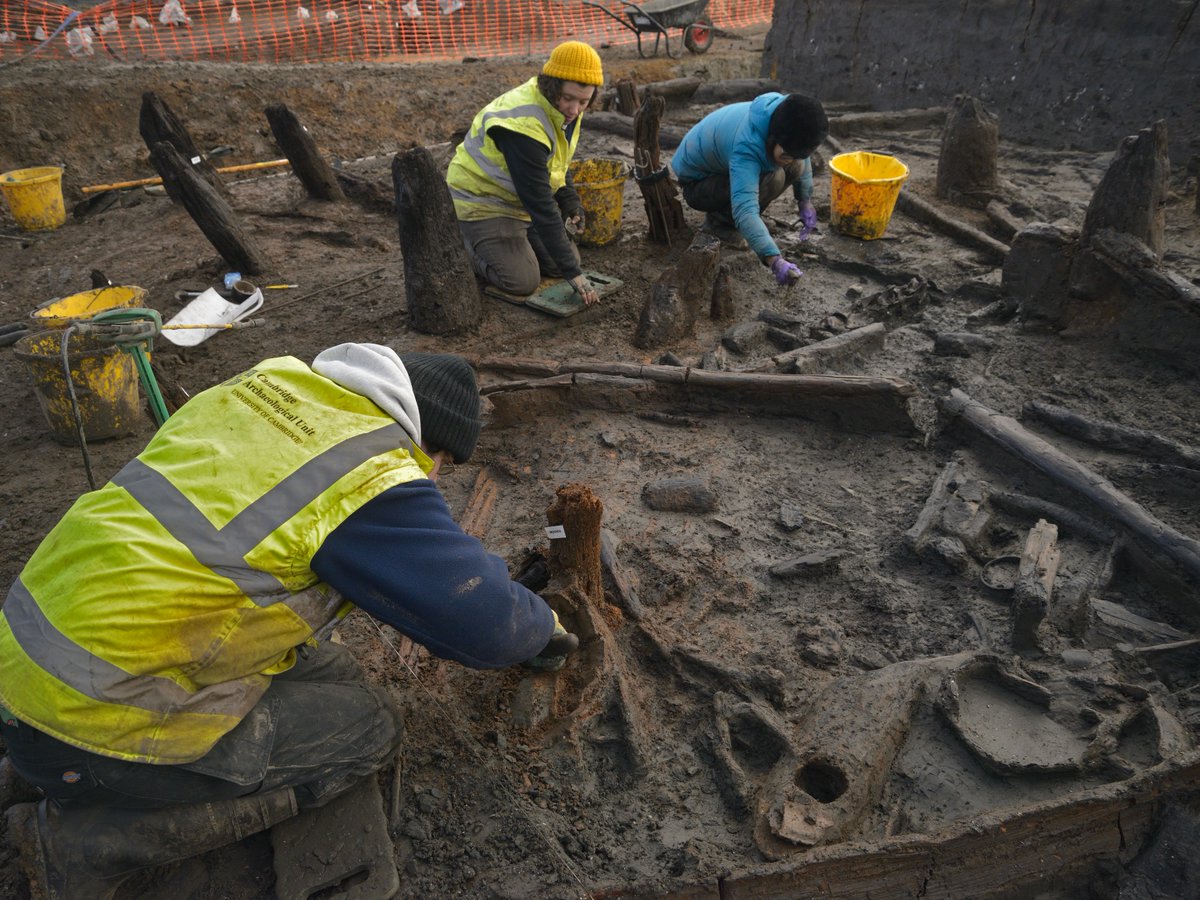
We’re excited to have been working on some new archaeology at Must Farm! These new investigations explored two side-by-side landscape zones in a new area, one contained these two barrows. You can read about the latest work in our blog here: ow.ly/7Eze50MX0rG


We were really happy to chat about @MustFarm post-excavation work on the latest series of Digging for Britain. We’re featured in Season 10 Episode 5 where we share some recent findings about the site’s pottery. This Sunday at 8pm or available on iPlayer ow.ly/aHkt50MHvSL
Pots are awesome! Great morning discussing the amazing @MustFarm pottery assemblage with @ArchaeoOutreach and @theAliceRoberts for #DiggingForBritain. Thanks to all the crew for looking after us and making us feel welcome. @CambridgeUnit
When excavating a palaeochannel at Must Farm we found this stunning Iron Age sword. Dating to the 1st century BC/1st century AD, the sword’s blade had been bent back on itself and has a well-preserved decorative stamp inlaid with three bronze or brass crescents. #archaeology