Dr. Dietmar Peetz

982 posts

Dr. Dietmar Peetz

Dr. Dietmar Peetz

@PeetzDietmar

Clarity comes through contrast

Beigetreten Ekim 2019
3K Folgt593 Follower
Dr. Dietmar Peetz
Dr. Dietmar Peetz@PeetzDietmar·
Republic of Austria 0.85% 06/30/2120 bought at the top resulted in a loss of almost 80%. But hey, at least the duration of your pension liability was properly hedged.
Dr. Dietmar Peetz tweet media
English
0
0
0
26
Dr. Dietmar Peetz
Dr. Dietmar Peetz@PeetzDietmar·
Warum Schuldenkrisen unvermeidlich sind – und was jetzt kommt. Schulden wachsen nicht ewig. In jedem Wirtschaftssystem gibt es eine natürliche Obergrenze für Verschuldung – begrenzt durch die Realwirtschaft darunter. Solange das Wirtschaftswachstum schneller wächst als die Schulden: kein Problem. Das Problem beginnt, wenn das Schuldenwachstum an Tempo verliert – wenn es den Anforderungen des Zinseszinses nicht mehr folgen kann. Historisch gesehen folgen auf genau diesen Moment regelmässig Krisen. Und die Massnahmen, die Staaten dann ergreifen, sind drastisch: → Massive Inflation & Steuererhöhungen → Enteignungen → Masseneinwanderung zur BIP-Steigerung → Krieg Das klingt extrem. Aber es ist Geschichte – immer wieder. Und heute? Wir befinden uns erneut an genau diesem Punkt. Die Verlangsamung im globalen Kreditwachstum ist messbar. Die Reaktionen der Staaten sind absehbar. Die Frage ist alos nicht mehr ob drastische Massnahmen kommen – sondern wann, in welcher Form, und wie Sie sich schützen. Genau das analysiere ich in meinem geopolitischen Vermögensbriefing – konkret, verständlich, umsetzbar. 📌 Mit 30-Tage-Geld-zurück-Garantie, ohne Risiko. 🔗 Jetzt sichern → dietmarpeetz.com
Dr. Dietmar Peetz tweet media
Deutsch
0
0
2
47
Dr. Dietmar Peetz
Dr. Dietmar Peetz@PeetzDietmar·
💥 Europa wird am Nasenring durch die Zirkusmanege der Geopolitik gezogen
Deutsch
0
0
0
29
Dr. Dietmar Peetz
Dr. Dietmar Peetz@PeetzDietmar·
Es gibt Gespräche, die einen länger beschäftigen als die 53 Minuten, in denen sie stattfinden. Heute hatte ich die Ehre, mit General a.D. Harald Kujat zu sprechen – einem Mann, der die NATO von innen geführt hat und der heute mit einer Klarheit warnt, die in der medialen Nachrichtenhysterie fast verloren geht. Was mich am meisten getroffen hat, war dieser Satz: „Ich argumentiere für Frieden, weil ich weiss, was Krieg bedeutet." Unsere Grosseltern- bzw. Elterngeneration, die den Krieg noch erlebt hat, stirbt weg. Mit ihr verschwindet eine praktische Erfahrung mit Krieg, die durch keine Sicherheitskonferenz und kein Briefing ersetzt werden kann. Was bleibt, sind Politiker, die – so Kujat – „leichtfertiger über Krieg sprechen, als es angemessen wäre". Wir leben in einer Zeit, in der Europa an der Seitenlinie steht, während über unsere Köpfe hinweg entschieden wird. Wo niemand mehr fragt: Was kommt nach diesem Krieg? Als jemand, der bei der Realunit Schweiz AG mit irreversiblen Entscheidungen unter Unsicherheit umgehen muss, weiss ich: Die gefährlichste Lage ist nicht jene, in der man die Risiken kennt – sondern jene, in der man durch Nichthandeln die Kontrolle abgibt. Danke, Herr General Kujat, für dieses Gespräch. Es war eine Lehrstunde in Verantwortung. youtube.com/watch?v=wblcpd…
YouTube video
YouTube
Dr. Dietmar Peetz tweet media
Deutsch
0
0
0
29
Dr. Dietmar Peetz retweetet
Сarm1ne
Сarm1ne@carm1nee·
Paul Tudor Jones predicted the 1987 crash, made $100 million, then spent years trying to destroy this footage you will watch him lose $6 million in one afternoon, sit in his chair and say "total devastation" then make it all back with 100% interest This documentary will change how you think about risk forever Bookmark & watch it. Then read the post below - $90 billion from being right just 54% of the time↓
Сarm1ne@carm1nee

CEO of Citadel: "no one is more wrong than I am today", he built the most profitable hedge fund in history in this interview he explains why he hired a Russian rocket scientist, why being the smartest in the room is a mistake, and why being right 54% of the time made $90 billion Bookmark & watch it. Then read the article below - The 77-year-old formula that explains why a small edge is all you need ↓

English
134
1.9K
13.7K
4.3M
Dr. Dietmar Peetz
Dr. Dietmar Peetz@PeetzDietmar·
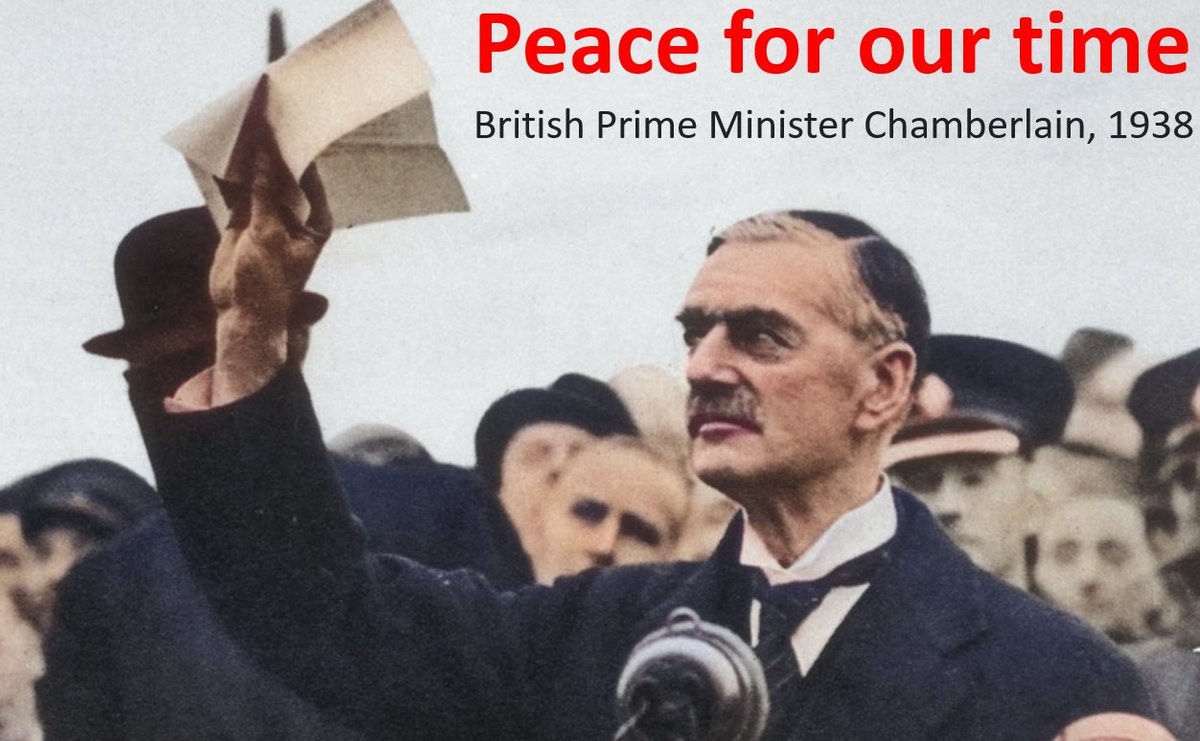
Hurra, wir leben noch! Die letzten zwei Wochen zeigen ein konsistentes Bild. Der Liquiditätszyklus dreht massiv. Kredit wird knapper. Teile des Finanzsystems zeigen erste Folgen der Illiquidität. Parallel dazu werden weiterhin Mittel in das System eingespeist. Die USA stellen über T-Bills rund 14,7 Milliarden US-Dollar bereit. Steigende Energiepreise (bis heute Nacht) wirken wie ein permanenter Abfluss. Ein Teil der bereitgestellten Liquidität wird dadurch absorbiert und steht dem Finanzsystem nicht mehr zur Verfügung. Geopolitik und Verschuldung begrenzen die Handlungsspielräume der Zentralbanken. Die völlig irrationale Hoffnung auf einen dauerhaften Frieden verschafft uns kurzfristig steigende Assets. Die gleichen Assets werden zweistellig einbrechen, wenn ab Q3/Q4 die Realität wieder durchbricht. Im Hintergrund öffnet sich derweil ein gigantisches schwarzes Loch, was enorm viel Liquidität absorbieren wird: die geplatzte Private Debt Bubble. BlackRock, Blue Owl und Morgan Stanley haben Auszahlungen massiv eingeschränkt. $7,9 Mrd. Abflüsse bei Investment Grade + High-Yield Bonds in nur einer Woche. Private Debt ist grösser als der klassische Bankkreditmarkt. Hier zeigt sich echte Kreditverknappung und Illiquidität – das schwächste Glied im gesamten Finanzsystem. Viel grösser als 2008. Und mitten im Sturm mal wieder die europäischen Versicherer. Gold wird global als monetäres Asset repriced (nicht nur als Commodity). Multipolarer Trade (Nicht-USD) beschleunigt sich → USD liquidity schrumpft aufgrund reduzierter USD-Schuldennachfrage → höhere US-Zinsen + Inflation + Liquiditätsverknappung ausserhalb der USA. In einfacher Sprache: Einstürzende Vermögenswerte, Rezession und Arbeitslosigkeit. Wie kann man sein Vermögen nun konkret über die Krise retten? Mehr dazu in unserem Geopolitical Briefing unter dietmarpeetz.com oder gleich eine Mitgliedschaft für das Insider-Netzwerk beantragen, damit Sie der Herde einen entscheidenen Schritt voraus sind. Denn die Herde ist an den Wendepunkten der Geschichte immer falsch - ausnahmslos.
Dr. Dietmar Peetz tweet media
Deutsch
0
0
3
72
Dr. Dietmar Peetz retweetet
Crémieux
Crémieux@cremieuxrecueil·
"Without Mohammed, Charlemagne would have been inconceivable." This quote summarizes Pirenne's thesis that the European Dark Ages began with the rise of Islam because it destroyed the flow of trade across the Mediterranean, ending Antiquity.
Crémieux tweet media
English
132
871
8.9K
534.4K
Dr. Dietmar Peetz
Dr. Dietmar Peetz@PeetzDietmar·
@antikoerper01 any social network where people meet physically is a good start. The rest will happen automatically. Its called emergent behavior of social groups.
English
0
0
0
476
StW
StW@antikoerper01·
@PeetzDietmar Powerful post! Thanks Dietmar. I saw that snippet from Elons interview too but your summary gives way more depth … and some goosebumps. Your answer at the end is for sure the way to go. Any recommendations for the start?
English
1
0
0
25
Dr. Dietmar Peetz
Dr. Dietmar Peetz@PeetzDietmar·
Worthless, useless, powerless? As Musk predicts: We are facing the devaluation of the human being as a factor of production. The value of Programming, translating, medicine, teaching, poetry, painting, office work. All of this will shrink down to electricity costs plus computing power. The market price for cognitive labor tends toward zero. Functional intelligence is arbitrarily scalable and practically free. If the prices for human labor and services collapse, this leads, via the consumption multiplier, to structural deflation in the real economy. Result: tax revenues implode, unemployment benefits explode. Governments will try to print money quickly (because they are in panic mode), but they will not be able to keep up with an ever-declining velocity of money. Who buys a car or a house when they know that their job will never return? Hoarding of cash to prepare for difficult times ahead is dangerous for an economy which depends so heavily on consumption. State emergency programs will not be able to stop deflation in the real economy, because the money—unless it is issued directly to the population as vouchers with expiration dates—will ultimately end up in the financial markets. States that are already bankrupt today (most Western countries) and suffering under interest burdens will be forced to implement austerity policies à la Weimar Republic's Brüning At the same time, multinational corporations (that is, companies that skillfully avoid taxes) will achieve enormous productivity gains when they replace human labor with AI. Their stock prices are likely to go through the roof. And precisely for that reason, states will have to begin radically taxing financial markets or carrying out redistribution on a large scale in order, for example, to create an unconditional basic income. The Netherlands is already setting the example. There it has been decided to tax unrealized capital gains on Bitcoin, stocks, bonds, and other assets starting in 2028. The capitalists are meant to pay for the basic income of the army of proletarians. A basic income, however, will not solve the core problem. It merely manages the decline. At the same time, the crisis will serve as the perfect argument for a digital euro. Programmable money, direct transfers, control of the velocity of money. This, in turn, is likely soon to trigger capital flight from Europe, thereby accelerating the development even further. The EU mega state also does not have the power to tax the most productive 5%. And while a few hundred millionaires leave the sinking ship in time, hundreds of millions who remain slide from the middle class into the lower class. Then only the nationalization of the means of production and the allocation of consumption goods remain in order to maintain order. Hardly any society will manage such a transformation. Rebellion? Where is it supposed to come from. The bottom 80% no longer have any leverage at all. Those who have been rationalized away can no longer threaten with the withdrawal of their labor. The bottom 80% no longer even have value as soldiers. An uprising such as storming the Russian Winter Palace or French Versailles will, in times of drone warfare and robotic wars, become an unequal fight. Even the Tsar in Russia or the Bourbon king had inhibitions about shooting their own people. An AI has no such inhibitions. What should one do now? The answer is: network with like-minded people and think about concrete solutions so as not to belong to the obsolete 80%. There is no time to lose.
English
2
0
0
72
Dr. Dietmar Peetz
Dr. Dietmar Peetz@PeetzDietmar·
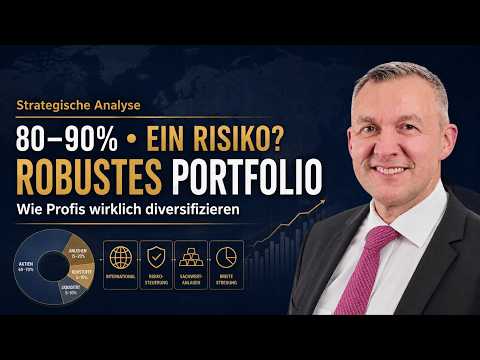
Du glaubst, dein Portfolio ist diversifiziert? Wahrscheinlich nicht. Die meisten Anleger halten viele grosse Positionen und tragen trotzdem nur ein einziges Risiko. Sie passen das Chance-Risiko-Verhältnis Ihres Portfolios nicht permanent an. Sie merken es erst, wenn es zu spät ist. In diesem Gespräch erklärt ein professioneller Portfoliomanager, wie echtes Risikodenken aussieht, weshalb gut gebaute Portfolios sich emotional oft falsch anfühlen. Hier klicken --> youtu.be/PMKPVZMqoNg
YouTube video
YouTube
Dr. Dietmar Peetz tweet media
Deutsch
0
0
2
89
Dr. Dietmar Peetz retweetet
Arnaud Bertrand
Arnaud Bertrand@RnaudBertrand·
This is big. The final U.S. National Security Strategy was just published and the refocus on the Western Hemisphere (i.e. the Americas) is confirmed. The document clearly establishes this as the U.S.'s number 1 priority, saying that the U.S. will now "assert and enforce a 'Trump Corollary' to the Monroe Doctrine." In terms of military presence, they write that this means "a readjustment of our global military presence to address urgent threats in our Hemisphere, and away from theaters whose relative import to American national security has declined in recent decades or years." On China, a couple of points. The most striking aspect to me is that China is NOT anymore defined as "the" primary threat, "most consequential challenge," "pacing threat," or similar formulations used in previous such documents. It's clearly downgraded as a priority. Based on the document's structure and emphasis, the top U.S. priorities could be characterized as: 1) Homeland security and borders (migration, cartels, etc.) 2) Western Hemisphere (Monroe Doctrine restoration) 3) Economic security (reindustrialization, supply chains) 4) China and Indo-Pacific To be clear they don't define China as an ally or a partner in any shape or form but primarily as 1) an economic competitor, 2) a source of supply chain vulnerabilities (but also a trading partner) and 3) a player who regional dominance should be "ideally" denied because it "has major implications for the U.S. economy." Interestingly, I believe for the first time ever, they mention the possibility of being overmatched militarily by China: - They write that "deterring a conflict over Taiwan, ideally by preserving military overmatch, is a priority": "ideally" clearly means that it's ideal, but not necessarily a given. The fact that they call deterring conflict over Taiwan merely "a priority" also suggests, by definition, that it's no more a top strategic priority, or a vital interest. - On Taiwan they also clearly imply that if the U.S.'s "First Island Chain allies" don't "step up and spend - and more importantly do - much more for collective defense", then there might be "a balance of forces so unfavorable to us as to make defending that island impossible." They still maintain that "the United States does not support any unilateral change to the status quo in the Taiwan Strait" but, clearly, there's a widening gap between what the US says it opposes and what it's actually willing to do about it. Interestingly as well, contrary to previous such document, there is zero ideological dimension in the document when it comes to China. No "democracy vs. autocracy" framing, no "rules-based international order" to defend, no values-based crusade. China is treated as a practical issue to be managed, not an ideological adversary to be defeated. In fact the document explicitly mentions, I think for the first time ever as well, that US policy is now: - "not grounded in traditional, political ideology" - that they "seek good relations and peaceful commercial relations with the nations of the world without imposing on them democratic or other social change that differs widely from their traditions and histories" - and that they seek "good relations with nations whose governing systems differ from ours." Which is quite a stunning departure from the rhetoric of the past few decades. We all knew this but it's now amply clear that the era of missionary liberal internationalism in US foreign policy is dead and buried. The competition with China is primarily described in economic terms, explicitly so: they write the competition is about "winning the economic future" and that economics are "the ultimate stakes." Notably, they admit that the tariffs approach "that began in 2017" when it comes to China essentially failed because "China adapted" and has "strengthened its hold on supply chains." The new strategy, as described in the document, is to build an economic coalition against China that can exert more leverage than the US economy alone - a tacit admission that America just isn't powerful enough on its own anymore. The contradiction is however obvious: unclear how you build an economic coalition against China while simultaneously waging trade wars against your coalition partners, demanding they shoulder more of their own defense, and treating every allied relationship as a deal to be renegotiated in America's favor. At some point these "allies" will be asking a very obvious question: why sacrifice our economic interests to prop up an America that can no longer compete on its own - and that offers us less and less in return? The document can be found here: whitehouse.gov/wp-content/upl…
Arnaud Bertrand tweet mediaArnaud Bertrand tweet mediaArnaud Bertrand tweet mediaArnaud Bertrand tweet media
English
371
2K
5.8K
1M
Dr. Dietmar Peetz
Dr. Dietmar Peetz@PeetzDietmar·
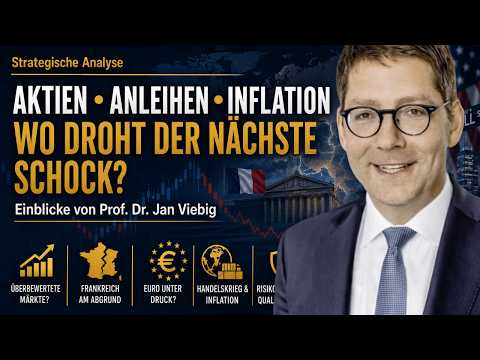
Die Finanzmärkte stehen an einem Wendepunkt. Jahrzehntelang haben niedrige Zinsen, billiges Geld und politische Stützprogramme die Illusion von Stabilität geschaffen – doch das ändert sich jetzt. In diesem Video erklärt der erfahrene Börsen- und Makroexperte und Chief Investment Officer Prof. Dr. Jan Viebig, warum 2026 das entscheidende Jahr für dein Vermögen werden könnte –und warum 99 % der Anleger genau jetzt die falschen Entscheidungen treffen. youtube.com/watch?v=1P8WCM…
YouTube video
YouTube
Deutsch
0
0
4
182
Dr. Dietmar Peetz
Dr. Dietmar Peetz@PeetzDietmar·
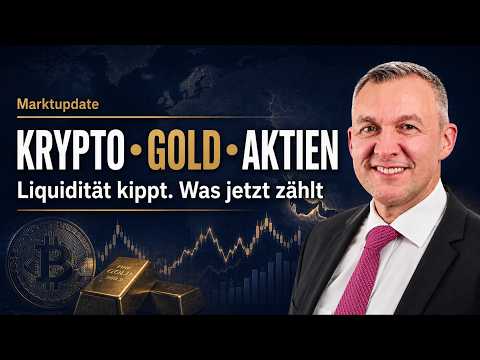
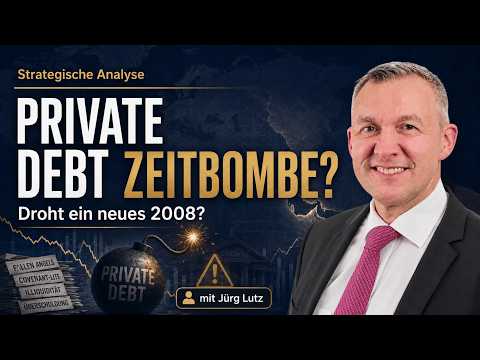
youtube.com/watch?v=vLZiGT… Wilde Zeiten – bewegte Märkte – und eine tickende Zeitbombe, von der kaum jemand spricht. In diesem Marktupdate spreche ich mit Cedric über die wahre Ursache der aktuellen Erschütterungen an den Finanzmärkten: Private Debt, Liquidität und die Rolle der Schattenbanken. Wir zeigen, wie Krypto, Aktien und Anleihen durch gezielte Marktmanipulationen in Sekunden ins Wanken gebracht wurden – und warum das erst der Anfang sein könnte. 💥 Themen dieser Ausgabe: • Krypto-Liquidationen & Ripple-Crash (50 % an einem Tag!) • Trump, Zollkrieg und die globale Liquiditätsfalle • Private Debt – die Zeitbombe im Finanzsystem • Warum Gold & Silber jetzt zur Absicherung zurückkehren • Wie du dein Kapital in der kommenden Deflationsphase rettest ⚠️ Risiko-Management ist kein Luxus mehr – es entscheidet über Überleben oder Verlust. 👉 Bleib bis zum Ende dran: Cedric verrät seinen persönlichen Krisenindikator, mit dem er entscheidet, wann Liquidität verschwindet und der Crash beginnt. 📈 Jetzt ansehen – bevor der Algorithmus dieses Video begräbt. 🔗 Zur Sonderaktion des Geopolitical Wealth Insider (30 % Rabatt bis Ende Monat) 👉 dietmarpeetz.com
YouTube video
YouTube
Deutsch
0
0
2
186
Dr. Dietmar Peetz
Dr. Dietmar Peetz@PeetzDietmar·
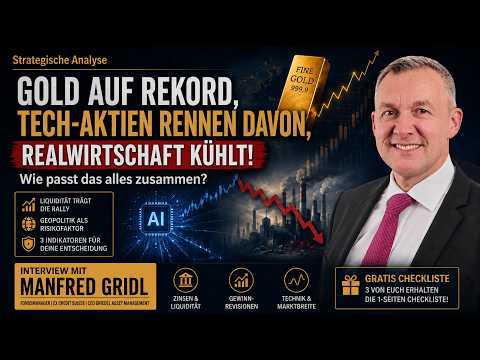
🔥 Gold auf Allzeit-Tech stapelt Rekorde – und die Realwirtschaft kühlt ab. Passt das überhaupt zusammen? Heute spreche ich mit Manfred Gridl, 27 Jahre Fondsmanager-Erfahrung (Credit Suisse, Sarasin, Allianz GI, Deka) und heute CEO von Gridl Asset Management. 👉 In diesem Video enthüllt Manfred: ✅ Die 3 Indikatoren, mit denen er täglich entscheidet: Cash oder voll investiert ✅ Warum Gold seine größte strategische Position ist – und was das für dich bedeutet ✅ Ob die Tech-Rally 2025 kippt wie 1999 – oder diesmal länger hält ✅ Welche Rolle USA, China und Europa bis Mitte 2026 wirklich spielen 💡 Am Ende gibt’s noch meine 1-Seiten-Checkliste gratis für dich. Bleib also bis zum Schluss dran – es lohnt sich. youtube.com/watch?v=EZLkPs…
YouTube video
YouTube
Deutsch
0
0
2
103