Queen Mary Planets

271 posts

Queen Mary Planets banner
Queen Mary Planets

Queen Mary Planets

@QMPlanets

The planet and planet formation community at Queen Mary University of London.

Beigetreten Kasım 2019
156 Folgt207 Follower
Queen Mary Planets
Queen Mary Planets@QMPlanets·
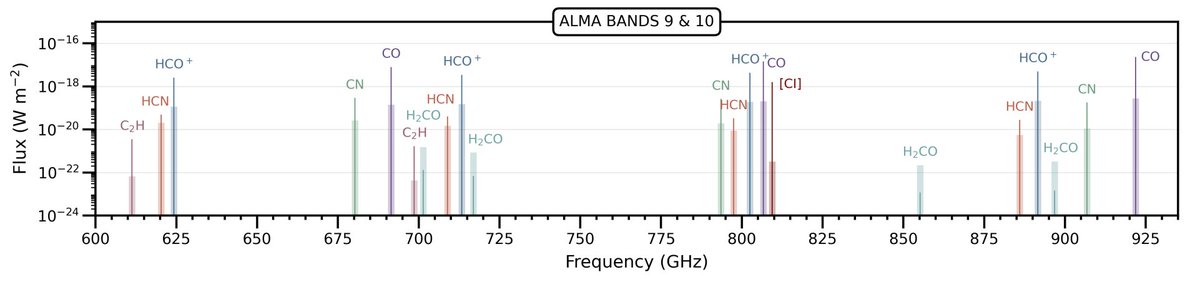
This affects the chemistry and how bright we expect emission lines to be. The team is now working on a parametric disk + wind model to open up this kind of modelling to the community (4/4)
Queen Mary Planets tweet media
English
0
0
0
20
Queen Mary Planets
Queen Mary Planets@QMPlanets·
Including the wind has little effect on the UV photochemistry in the disk because that all gets blocked high in the disk atmosphere anyway. However the wind radiates infrared light that can get deep into the disk, warm it up and affect the chemistry. (3/4)
Queen Mary Planets tweet media
English
1
0
0
20
Queen Mary Planets
Queen Mary Planets@QMPlanets·
Today we have a paper from Luke Keyte and @TomHaworthAstro studying the role of externally driven winds in planet-forming disk chemistry. Planet forming material is shone upon by nearby stars, which may affect the chemistry. (1/4) arxiv.org/abs/2501.05172
Queen Mary Planets tweet media
English
1
1
7
172
Queen Mary Planets
Queen Mary Planets@QMPlanets·
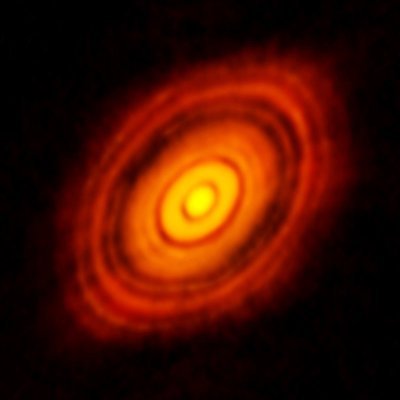
A cool paper today from @QMULSPCS's Alex Ziampras. Sometimes the inner part of a planet-forming disc can misalign, casting a shadow on the outer disc (left image). This can lead to all sorts of observable dynamical features (right images). Read more here arxiv.org/abs/2410.13932
Queen Mary Planets tweet media
English
1
1
5
199
Queen Mary Planets
Queen Mary Planets@QMPlanets·
These predictions will be testable in future space-based exoplanet surveys with the Roman telescope (@NASARoman). Observing these features will give key insight into the origins of these exotic worlds, as well as planet formation more generally (6/6)
English
0
0
0
35
Queen Mary Planets
Queen Mary Planets@QMPlanets·
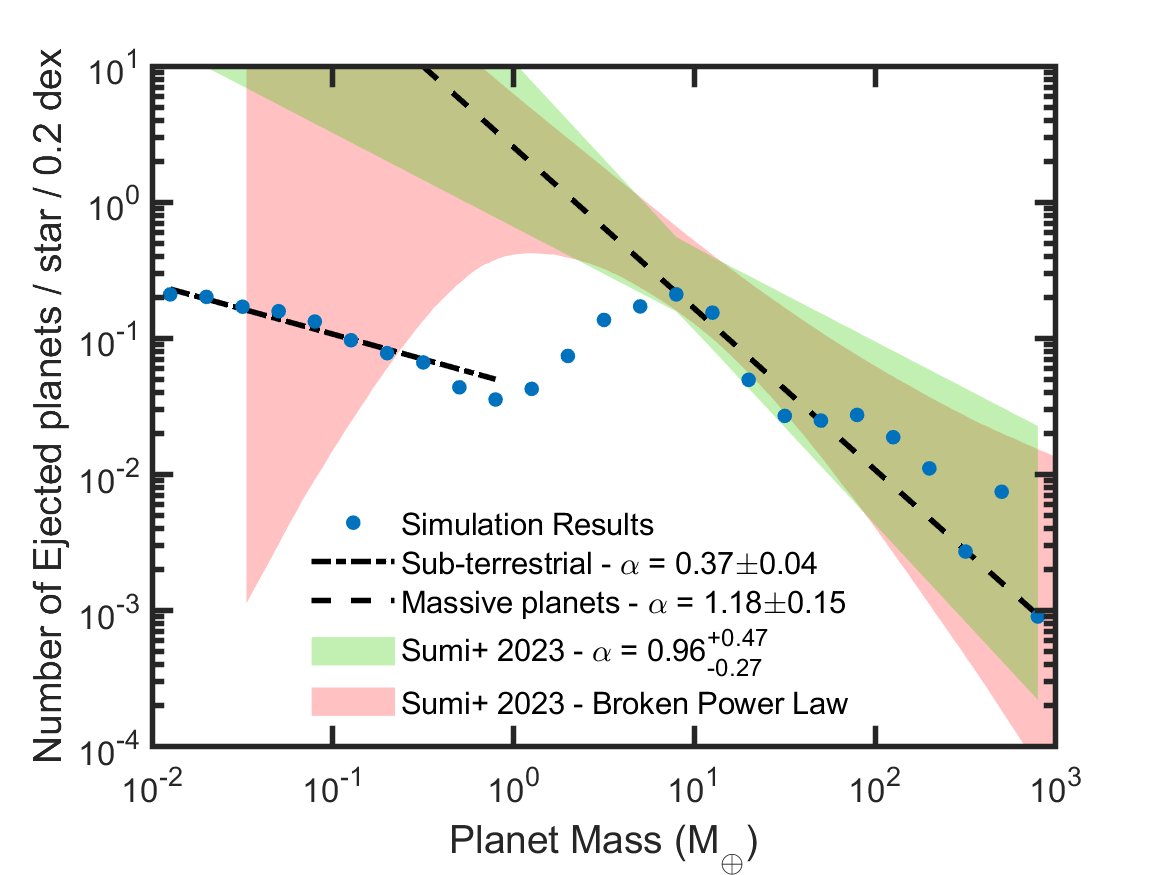
initial observational estimates are able to match the more massive planets in the distribution, but are predicted to overestimate the abundance of low mass planets (5/6)
Queen Mary Planets tweet media
English
1
0
0
39
Queen Mary Planets
Queen Mary Planets@QMPlanets·
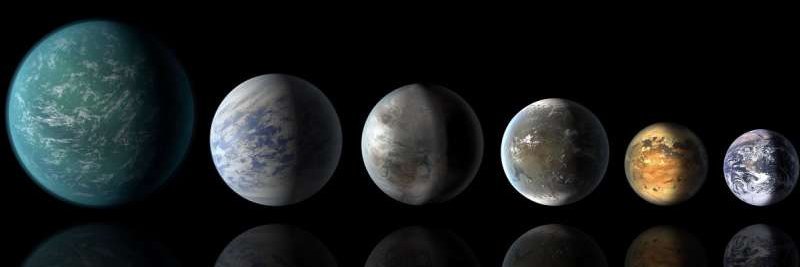
@QMULSPCS 's Gavin Coleman has an extremely cool paper out today providing the first predictions of the mass distributions of free-floating planets (FFPs), also known as rogue planets, that do not orbit a parent star arxiv.org/abs/2407.05992 (1/6)
Queen Mary Planets tweet media
English
1
1
1
164
Queen Mary Planets
Queen Mary Planets@QMPlanets·
This plot shows the planet separation from the star over time for different setups. The FARGO3D models capture the buoyancy torques and the planets migrate inwards much more quickly. If you want to know where planets will end up, the details matter.
Queen Mary Planets tweet media
English
0
0
1
40
Queen Mary Planets
Queen Mary Planets@QMPlanets·
A new paper by Alex Ziampras from @QMULSPCS showing that low mass planets do not stall in their inwards migration towards their parent star when buoncancy torques are properly accounted for (1/2) arxiv.org/abs/2406.08555
English
1
1
4
190
Queen Mary Planets retweetet
Thomas Haworth
Thomas Haworth@TomHaworthAstro·
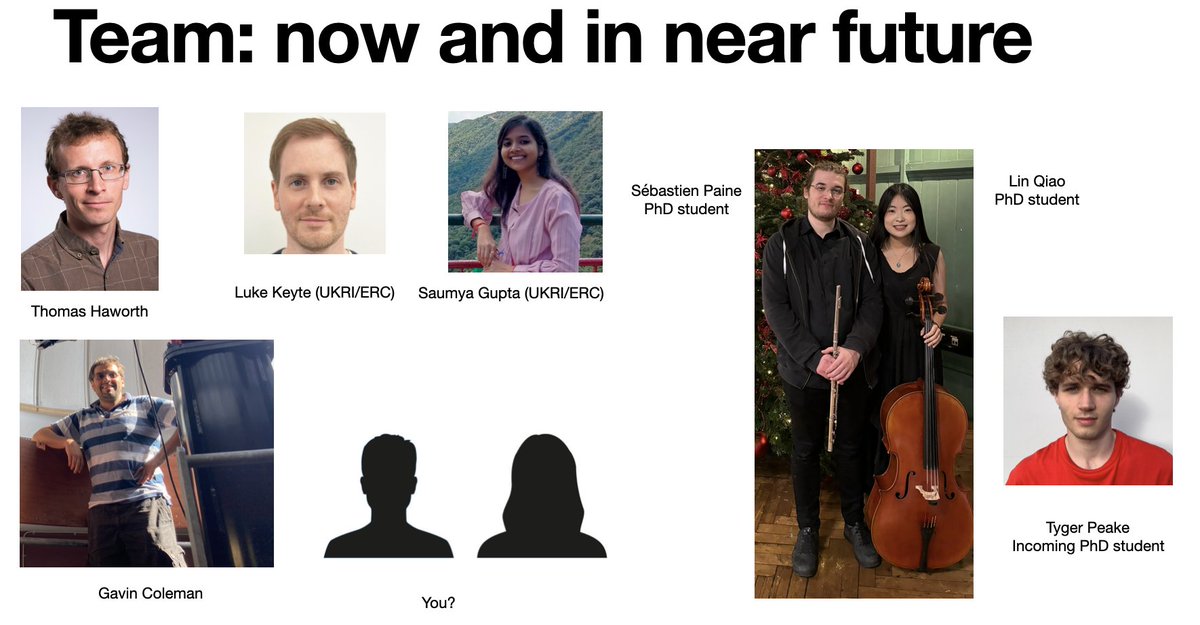
I am advertising two new postdoc positions. There is a great team coming together with room for two more. I'll describe core project goals below, but there will be freedom to explore other ideas (1/3)
Thomas Haworth tweet media
English
1
9
14
4.1K
Queen Mary Planets
Queen Mary Planets@QMPlanets·
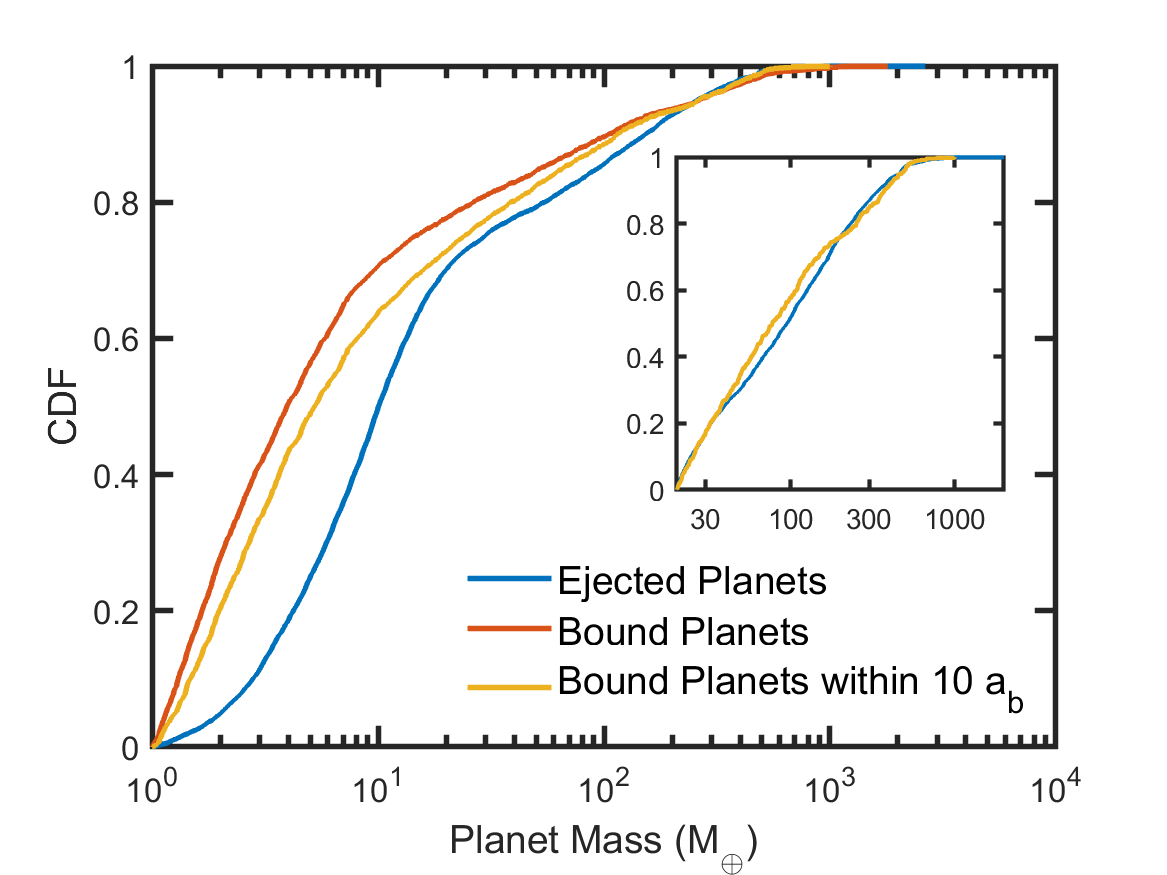
Finally, the work also shows that the mass distribution of more massive planets is similar to that of the remaining bound planets. This would allow for the results of different observing techniques to be effectively compared against each other (5/5)
Queen Mary Planets tweet media
English
0
0
0
33
Queen Mary Planets
Queen Mary Planets@QMPlanets·
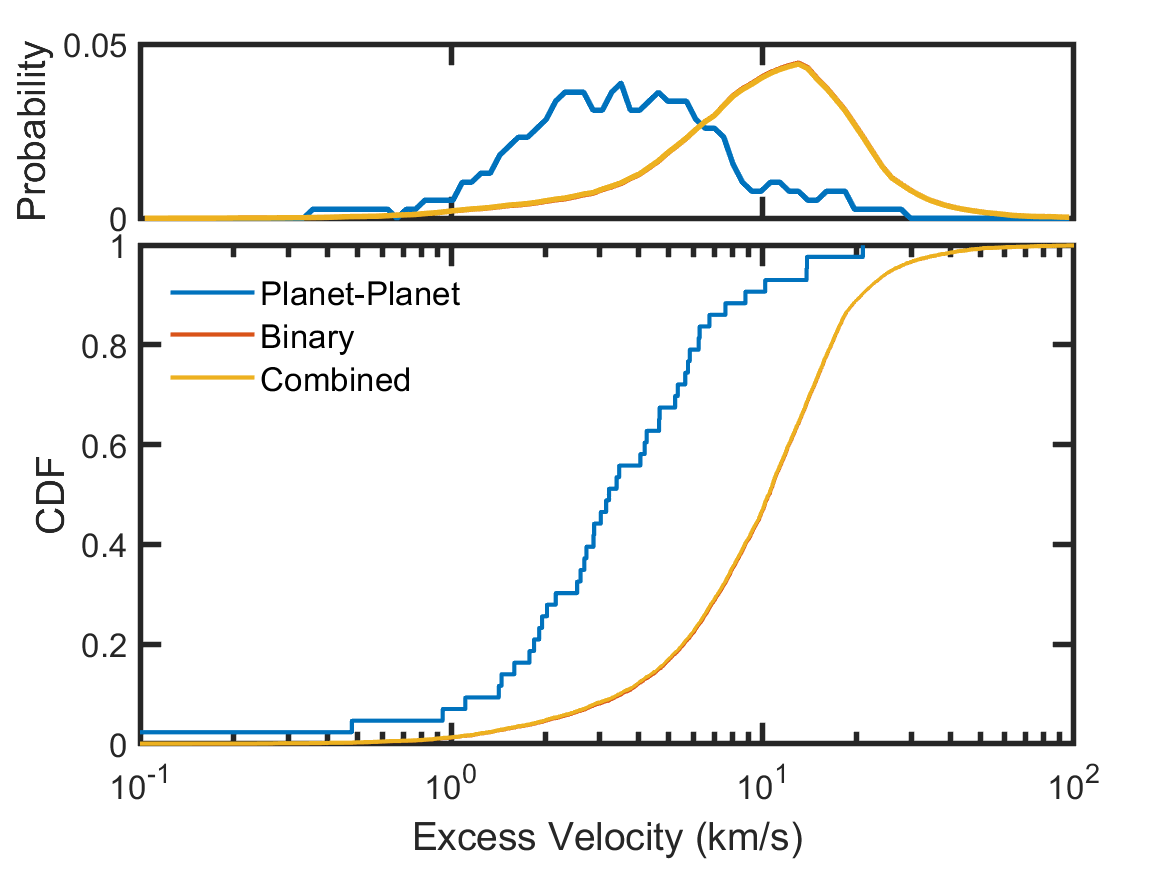
The work predicts that the velocities of planets ejected by the binary stars would be much larger than FFPs ejected by other means. This can be observed with JWST or Roman observations of star forming regions, and can distinguish by which mechanism FFPs formed (4/5)
Queen Mary Planets tweet media
English
1
0
0
53
Queen Mary Planets
Queen Mary Planets@QMPlanets·
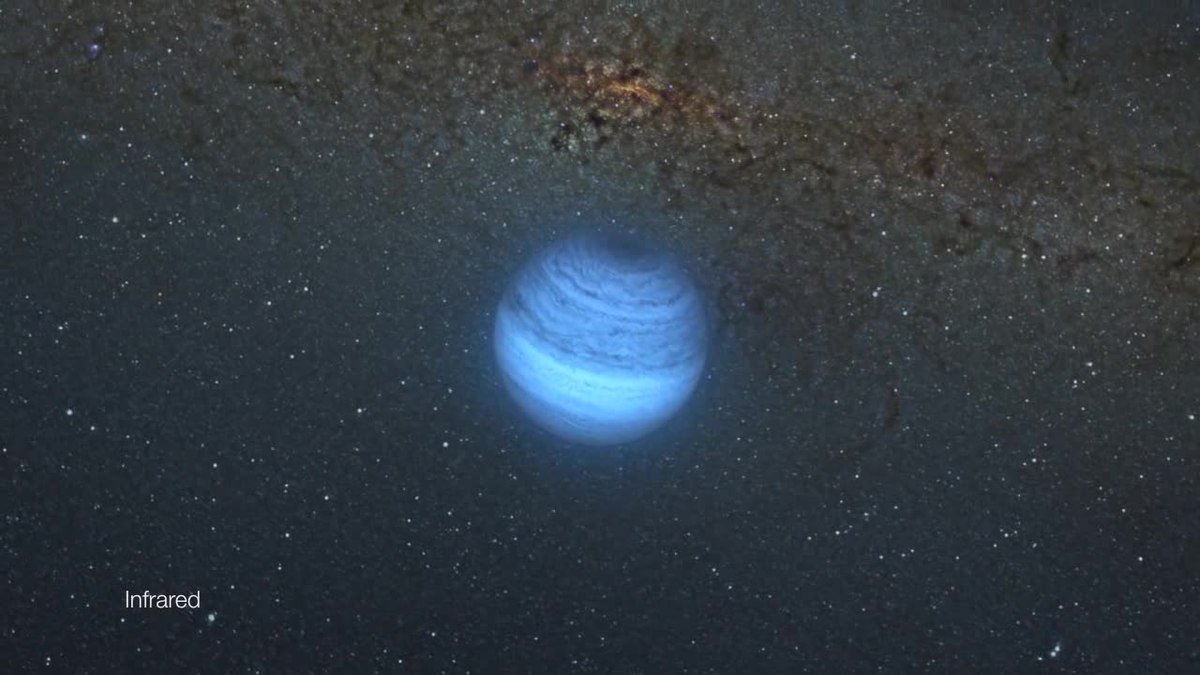
Today we have a paper by Gavin Coleman exploring the properties of free floating planets (FFPs) that originated in circumbinary systems. Free floating planets drift through space, not bound to any star. How these planets formed remains uncertain. (1/5) arxiv.org/abs/2403.18481
English
1
2
3
238