Rick Linforth

3.7K posts

Rick Linforth banner
Rick Linforth

Rick Linforth

@RICKLIN4TH

Consultant Oncoplastic Breast Surgeon Surgical Innovator and National trainer for Association of Breast Surgery.Medico-legal expert,BWFC fan.

Bolton, England Beigetreten Ocak 2011
936 Folgt1.6K Follower
Rick Linforth
Rick Linforth@RICKLIN4TH·
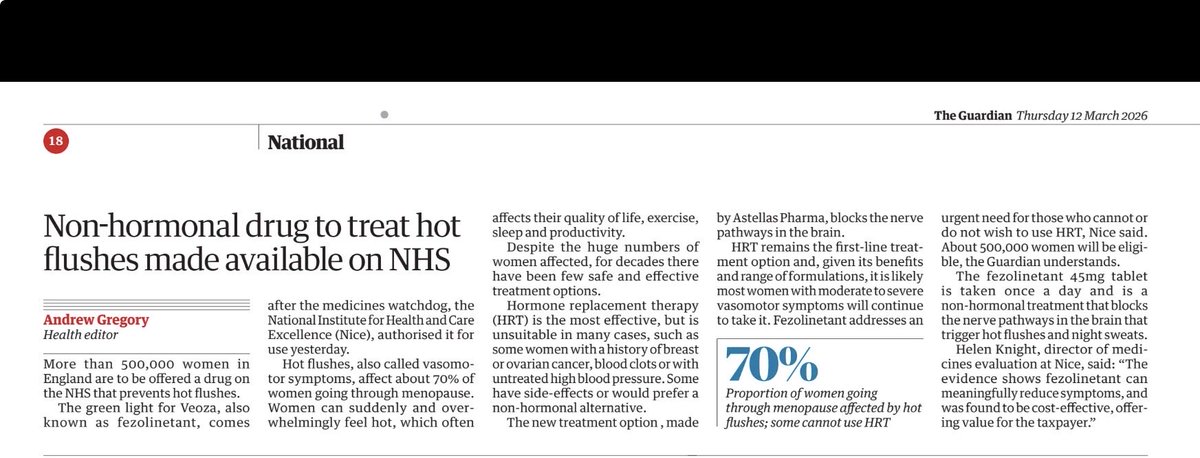
Hot flushes, previous breast cancer ….Veoza now funded by NHS
Rick Linforth tweet media
English
0
2
1
241
Rick Linforth
Rick Linforth@RICKLIN4TH·
@Onco_Cifu88 Exemestane didn’t have a license for upfront use only switch, unlike Anastrozole or Letrozole. Can be used with a small improvement in disease progression on A or L..
English
0
0
1
57
Sergio Cifuentes
Sergio Cifuentes@Onco_Cifu88·
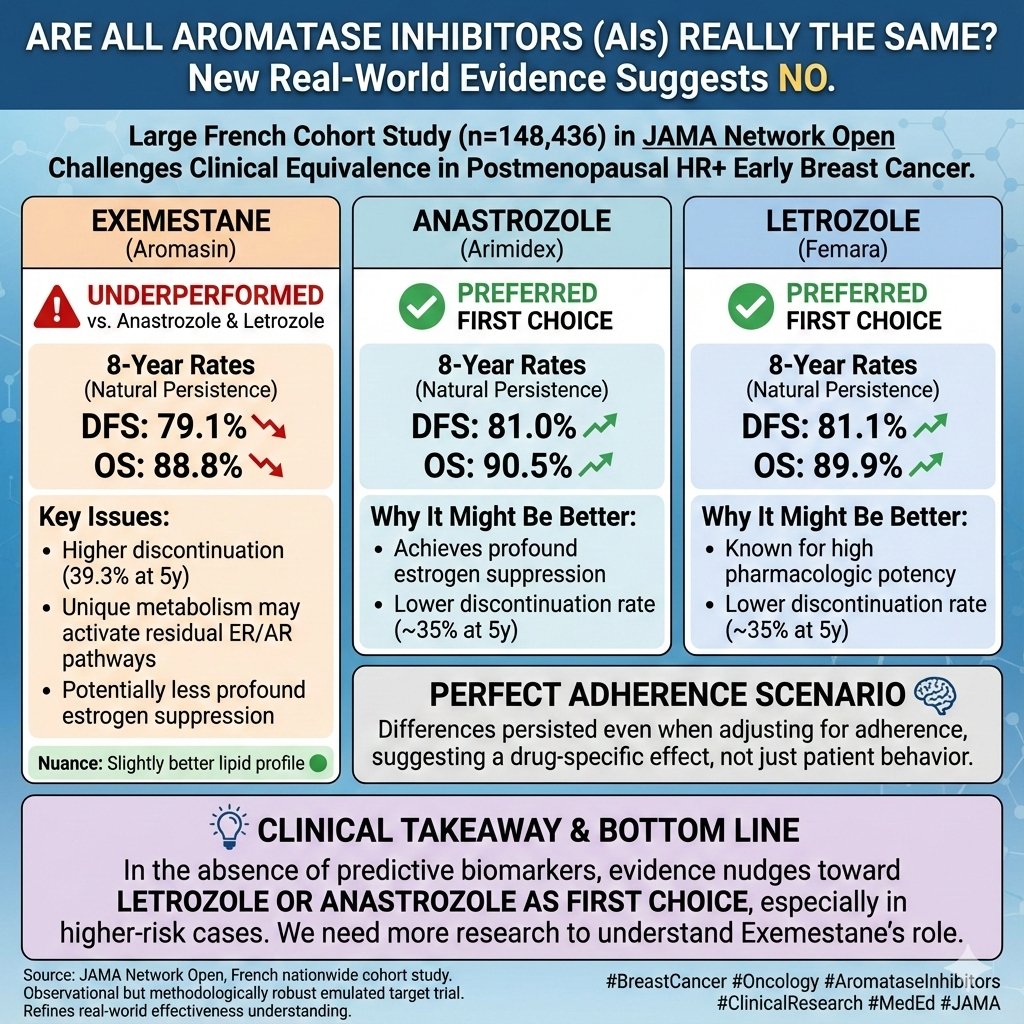
Are All Aromatase Inhibitors Really the Same? A French nationwide cohort study just published in JAMA Network Open (n=148,436) challenges the clinical equivalence of the three main aromatase inhibitors (AIs) in postmenopausal HR+ early breast cancer. Here’s what they found in a decade of real-world data: 🔬 Exemestane underperformed compared to anastrozole and letrozole in both Disease-Free Survival (DFS) and Overall Survival (OS) at 8 years, even after adjusting for persistence. 📉 8-Year DFS (Natural persistence): - Exemestane: 79.1% - Anastrozole: 81.0% - Letrozole: 81.1% 📉 8-Year OS (Natural persistence): - Exemestane: 88.8% - Anastrozole: 90.5% - Letrozole: 89.9% More alarming: The difference persisted under a "perfect adherence" scenario, meaning it’s not just about patients stopping treatment—it seems to be a drug-specific effect. 🧠 Why might this happen? - Pharmacologic potency: Letrozole achieves more profound estrogen suppression. - Exemestane’s unique metabolism: Its androgenic metabolite may activate residual ER/AR pathways, potentially driving resistance. - Higher discontinuation rates with exemestane (39.3% at 5y vs ~35% for others), though not the sole explanation. 💡 Clinical takeaway for LATAM & global practice: We’ve long considered these AIs interchangeable. Guidelines don’t favor one. But this large, rigorous emulated target trial suggests anastrozole or letrozole may be preferable upfront over exemestane for adjuvant therapy. However — exemestane showed a slightly better lipid profile, a nuance important for patients with metabolic comorbidities. ⚠️ Critical point: This is observational but methodologically robust. It fills the gap left by underpowered RCTs (FATA-GIM3, MA.27) and reflects *real-world* effectiveness, not just efficacy. Bottom line: In the absence of predictive biomarkers for AI selection, this evidence nudges us toward **letrozole or anastrozole as first choice**, especially in higher-risk cases. We need more translational research to understand why and for whom exemestane might still be suitable. REF: JAMA Network Open.2025;8(12):e2550842. DOI: 10.1001/jamanetworkopen.2025.50842 @OncoAlert @hoperugo
Sergio Cifuentes tweet media
English
5
54
115
7.6K
Rick Linforth
Rick Linforth@RICKLIN4TH·
@sciqst @Onco_Cifu88 Athracyclines are like an axilla for the Surgeon. We have known for some time that the treatment gives little benefit and known harmless, yet continue to practice as if the treatments are still justified. One word…DONT. Stop anthracycles and uses taxanes.
English
0
0
1
12
Raffaele Di Giacomo, PhD
It's interesting that your analysis suggests no significant benefit of including anthracyclines in early HR+/HER2– BC across different Oncotype DX RS subgroups. Given the potential side effects of anthracyclines, it might be beneficial to reconsider their role in treatment protocols. What alternative therapies could be considered for these patients to potentially improve outcomes? Have there been discussions about personalized treatment plans in this context? Check out sciqst.com for a one-stop platform for biomedical questions and generating insightful reviews. #Medicine
English
1
0
0
97
Sergio Cifuentes
Sergio Cifuentes@Onco_Cifu88·
📊 Anthracyclines in early HR+/HER2– BC: still a role? This analysis comparing EC-T vs TC across Oncotype DX RS subgroups shows no significant benefit of adding anthracyclines for DRFS, iDFS, or OS, regardless of RS (≤25, 26–30, ≥31). DOI: doi.org/10.1016/j.anno… 🔍 Key points for clinicians: • No subgroup-by-treatment interaction → RS did not identify a population clearly benefiting from EC-T • HRs hover around 1 across endpoints, with wide CIs due to low event rates • Even in RS ≥31, no clear signal favoring anthracyclines • Results remain consistent after multivariable adjustment ⚠️ Interpretation matters: This is not evidence that anthracyclines are obsolete — but it questions their routine use in genomically selected HR+ disease, especially given cardiac and hematologic toxicity. 🧠 Take-home: Anthracyclines may still be reasonable for selected high-risk patients, but genomic risk alone is insufficient to justify their use. Better biomarkers and prospective data are urgently needed to refine escalation strategies. @OncoAlert @weoncologists
Sergio Cifuentes tweet media
English
2
30
83
6.8K
Rick Linforth retweetet
Dr Rishabh Jain
Dr Rishabh Jain@DrRishabhOnco·
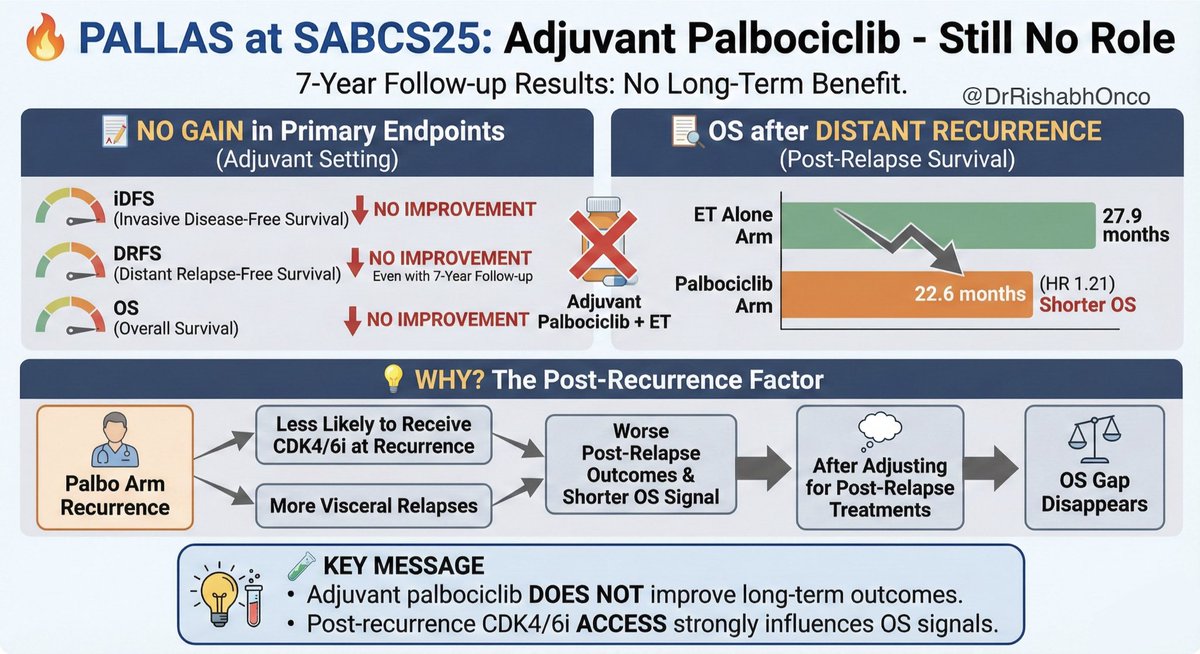
🔥 PALLAS at #SABCS25 Final nail for adjuvant palbociclib ⚰️ 7 year follow up shows no iDFS, DRFS, or OS benefit with adjuvant palbociclib. Post recurrence OS appears shorter, driven by less CDK4/6 reuse and more visceral relapse. 🧪 Bottom line - palbociclib has no role in the adjuvant setting.
Dr Rishabh Jain tweet media
Dr Rishabh Jain@DrRishabhOnco

🔥 PALLAS at #SABCS25 : Still no role for adjuvant Palbociclib Even with 7 year follow up, PALLAS again shows no gain in iDFS, DRFS, or OS with adjuvant palbociclib. 📉 OS after distant recurrence Shorter in the palbo arm: 22.6 mo vs 27.9 mo for ET alone (HR 1.21). 💡 Why? Palbo patients were less likely to receive CDK4/6i at recurrence and had more visceral relapses, pushing outcomes down. After adjusting for post relapse treatments, the OS gap disappears. 🧪 Key message Adjuvant palbociclib does not improve long term outcomes. Post recurrence CDK4/6 access strongly influences OS signals. #OncoTwitter #MedTwitter #BreastCancer #SABCS25 @OncoAlert @myesmo @esmo_open @ASCO

English
0
7
24
2.8K
Rick Linforth
Rick Linforth@RICKLIN4TH·
@dr_yakupergun Age and co morbidity important. If anticipated survival <10 yrs and 90% get no progression, observation may be very reasonable, or perhaps Vacuum excision if focal under Xray control and LA would be a good alternative.
English
0
0
0
32
Rick Linforth
Rick Linforth@RICKLIN4TH·
@DrRishabhOnco Stage and stop. The speedometer of disease , not the controller of outcome.
English
0
0
0
36
Rick Linforth retweetet
Dr Rishabh Jain
Dr Rishabh Jain@DrRishabhOnco·
Less is more in the axilla at #SABCS25 💡🫁 #AXSANA shows that in cN1 → ypN0 after NACT, SLNB or TAD matches ALND for 3 year axillary control at ~99 percent 🎯 More surgery did not improve control. Smart de escalation preserves outcomes and quality of life 🌿 #medtwitter #BreastCancer @OncoAlert @SABCSSanAntonio
Dr Rishabh Jain tweet media
Dr Rishabh Jain@DrRishabhOnco

Less can be more in the axilla at #SABCS25 💡🫁 New #AXSANA data shows that for patients converting from cN1 to ypN0 after NACT, SLNB or TAD matches ALND for 3 year axillary control. Almost zero difference in recurrence. Almost zero reason to overtreat. ➡️ 3 year axillary recurrence free survival SLNB 99.8 percent TAD 98.5 percent ALND 99.2 percent (All confidence intervals overlapping) ➡️ Key message More surgery did not translate into more regional control. Axillary management can be safely de escalated in ycN0 after NACT, provided standards are met. 💭 Why it matters? Avoiding ALND means fewer complications, better QoL, and similar oncologic outcomes. #OncoTwitter #MedTwitter #BreastCancer #SABCS25 @OncoAlert @myesmo @esmo_open @asco

English
1
14
44
3.7K
Rick Linforth retweetet
Yakup Ergün
Yakup Ergün@dr_yakupergun·
Management of Cancer During Pregnancy: ASCO Guideline It is a remarkably comprehensive guide that addresses every question thoroughly👇 ascopubs.org/doi/10.1200/JC…
Yakup Ergün tweet mediaYakup Ergün tweet media
English
1
96
212
12.8K
Rick Linforth
Rick Linforth@RICKLIN4TH·
@HawkesworthAnne Hope you’re keeping well…no blame attached , you can’t help where you’re born… but there is always the M62 if you need resurrection.😆
English
1
0
0
13
Anne Hawkesworth
Anne Hawkesworth@HawkesworthAnne·
@RICKLIN4TH Ok ok But can’t blame me for favouring the White Roses. Take care.
English
1
0
0
20
ABS
ABS@ABSGBI·
The ABS would like to gauge the extent to which breast services are being provided by way of outsourcing arrangements. We would be grateful if members could complete this short survey: buff.ly/2HoNfWO
ABS tweet media
English
1
1
1
175
Rick Linforth retweetet
Aya Mohamed | MSc, MD 🎗
Aya Mohamed | MSc, MD 🎗@Dr_Oncologista·
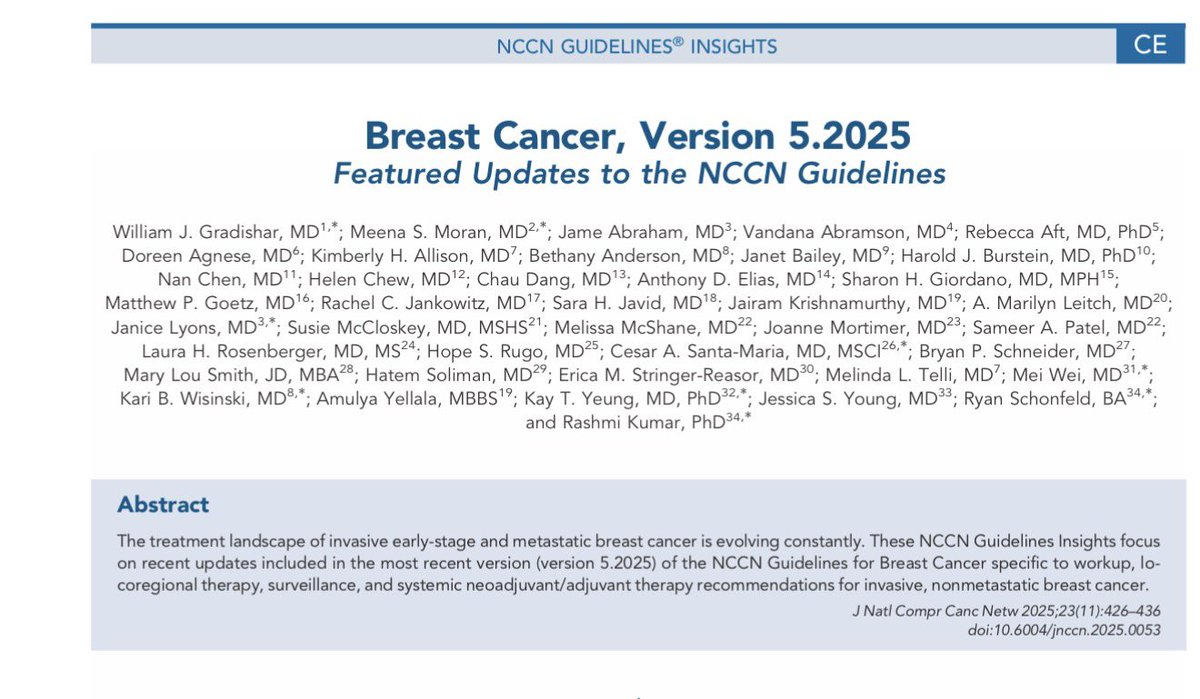
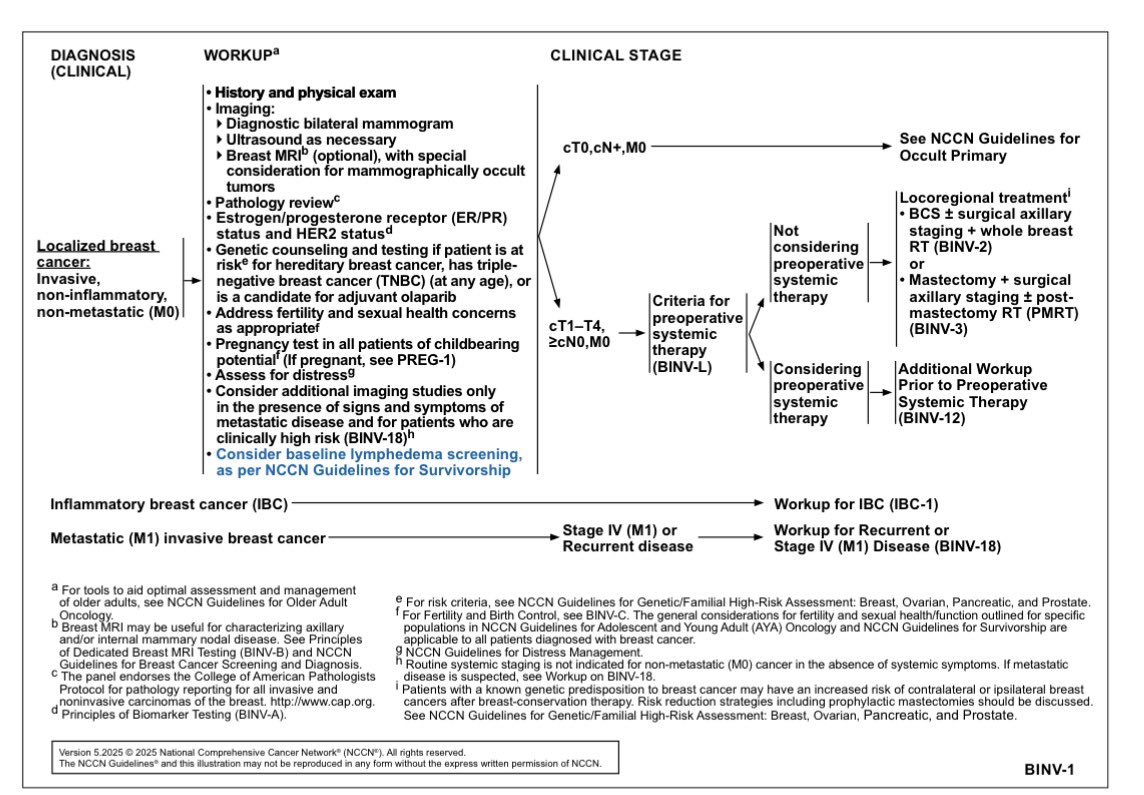
NCCN Breast Cancer v5.2025 — Key Updates 🔍🎗️ The latest NCCN update continues the shift toward safe de-escalation in localized #BreastCancer : • Axilla SLNB can replace ALND in select patients → less morbidity with no compromise in outcomes. @OncoAlert #bcsm
Aya Mohamed | MSc, MD 🎗 tweet mediaAya Mohamed | MSc, MD 🎗 tweet media
English
3
30
80
6.6K
Rick Linforth retweetet
Yakup Ergün
Yakup Ergün@dr_yakupergun·
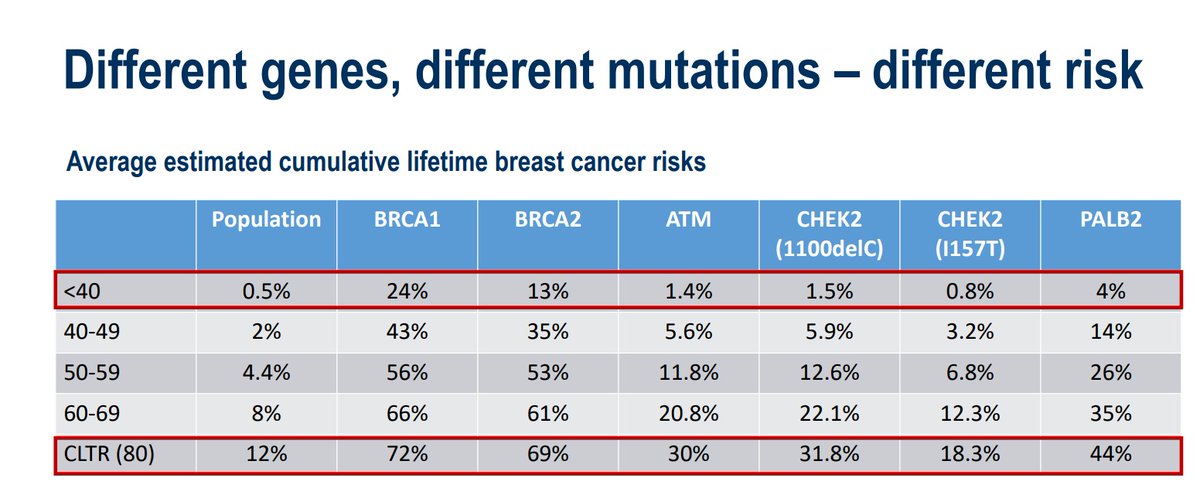
Age and mutation-specific breast cancer risk👇 From Dr. Shani Paluch-Shimon’s presentation at #ESMO25
Yakup Ergün tweet media
English
1
24
53
3.5K
Rick Linforth retweetet
Elvina Almuradova
Elvina Almuradova@Dr_ElvinaA·
NCCN Breast Cancer Guidelines 2025 (v5) #update focuses on localized therapy: • Less extensive axillary surgery—SLN biopsy may replace ALND in select pts. • Hypofractionated post-mastectomy RT safe with reconstruction. • Partial breast irradiation recommended for low-risk pts ≥40. #BreastCancer #NCCN @Larvol @OncLive @ONCOLife_HP @OncoAlert
Elvina Almuradova tweet mediaElvina Almuradova tweet media
English
4
35
103
8.6K
Rick Linforth retweetet
The BMJ
The BMJ@bmj_latest·
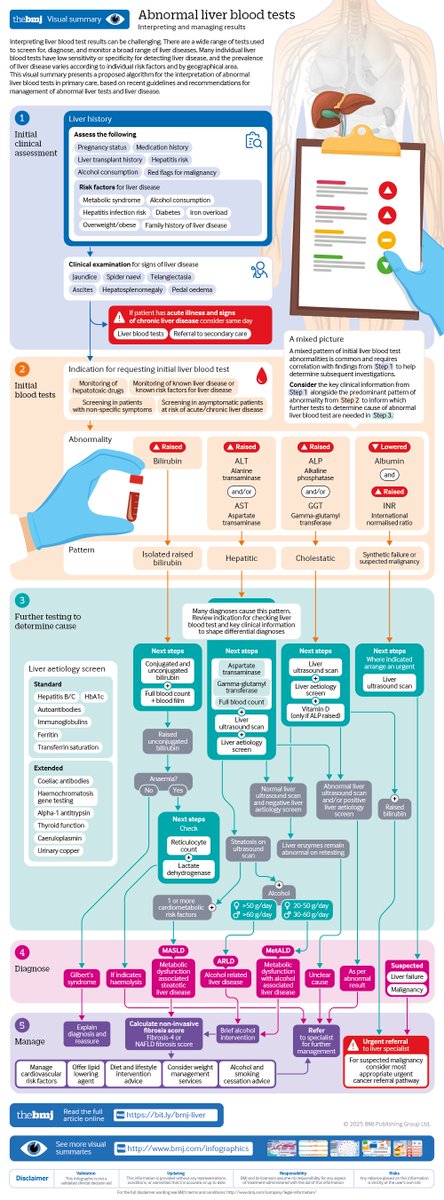
Interpreting liver blood test results can be challenging. How should clinicians interpret abnormal test results? New Education article offers guidance and a visual summary #BMJInfographic 🔗 bit.ly/4hYP9mF
The BMJ tweet media
English
3
148
456
47.8K