

ReportesGeopoliticos.CL 🇨🇱
3.8K posts

ReportesGeopoliticos.CL 🇨🇱
@ReportGuerraCL
🕵️♂️ Reportero del crimen, 📰 Noticias de Guerra 🪖y GEOPOLÍTICA, en los Estados del mundo 🌎.
Beigetreten Ekim 2025
400 Folgt87 Follower


F-16 Block 70🤝 Peru. Delivering advanced capability to the Peruvian Air Force, strengthening national defense and elevating the U.S.–Peru partnership like never before. 🇺🇸 🇵🇪
English
ReportesGeopoliticos.CL 🇨🇱 retweetet

Si Kast reconoce que “cometió un error” por el almuerzo en La Moneda, está reconociendo que sí hubo financiamiento del estado, por ende Mara Sedini mintió cuando dijo que aseguraba que todo el almuerzo lo financió el mismo Kast.
La vocera Mara Sedini tiene que irse del gobierno, por mentirle a todo Chile en algo tan delicado.
Español
Por favor comparte este video, hazles daño, porque los destruiremos (Estados Unidos e Israel).
Español
El señor Ebrahim Zolfaghari dijo...
Dondequiera que estés, por favor comparte este video, para que el mundo sepa que Irán no carecerá de misiles, porque Estados Unidos dice que Irán se ha quedado sin misiles, mientras que nosotros producimos misiles modernos todos los días.
Iranian Force@MrImranPk
Ibrahim Zulfiqari said... Wherever you are, please share this video, so that the world knows that Iran will not lack missiles, because America says that Iran has run out of missiles, while we produce modern missiles every day. Please share this video, hurt them, because we will destroy them (America and Israel).
Español
ReportesGeopoliticos.CL 🇨🇱 retweetet

Mara Sedini: “El crédito tributario tiene un impacto en sacar de la informalidad a cerca de 4 millones de personas” 🫣
No son 4 millones, la informalidad laboral cerró el último trimestre de 2025 con una tasa de 26,5%, afectando a más de 2,5 millones de personas
Español
@AlertaNews24 Esta cuenta avala el genocidio y es sumisa a ISR*EL, juran que el mundo creeran sus mentiras y atrocidades, todos sabemos quien es Isr*hell no es creible, por mas que quieran justificarlos ustedes son un medio que por mierdo a perder su sustento mienten y son manipulados.

Español

🇱🇧 | Hezbolá ha sido descubierto utilizando ambulancias y equipos médicos como cobertura para transportar armas y terroristas.
Español
ReportesGeopoliticos.CL 🇨🇱 retweetet
Resumen de las actividades realizadas por el Carrier Strike Group 11 (CSG) 🇺🇸 durante su estadía en Valparaíso
Actualmente, la Fragata "Almirante Blanco Encalada" escolta al CSG en su navegación por aguas australes chilenas 🇨🇱, culminando así el ejercicio Southern Seas 2026
Español
ReportesGeopoliticos.CL 🇨🇱 retweetet

El acero también se entrena. 💥
Desde la 1ra Brigada Coraceros, del Ejército de Chile 🇨🇱 finalizó con éxito la fase práctica del Curso de Equipo de Combate, instancia clave en la formación de Oficiales y Suboficiales recientemente destinados a la unidad.
Durante este periodo, se llevaron a cabo exigentes ejercicios en terreno que pusieron a prueba sus capacidades de planificación, conducción y liderazgo en operaciones acorazadas, fortaleciendo además la integración entre medios y personal.
Una etapa que no solo eleva el nivel técnico, sino que reafirma el compromiso, profesionalismo y alistamiento operativo de quienes están al servicio de la misión institucional.
.
🎥: @1rabrigadacoraceros
#zonadefensa #ejércitodechile #fuerzasarmadas #entrenamientomilitar
Español
Mythos y lo que representa podrían darle al Departamento de Defensa un motivo para reconsiderar su postura.
youtu.be/JmFKaqJg5X4

YouTube
Español
Mythos ha generado temor a medida que la inteligencia artificial avanza más rápido de lo que se puede implementar de forma segura. En un mundo donde la ciberseguridad cobra mayor importancia.
Bloomberg@business
Mythos has sparked fear as artificial intelligence advances faster than it can be safely deployed. In a world where cybersecurity is becoming more important, Mythos and what it represents may present the Defense Department with a reason to reconsider youtu.be/JmFKaqJg5X4
Español
Irán ha anunciado que se retirará de todos los acuerdos internacionales vinculados a la limitación de su programa nuclear.
Irán también ha declarado que poseer armas nucleares es un derecho soberano de Irán y no puede ser negociado.
Español
🚨“El Estrecho de Ormuz permanecerá bloqueado hasta que se liberen 11 billones de dólares en activos iraníes congelados.
Si no se presenta una propuesta en las próximas 48 horas, el alto el fuego podría terminar.”
Abbas Araghchi
Daily Iran News@DailyIranNews
🚨“The Strait of Hormuz will remain blocked until $11 trillion in frozen Iranian assets are released. If no proposal is presented within the next 48 hours, the ceasefire may end.” Abbas Araghchi
Español

Artículo completo: open.substack.com/pub/global21/p…
Español
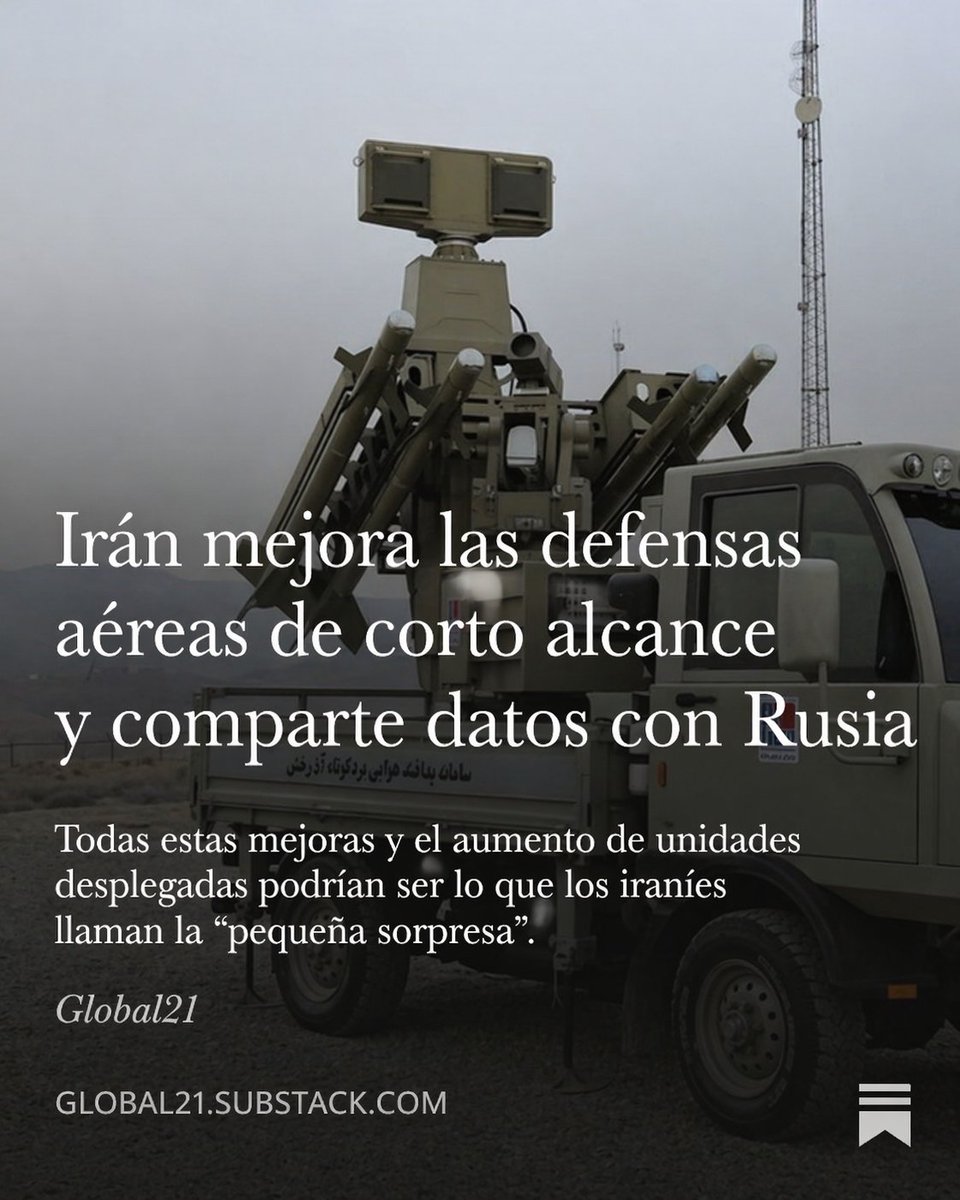
Irán mejora sus defensas aéreas de corto alcance y comparte datos con Rusia Durante los 15 días de tregua, Irán mejoró algunas de sus defensas aéreas de corto alcance (SHORAD), principalmente el Qaem-118 (también escrito Ghaem-118), que demostró su eficacia contra drones MALE.
Patricia Marins@pati_marins64
Iran Improves Short-Range Air Defenses and Shares Data with Russia During the 15 days of truce, Iran made improvements to some of its short-range air defenses (SHORAD), primarily the Qaem-118 (also spelled Ghaem-118), which proved effective against MALE drones. The Qaem-118 is a system that uses three simultaneous tracking methods: radar, electro-optical, and thermal (infrared). This allows it to operate in passive mode, detecting targets without emitting radar signals. During the 15 days of truce, Iranian engineers applied software updates to the system’s processors to improve signal filtering, after analyzing radar and heat data collected during confrontations with F-35s and MQ-9 drones in the previous weeks. In addition, they implemented datalink integration to connect the Qaem-118 to mobile radars, receiving the target’s position via radio and activating its own sensors only in the final second before launch Another system that will be seen more frequently is the 358 missile and its successor, the 359. The 358 is a missile that loiters at low speed to engage drones and helicopters. During the 15-day pause, the focus was on updating the image recognition algorithm. Since modern drones like the MQ-9 attempt to reduce their heat signature, Iran applied software corrections so that the 358’s sensor can detect smaller temperature differences against the sky background. Integration with radars was also carried out, as was done with the Qaem-118. Now the 358 is no longer launched blindly. It has been integrated into the network of short- and medium-range mobile ground radars. The radar detects the enemy drone and sends the 358 to the exact coordinates. The missile flies there in silence and only activates its thermal seeker once it is already in the kill zone. Iran emphasizes that this integration happens quickly because these SHORAD systems already use compatible communication protocols. What was accomplished in the 15 days was the physical installation of datalink kits and antennas that were already in stock but had not yet been distributed to all front-line units, which were also trained for this use. And what changes in the 359 version? The 359 uses the Tolou-10 turbojet engine, which makes it faster than the original 358. It can operate above 9,000 meters, enabling it to reach large aircraft such as refueling tankers and radar planes (AWACS) that fly at altitudes the 358 could not efficiently reach. In addition, it has a range of up to 150 km and has abandoned the complex laser proximity sensors of the 358 in favor of a more powerful warhead and more modern thermal imaging guidance systems focused on ignoring countermeasures (flares). Theoretically, this means the repeated scenes of aircraft releasing flares and evading missiles seen in the first phase of the war should no longer occur. We’ll see. All these improvements and the increase in deployed units may be what the Iranians are calling the “little surprise.” Join my Substack to read the full article: open.substack.com/pub/global21/p…
Español
ReportesGeopoliticos.CL 🇨🇱 retweetet

Ya comenzó a operar el primero de cinco trenes que llegaron de #China en 2025, en el servicio Limache–Puerto, ofreciendo mayor capacidad y un mejor servicio.
Todos estarán operativos en septiembre y, con ello, la oferta en hora punta aumentará un 20 %. #Limache #Valparaíso
EFE Trenes de Chile@EFETrenesChile
Junto al ministro del @MTTChile, @louisdegrange, presentamos en Estación Puerto uno de los cinco nuevos trenes que reforzará la flota del servicio de EFE Valparaíso. La llegada de estos cinco equipos, aumentarán en cerca de un 20% la oferta de transporte en horarios punta.
Español
ReportesGeopoliticos.CL 🇨🇱 retweetet

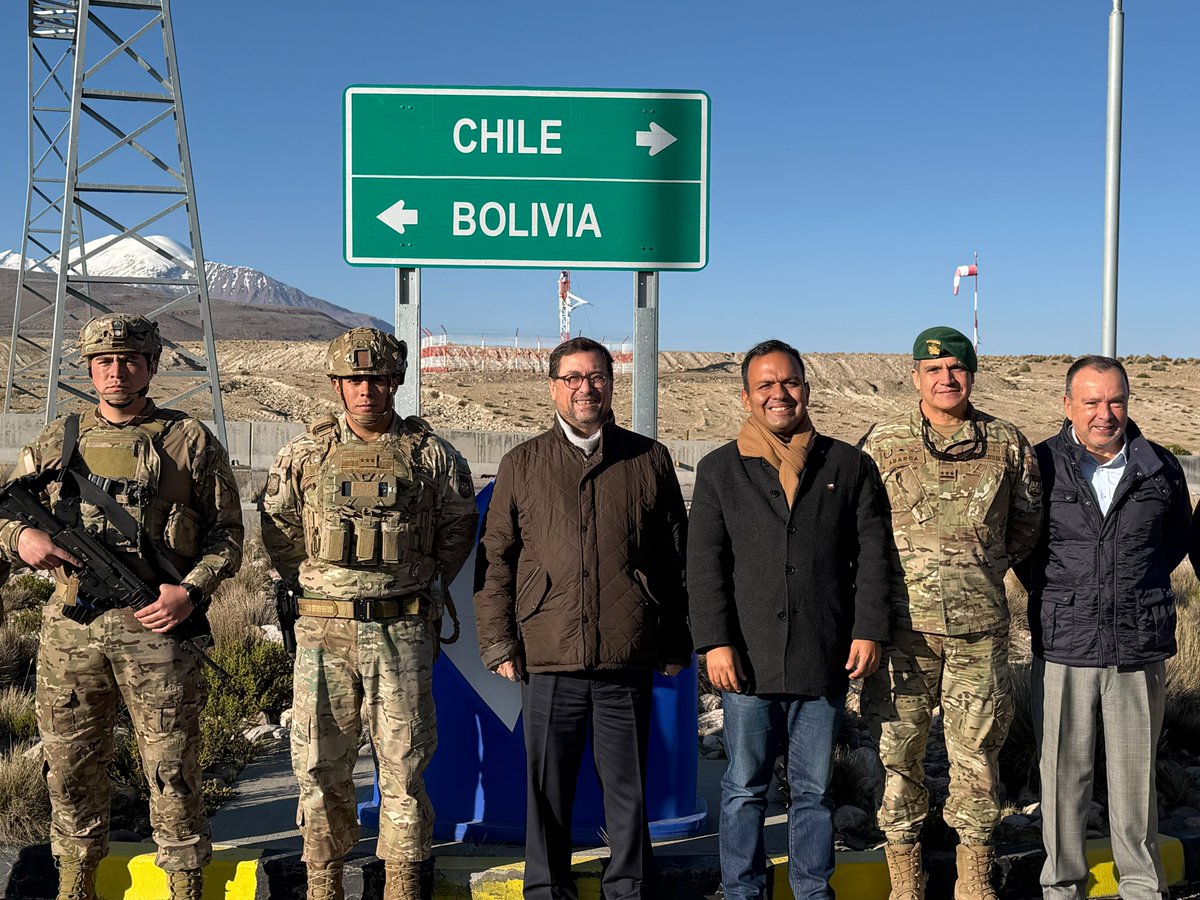
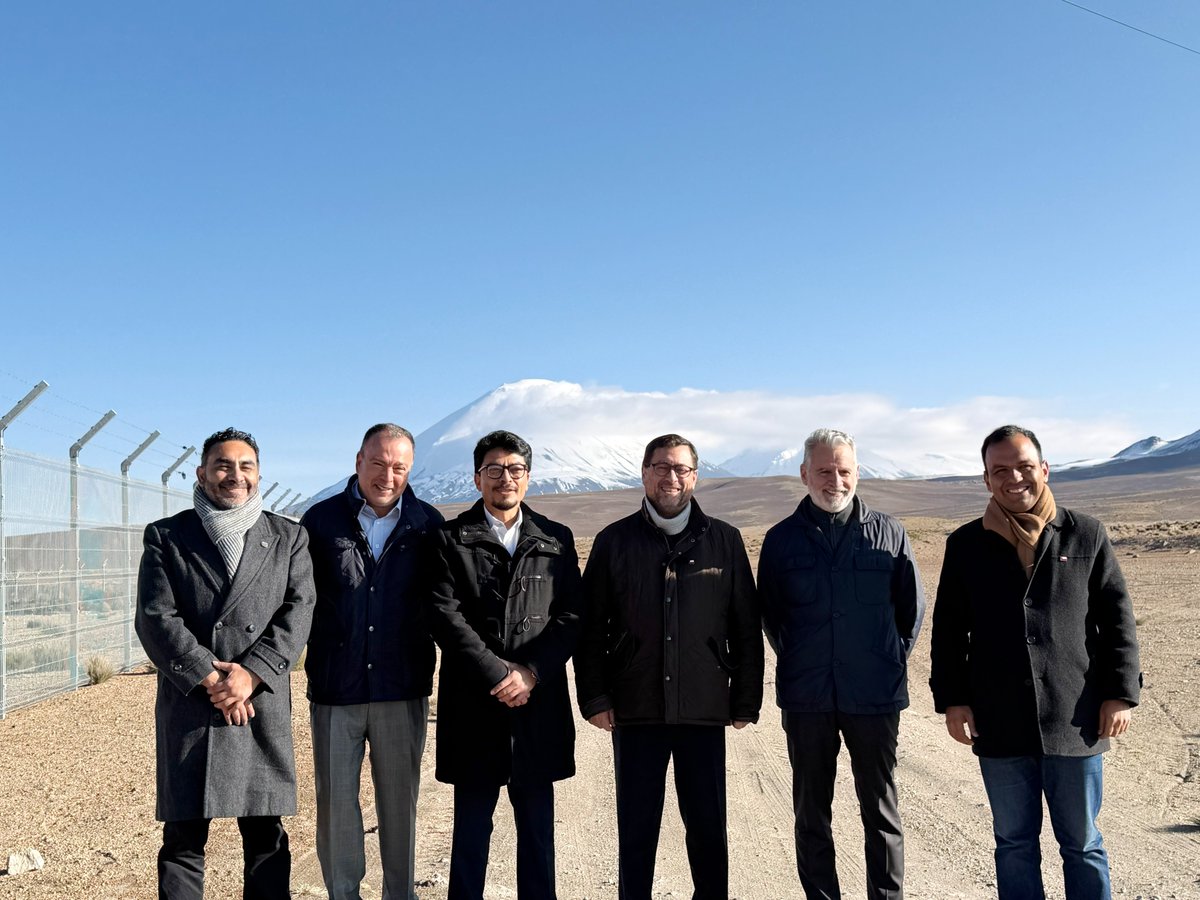
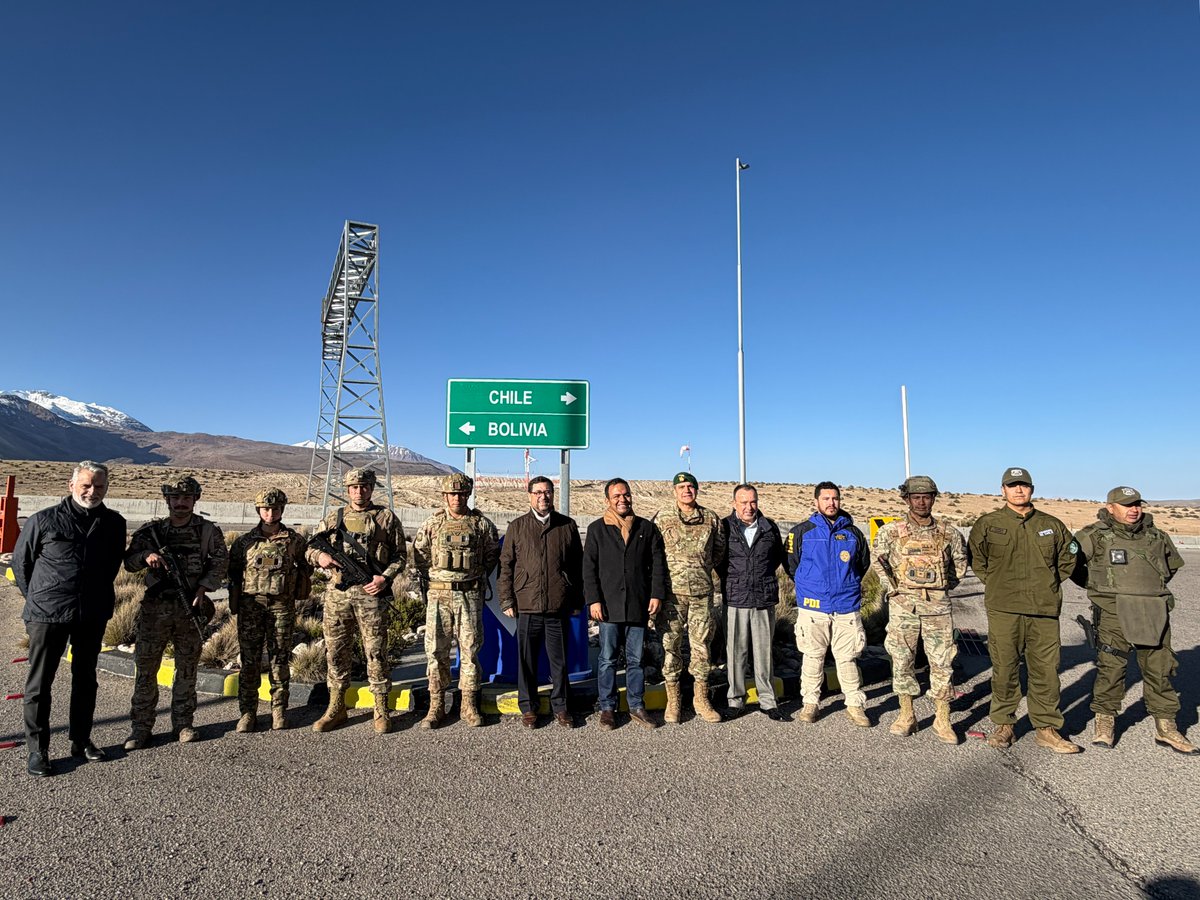
Hoy damos un paso importante con la mirada puesta en el futuro 🇨🇱🤝🇧🇴
Junto al canciller Fernando Aramayo, iniciamos desde el paso Chungará–Tambo Quemado, a más de 4.500 metros de altura, una agenda que proyecta más integración, cooperación y oportunidades entre Chile y Bolivia.

Español
— Detección y ataque de objetivos mediante inteligencia artificial.
— Operación en entornos sin señal GPS.
La plataforma está diseñada para ataques coordinados e inteligentes con drones.
2//
Español
La empresa turca BAYKAR presentará su dron kamikaze K2 y su munición merodeadora Sivrisinek (Mosquito) en SAHA 2026 (del 5 al 9 de mayo, Centro de Exposiciones de Estambul).
El sistema incluye:
— Vuelo autónomo en enjambre.
1//
Clash Report@clashreport
Türkiye's BAYKAR will unveil its K2 kamikaze UAV and Sivrisinek (Mosquito) loitering munition at SAHA 2026 (May 5–9, Istanbul Expo Center). The system features: — Autonomous swarm flight. — AI-powered target detection and engagement. — Operation in GPS-denied environments. The platform is designed for coordinated, intelligent drone attacks.
Español