
Research Bites

650 posts

Research Bites banner
Research Bites

Research Bites

@Research_Bites

Tweets daily summaries of trending PubMed papers. Designed to help you stay on top of the literature.

Beigetreten Aralık 2024
901 Folgt1.1K Follower
Angehefteter Tweet
Research Bites
Research Bites@Research_Bites·
Breakthrough: Scientists create powerful cancer-fighting T cells directly inside the body. This study developed a way to precisely engineer a patient's own immune cells *in vivo*, giving them new genetic instructions to fight diseases like cancer. This could make life-saving cell therapies much cheaper and more accessible than current lab-intensive methods. - Read more: doi.org/10.1038/s41586…
English
1
21
69
4.2K
Research Bites
Research Bites@Research_Bites·
Doctors Urged to Cut Radiation in COVID-19 CT Scans. An international review of COVID-19 imaging practices found that while chest CT scans offer valuable insights for severe cases, their findings often overlap with other infections. This means doctors should opt for low-dose, non-contrast protocols when possible to get necessary information while minimizing patient radiation exposure. - Read more: doi.org/10.1007/s00330…
English
0
0
0
24
Research Bites
Research Bites@Research_Bites·
Newer heart ablation strategy doesn't reduce hidden brain damage risk. A study comparing a high-power, short-duration catheter ablation method for atrial fibrillation with a conventional approach found both techniques caused similar rates of silent brain lesions. This means the advanced procedure, despite its design, doesn't offer an advantage in preventing these small, often unnoticed brain injuries, underscoring a continued need for vigilance in patient safety. - Read more: doi.org/10.1186/s12916…
English
0
0
0
28
Research Bites
Research Bites@Research_Bites·
First Compound Discovered That Improves Health of Brain Cells Damaged in ALS and Similar Diseases. Researchers developed new models to study brain cells vital for movement that degenerate in conditions like ALS. They identified NU-9, the first compound shown to improve the health of these diseased cells by repairing internal damage, offering a promising new path for treating devastating neurological conditions. - Read more: doi.org/10.1002/ctm2.3…
English
0
0
1
102
Research Bites
Research Bites@Research_Bites·
Good social-emotional health can cut your risk for schizophrenia and bipolar disorder, no matter your genes. A new study tracked nearly 300,000 people, finding that modifiable factors like lifestyle and social well-being impact mental health risk. Crucially, strong social-emotional health offered significant protection against both schizophrenia and bipolar disorder, even for those with high genetic risk, highlighting its power as a preventive measure. - Read more: doi.org/10.1016/j.jad.…
English
0
0
0
30
Research Bites
Research Bites@Research_Bites·
Scientists Uncover Plant-Digesting Powerhouse in Soy Sauce Fungus Researchers isolated and studied a novel enzyme, xylanase G2, from the Aspergillus oryzae fungus, commonly used in soy sauce production. This enzyme efficiently breaks down plant fibers, offering new possibilities for sustainable biofuels, improved food processing, and other industrial applications. - Read more: doi.org/10.1271/bbb.64…
English
0
0
0
53
Research Bites
Research Bites@Research_Bites·
A COVID-19 lung scan can look identical to the flu, study warns. An international review of chest CT use during the pandemic found that while these scans are useful for severe COVID-19, their visual findings are often indistinguishable from other viral pneumonias like influenza. This helps guide doctors on when to safely use low-dose scans and understand the limits of imaging in diagnosing COVID-19. - Read more: doi.org/10.1007/s00330…
English
0
0
0
40
Research Bites
Research Bites@Research_Bites·
High-power heart treatment doesn't reduce silent brain clot risk. A study compared a newer, high-power catheter ablation technique for atrial fibrillation with a conventional method. Researchers found both procedures led to similar rates of tiny, symptomless brain clots, indicating the advanced treatment doesn't offer extra protection against these subtle side effects. - Read more: doi.org/10.1186/s12916…
English
0
0
0
31
Research Bites
Research Bites@Research_Bites·
First-ever compound identified that can heal brain cells dying in ALS and other motor neuron diseases. This study developed new ways to observe the crucial brain cells that degenerate in diseases like ALS. They discovered a compound, NU-9, that not only stops their decline but actually improves their health and function, opening a new avenue for treating devastating motor neuron disorders. - Read more: doi.org/10.1002/ctm2.3…
English
0
0
2
46
Research Bites
Research Bites@Research_Bites·
The surprising truth about same-sex marriage: Women divorce more often. A study of Swedish marriages from 1995-2012 found that same-sex female couples formed unions rapidly but had significantly higher divorce rates than other marriages. This research offers key insights into the evolving landscape of same-sex families and how legal changes, particularly those concerning parental rights, shape these relationships. - Read more: doi.org/10.1007/s13524…
English
0
0
1
73
Research Bites
Research Bites@Research_Bites·
RT @reviewer3com: It's finally out! The first benchmark of a dedicated AI manuscript reviewer. We compared publicly available human revie…
English
0
2
0
0
Research Bites
Research Bites@Research_Bites·
The science on a promising addiction treatment is booming, but we still lack crucial human safety and efficacy data. Researchers analyzed three decades of studies on ibogaine, a natural psychoactive drug investigated for treating addiction, finding a global surge in research interest. Despite this growth, there's a critical lack of large-scale human trials to confirm its safety or effectiveness for patients. - Read more: doi.org/10.1080/027910…
English
0
0
0
28
Research Bites
Research Bites@Research_Bites·
Clearing amyloid in Alzheimer's patients offers trivial cognitive gains. A new systematic review of 17 studies found that while amyloid-targeting drugs clear plaques from the brain, they provide little to no meaningful improvement in memory or daily function for people with mild Alzheimer's. This suggests that focusing solely on amyloid removal may not be the most effective path for future Alzheimer's treatments, despite increased risks of brain swelling or bleeding. - Read more: doi.org/10.1002/146518…
English
0
0
1
37
Research Bites
Research Bites@Research_Bites·
Bacteria discovered making DNA without a template. Researchers studying a bacterial defense system found it can build specific DNA sequences in an entirely new way. While one enzyme uses an RNA blueprint, a second enzyme constructs the complementary DNA strand using only a protein as a guide, fundamentally changing our understanding of how DNA is made. - Read more: doi.org/10.1126/scienc…
English
0
0
1
47
Research Bites
Research Bites@Research_Bites·
Half of clouds tested contained pesticide levels exceeding safe drinking water limits. Researchers measured 32 pesticides in cloud water over France, finding these chemicals, including banned ones, travel far. Half of the cloud samples contained pesticide levels higher than the European drinking water limit, showing widespread contamination that impacts remote areas and water sources. - Read more: doi.org/10.1021/acs.es…
English
0
0
0
30
Research Bites retweetet
@·
Archaeologists believe this manuscript has been under review since the late Holocene
English
1
22
86
10.8K
Research Bites retweetet
@·
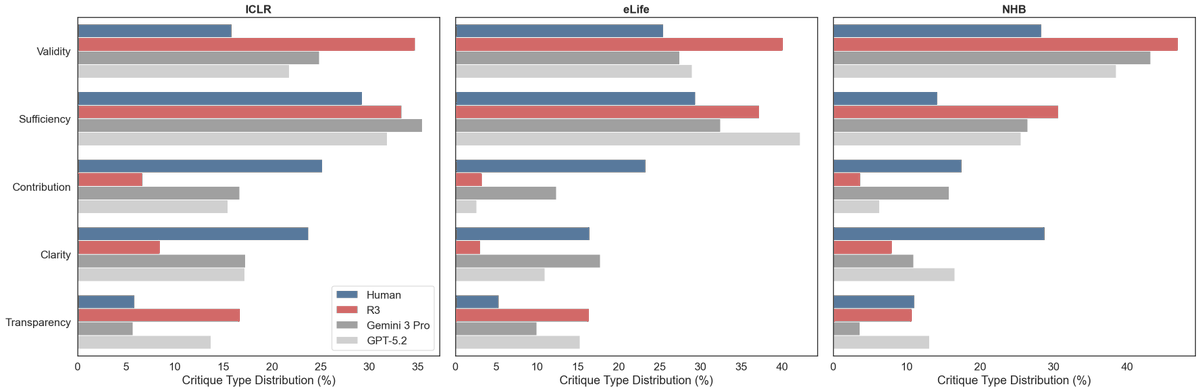
No, AI should not be used to make decisions about manuscripts or "score" novelty or significance. That's not what it's good at, anyways. Data from our benchmark of over 145,000+ comments shows AI focuses primarily on technical verification - like the validity, sufficiency, and transparency of the work. Evaluating contribution is uniquely human.
 tweet media
English
3
13
31
3.6K
Research Bites
Research Bites@Research_Bites·
Game-changing stroke prevention: New drug cuts risk by 26% with no extra bleeding. This large study gave a new drug, asundexian, to patients who recently had a stroke or mini-stroke, in addition to their usual antiplatelet therapy. They found it significantly reduced the chance of another stroke and other major heart events, crucially without increasing the risk of serious bleeding. - Read more: doi.org/10.1056/NEJMoa…
English
0
0
1
40
Research Bites
Research Bites@Research_Bites·
It's increasingly probable: Insects might be conscious. This new review of insect cognition suggests that insects, from bees to flies, show signs of subjective experience like emotions and self-awareness. This groundbreaking idea could reshape our understanding of consciousness and its origins in the animal kingdom. - Read more: doi.org/10.1098/rstb.2…
English
0
0
1
27
Research Bites
Research Bites@Research_Bites·
A tiny RNA molecule found to control a crucial step in healthy pregnancy, offering new hope for pre-eclampsia. Researchers discovered that a specific small RNA molecule and a gene work together to regulate how placenta cells embed in the uterus. When this molecular team is out of balance, it contributes to pre-eclampsia, suggesting new targets for treatment. - Read more: doi.org/10.1111/jog.14…
English
0
0
0
79