Richard Garriott

52K posts

Richard Garriott banner
Richard Garriott

Richard Garriott

@RichardGarriott

President Emeritus @ExplorersClub; a Videogame Industry Founding Father; Astronaut, Aquanaut, Polar Explorer; Family: @Ronin_British, @Kinga_British

Austin Texas Beigetreten Haziran 2009
3.4K Folgt47.5K Follower
Richard Garriott retweetet
Colossal Biosciences®
Colossal Biosciences®@colossal·
The Steller’s sea cow (Hydrodamalis gigas) was an extinct sirenian first described in 1741. Its closest living relatives are the dugong and the manatee, though it far surpassed them in size. The species was wiped out by humans less than 30 years after its discovery.
English
6
14
92
11.3K
Richard Garriott retweetet
Colossal Biosciences®
Colossal Biosciences®@colossal·
Being found is a huge part of this ferret’s story. Once thought extinct, these were rediscovered in 1981 and brought back through cloning. Using frozen DNA, @ViaGenPets_ (a Colossal company) created the first cloned black-footed ferret. 👏
English
5
10
67
10.4K
Richard Garriott retweetet
Ananth Rupanagudi
Ananth Rupanagudi@Ananth_IRAS·
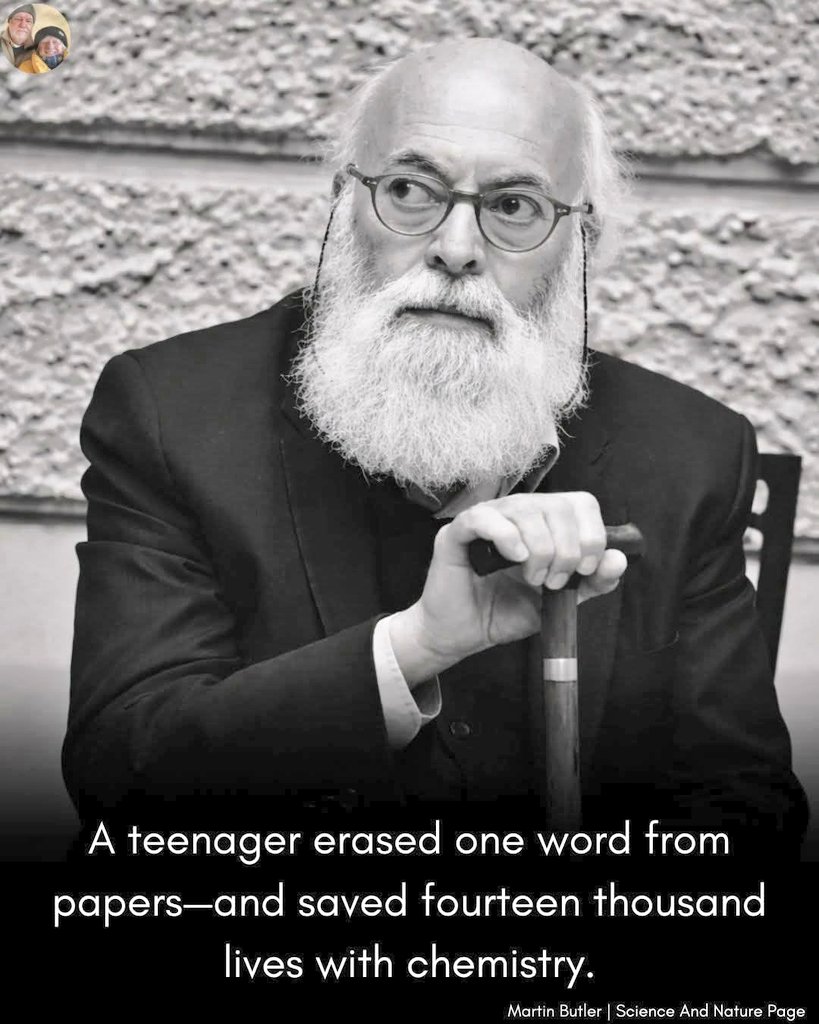
In 1943, in Nazi-occupied Paris, a teenager named Adolfo Kaminsky discovered that chemistry could be a weapon. He had learned the science of dyes in a small shop, studying how pigments bonded to paper and how solvents could break them apart. That knowledge became the difference between life and death. The Nazis used paperwork as a weapon. On Jewish identity documents, the word JUIF was stamped in permanent blue ink. That single mark meant arrest, deportation, and death. The French Resistance asked Kaminsky if it could be erased. Most attempts ruined the paper. He remembered something else: lactic acid. It dissolved the dye without damaging the fibres. Under a single lamp, he watched the fatal word disappear. But removing ink was only the beginning. He had to recreate entire identities birth certificates, ration cards, transit permits each detail perfect. A wrong shade of ink or a misaligned stamp could expose entire networks and send families to torture or execution. He worked in a hidden attic on the Left Bank, surrounded by chemical fumes that burned his eyes and stained his hands. Requests flooded in. Papers for children escaping to Switzerland. Ration cards for families in hiding. Transit passes for dangerous routes through Spain. Then he made a calculation that would haunt him. Each document took about two minutes. In an hour, he could save thirty people. In an hour of sleep, thirty people could die. So he stopped sleeping. When he learned that three hundred Jewish children in an orphanage were about to be raided, he locked himself in his lab and worked for two days without rest. His vision blurred. His hand cramped. He collapsed for an hour and woke in panic, furious at himself for the lives he imagined lost. He forced himself back to work. The children escaped. It became a quiet war of precision. As Nazi security measures evolved, Kaminsky refined his methods. Success wasn’t measured in territory or headlines, but in families that survived and names that never appeared on transport lists. By the liberation of Paris in 1944, his forged documents had saved an estimated fourteen thousand people. He never charged a cent. To him, putting a price on a life was unthinkable. After the war, he became a photographer and spoke little about what he had done. Even his children did not know for decades. The man who saved thousands disappeared back into ordinary life. Only later did his story emerge, revealing a quieter truth about heroism. Courage does not always carry a weapon or wear a uniform. Sometimes it works under a dim bulb, with stained fingers and relentless focus, fighting an empire with knowledge and refusal to look away. Adolfo Kaminsky died in 2023 at ninety-seven. His legacy is not in monuments or medals. It lives in the generations that exist because a teenager decided sleep could wait. #unknown #heroes #HistoryMakers
Ananth Rupanagudi tweet media
English
93
1.9K
8.2K
280.3K
Richard Garriott retweetet
NASA Administrator Jared Isaacman
The Artemis vision began with President Trump, but the SLS architecture and its components long predate his administration, with much of the heritage clearly traced back to the Shuttle era. As I stated during my hearings, and will say again, this is the fastest path to return humans to the Moon and achieve our near-term objectives through at least Artemis V, but it is not the most economic path and certainly not the forever path. The flight rate is the lowest of any NASA-designed vehicle, and that should be a topic of discussion. It is why we undertake wet dress rehearsals, Pre-FRR, and FRR, and why we will not press to launch until we are absolutely ready. The President’s National Space Policy envisions a Moon base, with repeated and affordable missions to the lunar environment. Along that journey, some functions that NASA has performed in the past and present may move to industry in the future, and that is when NASA recalibrates toward the near-impossible and undertakes the next grand endeavor. Where Apollo ended at 17, Artemis will live on for decades as we explore and realize the economic and scientific potential of the lunar surface. It is where we will test hardware and operations, including resource manufacturing, nuclear power, and propulsion, the tools necessary to undertake human missions to Mars. In short, Artemis II will be a historic mission, but it is still just the beginning. Where we go in the years ahead will inspire generations to come.
Eric Berger@SciGuySpace

There are many, many problems with the SLS rocket architecture, but one of the biggest is its extremely low flight rate, which makes every fueling and launch an experimental rather than operational procedure. arstechnica.com/space/2026/02/…

English
164
317
3.6K
448.4K
Richard Garriott retweetet
Colossal Biosciences®
Colossal Biosciences®@colossal·
Imagine opening a museum cupboard and finding a Tasmanian tiger head in a bucket. 😭 That actually happened at @museumsvictoria From it, our scientists recovered rare RNA from the tongue, nasal cavity, brain, and eye, helping us assemble the thylacine genome. (1/2)
English
14
12
108
11.9K
UppityBaldGinger
UppityBaldGinger@uppityginger·
And now I have all the Ultima games as well. @RichardGarriott I'm looking forward to all of these for the first time. @GOGcom had them all and now I have them all. Now for the task of playing them all. I'm on a "games I didn't get to play as a kid" kick.
English
3
0
7
592
Richard Garriott retweetet
Tommy
Tommy@wizord2252·
@RichardGarriott if I had a few wishes one would be to be able to play all the Ultimas for the first time again.
English
5
2
28
1.5K
Richard Garriott retweetet
Colossal Biosciences®
Colossal Biosciences®@colossal·
🐭 The woolly mouse kinda broke the internet when it dropped earlier last year. But behind the memes and the “aww”s was some serious science. This little furball proved that the same gene edits we’re using for the mammoth actually work. Oh, and it's cute.
English
9
16
121
15.3K
Richard Garriott retweetet
Colossal Biosciences®
Colossal Biosciences®@colossal·
If you’re looking to roast a T. rex, those tiny arms are an easy target. But here’s the truth. The arms are small because the jaws are so powerful. Dr. Kenneth Lacovara explains why. So yeah… maybe hold off on the hug.
English
4
10
119
15.3K
Elon Musk
Elon Musk@elonmusk·
A large solar-powered AI satellite constellation would be able to prevent global warming by making tiny adjustments in how much solar energy reached Earth
English
28.3K
9.2K
109.7K
26.4M