Stefanos Elenidis

1.1K posts

Stefanos Elenidis banner
Stefanos Elenidis

Stefanos Elenidis

@SElenidis

τα τελομερή μου μέσα!

Beigetreten Kasım 2019
367 Folgt184 Follower
Stefanos Elenidis retweetet
@·
In Heraklion, Crete today. I spent many hours in the Heraklion Archaeological Museum, but before I ventured in, I had to visit something special - a modern-day monument to a medieval Roman Emperor. Erected by the Municipality of Heraklion in 1961 to celebrate 1,000 years since
 tweet media tweet media tweet media
English
3
16
121
20.5K
Stefanos Elenidis
Stefanos Elenidis@SElenidis·
@Paepaok_ @noemonas I m referring to the abyss between modern English/Old English and the rest of the linguistic abysses all people have except the Greeks (maybe the Chinese too) I m a Christian and I think it is Divine intervention for the Christian theology to be in Greek and Λόγος still be intact
English
1
0
2
12
Noemon Acragas
Noemon Acragas@noemonas·
These "Indo-European" Pronunciation reconstructionists are using "Sanskrit" to define the Attic Greek, they claim Sanskrit survived orally while lacking a writing system and that their modern reconstructions of Sanskrit are not just awesome but awesome enough to define the Attic Greek too which survived not just orally but also in script, in literature, in continuous education, in law and in instruction by both secular and religious central authorities. Don't get me wrong, Indo-European is a great field when it comes to archeology, super-families of languages, but not when it comes to pronunciation of anything ancient. We have barely reconstructed ancient Egyptian with real Greek side by side to it while some IE people cliam to have reconstructed an unattested Proto language for which we have not a single marking.
Kāuśikás@parjanyudu

@APC_Trades See in India, for example, where multiple hyperstrict oral traditions have survived three–four millennials of invasions, diachonic evolution and lack of a writing system. Several Brāhmaṇa families decentralized into preserved different 'albums' of the same artist/composer.

English
5
2
30
1.1K
Stefanos Elenidis retweetet
Spyros Kalogirou
Spyros Kalogirou@miostudio3·
@AntigoneJournal "Yet for all the symbolic resonance of the fall of the New Rome 1453 was hardly a catastrophe for Latin Christendom in its consequences, at least to judge by the muted international reaction" Wrong terminology leads to wrong hypothesis It was Germanicolatin (NonRoman) Christendom
English
1
1
2
202
Stefanos Elenidis retweetet
Noemon Acragas
Noemon Acragas@noemonas·
Modern Greek is the only language to enjoy oral continuity, written continuity, grammatical & pronunciation instruction continuity with ancient and the largest continuous literature on earth by far. No other language in the world today still has 2 dedicated ancient grammar and pronunciation manuals the 'Techne Grammatike' of Thrax and the 'On the Literary Composition between Grammar and Rhetoric' by Alicarnaseus as well as Plato's Kratylos as well as around 100 million saved words from the antiquity alone.
Kāuśikás@parjanyudu

@psychotakes Ancient Greek is a foreign language to Modern Greek in terms of phonology, morphology and mutually intelligibility. There is no native speaker of Ancient Greek.

English
25
65
531
21.8K
Stefanos Elenidis
Stefanos Elenidis@SElenidis·
@noemonas I d wish they could take the trouble to learn modern Greek and realise themselves their huge access to the vast Greek literature of past millennia. I learned Italian because I liked the songs. If they are academics they shouldn't utter a single word without learning modern Greek.
Stefanos Elenidis tweet media
English
1
2
15
656
Noemon Acragas
Noemon Acragas@noemonas·
@SElenidis I don't mute them or block them, I want them to learn from us so they can not claim to be ignorant later.
English
1
0
11
159
Stefanos Elenidis
Stefanos Elenidis@SElenidis·
@hortus_siccus @noemonas So easy to uncover what’s hiding under “logical” :) a Greek hater! When I see HS I call it out. What did you expect? To endorse it?
English
0
0
3
23
Noemon Acragas
Noemon Acragas@noemonas·
Turkey is the only country that in the present day illegally occupies EU territory(Cyprus) and which has an official cassus-belli(declaration of war) against another EU Member(Greece). Turks themselves do not make it easier either: politico.eu/article/recep-…
@

For all its flaws, Türkiye is not an existential danger to Europe. It remains a (largely imperfect) democracy, a secular state and is the only militarily powerful country in the Middle East, which, despite major challenges and tensions, can be considered as an ally to Europe.

English
9
21
81
1.9K
Stefanos Elenidis retweetet
@·
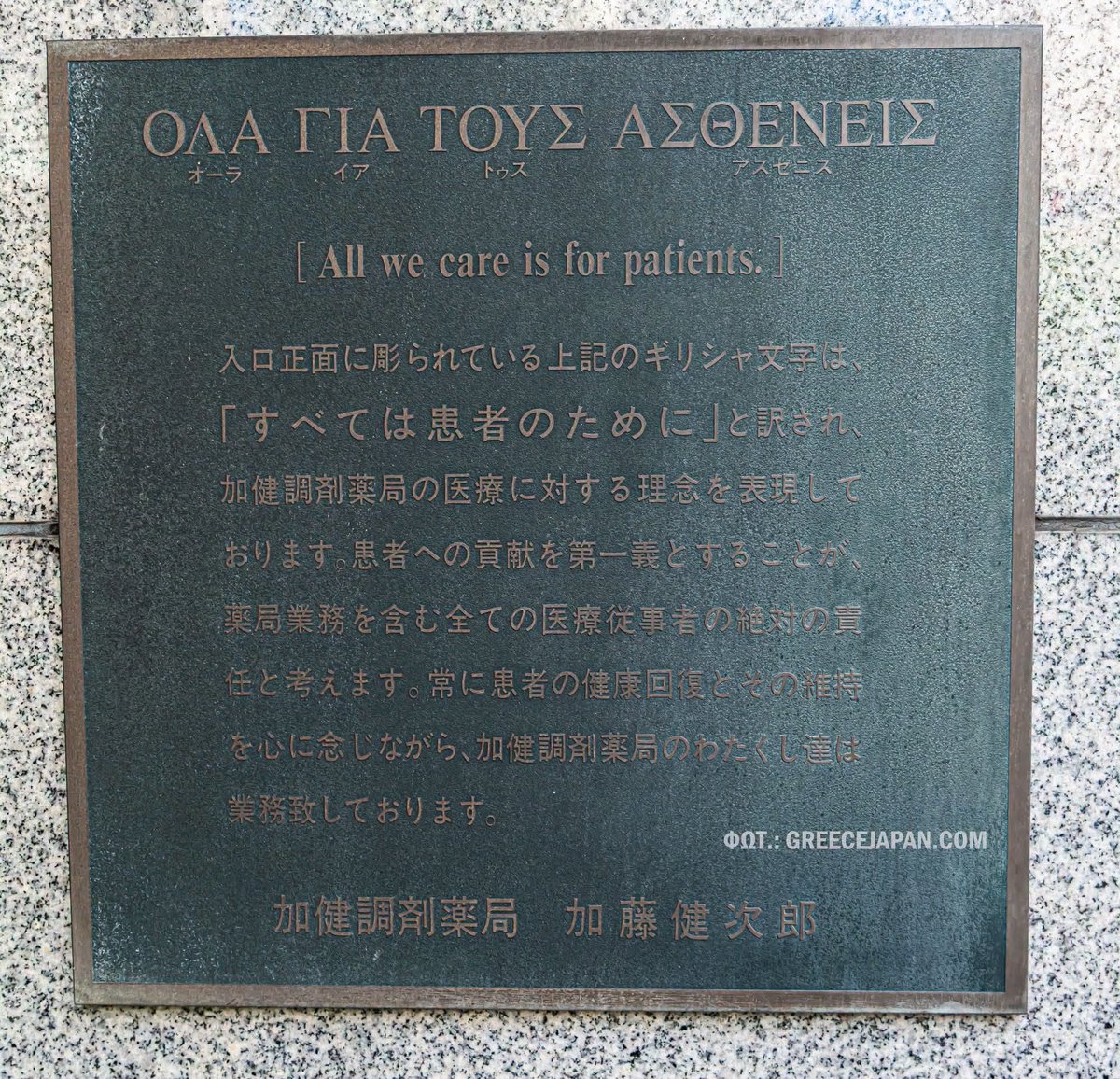
Το φαρμακείο "Κακέι" βρίσκεται στην περιοχή Akashi-cho (Tokyo). Στην είσοδο του δεσπόζει η ελληνική φράση "ΟΛΑ ΓΙΑ ΤΟΥΣ ΑΣΘΕΝΕΙΣ". Ο ιδιοκτήτης του φαρμακείου, κος Κεντζιρό Κάτο, ρωτήθηκε γιατί έγραψε την πινακίδα σε μια γλώσσα που πολύ λίγοι θα καταλάβουν.
 tweet media tweet media tweet media
Ελληνικά
7
245
1.2K
70.2K
Hortus Siccus
Hortus Siccus@hortus_siccus·
@noemonas The most logical solution is for Greece to be incorporated into Turkey as soon as possible. After all, Greece was an imperialist creation; not a single Greek representative was present at the 1830 negotiations. Times have moved on, and this historical anomaly should finally end.
English
2
0
3
89
Stefanos Elenidis retweetet
@·
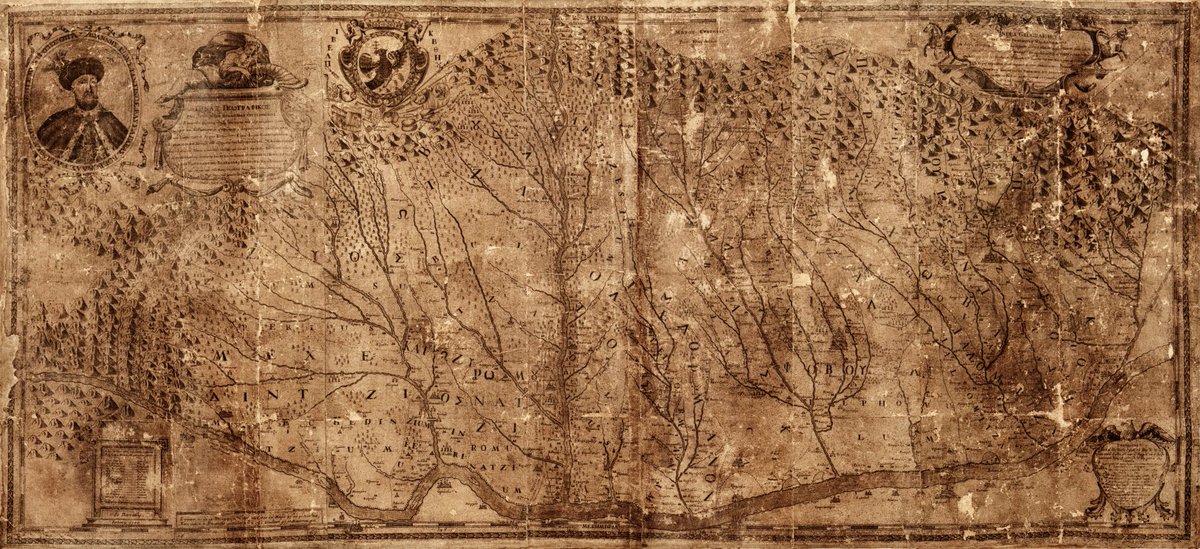
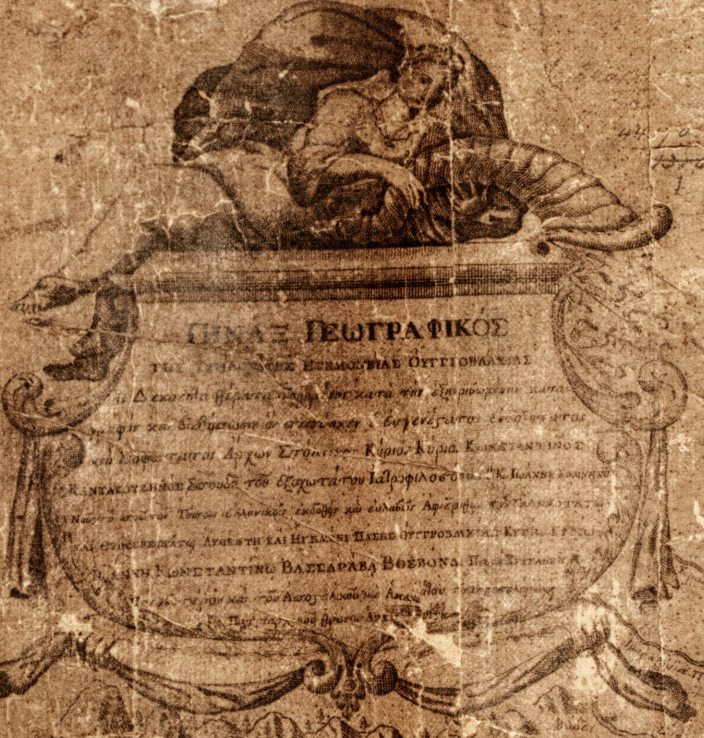
It's 1700 in the University of Padua and we meet three Greeks with very familiar surnames...Konstantinos Kantakouzenos the Greco-Wallachian stolnic, nobleman and historian, Ioannis Komnenos the doctor, and Chrysanthos Notaras the mathematician, geographer and future Patriarch of Jerusalem gather to collaborate for a monumental for Romanian history task, a valuable map of Wallachia, in Greek mainly - and Latin. Konstantinos Kantakouzenos was son of (also) Konstantinos and great-grandchild of the Constantinopolitan Greek magnate Michail Kantakouzenos nicknamed Sheytanoglu (d.1578), and from the Wallachian family of lord Radu Șerban from his mother side. In his notes, published by Nicolae Iorga, he will note an unknown possible Palaiologos descendant, who ended up in Crimea : "It must be known that among all the noble families now found in this province and in Moldavia, none is truly and purely Wallachian or Moldavian; and if there is any such family, it is miserable and almost unknown. Rather, those that today are considered noble are all of Greek or Bulgarian lineage. Among the Greeks are the most noble families of the Palaeologi and the Kantakouzenoo, who, after the fall of the Greek Empire into the hands of the infidels, scattered across various kingdoms and provinces, such as Trebizond, the Morea, Thessalonica, and other places, even more distant ones, including these provinces—Wallachia, Moldavia, and even Crimea—where there are descendants of the Palaiologi. Of these, some lines are entirely extinct, while others still survive in remnants. In Moldavia, of the male line of the most noble Palaeologos family, only one remains; but of the Kantakouzenoi there are more. In Crimea, the Palaiologoi have unfortunately fallen into Mohammedanism, and even today one of them can be found, presently in the service of this prince (though rather of the female line), and he is called Murat Shah. It is known that “Shah” in the Persian language means “king,” and thus among those barbarians that ancient royal name has remained. ..." The dedication of the map to the Wallachian prince Constantin Brâncoveanu: "Πίναξ γεωγραφικός τῆς ὑψηλοτάτης Ἡγεμονείας Ὀυγγροβλαχίας εἰς δεκαεπτά θέματα διηρημένηϛ τὴν ἐξηκριβωμένην καταγραφήν καὶ διατύπωσιν ἣν πεποίηκεν ὁ εὐγενέστατoς, ἐνδοξότατος καὶ σοφώτατος Ἅρχων Στόλνικoς Κύριος Κύριος Κωνσταντίνος Καντακουζηνός, σπουδῆ τοῦ ἐξοχoτάτου ἰατροφιλοσόφου K. K. Ἰωάννου Κομνηνοῦ. Νῦν τὸ πρῶτον τύπoις ἑλληνικoίς ἐκδοθεὶς καὶ εὐλαβῶς ἀφιερωθεὶς τῷ γαληνoτάτῳ καὶ θεοσεβαστοτάτῳ Aὐθέντῃ καὶ Ἡγεμόνῃ πάσης. Oὐγγροβλαχίας Κυρίῳ Κυρίῳ Ἰωάννῃ Κωνσταντίνῳ Βασσαράβᾳ Βοεβόνδα παρὰ Χρυσάνθου Πρεσβυτέρου καὶ τοῦ Απoστολικοῦ καὶ Ἀγιωτάτου τῶν Ἱεροσολύμων Πατριαρχικοῦ θρόνου Ἀρχιμανδρίτου. The geographical tabula of the all high and mighty Principality of Ungrovlahia divided into seventeen counties, according to the description and very exact form prepared by the almighty noble, almighty learned and almighty wise boyar stolnic Constantin Kantakouzenos for the documentation of the mighty eminent physician and philosopher Ioannis Komninos. Now for the first time printed in Greek letters and reverently dedicated to the all high and mighty pious Lord and Ruler of all Ungrovlahia Prince Ioan Constantin Basaraba Voevod by Chrysanthos the Presbyter and Archimandrite of the Apostolic and Almighty Holy Patriarchal See of Jerusalem."
 tweet media tweet media tweet media tweet media
English
5
33
225
6.4K
Stefanos Elenidis retweetet
@·
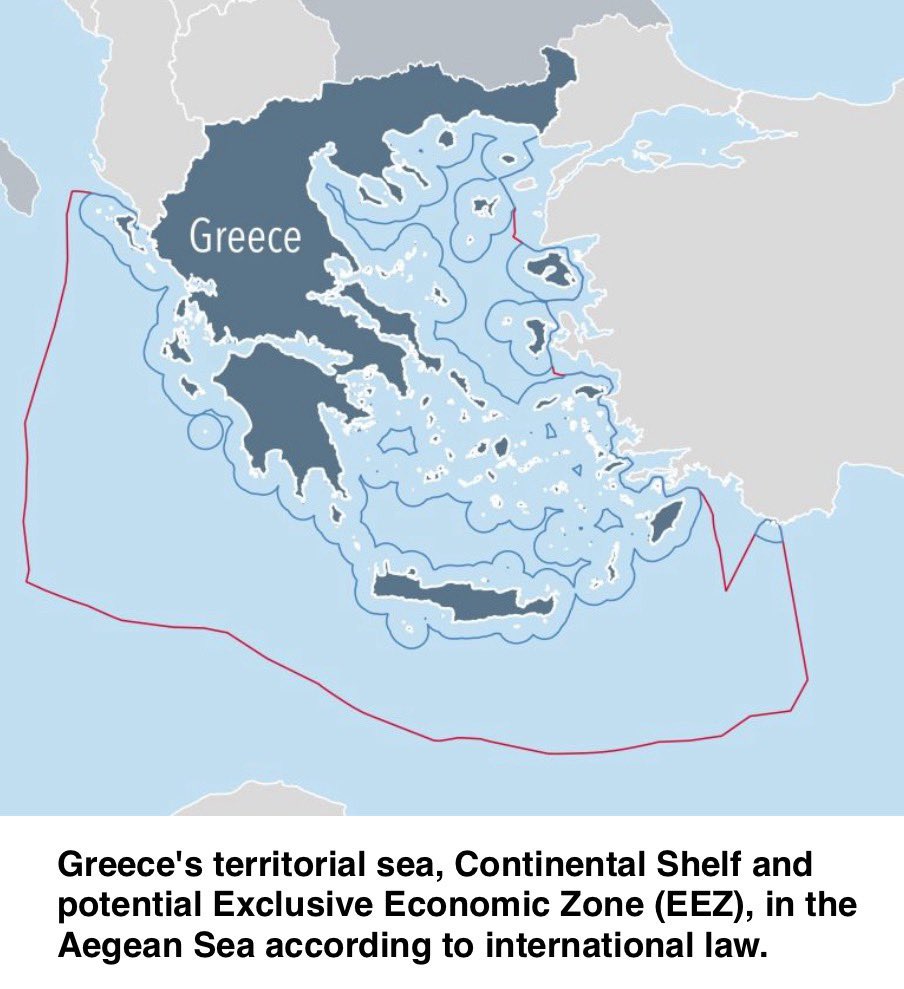
🇬🇷 Athens responds to Turkey’s provocations and rejects the Turkish illegal claims regarding the outer limits of its maritime zones in the Aegean and the Eastern Mediterranean in a letter to the United Nations. “The Turkish claims ignore completely the sovereign rights of
 tweet media
English
229
222
876
66.7K
Stefanos Elenidis retweetet
Noemon Acragas
Noemon Acragas@noemonas·
Petrach was taught Greek by a Greek Byzantine Scholar, Barlaam of Calabria. Another Byzantine Greek Leontio Pilatos was the one who translated Homer from Greek for Petrarch and his Library. He sent letters to the Greek-sepaking Roman Empire in Constantinople asking for manuscripts. He was presented with a full Greek copy of Homer by a Byzantine Diplomat in Avignon. Petrach was initiated into Classic Literature by Byzantine Greeks in Italy who also functioned as his teachers. The same happened with Aldus Manutius who collected an army of Greek immigrants and the same happened with Bibliotheca Marciana which belonged to a byzantine Greek emigre, Bessarion and who bequeathed his entire Library to Venice to form the nucleus of the Bibliotheca Marciana.
English
4
17
122
6K
Stefanos Elenidis retweetet
Spyros Kalogirou
Spyros Kalogirou@miostudio3·
Many years to Zoe and Zisi :)
English
0
1
1
20
Historic Vids
Historic Vids@historyinmemes·
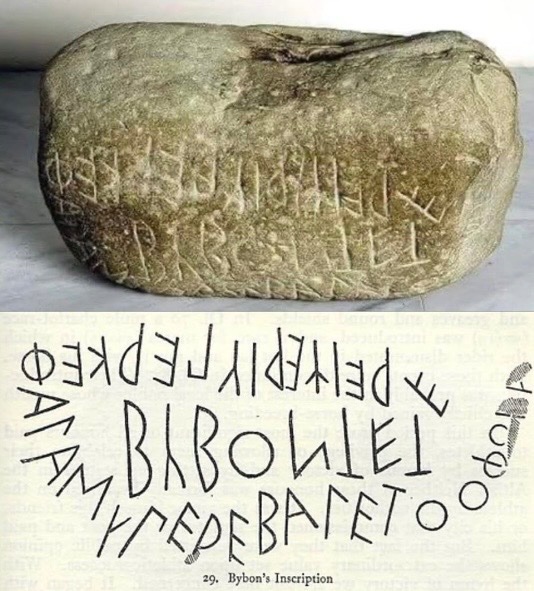
316 lb stone from Ancient Greece with the inscription: “Bybon, son of Phola, has lifted me over [his] head with one hand.” The only known reference to Bybon comes from a single inscription carved into a sandstone block discovered at Olympia. The stone features two deep grooves, likely used as handholds, suggesting it once served as a training weight. The inscription states that Bybon, son of Phola, lifted the stone overhead with one hand—an impressive display of strength meant to be remembered. Historian E. Norman Gardiner notes that the word translated as “lifted” could also mean “threw,” placing the feat within the broader culture of ancient Greek athletics. At Olympia, strongmen, wrestlers, boxers, and practitioners of pankration were known for showcasing extraordinary power. Gardiner suggests Bybon’s accomplishment may have been even more dramatic than it appears—possibly involving the one-handed throw of a 316-pound stone, a feat designed to demonstrate and immortalize exceptional strength.
Historic Vids tweet media
English
41
114
939
100.5K