Angehefteter Tweet
将時
55.8K posts

将時
@SYOWJ
しょうじ🦇 ゲーム垢|🇯🇵 風燕伝|門派:三更天|好:青渓人、南華公子|3L🆗(見る専) HPMA | 🦡🪄 エンジョイ勢|SS・戦闘・考察love フォロー❌・AI絵師・AI加工者・ネタバレNG者・趙●義ファン 嫁🦊アイコン作【@mapleSD2】 絵専用垢【@KUMR_SYO】
DD子の部屋 Beigetreten Haziran 2019
706 Folgt756 Follower

いつも本当にありがとうございます、素晴らしすぎる。
Where Stories Meet@jiangyan53997
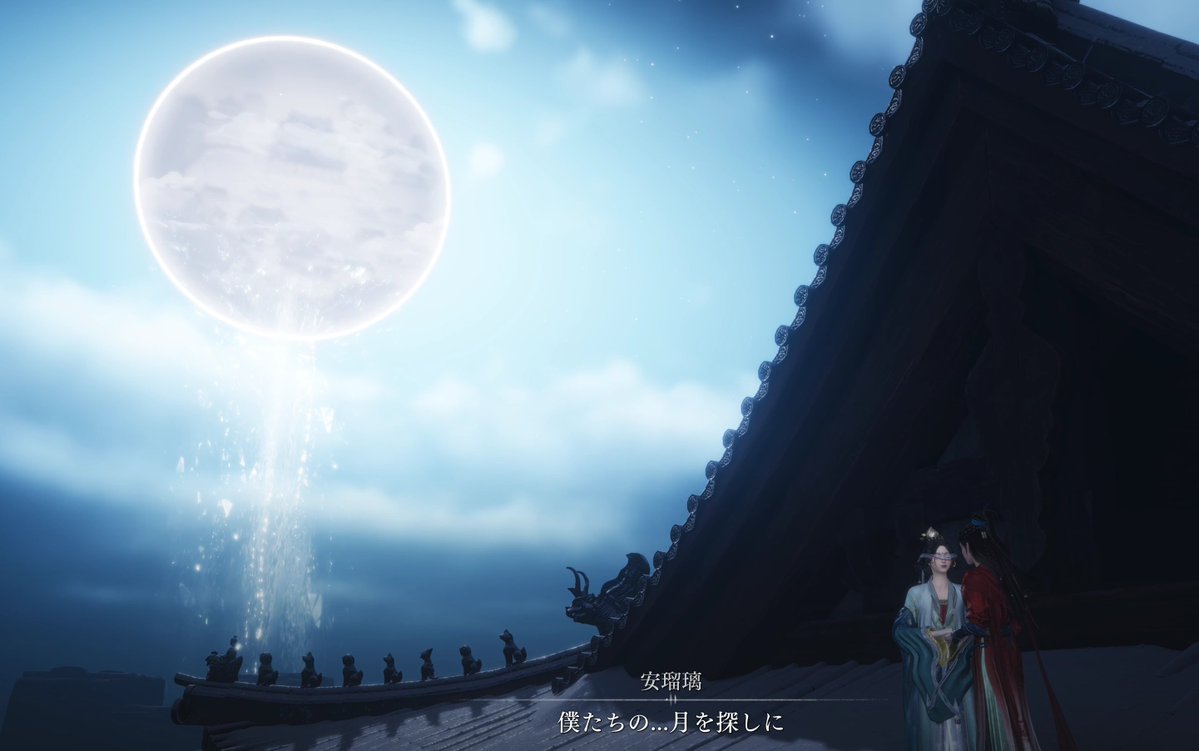
Is Paper Moon just a cute tale about two girls' love? Give me five minutes and let me break down a lot more going on beneath the surface. 1.Three Names, Three facets To actually get this story, you have to understand the three main women: Guanyin, Liuli, and Xin Zizai. Guanyin, in Buddhism, is also known as 'Avalokiteshvara' or 'Guanzizai Bodhisattva'. This figure isn’t tied to a fixed gender and is said to have thirty-three manifestations. Guanyin symbolizes mercy and wisdom. The name suggests observing the world with awareness, awakening one’s own mind, and helping guide others beyond confusion and suffering toward inner freedom. Liuli , or 'Lapis Lazuli' (blue glass), is one of the seven treasures in Buddhism. It refers to wisdom, resilience, and a state as pure as crystal. Liuli Guanyin is one of Guanyin’s incarnations, embodying spiritual cleansing and the hope to transcend hardship. Xin Zizai, literally means 'a mind that is free and at ease'. It represents transcending the mental shackles and returning to one’s pure nature, facing life’s ups and downs with clarity and openness, and finding the balance between helping others and caring for oneself to achieve true freedom and peace. If you’ve got this far, you can probably sense that all three names revolve around the same core idea: chasing inner freedom and spiritual awakening. 2.The Caged Guanyin The main characters in Paper Moon are two girls with completely opposite backgrounds: one is a sheltered young lady from a powerful aristocratic family, while the other is a low-status performer from an acrobatic troupe. During the late Tang period, several major clans dominated Shazhou in the Hexi region, including the Zhang, Suo, Li, and Cao families. In AD 914, the Cao family replaced the Zhang family’s Guiyi Army regime and became the military governors of Shazhou. The Cao family in Paper Moon is likely inspired by this historical background (though the story itself isn’t necessarily set in AD 914). To stand out among the powerful families of Shazhou and project an image of unwavering dedvotion to Buddhism, the Cao family needed a way to build prestige. At the same time, the local Buddhist temple equally needed publicity to secure its influence among the elite families of Liangzhou (a border political heart of the Hexi region). The two sides quickly found common ground. They chose the Cao family’s young daughter as the center of their paln —a girl delicate as carved jade, beautiful but frail. The temple claimed that the girl was the reincarnation of a jade attendant of the Bodhisattva to prove that she shared a special connection with Guanyin. They even bestowed upon her a new name: Cao Jing Guanyin. As Guanyin got better, people believed the temple's blessing truely worked, incense burned ever more thickly upon the altars, and the temple’s fame grew with each passing day. However, a bigger calculation was waiting for this poor girl. In order to keep the family's status and peace among the surrounding tribes, her father decided to marry her to the Diedie clan(跌跌氏) of the Wuhu tribe(乌护部落). The girl found the prospect unbearable. Often she would hid in the quiet halls of the temple, copying Buddhist scriptures by lamplight. But while her brush traced sacred words, her mind was elsewhere—she secretly committed to memory the map of Hexi, preparing the path of escape. She never had faith in Buddhas. All she wanted was just the chance to alter her own fate. 3.Zizai Liuli An Liuli was born of mixed Hu and Han blood and raised among the wandering folk of an acrobat troupe. Her mother used to tell her that her dad was a poet who did magic tricks and ran a snack shop in Chang’an called An's Hu cakes(安记胡饼). At the age of seven, Liuli slipped away from the troupe and started a journey to Chang’an, determined to find the father she had never known. Along the way, she encountered an old man surnamed Lian(Little Lian), who taught her the Buddhist art of Sporting with Supernatural Powers(Youxi Shentong), which was about the Buddhas and bodhisattvas, endowed with great wisdom, take infinite ways to lead beings gently away from suffering and toward awakening. Among the thirty-three manifestations of the Bodhisattva of Compassion, the fifth is known as The Avalokiteshvara of Playful Freedom. Here, 'Play' signifies the grace to manifest at will and enlighten by chance—a testament to the Bodhisattva traversing the mortal realm with an unobstructed heart, delivering all beings from darkness. When the caged canary first glimpses the wild goose in its soaring flight, the heart can never find peace again within its golden bars. Guanyin and Liuli spend the happiest days of their lives together. Yet Guanyin’s wedding looms, as having tasted the flavor of freedom, she would not, and could not submit to the shackles of marriage. 4.Three Lantern Riddles At the Lantern Festival, three riddles were like silent oracles, marking the stations of Guanyin’s awakening. The First Riddle: The Great Prajna Sutra The soul yearns for liberation; the True Word endures for eternity. But for Guanyin, how could she find liberation when the heart was no longer at peace? The Second Riddle: The Kite Guanyin grasped the truth at last—only when the string snaps can the flight be free. Without sacrifice, there can be no gain. However, to her dear friend, Xin Zizai, it was madness to cast away the wealth for the fleeting "selfhood" of a single morn, it was not worth the price. The Third Riddle: The Character for Nation (国) A jade clutched within the mouth, guarded by halberds on every side; thus is the Land secured in peace. From these strokes, Guanyin gleaned sharp and bitter wisdom: a realm can only be stabilized through force. The Cao family decided to marry their daughter for flatteries, which was not a strategy of wisdom, but a surrender of the soul. Xin Zizai cut her short: "For us daughters, a marriage alliance is our only Pure Land." Xin Zizai, now the secondary wife of the Bochen clan, possessed a name that belied her fate; she was anything but 'unbound'. Faced with the scorns of her husband’s family and the cold prejudice against her Han blood, she could only swallow her grievances in silence. She deceived herself with the lie that everything was well, and urged Guanyin to accept the same fate: "Women like us are never born to be ourselves. Even our marriages are only for benefiting our families." Guanyin understood her father's decision from this point. But, if one thing is not wrong, does that really make it right? 5.Paper Moon As the wedding day crept closer, Guanyin grew ever more despondent. To cheer her, Liuli performed a trick: it seemed that she plucked the moon from the sky and placed it gently in Guanyin’s hands. It was just like magic. A dream of two souls adrift in a troubled world; a desperate yearning to shatter the shackles of fate and embrace liberty as luminous and untainted as moonlight. Liuli then taught Guanyin a small trick. She folded a paper moon for her, and told her: "If you whisper to it the words ‘A guest arrives tonight, grant them light’ (今夕有客,可赐光明),your wish will be answered.” She spoke of Chang’an, promising there would be a hundred moons that Guanyin would love. Guanyin gave her word. 6.Sight Beyond Eyes But fate was cruel to these two girls. A sudden assassination attack fell upon them, and in the chaos, Guanyin was stabbed, her eyes were destroyed forever. Blinded but still a pawn, her family refused to abandon this marriage. Her grandmother’s voice was cold as a sword: "You know nothing about the chaos time, the hardship of the Han people in Hexi region, nor the crushing weight the Cao clan bears for survival." Guanyin answered, quietly and firmly: "Do you truly believe that by bending the knee, by bartering daughters and praying to Buddha, we shall ever reclaim the lost lands of the Great Tang?" In a fury, her father immured her in darkness. Under the shroud of night, Liuli found her and stole her away. Liuli told her to go first and she would follow later with the wedding procession. They pledged to meet at the Dasan Pass. At their parting, Guanyin traced a silent blessing in the book of magical arts Liuli always carried. 7.A Shared Dream The wedding day finally arrived with fire and blood—the Guiyi Army was thrown into rebellion. Zhang Huaishen’s family was annihilated, and Liangzhou plunged into chaos. In the tumult, Liuli, the disguised bride, fell from a cliff. On the edge of death, Liuli summoned her final magic. She transformed her love and promise into a way toward the moon. She vowed to the wind: "I shall become the wild goose, or a drifting cloud, or the moonlight itself, to find you." At that same moment, the blind Guanyin clutched her paper moon and breathed the incantation: "A guest arrives tonight, grant them light." Years later, a blind woman ran a snack shop named An's Hu cakes in Chang’an, and was called "Grandmother Guanyin". Neighbors whispered that she had some magical powers: she had crossed a thousand miles of desert to Chang'an with her blind eyes, and wherever she went, moonlight followed—sometimes with a shadow of someone beside her. Through the Eyes of My Heart To my mind, The Paper Moon is far more than a monologue of tragic love. It is a tale of a girl wielding the blade of freedom to cut through the heavy shackles of clan and the so-called "national" dutythat bound another. Just as The Play of Divine Transcendence (Abhijñā-vikrīḍita) shows, when one steps beyond the surface and the habits of fixed understanding, the world opens differently. We may move like a lion walking among deer, unfettered, unafraid, seeing at last that life, in its deepest nature, has always been whole. And then it becomes clear that the heart of the story was never truly about gender: love and friendship are always the light that illuminates our life. In the turbulent world of Paper Moon, the bond between these two girls transcends status, life and death, and becomes the ultimate act of salvation. 8.Behind the Story Paper Moon draws from two Dunhuang relics: the Mahaprajnaparamita Sutra and the Precepts of the Ten Commandments. The former explores the "Emptiness of All Phenomena", a teaching that shatters the illusions of self and dogma. By seeing through appearances with transcendental wisdom, one breaks free from the cycle of birth and death to reach a state of perfect harmony and liberation. Unearthed at Dunhuang in 1900, these manuscripts were dispersed among international institutions due to the waning power of the late Qing Dynasty. The latter, though a text on discipline, contains a hidden poem on its reverse: "Sun and moon long look at each other,winding around, never departing from the mind.Wherever I see you walk or sit,I feel as if my body is set on fire."(日月长相望,宛转不离心。见君行坐处,疑似火烧身。) This verse serves as Guanyin’s parting message to Liuli. The original manuscript resides in the British Library. Original author:软软喵大人 Translator:旺仔 Review:向日菇 #wheremindsmeet #WWM #燕云十六声
日本語
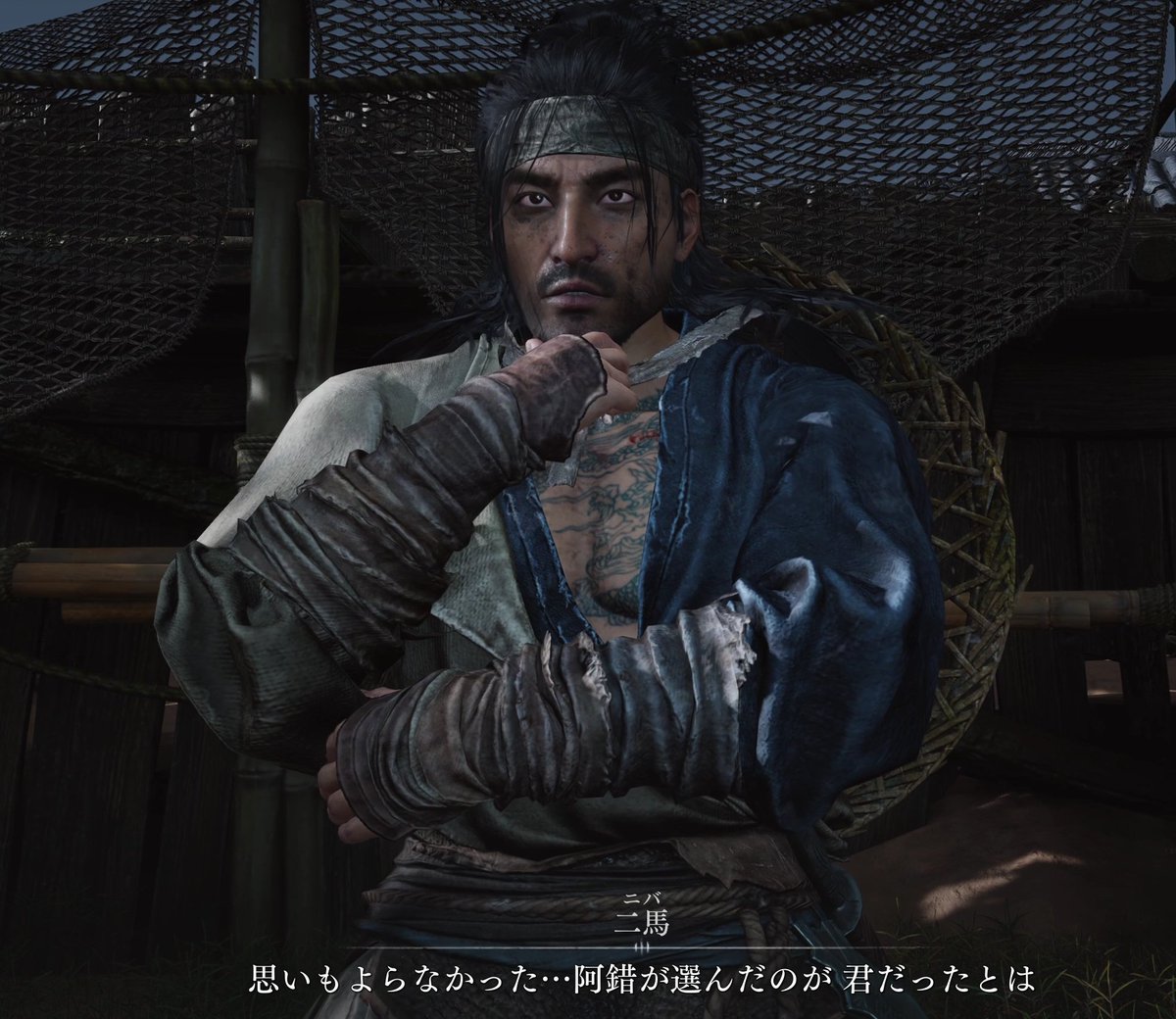
@Melo_maru_u アキさんありがとうございますぅぅ😭🫶💝
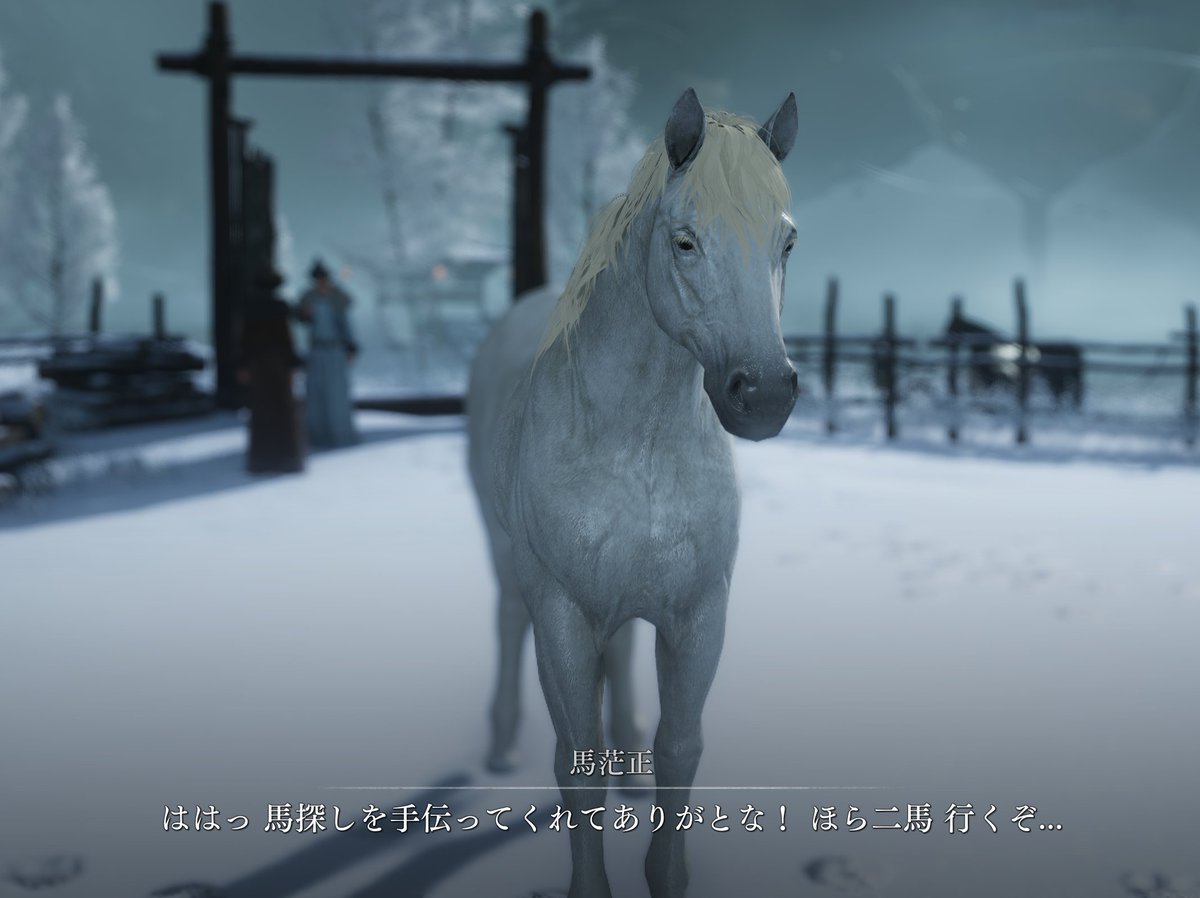
涼州はどこで撮ってもどことなく悲しい雰囲気があります…🥹
アキさん、良い旅をお過ごしください…🫶💝💐
日本語