Vikram Saxena

5.7K posts

Vikram Saxena banner
Vikram Saxena

Vikram Saxena

@SaxSF

Creators @Meta| ex Vice-Chair Planning Commission @Cupertino| @ArunayFdn| @RagazziTweets| @SFBart Around The Bay| Transit fixes Housing Affordability (eg: NYC)|

San Francisco Bay Area Beigetreten Ağustos 2012
1.5K Folgt344 Follower
Vikram Saxena retweetet
The Emissary
The Emissary@TheEmissaryCo·
Ther perversion of Indology is downstream of the sheer volume of missionary volumes on Indian ethnography. Missionaries had a massive incentive to not only create literature about India but also exaggerate the barbarism of India. The more shocking material on India, the more funding missionaries got. Not just that, but missionary embellishment of Indian atrocities created a Casus Belli for the 'civilizing' mission of the British Raj. Thus both sides benefited from outrageous reporting. One such occasion was conjuring reports of human sacrifice in resource laden regions of central & east India. The Company came in with a free hand & brutalized the natives to a terrible degree. Outside of tribal areas who had to be civilized due to their demonic barbarism, missionaries claimed that Brahminism was even worse than demonic. And that other castes had to be saved from perhaps the most evil practice in humanity (Brahminism).
The Emissary tweet mediaThe Emissary tweet mediaThe Emissary tweet media
The Emissary@TheEmissaryCo

British intervention in Indian religious life had an ironic appendage: a class of Brahmins who would lay the foundations for anti-Brahmin sentiments across India. For example, in the 'Hookswinging Controversies' quoted, the British collaborated with a section of Brahmins who had a dim view of the entire spectacle & wanted it abolished as well. The thing was, this collaborating group was a minority, many Brahmins participated in the ritual & were at the forefront of a petition to keep it alive. The unintended effect of the collaboration was ammunition for missionaries & the cleaving of Hinduism. Collaborators buttressed divisive arguments claiming that hookswinging was not 'Brahmanic' or 'Sanskritic,' thereby creating categories unmoored in local Indian theology. This class of Brahmins helped entrench this fantasy in Indology and with it, anti-Brahmin sentiment was spread framing Brahmins as the masters of Brahminism, a faith designed to fool all others.

English
4
50
199
33K
Vikram Saxena retweetet
Wilfred Reilly
Wilfred Reilly@wil_da_beast630·
Gotta say: look at India.
Wilfred Reilly tweet media
English
90
355
2.5K
200.8K
Vikram Saxena
Vikram Saxena@SaxSF·
🫢 Paul, you have the "only for select partners" Muse Spark API Access?
English
1
0
1
33
Paul C. Jeffries
Paul C. Jeffries@PaulJeffries·
But you already laid claim to all the various ways tennis is differentiated. You can’t have it both ways. Having ability to sustain the distinctive ohysical demands, cognitive load, social embeddedness, being outdoors — and I suspect social class or differentiated financial capacity — are all likely to be causes of tennis playing (or rather, absence of these things is a gating function) as much as consequences, and these things themselves were the things that caused them may very well be sources of longevity. For example, consider luxury yachting. This tends to be associated with having a lot of friends, and some levels of physical robustness let us imagine. I might claim that everyone should own and use a luxury yacht because it turns out that people who do, live years longer than people who don’t. Well, of course we know that what’s really going on in that case is that people who are very wealthy live longer than people who are not. And by the way, just like with the tennis case this isn’t even necessarily because the money enables the longer life, although of course, that was my main point. It’s also true that the things that caused a longer life if they are absent are going to get in the way of you earning a lot of money. I’m not saying that you’re wrong about the implication that people who don’t play tennis and are able to do so would benefit in longevity from changing their behavior to become tennis players. But I don’t know if we know that. Presumably, a good scientific study takes all this into account, but you didn’t mention it, and you pushed back when I suggested the problem, so I do wonder. I used to joke with my friends that scientific studies showed that people who owned multiple pieces of exercise equipment at home, and also owned an expensive gym membership, were substantially physically stronger than other people. So it was puzzling that my closet full of unused gadgets, and my own used expensive gym membership had not so far led to hypertrophy. 😛
English
1
0
0
17
Aakash Gupta
Aakash Gupta@aakashgupta·
Tennis players live 9.7 years longer than sedentary people. Not 9.7 months. 9.7 years. Nearly a decade. The Copenhagen City Heart Study tracked 8,577 people for 25 years and ranked every sport by how much life it adds. Badminton: 6.2 years. Soccer: 4.7. Cycling: 3.7. Swimming: 3.4. Jogging: 3.2. Tennis almost triples jogging. A separate study of 80,000 adults found racket sports cut all-cause mortality by 47% and cardiovascular death by 56%. Swimming hit 41%. Aerobics hit 36%. The question is why racket sports destroy everything else. Three mechanisms stack on top of each other. First, the physical demands. A tennis rally requires explosive sprints, lateral cuts, and sustained aerobic output. You're training fast-twitch and slow-twitch muscle fibers simultaneously. Most cardio only trains one system. Second, the cognitive load. You're reading spin, predicting angles, adjusting position, and executing motor patterns in real-time. Your brain is solving spatial puzzles at 80+ mph. That hand-eye coordination and strategic processing builds neural connections that protect against cognitive decline. Third, and this is the one researchers keep coming back to: you literally cannot play alone. Every racket sport requires another person on the other side of the net. That forced social interaction triggers neurochemical benefits that solitary exercise cannot replicate. Strong social connection alone increases your chance of longevity by 50%. Jogging is you and your thoughts. Tennis is you, a strategic opponent, and a community. Dr. Daniel Amen is right. The data is overwhelming. If you want the single highest-ROI activity for a longer life, pick up a racket.
English
1.3K
3.7K
25.3K
5.2M
Vikram Saxena
Vikram Saxena@SaxSF·
But ill people also do not go running or go lift weights. This study tracked people in the same environment (Copenhagen) over twenty five years. There is growing evidence that companionship and social bonds lower cortisol levels which results in a much better overall outcomes beckman.illinois.edu/news/article/2…
English
1
0
1
26
Vikram Saxena
Vikram Saxena@SaxSF·
@hmurali321 @aakashgupta Access to tennis is fairly universal. Most communities, schools have tennis courts and it is not an expensive sport.
English
1
0
0
27
Harish Murali
Harish Murali@hmurali321·
@aakashgupta There is likely huge confounding due to selection. The type of people who have access to and play tennis - is likely a demographic with high longevity. The causal effects tennis has likely is present, but much more smaller than this
English
1
0
1
130
Vikram Saxena retweetet
Aparajite
Aparajite@amshilparaghu·
Wow Cricket Flicker Book!!! During 80s, before reels, before whatsapp… before shorts… THIS was the cricket entertainment! A rare Thumbs Up Flicker Book of Kapil Dev-pure nostalgia for every Indian cricket fan❤️ Do you remember this?
English
177
497
3.7K
186.7K
Vikram Saxena retweetet
Tech with Mak
Tech with Mak@techNmak·
In 1948, a 32-year-old at Bell Labs published a paper nobody fully understood. Engineers found it too mathematical. Mathematicians found it too engineering-focused. One prominent mathematician reviewed it negatively. That paper - "A Mathematical Theory of Communication", became the founding document of the digital age. The man was Claude Shannon. Father of Information Theory. At 21, he wrote the most important master's thesis of the 20th century. Working at MIT on an early mechanical computer, Shannon noticed its relay switches had exactly two states - open or closed. He had just taken a philosophy course introducing Boolean algebra, which also operated on two values: true and false. Nobody had ever connected these two things. His 1937 thesis proved that Boolean algebra and electrical circuits are mathematically identical, and that any logical operation could be built from simple switches. Howard Gardner called it "possibly the most important, and also the most famous, master's thesis of the century." Every digital computer ever built traces back to this insight. At 29, he proved that perfect encryption exists. During WWII, Shannon worked on classified cryptography at Bell Labs. His work contributed to SIGSALY, the secure voice system used for confidential communications between Roosevelt and Churchill. In a classified 1945 memorandum, he mathematically proved the one-time pad provides perfect secrecy, unbreakable not just computationally, but provably, permanently, against an adversary with infinite power. When declassified in 1949, it transformed cryptography from an art into a science. It laid the foundations for DES, AES, and every modern encryption standard. At 32, he defined what information is. His 1948 paper introduced one equation: H = −Σ p(x) log p(x) Shannon entropy. The average uncertainty in a probability distribution. The minimum bits required to encode a message. Three things followed: > He defined the bit - the fundamental unit of all information. His colleague John Tukey coined the name. > He proved the channel capacity theorem, every communication channel has a maximum rate of reliable transmission. You can approach it. You can never exceed it. > He unified telegraph, telephone, and radio into a single mathematical framework for the first time. Robert Lucky of Bell Labs called it the greatest work "in the annals of technological thought." Where his equation lives in AI today: Cross-entropy loss - the function training every classifier and language model, is derived directly from H. Decision tree splits use information gain, which is H applied to data. Perplexity, the standard LLM evaluation metric, is an exponentiation of cross-entropy. Every time a neural network trains, Shannon's formula runs inside it. He also built the first AI learning device. In 1950, Shannon built Theseus, a mechanical mouse that navigated a maze through trial and error, learned the correct path, and repeated it perfectly. Mazin Gilbert of Bell Labs said: "Theseus inspired the whole field of AI." That same year he published the first paper on programming a computer to play chess. He co-organized the 1956 Dartmouth Workshop, the founding event of AI as a field. The man: He rode a unicycle through Bell Labs hallways while juggling. He built a flame-throwing trumpet, a rocket-powered Frisbee, and Styrofoam shoes to walk on the lake behind his house. He called his home Entropy House. When asked what motivated him: "I was motivated by curiosity. Never by the desire for financial gain. I just wondered how things were put together." In 1985, he appeared unexpectedly at a conference in Brighton. The crowd mobbed him for autographs. Persuaded to speak at the banquet, he talked briefly, then pulled three balls from his pockets and juggled instead. One engineer said: "It was as if Newton had showed up at a physics conference." He died in 2001 after a decade with Alzheimer's, the cruel irony of information slowly leaving the mind of the man who defined what information was. Claude, the AI model, is named after Claude Shannon, the mathematician who laid the foundation for the digital world we rely on today.
Tech with Mak tweet media
English
193
2.1K
7.6K
443.4K
Vikram Saxena
Vikram Saxena@SaxSF·
As a child growing up in India, seeing the color plates of man on the moon in the Grolier encyclopedia was an inspirational memory. The past 30 years have not been all that great for us Americans Hope #ReturnToTheMoon rekindles what so many look up the #USA as the best country in the world. #NASA #ARTEMISII
NASA@NASA

Liftoff. The Artemis II mission launched from @NASAKennedy at 6:35pm ET (2235 UTC), propelling four astronauts on a journey around the Moon. Artemis II will pave the way for future Moon landings, as well as the next giant leap — astronauts on Mars.

English
0
0
0
23
Vikram Saxena retweetet
Massimo
Massimo@Rainmaker1973·
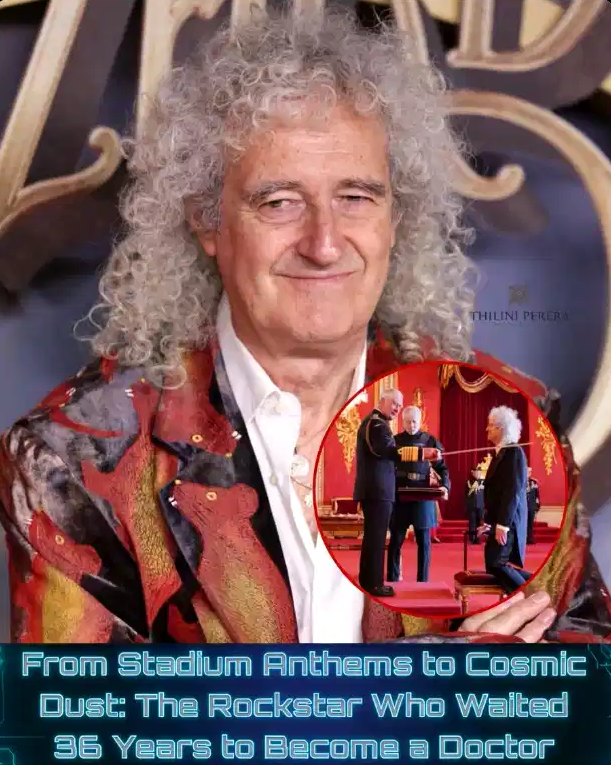
In 1970, a 23-year-old physics student at Imperial College London found himself at a life-altering crossroads. Brian May was deep into his doctoral research on cosmic dust—specifically the zodiacal dust cloud, the tiny particles that drift through the solar system and scatter sunlight. His PhD was well underway, and a promising academic career in astrophysics lay ahead. But there was another path calling him. May was also the lead guitarist of a newly signed rock band named Queen. With a record deal secured and tours on the horizon, the band’s momentum was building fast. Faced with an impossible choice between the guitar and the telescope, May made his decision: he paused his studies and bet everything on music. Queen’s ascent was meteoric. By the mid-1970s, they had become a global phenomenon. Timeless anthems like “Bohemian Rhapsody” and “We Will Rock You” exploded onto the charts, while May’s iconic homemade guitar, the Red Special, helped define the band’s legendary sound. Stadiums sold out worldwide, and millions of albums flew off the shelves. Yet throughout his rock stardom, May never fully let go of his scientific passion. Even at the height of Queen’s fame, he stayed connected to astrophysics—reading journals, attending lectures when possible, and maintaining contact with his former supervisor, Professor Michael Rowan-Robinson, who had once told him: “You can always come back and finish.” Thirty-six years after stepping away, in 2006, May decided the time had finally come. He reached out to Rowan-Robinson, and together they revived the long-dormant project. Though the field had moved forward and his original data needed updating, his early observations still held real scientific value. Balancing his ongoing music career with late-night research sessions, May updated his work, incorporated new findings, and refined his analysis. In 2007, at the age of 60, Imperial College London officially awarded him a PhD in astrophysics—not an honorary title, but one earned through rigorous research and peer review. Dr. Brian May had finally completed what he started more than three decades earlier. His journey is a powerful reminder that passion has no expiration date. Whether on stage under stadium lights or studying the dust between the planets, Brian May proved it’s never too late to finish what you began.
Massimo tweet media
English
45
531
3K
119.2K
Vikram Saxena retweetet
Nabila Jamal
Nabila Jamal@nabilajamal_·
🚨 Chilling footage Air Canada AC8646 that collided with a Port Authority fire truck mid-runway at LaGuardia. Impact caught on camera The Port Authority fire truck was crossing the runway to respond to a separate emergency on a different aircraft Both pilots killed. Dozens injured. Investigators looking into the communication between air traffic control and the ground vehicles
English
0
11
47
6.6K
Vikram Saxena retweetet
Sheel Mohnot
Sheel Mohnot@pitdesi·
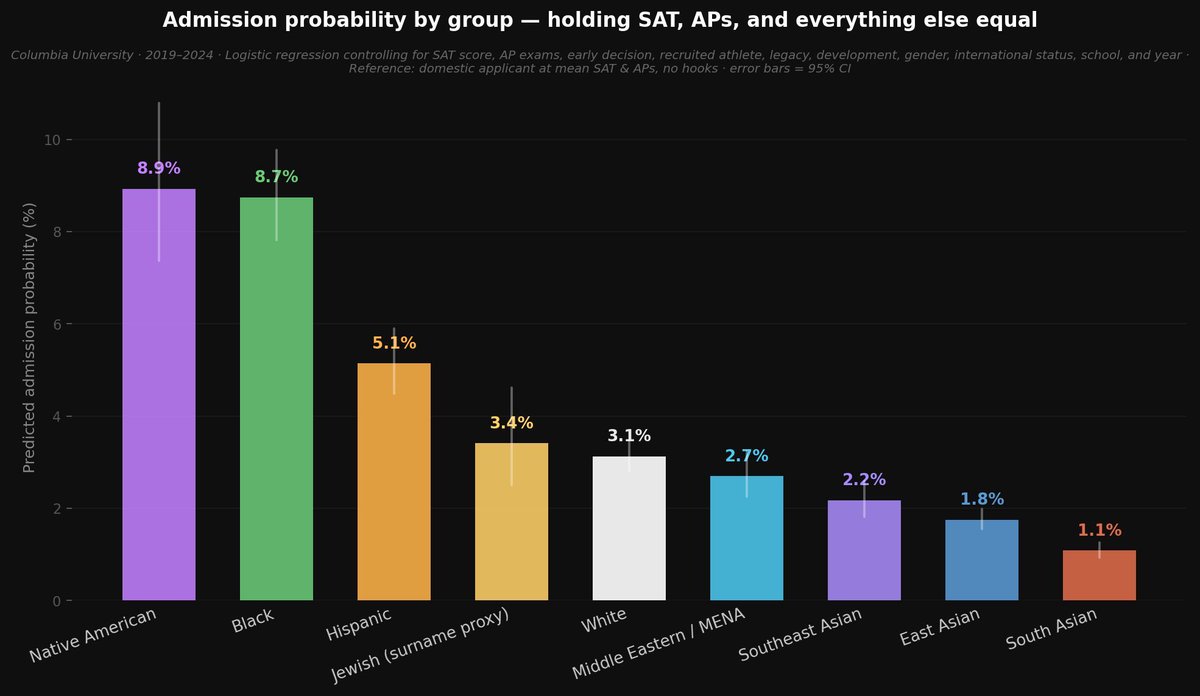
Columbia, 2019-2024 Controlling for all other factors, compared to South Asians: East Asian: 64% more likely to get in White: 182% more likely Black: 691% more likely Supreme Court ruled race-conscious admissions unconstitutional in 2023.
Werner Zagrebbi🇦🇿@zagrebbi

Here's a graph of what race alone does to your odds of getting into Columbia, holding everything measurable equal. Race is the single biggest factor in admission odds.

English
22
32
403
44.3K
Vikram Saxena retweetet
Werner Zagrebbi🇦🇿
Werner Zagrebbi🇦🇿@zagrebbi·
Here's a graph of what race alone does to your odds of getting into Columbia, holding everything measurable equal. Race is the single biggest factor in admission odds.
Werner Zagrebbi🇦🇿 tweet media
English
53
128
1.3K
315.8K
Vikram Saxena retweetet
Peter Kazanjy
Peter Kazanjy@Kazanjy·
We knew the Ivy League was racist against east asian and white men, but little did we know they were EXTRA racist against south asians.
Werner Zagrebbi🇦🇿@zagrebbi

The famous SFFA case treated Indians and East Asians as a single group. This masked significant heterogeneity: It's way harder to get in if you're Indian! In Columbia's internal admissions database (h/t @cremieuxrecueil), East Asian applicants had a 41% lower odds of admission than equally qualified White applicants, whereas South Asian applicants had 63% lower odds.

English
31
71
715
45.3K
Vikram Saxena retweetet
woopdedoodah ✝️✝️ 🇺🇸🇺🇸
I mean obviously this is true. As an Indian Catholic with a Portuguese/Latino name, basically as long as I didn't show up to an interview, or only did a telephone interview, I got into the college. The moment someone from the admission department saw you and saw that you looked Indian, you were out. The entire system is unfair and stupid.
English
3
2
34
2.3K
Vikram Saxena retweetet
Wilfred Reilly
Wilfred Reilly@wil_da_beast630·
Asians have a harder time getting into college than whites - which we knew - but Indians etc apparently have a harder time than East Asians.
Wilfred Reilly tweet media
English
67
121
1K
125.7K
Vikram Saxena retweetet
Mr PitBull
Mr PitBull@MrPitbull07·
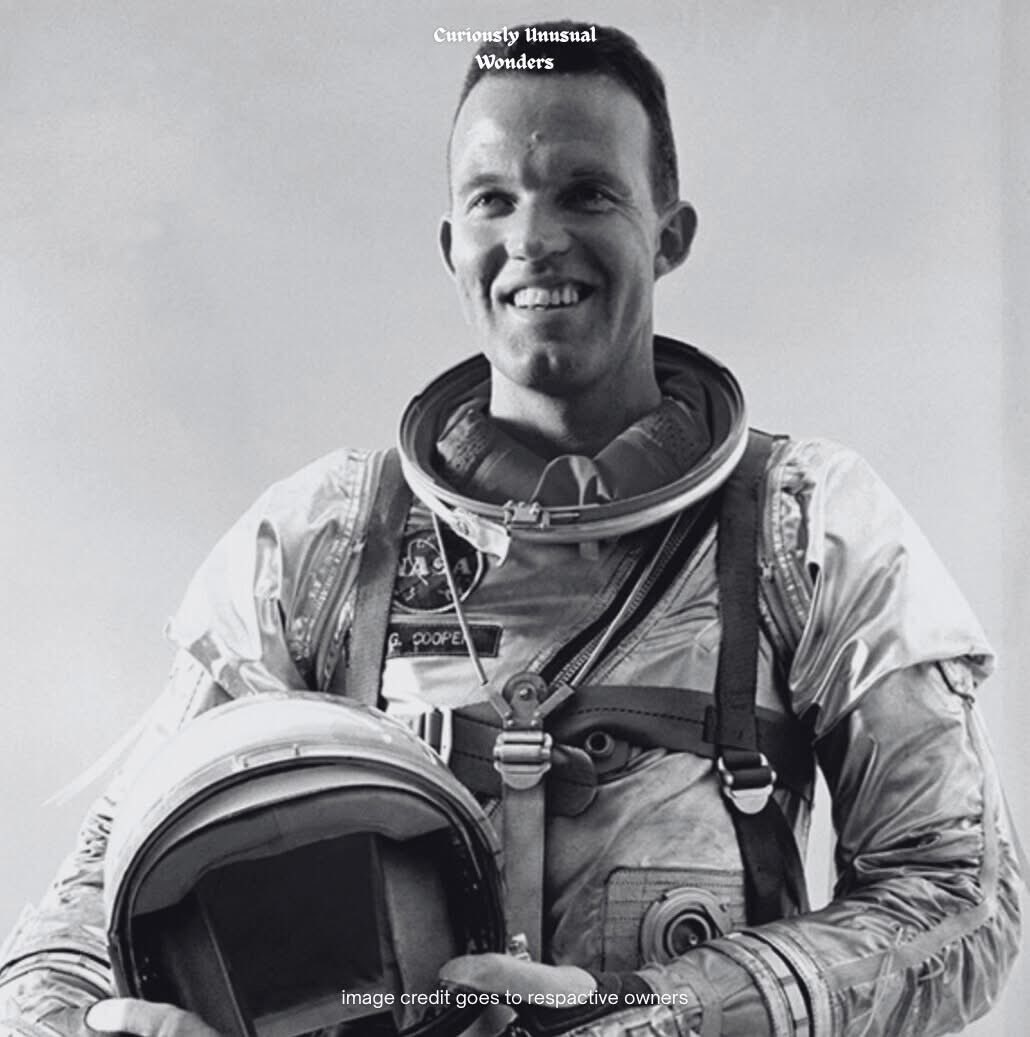
May 16, 1963. Gordon Cooper was orbiting Earth alone inside a capsule barely big enough to turn around in, moving at 17,500 miles per hour. He had been up there for over a day. Then the warnings started. First a faulty sensor screaming that the ship was falling — it wasn't. He switched it off. Then something far worse: a short circuit knocked out the entire automated guidance system. The one that kept the capsule steady. The one that was supposed to bring him home. Without it, reentry was nearly impossible. Too shallow an angle and the capsule would bounce off the atmosphere back into space. Too steep and it would incinerate. The margin for error was razor thin — and every computer that was supposed to hit that margin was dead. Down on the ground, NASA engineers watched the telemetry in silence. They could see everything going wrong. They could fix nothing. Cooper didn't panic. He uncapped a grease pencil and drew lines directly on the inside of his window to track the horizon. He looked up at the stars he had spent months memorizing and used their positions to orient the ship by eye. Then he set his wristwatch. Because when you have no computers left, you become the computer. At exactly the right moment — calculated in his head, confirmed by the stars outside — he fired the retrorockets. The capsule shook. The sky turned to fire. For several minutes, no one on Earth could reach him as plasma swallowed the ship whole. Then the parachutes opened. Faith 7 hit the water just four miles from the recovery ship — the single most accurate splashdown in the entire Mercury program. The man with a wristwatch and a few pencil marks on a window had outperformed every automated system NASA had. We talk a lot about technology saving us. And it often does. But Cooper's story is a quiet reminder that behind every machine, there still has to be a human being who can look out the window, think clearly under pressure, and decide what to do next. The final backup was never the software. It was him.
Mr PitBull tweet media
English
512
4K
16.6K
366.2K
Vikram Saxena retweetet
Satya Nadella
Satya Nadella@satyanadella·
We’ve trained a multimodal AI model to turn routine pathology slides into spatial proteomics, with the potential to reduce time and cost while expanding access to cancer care.
English
458
1.9K
11.2K
2.8M
Vikram Saxena retweetet
Physics In History
Physics In History@PhysInHistory·
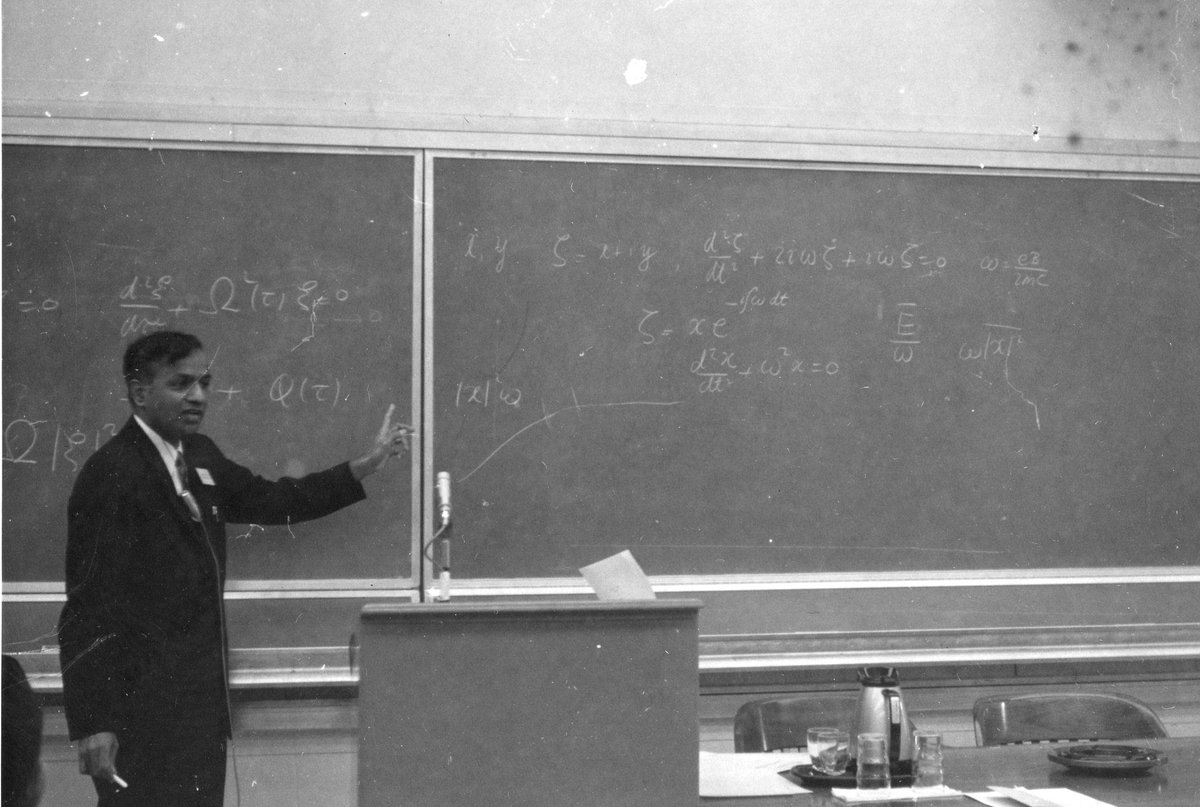
In the 1940s, Subrahmanyan Chandrasekhar was committed to his teaching role at the University of Chicago, despite being based at the Yerkes Observatory. Each week, he traveled 80 miles to teach a special course attended by only two students. The students were Tsung-Dao Lee and Chen-Ning Yang. They proved their mentor's faith was well-placed when they both won the Nobel Prize in Physics in 1957, years before Chandrasekhar received the same honor in 1983. Remarkably, this course went down in history as the only one where every attendee received a Nobel Prize, underscoring the extraordinary impact of Chandrasekhar's dedication and teaching. 📷 AIP Emilio Segrè Visual Archives, Physics Today Collection
Physics In History tweet media
English
100
915
6K
215.2K