Hiatal hernia: the upper stomach pushes through the diaphragm's esophageal hiatus into the chest cavity. The sliding type makes up ~95% of cases.
Affects an estimated 60% of people over 60. Often asymptomatic, but a common cause of GERD. #HiatalHernia
All animations created using the SciePro 3D anatomy model.
The female pelvic floor: multiple layers of muscle supporting the bladder, uterus, and rectum while controlling continence and contributing to core stability.
This animation shows the levator ani group, the superficial perineal muscles, and the perineal membrane in full anatomical detail. #PelvicFloorAnatomy
All animations created using the SciePro 3D anatomy model.
It's #BrainAwarenessWeek. The human brain: ~1.4 kg, ~86 billion neurons, 20% of the body's energy consumption.
This exploded view separates the cerebrum, cerebellum, brainstem, thalamus, hippocampus, and amygdala into individual structures.
All animations created using the SciePro 3D anatomy model. #anatomy
The posterior neck has some of the most complex muscular layering in the body. This exploded view separates every layer, from the superficial trapezius down to the deep suboccipital muscles.
Dysfunction here is one of the most common causes of cervicogenic headaches and chronic neck pain. #NeckAnatomy
All animations created using the SciePro 3D anatomy model.
Toxic megacolon: the colon dilates, loses motility, and the wall thins dangerously. Perforation can lead to peritonitis and sepsis.
Most common causes: severe ulcerative colitis, Crohn's disease, and C. difficile infection. This animation shows the progression. #ToxicMegacolon
All animations created using the SciePro 3D anatomy model.
Adhesions develop in up to 90% of patients after major pelvic surgery. These fibrous bands tether the uterus to surrounding organs, causing chronic pain, bowel obstruction, and infertility.
This animation shows how they form on the outer surface of the uterus. #PelvicAdhesions
All animations created using the SciePro 3D anatomy model.
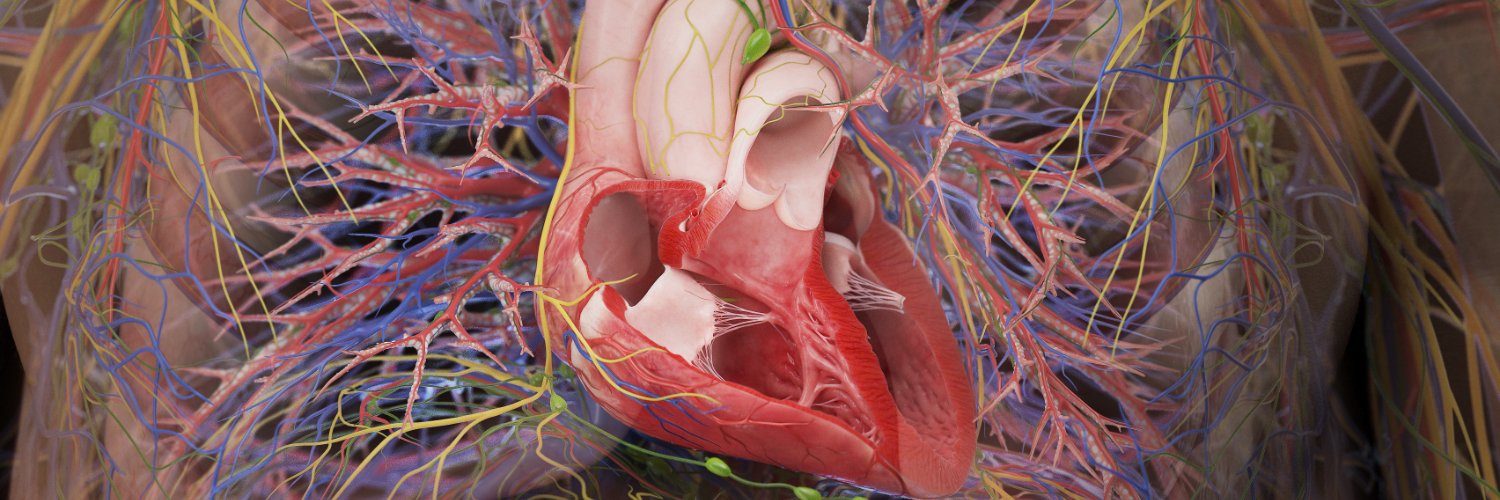
Your heart beats ~100,000 times a day. Every beat depends on four valves opening and closing in perfect sequence.
This animation shows the mitral, tricuspid, aortic, and pulmonary valves at work inside the beating heart. #HeartAnatomy
All animations created using the SciePro 3D anatomy model.
Today is #WorldKidneyDay, 20 years of raising awareness.
Your kidneys filter ~180 liters of blood daily. This animation shows the healthy kidney, a horseshoe kidney, a cross-section, and a polycystic kidney side by side.
1 in 10 people worldwide are affected by chronic kidney disease. Most don't know it until late stages.
All animations created using the SciePro 3D anatomy model.
Your heartbeat follows your breath.
Inhale → pressure drops → heart fills more.
Exhale → pressure rises → filling shifts.
Animation based on the SciePro 3D anatomy model. More info: sciepro.com/licensing#anatomy#heart#lungs#physiology#sciepro