Angehefteter Tweet
SharpFox
194 posts

SharpFox
@SharpFoxWeb3
🦊Finding gems & narratives early since 2022 Crypto, AI, tech & whatever comes next You see them late. Follow or fade.
North Chicago, IL Beigetreten Nisan 2022
118 Folgt224 Follower

The Model 3 is such a fun car
Tesla@Tesla
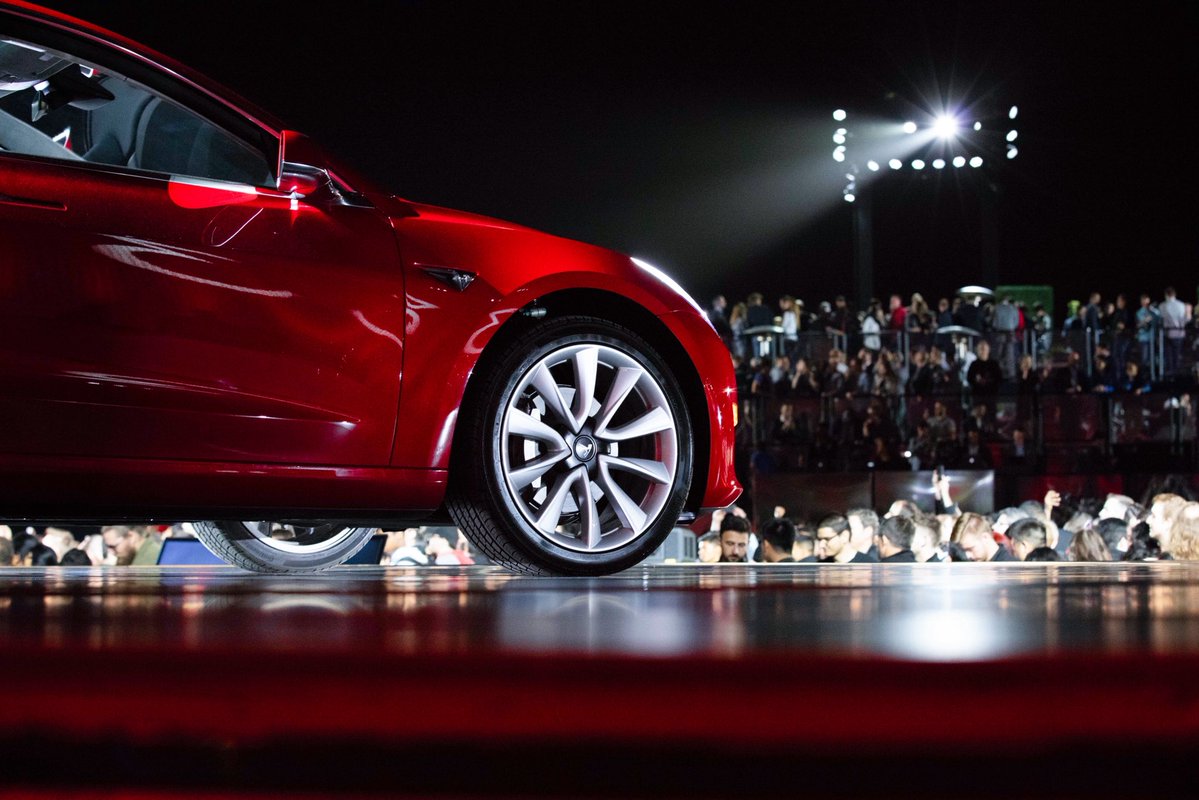
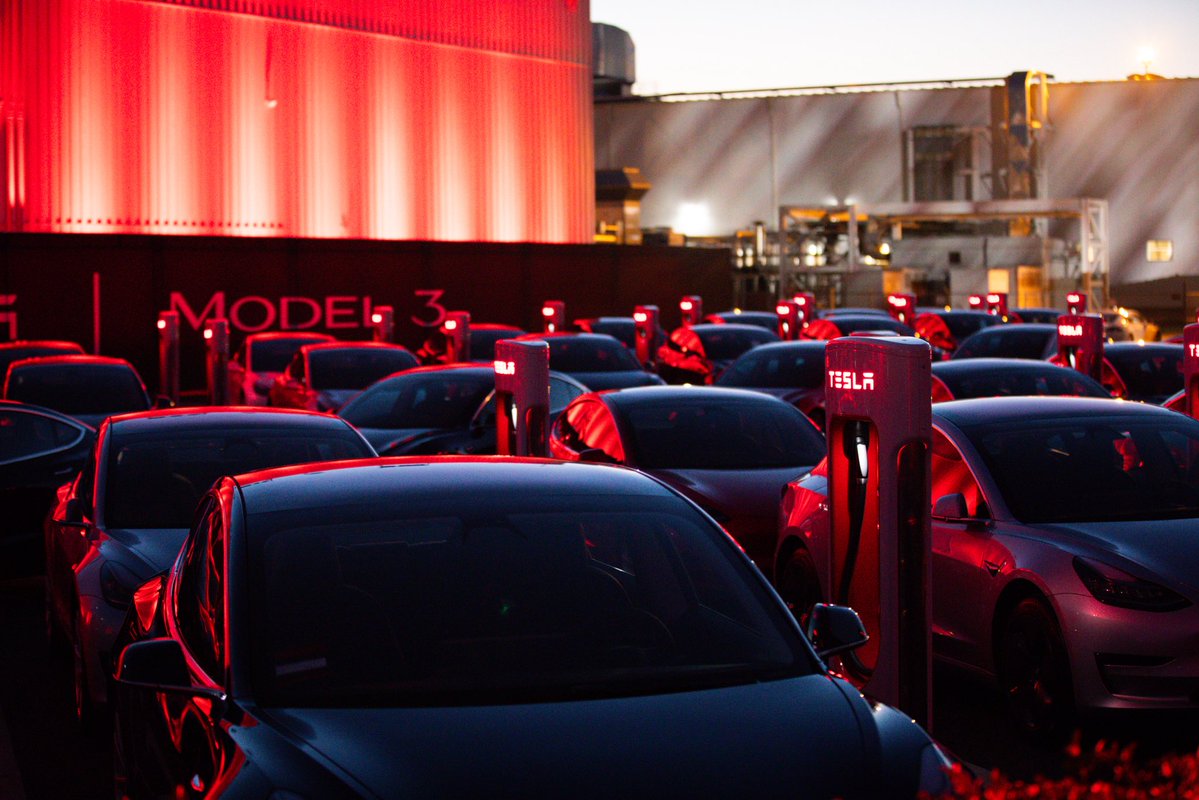
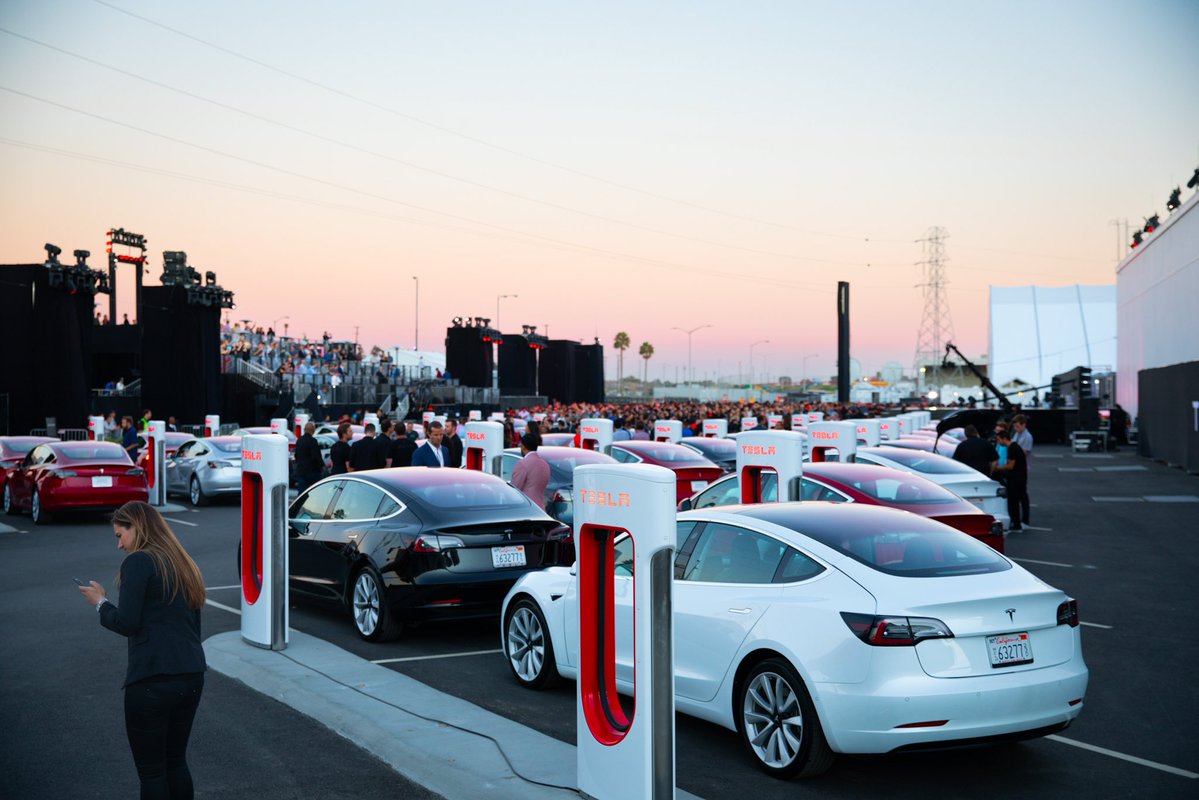
10 years of Model 3 The car that started the EV revolution
English

@cz_binance At the end of the day: algorithms can be upgraded. People can’t. The biggest risk isn’t quantum — it’s coordination.
English

Saw some people panicking or asking about quantum computing's impact on crypto.
At a high level, all crypto has to do is to upgrade to Quantum-Resistant (Post-Quantum) Algorithms. So, no need to panic. 😂
In practice, there are some execution considerations. It's hard to organize upgrades in a decentralized world. There will likely be many debates on which algorithm(s) to use, resulting in some forks.
And some dead project may not upgrade at all. Might be a good to cleanse out those projects anyway.
New code may introduce other bugs or security issues in the short term.
People who self custody will have to migrate their coins to new wallets.
This brings to the question of Satoshi's bitcoins. If those coins move, then it means he/she is still around, which is interesting to know. If they don't move (in a certain period of time), it might be better to lock (or effectively burn) those addresses so that they don't go to the first hacker who cracks it. There is also the difficulty of identifying all his addresses, and not confuse with some old hodlers. Anyway, it's a different topic for later.
Fundamentally:
It's always easier to encrypt than decrypt.
More computing power is always good.
Crypto will stay, post quantum.
English

@0xPolygon For blockchain to be a payments chain, fix three things: gas fees that don’t spike randomly, confirmation times shorter than a coffee, and merchants not needing to understand private keys. $2.4T volume is a start, not the answer.
English

@narendramodi Development is real when remote areas aren’t forgotten.
English

Speaking at the launch of various initiatives in Vav-Tharad, Gujarat. These will improve connectivity and support socio-economic development of the region. twitter.com/i/broadcasts/1…
English

@elonmusk @Kekius_Sage The strangest part isn’t the universe — it’s that we’re trying to understand it with human brains.
English

@Kekius_Sage The universe would be even stranger if it didn’t
English

@elonmusk @nic_munoz When Neuralink adds the “download knowledge” feature, sign me up first.
English

@nic_munoz How else will understanding get in your brain? 🤷♂️
English

How Elon became a rocket engineer:
"Diving into SpaceX and Tesla, I had to learn how to make hardware. I'd never seen a CNC machine or laid our carbon fiber. I didn't know any of those things, but if you read books and talk to experts you can pick them up quickly.
I started going to the Palo Alto public library to read about rocket engineering and started calling experts, asking to borrow their old engine manuals.
Most people self-limit their ability to learn. It's pretty straight forward-just read books and talk to people."

English

@elonmusk @DimaZeniuk Got it. Stainless steel is Elon’s universal material. Rockets, trucks… next up, stainless steel houses?
English

@DimaZeniuk Slightly different variants of stainless alloys are used in the rocket and truck, but pretty close overall
English

@elonmusk @drakefjustin What I really want to know isn’t “can it break now” — it’s “when will it break.” 10M to 1M in one year. At this rate, the window for Bitcoin to upgrade to post-quantum signatures might be tighter than people think.
English

Today is a monumentous day for quantum computing and cryptography. Two breakthrough papers just landed (links in next tweet). Both papers improve Shor's algorithm, infamous for cracking RSA and elliptic curve cryptography. The two results compound, optimising separate layers of the quantum stack. The results are shocking. I expect a narrative shift and a further R&D boost toward post-quantum cryptography.
The first paper is by Google Quantum AI. They tackle the (logical) Shor algorithm, tailoring it to crack Bitcoin and Ethereum signatures. The algorithm runs on ~1K logical qubits for the 256-bit elliptic curve secp256k1. Due to the low circuit depth, a fast superconducting computer would recover private keys in minutes. I'm grateful to have joined as a late paper co-author, in large part for the chance to interact with experts and the alpha gleaned from internal discussions.
The second paper is by a stealthy startup called Oratomic, with ex-Google and prominent Caltech faculty. Their starting point is Google's improvements to the logical quantum circuit. They then apply improvements at the physical layer, with tricks specific to neutral atom quantum computers. The result estimates that 26,000 atomic qubits are sufficient to break 256-bit elliptic curve signatures. This would be roughly a 40x improvement in physical qubit count over previous state-of-the-art. On the flip side, a single Shor run would take ~10 days due to the relatively slow speed of neutral atoms.
Below are my key takeaways. As a disclaimer, I am not a quantum expert. Time is needed for the results to be properly vetted. Based on my interactions with the team, I have faith the Google Quantum AI results are conservative. The Oratomic paper is much harder for me to assess, especially because of the use of more exotic qLDPC codes. I will take it with a grain of salt until the dust settles.
→ q-day: My confidence in q-day by 2032 has shot up significantly. IMO there's at least a 10% chance that by 2032 a quantum computer recovers a secp256k1 ECDSA private key from an exposed public key. While a cryptographically-relevant quantum computer (CRQC) before 2030 still feels unlikely, now is undoubtedly the time to start preparing.
→ censorship: The Google paper uses a zero-knowledge (ZK) proof to demonstrate the algorithm's existence without leaking actual optimisations. From now on, assume state-of-the-art algorithms will be censored. There may be self-censorship for moral or commercial reasons, or because of government pressure. A blackout in academic publications would be a tell-tale sign.
→ cracking time: A superconducting quantum computer, the type Google is building, could crack keys in minutes. This is because the optimised quantum circuit is just 100M Toffoli gates, which is surprisingly shallow. (Toffoli gates are hard because they require production of so-called "magic states".) Toffoli gates would consume ~10 microseconds on a superconducting platform, totalling ~1,000 sec of Shor runtime.
→ latency optimisations: Two latency optimisations bring key cracking time to single-digit minutes. The first parallelises computation across quantum devices. The second involves feeding the pubkey to the quantum computer mid-flight, after a generic setup phase.
→ fast- and slow-clock: At first approximation there are two families of quantum computers. The fast-clock flavour, which includes superconducting and photonic architectures, runs at roughly 100 kHz. The slow-clock flavour, which includes trapped ion and neutral atom architectures, runs roughly 1,000x slower (~100 Hz, or ~1 week to crack a single key).
→ qubit count: The size-optimised variant of the algorithm runs on 1,200 logical qubits. On a superconducting computer with surface code error correction that's roughly 500K physical qubits, a 400:1 physical-to-logical ratio. The surface code is conservative, assuming only four-way nearest-neighbour grid connectivity. It was demonstrated last year by Google on a real quantum computer.
→ future gains: Low-hanging fruit is still being picked, with at least one of the Google optimisations resulting from a surprisingly simple observation. Interestingly, AI was not (yet!) tasked to find optimisations. This was also the first time authors such as Craig Gidney attacked elliptic curves (as opposed to RSA). Shor logical qubit count could plausibly go under 1K soonish.
→ error correction: The physical-to-logical ratio for superconducting computers could go under 100:1. For superconducting computers that would be mean ~100K physical qubits for a CRQC, two orders of magnitude away from state of the art. Neutral atoms quantum computers are amenable to error correcting codes other than the surface code. While much slower to run, they can bring down the physical to logical qubit ratio closer to 10:1.
→ Bitcoin PoW: Commercially-viable Bitcoin PoW via Grover's algorithm is not happening any time soon. We're talking decades, possibly centuries away. This observation should help focus the discussion on ECDSA and Schnorr. (Side note: as unofficial Bitcoin security researcher, I still believe Bitcoin PoW is cooked due to the dwindling security budget.)
→ team quality: The folks at Google Quantum AI are the real deal. Craig Gidney (@CraigGidney) is arguably the world's top quantum circuit optimisooor. Just last year he squeezed 10x out of Shor for RSA, bringing the physical qubit count down from 10M to 1M. Special thanks to the Google team for patiently answering all my newb questions with detailed, fact-based answers. I was expecting some hype, but found none.
English

@mreiffy On the plus side, if you forgot the password to your wallet, it will be accessible in the future
x.com/i/grok/share/a…
English

Google is basically saying:
“We’ve cut the quantum resources needed to break Bitcoin’s encryption by 20x. We can now break it. We can prove it. We’re just not going to tell you how.
We’ve slowed down research to give crypto a chance. You have until 2029 to figure out a solution. Good luck.”
nic carter@nic_carter
Many are wondering "what Google saw" that caused them to revise their post-quantum cryptography transition deadline to 2029 last week. It was this: research.google/blog/safeguard…
English

@narendramodi Honestly, after years of hearing “Made in India” for semiconductors, actual facility news is still rare. Kaynes got this one done — hope it pulls more of the supply chain along with it.
English

@narendramodi Tradition isn’t meant to sit behind glass — it’s meant to talk to the present. Hope this museum does the latter.
English

Speaking at the inauguration of the Samrat Samprati Museum in Gandhinagar. It showcases the deep-rooted traditions of the Jain culture and its timeless values for humanity. twitter.com/i/broadcasts/1…
English

@MarioNawfal @Tesla Honestly, Robovan sounds like an airport shuttle and CyberSUV sounds like something for the Kardashians. I’d love to see both — but I’d love even more to see Elon actually build them, not just tease renders on Twitter.
English

Something way cooler than a minivan? Classic Elon tease.
Tesla Robovan for fleets. Airports. Events. Moving crowds.
Or… CyberSUV? Three rows. Three sets of doors. Soccer drop-offs with attitude.
Guess we wait. Stay tuned. Obviously.
@Tesla
Elon Musk@elonmusk
@LeahLibresco Something way cooler than a minivan is coming
English

@narendramodi Honestly, I didn’t know much about Suriname’s president before. But “oath in Sanskrit” — that made me remember him instantly. Making people from other countries remember you through culture. That’s a real legacy. Om Shanti.
English

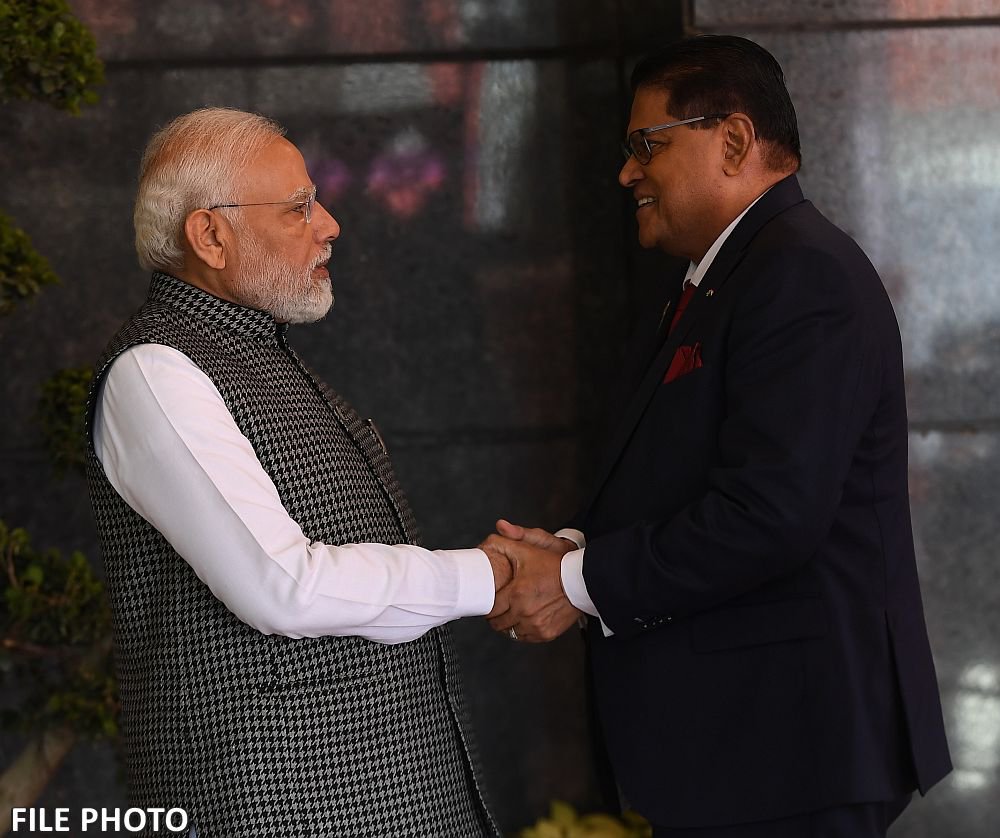
Deeply shocked and saddened by the sudden demise of my friend and the former President of Suriname, Mr. Chandrikapersad Santokhi Ji. This is not only an irreparable loss to Suriname but also to the global Indian diaspora.
I fondly recall my many meetings with him. His tireless service for Suriname and his efforts in strengthening India-Suriname relations were clearly reflected in our interactions. He had a special fondness for Indian culture. He won several hearts when he took oath in Sanskrit.
I extend my heartfelt condolences to his family and the people of Suriname in this hour of grief. Om Shanti.
Sharing some glimpses from our various interactions…


English