Smart Science

712 posts

Smart Science banner
Smart Science

Smart Science

@SmartScience

🔬 Smart science facts • Space 🚀 Physics ⚛️ Biology 🧬 Tech 🤖 • Learn something new every day

Science Hub Beigetreten Mart 2026
12.4K Folgt13.8K Follower
Smart Science
Smart Science@SmartScience·
Scientists at the Extreme Light Infrastructure – Nuclear Physics have done something remarkable. They used two extremely powerful laser beams (10 petawatts each) and focused them into a tiny spot. This created an intensity so high that it affected empty space itself. At this level, they reached what’s called the Schwinger limit—a point where empty space becomes unstable. For a tiny moment, energy from the light turned into real particles (an electron and a positron). In simple terms, light created matter. This shows that “empty” space isn’t truly empty—it has hidden energy. In the future, this technology could help build much smaller particle accelerators and improve medical imaging and physics research.
Smart Science tweet media
English
1
0
1
8
Smart Science
Smart Science@SmartScience·
Spending time alone is often seen in a negative light, but psychology tells a different story. People who truly enjoy solitude aren’t avoiding others—they’re strengthening their connection with themselves. This self-awareness often leads to deeper, more meaningful relationships with those around them. Studies suggest that individuals who are comfortable being alone tend to develop strong emotional independence. They don’t rely heavily on validation or constant attention, which reduces insecurity in relationships. This inner stability allows them to show qualities like loyalty, consistency, and trust—traits essential for lasting connections. Rather than chasing many superficial relationships, they focus on a few meaningful ones built on honesty and mutual respect. Because they’re content on their own, they choose to stay in relationships—not out of need, but out of genuine care. That makes their presence more intentional and their loyalty more authentic. Shifting our perspective on solitude can change how we value it. Being alone isn’t a weakness—it’s often a reflection of emotional strength and a deeper commitment to the people who truly matter. Do you spend time alone to escape the world—or to better understand yourself?
Smart Science tweet media
English
2
6
14
271
Smart Science
Smart Science@SmartScience·
🚨 A teen just created a filtration system that removes over 95% of microplastics from drinking water. Mia Heller, an 18-year-old student at Kettle Run High School, took matters into her own hands after realizing that government agencies were not prioritizing filtration programs for plastic-contaminated water. Frustrated by the maintenance-heavy and expensive membrane filters her parents used at home, Heller spent months in her garage designing a more efficient alternative. Her prototype, which is roughly the size of a standard home appliance, successfully eliminates 95.5% of microplastics—a performance level that rivals existing high-end commercial technologies but with significantly less waste. The system utilizes a specialized magnetic liquid called ferrofluid that attaches to microscopic plastic particles ranging from one nanometer to five millimeters in size. As water flows through the device, a magnet pulls the ferrofluid-bound contaminants out, leaving behind clean drinking water while allowing the magnetic liquid to be recycled for future use. A finalist in the 2025 Regeneron International Science and Engineering Fair, Heller envisions her low-cost, under-sink system hitting the consumer market to empower individual households against the rising health concerns linked to microplastic consumption. source: Sheffield, T. (2026). High School Student, 18, Invents Water Filter That Eliminate 95.5% of Microplastics. PEOPLE.
Smart Science tweet media
English
0
17
50
861
Smart Science
Smart Science@SmartScience·
Wearing socks to bed can help you fall asleep faster and improve overall sleep quality. When your feet are warm, blood vessels widen through a process called vasodilation, which helps lower core body temperature and signals the brain that it’s time to sleep. A study conducted by researchers at Seoul National University found that participants who wore socks to bed fell asleep more quickly, slept longer, and experienced fewer nighttime awakenings. The warming of the feet enhances heat redistribution, supporting the body’s natural sleep initiation process. This simple habit may be especially beneficial for people who struggle with cold feet at night.
Smart Science tweet media
English
3
16
56
1.6K
Smart Science
Smart Science@SmartScience·
🚨 It’s official — El Niño has arrived A powerful Super El Niño has officially arrived, threatening to collide with human-driven warming and push global temperatures to historic, record-breaking heights. The National Oceanic and Atmospheric Administration (NOAA) has officially declared the arrival of El Niño after a massive build-up of unusually warm water in the tropical Pacific. This natural climate cycle is already releasing vast amounts of stored ocean heat into the atmosphere, threatening to disrupt global weather patterns. Alarmingly, scientists warn there is a 63% chance this event could intensify into a 'very strong' or Super El Niño, potentially ranking as one of the most powerful since modern records began in 1950. With the phenomenon developing on top of an already overheated planet, experts caution that it could push global temperatures to unprecedented heights, making the coming year the hottest on record. The consequences of a Super El Niño are far-reaching and highly unpredictable. For the United States, it typically triggers wetter winter conditions in southern states, increases the risk of damaging atmospheric river storms in California, and suppresses Atlantic hurricanes. Conversely, parts of South America face severe flooding, while Australia and Southeast Asia brace for extreme heat and devastating wildfires. Beyond land impacts, rising sea surface temperatures threaten marine life with widespread coral bleaching and marine heatwaves. As natural climate cycles collide with human-driven warming, the coming months will offer a critical look at how our changing planet handles such extreme environmental pressure. source: CNN. (2026). El Niño has arrived – and it could push the planet to new records.
Smart Science tweet media
English
9
42
100
4.5K
Smart Science
Smart Science@SmartScience·
A world-class education is now completely free — MIT has opened its entire vault of more than 2,500 courses to the public online. With total student loan debt in the United States surpassing $1.7 trillion, these free educational platforms provide a crucial, debt-free alternative for Americans looking to acquire high-income skills in tech and business. For decades, an elite college education was reserved for a select few who could afford staggering tuition fees or secure highly competitive admissions. Today, the Massachusetts Institute of Technology is tearing down those barriers by offering virtually its entire curriculum—spanning over 2,500 courses—entirely for free online. Through its ground-breaking OpenCourseWare platform, anyone can access complete course materials, including lecture notes, homework assignments, exams, and even streaming video lectures from world-renowned professors. Whether you are looking to master complex algorithms in computer science or understand the fundamentals of corporate finance, MIT’s high-quality curriculum is completely accessible without any registration, fees, or enrollment requirements. This massive repository of open-source knowledge has quietly sparked a global education revolution. Celebrating its twenty-fifth anniversary, the program has reached over 500 million learners and educators worldwide, transforming independent study into a viable path for personal and professional growth. While the self-paced courses do not confer official MIT credit or degrees, they provide invaluable tools for lifelong learners to upskill at their own pace. By making premium education a public good, MIT has proven that while admission to physical classrooms remains exclusive, the pursuit of top-tier knowledge should have no boundaries. source: Massachusetts Institute of Technology. (2026). About Us: MIT OpenCourseWare. MIT Open Learning.
Smart Science tweet media
English
4
46
105
4K
Smart Science
Smart Science@SmartScience·
Scientists have discovered that when a sperm fertilizes an egg, the moment is marked by a tiny flash of light known as a zinc spark. This glow comes from the egg releasing zinc ions that create a brief shimmer only visible under powerful microscopes. First seen in mice and later in human eggs, the zinc spark is considered a sign that fertilization has succeeded. It offers a rare look at the instant life begins, captured in a microscopic burst of light.
Smart Science tweet media
English
4
27
68
2.2K
Smart Science
Smart Science@SmartScience·
A new mRNA vaccine for pancreatic cancer creates lasting immunity in patients. A groundbreaking clinical trial has demonstrated that a personalized mRNA vaccine can trigger a long-lasting immune response against pancreatic cancer, one of the deadliest and most treatment-resistant malignancies. Published in the journal Nature, the Phase 1 study evaluated autogene cevumeran, an investigational vaccine developed by BioNTech and Genentech. Tailored to the unique genetic mutations of each patient’s tumor, the vaccine works by training the body’s immune system to recognize and attack malignant cells. When administered alongside standard chemotherapy and immunotherapy, the vaccine successfully triggered tumor-specific T-cell responses in half of the 16 study participants. Crucially, patients who mounted this robust immune response experienced a significantly lower risk of cancer recurrence during a three-year follow-up period. Researchers observed that these vaccine-activated T cells persisted in some patients' bodies for up to four years, proving that mRNA technology can provide durable oncological protection. While pancreatic cancer has historically carried a bleak prognosis, this highly personalized approach offers a promising new frontier. A larger Phase 2 trial is currently underway, enrolling 260 patients worldwide to determine whether this customized vaccine can fundamentally improve long-term survival outcomes compared to standard care. source: Sethna, Z., Guasp, P., Reiche, C., et al. RNA neoantigen vaccines prime long-lived CD8+ T cells in pancreatic cancer. Nature, 639(1042–1051).
Smart Science tweet media
English
10
49
204
5.6K
Smart Science
Smart Science@SmartScience·
🚨The United States just offically recliassified cannabis. The federal reclassification of medical marijuana to Schedule III marks a monumental shift in U.S. drug policy, promising to unlock clinical research and deliver massive tax relief to state-legal businesses. After more than half a century under the nation's most restrictive drug category, state-licensed medical marijuana has been officially reclassified from Schedule I to Schedule III by the federal government. Since 1970, cannabis was grouped alongside heroin and LSD under the assumption that it had high abuse potential and no accepted medical value—a designation that increasingly clashed with the reality of millions of Americans legalizing its use under state programs. While the change does not legalize recreational marijuana federally or allow interstate sales, it removes significant roadblocks for medical cannabis operators and scientists alike. The practical implications of this policy shift are vast, particularly for the business and scientific communities. State-licensed medical dispensaries can finally access standard federal tax deductions and operate with fewer restrictions, while clinical researchers can now bypass long-standing bureaucratic hurdles to conduct comprehensive studies on the drug's medical efficacy and long-term health risks. Proponents hail the reclassification as a long-overdue, science-based correction, whereas critics warn it could downplay the potential risks associated with heavy cannabis use. source: NBC News. Cannabis reclassification could 'open the floodgates' for research, scientists say.
Smart Science tweet media
English
17
73
285
10.1K
Smart Science
Smart Science@SmartScience·
🧅 The Onion Juice Hair Regrowth Shock That Stunned Scientists A small but fascinating clinical trial from 2002 revealed something almost unbelievable. People struggling with patchy hair loss applied simple onion juice to their scalp—and the results turned heads. Hair regrowth began in as little as two weeks, and by eight weeks, many participants experienced full recovery.
Smart Science tweet media
English
20
81
408
22.5K
Smart Science
Smart Science@SmartScience·
New research reveals that chronic snoring can cause brain damage — and contribute to dementia. Loud, persistent snoring is often the primary indicator of Obstructive Sleep Apnea (OSA), a condition where breathing repeatedly stops and starts throughout the night. These interruptions cause chronic oxygen deprivation and brain inflammation, leading to vascular damage and memory issues. Scientists have found that individuals with severe sleep breathing disorders often show a higher accumulation of beta-amyloid plaques, which are hallmark biological signatures of Alzheimer’s disease. This suggests that the physical strain of poor sleep directly impacts the brain's long-term health and structural integrity. The relationship between snoring and brain health involves a complex "paradox" as we age. While snoring in mid-life is a significant risk factor, a sudden reduction in snoring in older adults can actually be an early indicator of developing dementia, often tied to weight loss associated with the disease. Fortunately, managing these risks through treatments like CPAP machines can improve oxygen levels and potentially slow cognitive impairment. Experts recommend that those experiencing gasping for air, morning headaches, or extreme daytime fatigue seek medical advice to protect their cognitive future. source: National Institutes of Health and the Fisher Center for Alzheimer's Research Foundation. (2024). Snoring-Dementia Connections and Sleep Apnea Management.
Smart Science tweet media
English
3
14
46
1.9K
Smart Science
Smart Science@SmartScience·
A daily dose of dark chocolate lowers blood pressure and protects arteries. A large review led by researchers at the University of Surrey suggests that flavan-3-ols—natural compounds found in tea, cocoa, dark chocolate, apples, and grapes—can modestly lower blood pressure and support vascular health. Analyzing data from 145 randomized controlled trials, the team found that regular intake of flavan-3-ol–rich foods led to meaningful reductions in blood pressure, particularly among people with elevated or high readings. In some participants, the magnitude of blood pressure reduction was comparable to that achieved with certain blood pressure medications, underscoring the potential of diet as an adjunct tool in cardiovascular prevention and management. Beyond blood pressure, flavan-3-ols were shown to improve endothelial function, enhancing the performance of the inner lining of blood vessels independently of any change in blood pressure. This suggests broader cardiovascular benefits, such as better regulation of blood flow and reduced vascular strain. Lead author Professor Christian Heiss emphasized that while these findings are promising, flavan-3-ol–rich foods should not replace prescribed treatments or professional medical advice. Instead, modest daily amounts of tea, dark chocolate, apples, or cocoa powder may be a practical and enjoyable addition to a balanced diet, supporting heart health as part of an overall healthy lifestyle, especially in individuals at higher cardiovascular risk. Reference University of Surrey. (2025). Flavan-3-ols and blood pressure: Findings from randomized controlled trials. University of Surrey.
Smart Science tweet media
English
2
47
134
6.4K
Smart Science
Smart Science@SmartScience·
Warming your feet triggers a biological shortcut to deeper, more restorative sleep. Slipping on a pair of socks before climbing under the covers might be the simplest biohack for a better night's rest. When your feet are warm, your blood vessels undergo a process known as vasodilation. This expansion allows heat to redistribute from your core to your extremities, effectively lowering your internal body temperature. This physiological shift serves as a critical biological signal to the brain that the body is ready to transition into a sleep state, making it easier to drift off without tossing and turning. The benefits go beyond just falling asleep quickly; they also impact the duration and depth of your rest. Researchers at Seoul National University discovered that participants who wore socks to bed not only fell asleep significantly faster but also enjoyed longer sleep cycles with fewer interruptions throughout the night. For those who frequently struggle with cold feet or insomnia, this low-cost habit supports the body's natural circadian rhythms, ensuring a more seamless and refreshing sleep experience. source: Ko, Y., & Lee, J. (2017). Effects of feet warming using bed socks on sleep quality and thermoregulatory responses in a cool environment. Journal of Physiological Anthropology.
Smart Science tweet media
English
7
25
107
3.8K
Smart Science
Smart Science@SmartScience·
🚨 The FDA has approved a revolutionary light-activated polymer system that repairs severed nerves without the need for traditional surgical stitches. The US Food and Drug Administration has officially cleared a revolutionary nerve-repair system that replaces traditional surgical stitches with light-activated polymers. Developed by medical technology firm Tissium based on research from MIT, this innovation utilizes a biocompatible polymer to create a flexible, 3D-printed cuff around severed nerves. Instead of the painstaking process of manual suturing under a microscope, surgeons can now apply a liquid prepolymer that cures instantly with light, creating a secure seal that allows delicate nerve tissues to knit back together naturally. This milestone marks the first FDA approval for Tissium, culminating over a decade of research into poly(glycerol sebacate acrylate) materials. The implant is designed to be fully bioresorbable, meaning it safely disappears once the nerve has healed, reducing the risk of inflammation or complications from permanent foreign materials. Beyond nerve reconstruction, the company is already scaling its manufacturing capabilities to adapt this technology for cardiovascular sealing and gastrointestinal hernia repairs, aiming to transform complex microsurgeries into streamlined, highly effective clinical solutions. Source: Howes, L. (2025). FDA approves light-activated polymer for nerve repair without stitches. Chemical & Engineering News.
Smart Science tweet media
English
6
98
272
8.5K
Smart Science
Smart Science@SmartScience·
In the United States, lung cancer is the leading cause of cancer death. Soon, that may change — a lung cancer vaccine has officially entered human trials. A groundbreaking global trial of the world's first mRNA lung cancer vaccine has officially launched, offering a personalized, targeted weapon against the deadliest form of the disease. Doctors have officially initiated human trials for BNT116, the world’s first mRNA lung cancer vaccine targeting non-small cell lung cancer (NSCLC), which is the most common and deadliest form of the disease. Developed by BioNTech, the investigational therapy utilizes the same messenger RNA technology that successfully powered COVID-19 vaccines. However, instead of fighting viruses, this jab is engineered to deliver precise genetic instructions that train the patient's immune system to identify and destroy tumor cells while sparing healthy surrounding tissues from the harsh side effects associated with traditional chemotherapy. The Phase 1 clinical trial is currently underway across 34 research sites in seven countries, including the United States and the United Kingdom, and is enrolling about 130 patients. Delivered via weekly doses followed by long-term maintenance injections, the vaccine is administered alongside immunotherapy to supercharge the body's natural defenses. Early participants, such as 67-year-old London scientist Janusz Racz, have already begun treatment. Researchers hope this proactive approach will not only eliminate existing tumors but also prevent the disease from recurring, potentially transforming the landscape of personalized oncology. source: University College London Hospitals NHS Foundation Trust. First UK patient receives innovative lung cancer vaccine.
Smart Science tweet media
English
5
37
95
6.3K
Smart Science
Smart Science@SmartScience·
A woman lost a decade's worth of memories due to constipation. The routine case of constipation turned into a medical anomaly for a woman in Hong Kong who reportedly lost ten years of her life’s memories after straining too hard on the toilet. Following the intense physical effort, she experienced a 'mental blackout' that lasted eight hours, leading her concerned family to rush her to the hospital. Neurologists identified the condition as transient global amnesia, a rare phenomenon where a sudden spike in internal pressure restricts the flow of blood and oxygen to the brain via the jugular vein. While the woman eventually regained her memories after a night of observation, she had no recollection of the terrifying event that had just unfolded. This unusual occurrence underscores the potential neurological risks associated with extreme physical strain. Similar to a 'weight-lifter’s blackout,' the condition can be triggered by various factors that cause a sharp spike in blood pressure, such as heavy lifting, intense emotional stress, or even swimming in icy water. Doctors warn that while these amnesia episodes are typically temporary, the underlying vascular stress highlights the importance of heart and brain health. Medical professionals suggest that while such cases are extreme, they serve as a reminder to maintain a high-fiber diet and avoid excessive physical overexertion to prevent these sudden physiological disruptions. source: Joshi, S. (2019, May 29). This Hong Kong Woman’s Constipation May Have Caused Amnesia. Vice.
Smart Science tweet media
English
2
14
29
12.6K
Smart Science
Smart Science@SmartScience·
Excessive screen time before age five has been linked to slower growth of white-matter pathways in the developing brain. These pathways are essential for language, literacy, and cognitive processing, making their healthy development crucial during early childhood. MRI scans reviewed in a study published in JAMA Pediatrics show that children with higher screen exposure demonstrate reduced white-matter integrity. As a result, toddlers may face an increased risk of speech delays and difficulties in communication. The findings highlight the importance of mindful screen-use habits during the early years to support optimal brain development.
Smart Science tweet media
English
5
17
36
1.3K
Smart Science
Smart Science@SmartScience·
🚨 Octopuses have three hearts, blue blood, and can edit their own RNA on the fly. They are basically aliens living here on Earth.
Smart Science tweet media
English
6
46
162
4.2K
Smart Science
Smart Science@SmartScience·
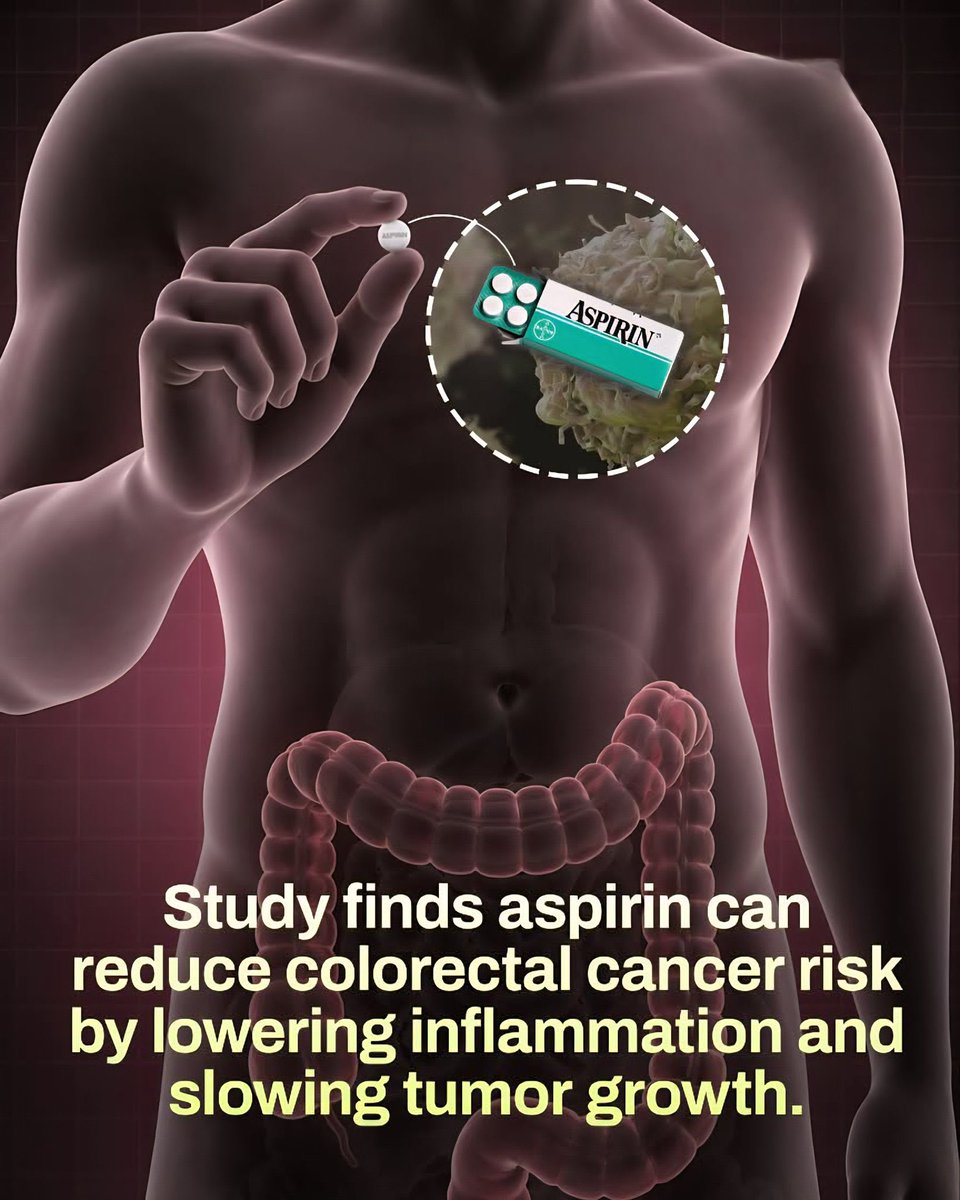
Aspirin, a common pain-relieving drug, has been shown to reduce the risk of colorectal cancer, especially in high-risk individuals. It works by lowering inflammation, slowing tumor growth, and helping the immune system detect cancer cells. However, due to potential side effects like bleeding, it should only be used for prevention under medical guidance.
Smart Science tweet media
English
6
29
96
3.5K
Smart Science
Smart Science@SmartScience·
🎗 In a breakthrough that could reshape cancer treatment, scientists have discovered that honeybee venom can destroy 100% of aggressive breast cancer cells in less than 60 minutes. The key lies in a powerful compound called melittin, found in honeybee venom but not in bumblebee venom. Researchers tested the venom on various breast cancer cell types in lab dishes and found that melittin acts like a precision-guided weapon. It punches holes in cancer cell membranes, causing the cells to die quickly. What’s even more promising is that melittin leaves healthy cells largely untouched, suggesting it could be used for treatments with fewer side effects than chemotherapy or radiation. Melittin proved especially effective against triple-negative breast cancer and HER2-enriched breast cancer, two of the most difficult types to treat. This discovery opens new doors to developing safer, more targeted cancer therapies using natural compounds. Scientists are now working to harness melittin’s cancer-fighting power in a controlled way, possibly through nanoparticles or synthetic versions that could be used in future medications. While more research is needed, this natural molecule from bees offers a powerful new weapon in the fight against cancer.
Smart Science tweet media
English
3
32
72
2.3K