
Kathryn Campbell
253 posts

Kathryn Campbell
@ThatKatC
Training Coordinator at Edinburgh Genomics🔬🧬👩🔬 Badminton player and women’s sport advocate 🏸🏃♀️
Glasgow, Scotland Beigetreten Ekim 2019
213 Folgt230 Follower

Kathryn Campbell retweetet


Kathryn Campbell retweetet


Kathryn Campbell retweetet


Kathryn Campbell retweetet

📢A super exciting new course covering both lab skills 👩🔬 AND bioinformatics 💻- you won't find a course like this anywhere else!
Learn full-length 16S sequencing with PacBio! 🧬
📅 April 8-9 (Lab), April 15-16 (Online Bioinformatics)
🔗 Register now: genomics.ed.ac.uk/event/full-len…

English
Kathryn Campbell retweetet
Master Variant Analysis! Join our online course (17–20 March 2025) to learn germline & somatic variant calling with the GATK pipeline. Hands-on training with Edinburgh Genomics experts!
📅 17–20 March 2025 | 🖥️ Online |
🔗 Register now: genomics.ed.ac.uk/event/variant-…
English
Kathryn Campbell retweetet
Kathryn Campbell retweetet
🎓 We just wrapped up another successful R for Biologists!
Participants learned R basics, data manipulation, and creating publication-ready plots. 📊
Missed out? Register now for the next session: genomics.ed.ac.uk/event/r-for-bi…
#RforBiologists #Bioinformatics

English
Thrilled to have attended the #PairProgramming #EdinburghWinterSchool25! 🐤It was an honour to speak on #Bioinformatics #training for @edgenome. Huge thanks to amazing organisers @edinkasia @DrPawel @BrittNeuroPsych for a stellar event, and to @Felienne for an inspiring keynote!


English
Kathryn Campbell retweetet
🎉 Start 2025 with new skills!
Join our DNA Library Preparation for Short-Read Sequencing course.
📅 6th Feb 2025
📍 Edinburgh Genomics
🔬 Hands-on lab work, MiSeq demo, and more!
Limited spots—register now: genomics.ed.ac.uk/event/dna-libr…
#Genomics #DNASequencing #HappyNewYear2025 🎆
English
Kathryn Campbell retweetet


Kathryn Campbell retweetet
2024 was an incredible year at Edinburgh Genomics! 🎉
Thank you for your support as we pushed boundaries in #sequencing, advanced #bioinformatics, and impactful #training courses.
🎥 Check out our ‘2024 #Wrapped’ video to celebrate with us!
Here’s to an even brighter 2025! 🚀
English
Kathryn Campbell retweetet
🚀 Kickstart your coding journey in 2025 with our introductory courses this January! 📅
✅ R for Biologists
✅ Intro to Python
✅ Linux for Genomics
📍 Perfect for biologists & genomic scientists—boost your research skills!
🔗 Sign up now: genomics.ed.ac.uk/service/traini…

English
Kathryn Campbell retweetet


Kathryn Campbell retweetet

My first PhD chapter has been published in @PLOSPathogens! Is incubation period weirdness behind the lack of temporal signal in some rabies virus datasets? (probably not) dx.plos.org/10.1371/journa…
English
Kathryn Campbell retweetet
Last week, we hosted our amazing Long-Read Bioinformatics course, covering QC, mapping, de novo assembly, structural variation, and methylation. 🧬
We hope you loved it!
Missed out? Register for the next session here: genomics.ed.ac.uk/event/introduc…
#Bioinformatics #Genomics #longread

English
Kathryn Campbell retweetet
We love this photo of our wonderful EdGe members, Ana and Helen, showing off our lab #Sustainability award from @EdSust! 💚
We're incredibly proud to work toward a #sustainable future and thrilled to see our team’s hard work recognised on this journey!
#SustainabilityInScience

English
Kathryn Campbell retweetet
Today we're talking about #Kinnex - unlocking the full potential of microbiome research with @PacBio #16S #HiFi #Sequencing 🌟
With PacBio Revio and Kinnex we offer groundbreaking 16S rRNA full gene sequencing, advancing microbiome research beyond traditional short-reads

English
Kathryn Campbell retweetet
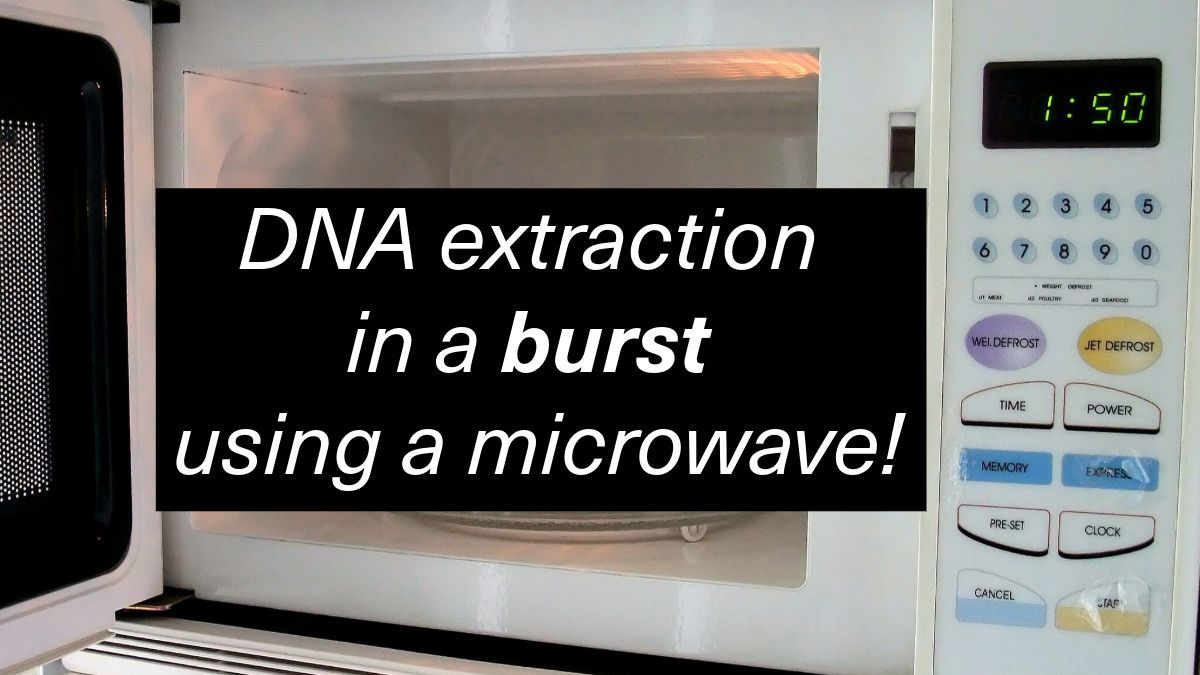
Did you know that microwaving to burst open cells can be a useful method of DNA extraction, especially for cheap, rapid, and high-throughput workflows?
It can be used as a step within the extraction process to improve cell lysis, and also as the main cell lysis process to produce a crude DNA extract for PCR.
An early example was published by Goodwin & Lee (1993), and was used on a wide range of taxa across different kingdoms of life:
⭐Goodwin & Lee (1993). Microwave miniprep of total genomic DNA from fungi, plants, protists and animals for PCR. Biotechniques, 15(3), 438-441.
buff.ly/3UJf1IJ
Since then, researchers have regularly published variations or instances of this method for specific applications. Below are a few examples 👇
⭐DNA extraction from human samples (saliva, blood, semen) for forensics:
Taglia et al. (2022). Development of a microwave-based extraction for forensic biological samples. Forensic Science International: Synergy, 5, 100291.
buff.ly/3UGJcjY
⭐High throughput DNA extraction from barley seeds for genotyping, using microwaving in an alkaline buffer followed by neutralisation with a Tris-HCl buffer, allowing processing of thousands of seeds per day:
Von Post et al. (2003). A high-throughput DNA extraction method for barley seed. Euphytica, 130, 255-260.
buff.ly/40DZj5C
⭐Microwaving dry fungal spores to pop them open prior to direct PCR:
Ferreira et al. (1996). PCR from fungal spores after microwave treatment. Fungal Genetics Reports, 43(1), 25-26.
buff.ly/3UCKgFu
⭐Microwaving ground mosquitos, in which it was found to produce comparable results to much more time-consuming extraction methods:
Firmansyah et al. (2023). Comparison of 3 DNA extraction methods for extracting DNA from an adult Culex quinquefasciatus (Diptera: Culicidae). Journal of Insect Science, 23(5), 15.
buff.ly/40DZjCE
Image shows a microwave oven, CC BY-SA Mk2010, buff.ly/2K169f4
Do you use microwaving as part of your DNA extractions? If you do, we'd love to hear about how it works for you!
English