
TrueRedMan retweetet
TrueRedMan
24.3K posts



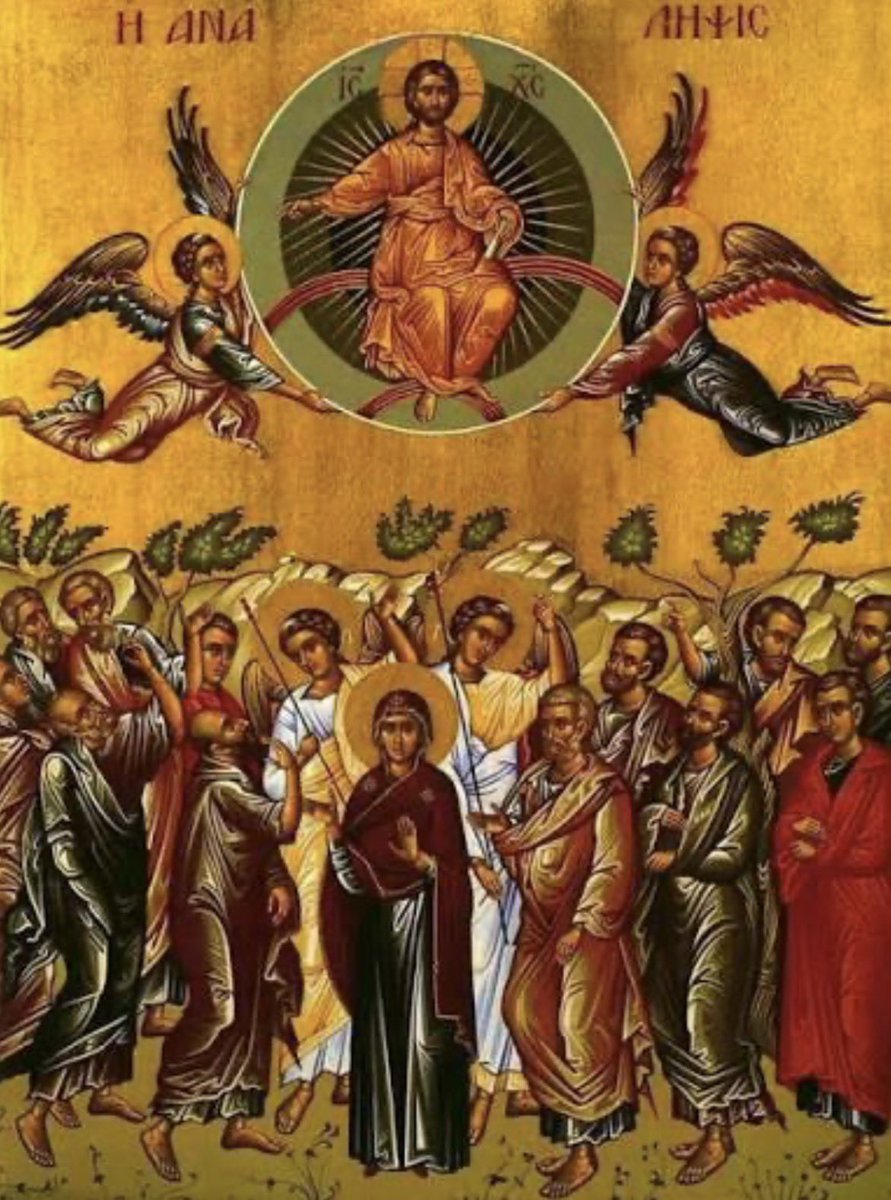
@TrumpTrueRed Never went to the Mass of Pope Damasus or the Council of Trent huh?
English
Jesus Christ claims an Infallible and Indefectible Church too but seeing He IS the Roman Catholic Church I suppose it’s inevitable.*
This line of “argumentation” (sans facts) is akin to someone saying “because Scripture is subject to translation and misinterpretation it is not Infallible” or that “because the authors of Scripture, though Inspired, are merely sinful men, Scripture cannot be Infallible.”
Does everyone reading understand that there are multiple levels to the Magisterium and that that which is Infallible (and Infallible does not merely mean “free from error” but “incapable f error”)?
*Scriptural Citation(s)
Matthew 16: And Jesus answering, said to him: Blessed art thou, Simon Bar-Jona: because flesh and blood hath not revealed it to thee, but my Father who is in heaven. 18 And I say to thee: That thou art Peter; and upon this rock I will build my church, and the gates of hell shall not prevail against it. 19 And I will give to thee the keys of the kingdom of heaven. And whatsoever thou shalt bind upon earth, it shall be bound also in heaven: and whatsoever thou shalt loose upon earth, it shall be loosed also in heaven.
Ephesians 1:22-23 “And he put all things beneath his feet and gave him as head over all things to the church, which is his body, the fullness of the one who fills all things in every way.
1 Timothy 3:15 “Church of the Living God, the pillar and bulwark of the Truth.”
Ephesians 4:4-6 “one body and one Spirit, as you were also called to the one hope of your call; one Lord, one faith, one baptism; one God and Father of all, who is over all and through all and in all.”
Matt 10:40 “who receives you received me, and receives Him who sent me.”
Matt 18:17 “if he refuses to listen to them let him be as a . . . tax collector”
John 15:26 “But when the Paraclete cometh, whom I will send you from the Father, the Spirit of truth, who proceedeth from the Father, he shall give testimony of me.”
John 16:13 “the Spirit of truth . . . will guide you into all the truth.”

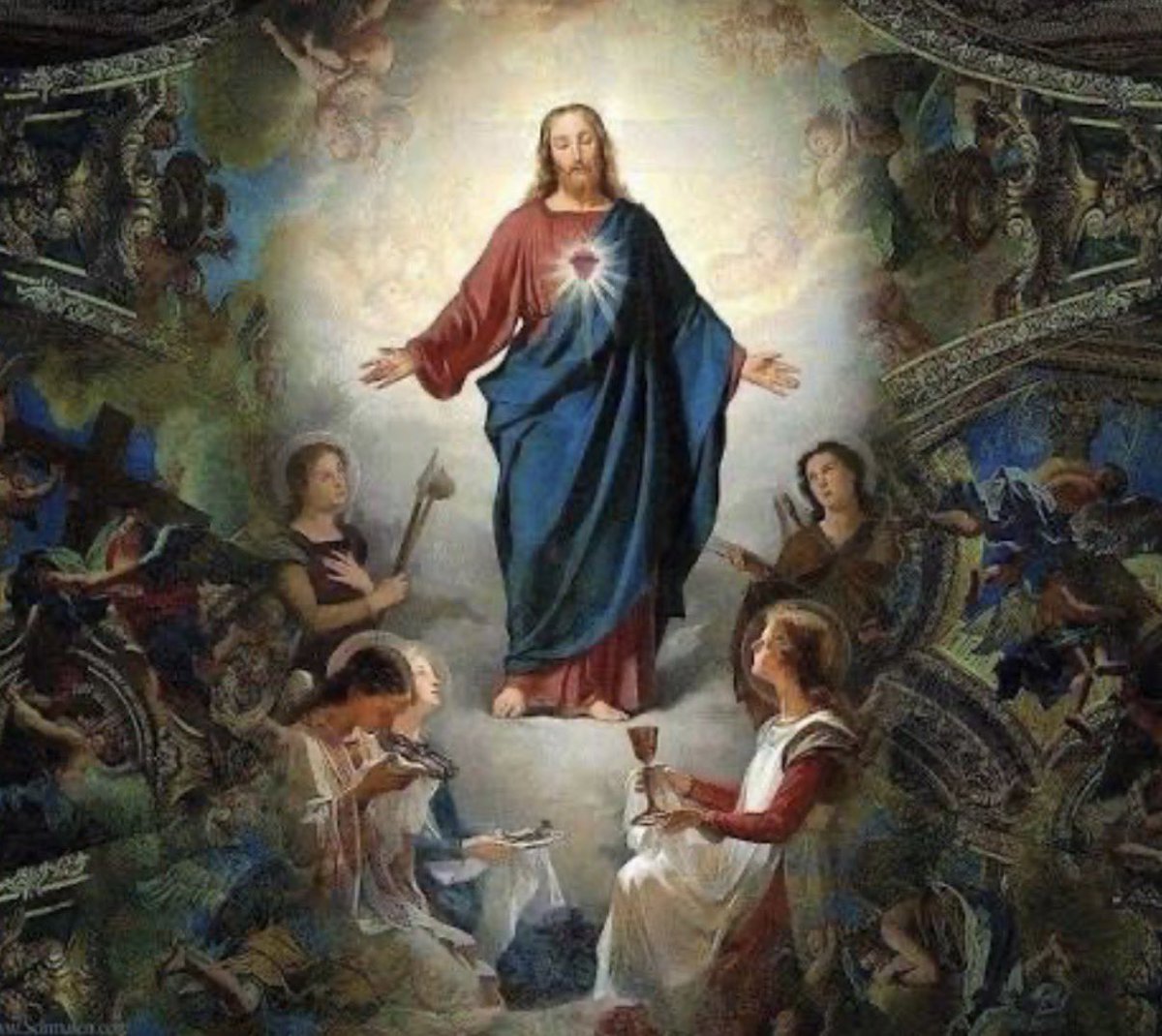

Joseph Spurgeon@Joseph_Spurgeon
Roman Catholics claim an infallible church, but in practice what they defend is a selective and shifting infallibility. The problem is not hard to see. There are councils the Roman Church now rejects or downplays, such as the iconoclast council of Hieria in 754, which opposed the use of images, and then later councils that reversed course. Both cannot be protected from error. At some point, the church was wrong, and Rome decides after the fact which moments count and which do not. That is not a consistent doctrine of infallibility. That is a retrospective sorting of history. The same tension appears in the Western Schism from 1378 to 1417, when there were two and then three rival popes, each with supporters, each claiming legitimacy, and each excommunicating the others. The church did not speak with one clear, indefectible voice. It fractured, and it took decades and a council to sort out the mess. During that time, who exactly was the infallible head of the church. The system offers no clean answer. It simply moves past the problem once a winner is declared. There are also moments when popes themselves resisted ideas later defined as dogma. In the fourteenth century, during disputes over poverty, the Franciscans pushed arguments that would bind a pope to prior papal statements. Pope John XXII rejected those claims and opposed the line of reasoning that would later be used to support papal infallibility. Take another example. Pope Honorius I was condemned by the Third Council of Constantinople for supporting the Monothelite heresy. A pope was formally rebuked as a heretic by a council later recognized as authoritative. Or consider the Council of Constance in the fifteenth century, which asserted that a general council held authority over the pope. Rome later rejected that principle. So was the church speaking infallibly when it elevated the council over the pope, or when it later denied it. Both positions have been held. Both cannot be infallible. Then there is the case of Pope Sixtus V and his official edition of the Latin Vulgate in 1590. He proudly proclaimed to have produced an infallible translation. Yet within his own lifetime, it was found to contain numerous errors. Within a short time, it was withdrawn and replaced under Pope Clement VIII with a corrected version. Oops. And this raises a deeper problem. Can the church produce an infallible list of all the infallible things it has ever said. It cannot. What Rome actually has is a selective catalog, identified after the fact, under highly technical conditions that seem to change with the wind. That is not how an inherent property works of infallibility works. Even beyond that, popes have contradicted one another in teaching and policy. Councils have been called, corrected, and sometimes effectively reversed. Rome maintains the appearance of consistency by narrowing the definition of infallibility to rare, highly technical conditions, then declaring that only those moments count. Everything else is allowed to be mistaken, revised, or abandoned. That approach protects the claim while conceding the reality that the church, in its actual history, has erred. Once that is admitted, then we aren't dealing with infallibility any more. An authority that can be wrong in many of its official acts, reversed by later decisions, and divided against itself in times of crisis does not carry the marks of something that is incapable of error by nature. The historical record shows a church that can speak truly at times and err at others. That is exactly what one would expect from a fallible institution, not an infallible one. Holy Scripture is infallible because it is the word of God. It is the only infallible authority on earth.
English
@TrumpTrueRed Latin is the Lingua Franca of the Church.
Even before the Council of Nicaea.
And Rome was ground zero for the Apostolic See.
nypost.com/2024/12/16/sci…
English
@TrumpTrueRed The Holy Roman and Universal Inqusition was instituted in A.D. 1542 by Pope Paul III.
English
@TrumpTrueRed And it was in Communion with the Roman Pontiff yes?
Is that not the visible mark of Communion?
English
@Burgess7281975 St. Polycarp "remembered all who had met with him at any time, both small and great, both those with and those without renown, and the whole Catholic Church throughout the world."
English
Yes and no but we shouldn’t run from it.
It is De Fide that the Roman Episcopacy is joined to Petrine Primacy.
From the Catechism of Pope Pius X:
14 Q. Why is the Church called One?
A. The true Church is called One, because her children of all ages and places are united together in the same faith, in the same worship, in the same law; and in participation of the same Sacraments, under the same visible Head, the Roman Pontiff.
15 Q. Can there not be several Churches?
A. No, there cannot be more than one Church; for as there is but one God, one Faith and one Baptism, there is and can be but one true Church.
16 Q. But are not the faithful of a whole Nation or Diocese also called a Church?
A. The faithful of a whole Nation or Diocese are also called a Church, but they ever remain mere parts of the Universal Church and form but one Church with her.
17 Q. Why is the true Church called Holy?
A. The true church is called Holy because holy is her Invisible Head, Jesus Christ; holy are many of her members; holy are her faith, her laws, her Sacraments; and outside of her there is not and cannot be true holiness.
18 Q. Why is the Church called Catholic?
A. The true Church is called Catholic, or Universal, because she embraces the faithful of all times, of all places, of all ages and conditions; and all peoples are called to belong to her.
19 Q. Why is the Church also called Apostolic?
A. The true Church is also called Apostolic because she goes back without a break to the Apostles; because she believes and teaches all that the Apostles believed and taught; and because she is guided and governed by their lawful successors.
20 Q. And why is the true Church called Roman?
A. The true Church is called Roman, because the four marks of Unity, Sanctity, Catholicity and Apostolicity are found in that Church alone which acknowledges as Head the Bishop of Rome, the Successor of St. Peter.
English
@Burgess7281975 The Catechism of the Catholic Church in our own day has concisely summed up all the reasons why the name of the Church of Christ has been the Catholic Church: "The Church is catholic," she bears in herself and administers the totality of the means of salvation.
English
@Burgess7281975 Roman Catholic is a protestant term used to divide and never appeared until a drunken monk raped a nun
English
@Burgess7281975 first ecumenical council of the Church, held at Nicaea in Asia Minor in the year 325 A.D., the bishops of that council were legislating quite naturally in the name of the universal body they called in the Council of Nicaea's official documents "the Catholic Church."
English
@cnalive 70million Catholics have been put to death since Christ death. You stupid shits
English
“The Jewish community is attacked at a far higher rate than any other religious group in the United States,” Archbishop Alexander Sample said. “We must clearly speak out against antisemitism.” catholicnewsagency.com/news/270609/ar…
English
@WellsJorda89710 The Catholic Church? You abandon Christ because of some sinners. Yet you followed a drunken monk who raped a nun into Hell.
English

🚨SHAME ON THE CATHOLIC CHURCH: Platforming NAZI-SYMPATHIZING ANTSEMITE Candace Owens & Carrie Prejean Boller?! 😡✝️
The Catholic Church should be utterly ashamed for platforming blatant antisemites and Nazi sympathizers like Candace Owens and Carrie Prejean Boller as speakers at its events.
What a disgusting betrayal of Christian values—giving a stage to people who spread vile Jew-hatred, blood libels, and conspiracy theories while claiming the cross.
The Church has repeatedly condemned antisemitism as incompatible with the Gospel (Nostra Aetate, Catechism), yet here we are: headline galas and conferences welcoming this poison.
Shame on the organizers. Shame on any bishop or group that stays silent. This isn't evangelization—it's scandal.
True Catholics, demand better. Jesus drove out the money-changers; He wouldn't tolerate hate-mongers in His house. ✝️🚫
#CatholicChurch #Antisemitism #CandaceOwens #CarriePrejeanBoller #NoHateInHisName #ChristIsKingNotHate

English
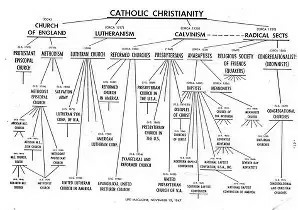
@ComeHometoRome They just pick and choose
Sola scriptura or sold scripture?
Paul addresses the issue of divisions in the church, emphasizing that Christ is not divided and that believers should not align themselves with human leaders over Christ.
English
Protestants don’t read their Bible
GodlyAction@GodlyAction
Baptism is not required for salvation.
English
@RepLuna Vote every incumbent out including YOU. You lie too much
English
I am seriously DISGUSTED by some members of the Senate. Primary every single one of them
English
TrueRedMan retweetet

🚨 BUSTED: NYC Mayor Zohran Mamdani's wife, Rama Duwaji, PANICS after being caught using the n-word & g*y slurs, DELETES her X account!
Where are the Democrats at to condemn & cancel her? I thought they hated this sort of thing?
Zohran Mamdani must resign.

English
TrueRedMan retweetet

No matter the crime, they won’t deport someone who votes for them
Scott Jennings@ScottJenningsKY
They vote against deporting migrants who harm humans. What did you expect?
English