
Ben Erez

7.4K posts

Ben Erez banner
Ben Erez

Ben Erez

@ViableBen

I help PMs land roles at Meta, Google, OpenAI, Anthropic, Stripe + | Ex-Meta | 3x first PM

Brooklyn Beigetreten Ağustos 2011
814 Folgt2.6K Follower
Angehefteter Tweet
Ben Erez
Ben Erez@ViableBen·
In >1 year as a PM @ Facebook I've created zero tickets/tasks. We don't do sprints either. PMs here focus on vision, strategy & partnerships. Less on project management & tasks. Engineers carry most of the project management responsibility & create their own tasks. It's great.
English

91
257
2.3K
0
Ben Erez retweetet
Brian Halligan
Brian Halligan@bhalligan·
If you want to get hired at an AI company right now, this is what they need to say about you when you leave the room, directly from @jack and @roelofbotha Watch the full episode here: seq.vc/6b8685
English
11
22
174
24.6K
Ben Erez retweetet
Andrej Karpathy
Andrej Karpathy@karpathy·
Judging by my tl there is a growing gap in understanding of AI capability. The first issue I think is around recency and tier of use. I think a lot of people tried the free tier of ChatGPT somewhere last year and allowed it to inform their views on AI a little too much. This is a group of reactions laughing at various quirks of the models, hallucinations, etc. Yes I also saw the viral videos of OpenAI's Advanced Voice mode fumbling simple queries like "should I drive or walk to the carwash". The thing is that these free and old/deprecated models don't reflect the capability in the latest round of state of the art agentic models of this year, especially OpenAI Codex and Claude Code. But that brings me to the second issue. Even if people paid $200/month to use the state of the art models, a lot of the capabilities are relatively "peaky" in highly technical areas. Typical queries around search, writing, advice, etc. are *not* the domain that has made the most noticeable and dramatic strides in capability. Partly, this is due to the technical details of reinforcement learning and its use of verifiable rewards. But partly, it's also because these use cases are not sufficiently prioritized by the companies in their hillclimbing because they don't lead to as much $$$ value. The goldmines are elsewhere, and the focus comes along. So that brings me to the second group of people, who *both* 1) pay for and use the state of the art frontier agentic models (OpenAI Codex / Claude Code) and 2) do so professionally in technical domains like programming, math and research. This group of people is subject to the highest amount of "AI Psychosis" because the recent improvements in these domains as of this year have been nothing short of staggering. When you hand a computer terminal to one of these models, you can now watch them melt programming problems that you'd normally expect to take days/weeks of work. It's this second group of people that assigns a much greater gravity to the capabilities, their slope, and various cyber-related repercussions. TLDR the people in these two groups are speaking past each other. It really is simultaneously the case that OpenAI's free and I think slightly orphaned (?) "Advanced Voice Mode" will fumble the dumbest questions in your Instagram's reels and *at the same time*, OpenAI's highest-tier and paid Codex model will go off for 1 hour to coherently restructure an entire code base, or find and exploit vulnerabilities in computer systems. This part really works and has made dramatic strides because 2 properties: 1) these domains offer explicit reward functions that are verifiable meaning they are easily amenable to reinforcement learning training (e.g. unit tests passed yes or no, in contrast to writing, which is much harder to explicitly judge), but also 2) they are a lot more valuable in b2b settings, meaning that the biggest fraction of the team is focused on improving them. So here we are.
staysaasy@staysaasy

The degree to which you are awed by AI is perfectly correlated with how much you use AI to code.

English
930
2.3K
19.2K
3.7M
Ben Erez
Ben Erez@ViableBen·
If I was a PM in the market right now, @AnthropicAI would probably be my top choice. @gokulr has a fantastic framework for picking companies. It comes down to trajectory, talent density, and culture. Anthropic checks all three right now. (1) Trajectory - They went from $1B to $30B ARR in 15 months. 10x year-over-year. Their head of growth Amol Avasare just shared on @lennysan's Podcast that they’re actively hiring PMs because engineers with Claude Code are shipping so much faster that PM teams are stretched to keep up. - When a company is growing this fast, the pie expands. More responsibility, harder problems, nobody fighting over scraps. (2) Talent density - Amol described it as “playing for Real Madrid” (as a Barcelona fan, this was a tough one to hear). Mike Krieger started Instagram and he’s there. - These are the people who’ll pull you into your next 3 roles. Future co-founders, investors, people you can recruit into your startup someday. You get to see what great looks like up close. (3) Culture - Amol said he’s never met a single person at Anthropic who’s not putting everything they have on the table. They have these notebook channels on Slack, basically internal Twitter feeds where anyone can publicly disagree with Dario. A new hire challenged something he said at an all-hands and it sparked a company-wide debate. - They’re also comfortable leaving money on the table for safety. That’s not something you hear from a growth team. What they’re doing (and their product velocity) is impressive AF and the way they’re working is just as fascinating as what they’re shipping. If I was applying, I wouldn’t leave the process to chance. I’d try to get as much alpha as possible. There’s barely anything out there about how Anthropic interviews PMs, which is why I'm excited to share we launched our newest Insider Loops guide covering their interview loop! insiderloops.com
English
2
3
84
10.5K
Ben Erez
Ben Erez@ViableBen·
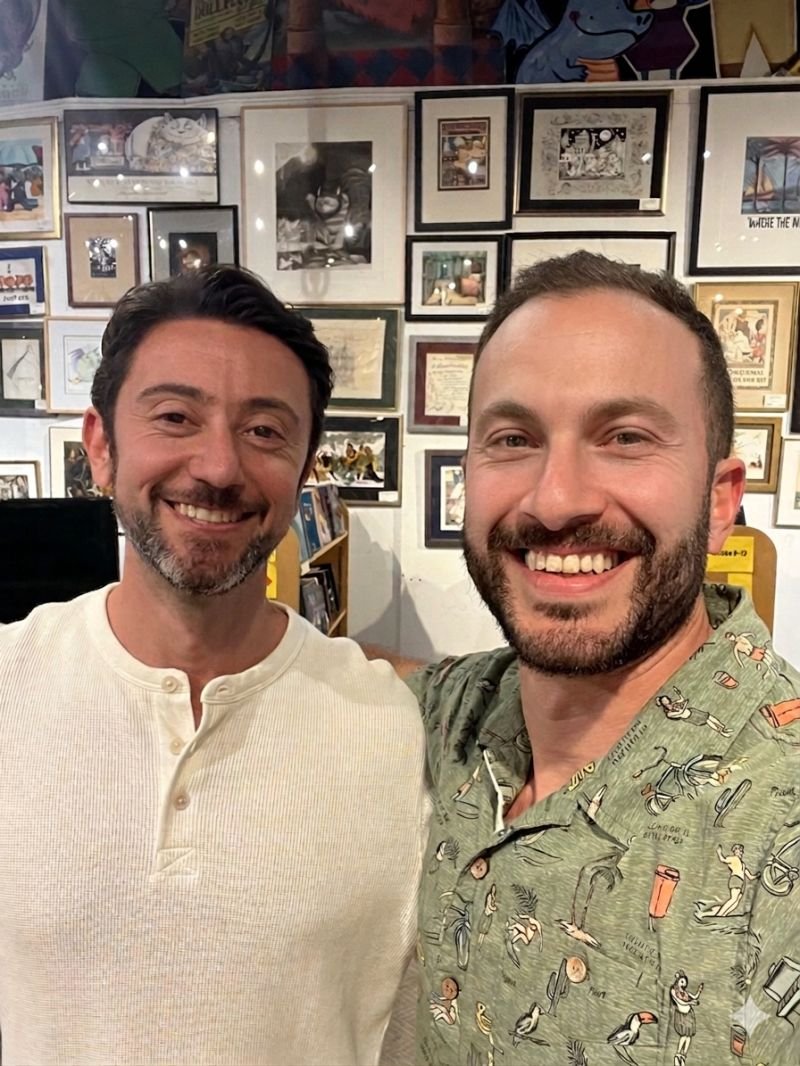
Last night I read my 3yo daughter a new picture book about charts and she slept like a logarithm. I always enjoyed numbers and shapes in the school. Geometry and algebra felt fun. Solving for X and Y over and over was like doing puzzles! But not everyone has that type of relationship with numbers. My wife is now learning math on Duolingo (shout out @nickeyskarstad ) and we want our daughter to develop a positive relationship with numbers as well. So when I saw that @lennysan's super talented wife, @TheRialMichelle, was publishing a kid's picture book called “Charts for Babies” about… well, charts… I bought it immediately. We finally received our copy yesterday after going to an intimate in-person live reading in NYC over the weekend where I snagged this overdue selfie. And then last night for bedtime, I read the book to Gaia after she did her own completely made up voiceover of every page. We loved it. If you’re looking to get your young kids comfortable with math and numbers, you should grab a copy of the book. It’s awesome.
Ben Erez tweet media
English
1
0
3
431
Ben Erez retweetet
Shane Levine
Shane Levine@theShaneLevine·
People ask me how has AI changed the design process? Just look at @tryramp Product Designer job description
Shane Levine tweet media
English
42
115
1.6K
218.1K
Ben Erez retweetet
Ben James
Ben James@BenJames_____·
I made a USB-Clawd who gets my attention when Claude Code finishes a response
English
419
1.3K
19.8K
1.3M
Ben Erez
Ben Erez@ViableBen·
Anthropic went from $1B to $19B ARR in 14 months and they're strapped for strong PMs. Anthropic has been our most requested guide at Insider Loops and their head of growth Amol Avasare just shared on @lennysan's Podcast that PM teams across the company are stretched and Anthropic is actively hiring strong PMs. If you're thinking about joining @AnthropicAI , this is a great time to get in the door. The timing of this episode couldn't be better because today we're announcing the launch of our Anthropic guide. This is our 7th Insider Loops guide, following OpenAI, Google, Stripe, DoorDash, Figma, and Uber. To create this guide, we spoke off the record with PMs at Anthropic and candidates who recently went through their interview process to unpack each step of the loop and what's being evaluated. Out of all the guides we've created, it feels like Anthropic takes culture interviews more seriously than any other company. They're looking for PMs they can trust with the heavy responsibility of bringing AGI to the world. I joked to @MarcBaselga when we were putting the final touches on the guide that it seems they're screening for PMs who can see the Black Mirror episode downstream of every decision and pick the *other* path. After getting dozens of pings in recent months about how little information is available about Anthropic's PM interviews online, our guide is now the best resource for candidates to understand their interview process. I'm sure the Anthropic loop will evolve quite a bit in the coming months and thanks to our steady flow of insights from real candidate, we'll update our guides on a weekly/monthly basis as new changes are rolled out. You can get the guide here: insiderloops.com And a quick personal note: if I was looking for a PM role, Anthropic would probably be my top choice right now. What they're doing is impressive AF and the way they're working is just as fascinating as what they're shipping.
English
1
2
20
3.7K
Ben Erez
Ben Erez@ViableBen·
@hnshah Loved having you on the pod, Hiten! I've been seeing the vibe->environment->culture model everyone since we had this convo it's so good 🤩
English
0
0
1
120
Ben Erez
Ben Erez@ViableBen·
is Jack Dorsey wearing a paperclip as an earring?
Brian Halligan@bhalligan

NEW EPISODE: @jack & @roelofbotha unpack @blocks 40% staff cut and rebuilding the entire company as a mini-AGI. This isn’t “use AI to make people more productive.” It’s making the company itself the intelligence. If you’re a founder or operator wondering what work looks like in the next 5 years… this is the episode. The evolution looks like: • Manager mode = Pyramid 🔺 (command & control) • Founder mode = Flat ➖(founders decide fast) • Dorsey mode = Circle 🔵 w/ AI at the center, humans at the edge, and decisions flow from customer inputs → AI → humans steering it I’ve tried killing org charts before. Brutally hard. But we never had these tools. This is rewriting the CEO playbook for the AI era. Buckle up. 00:00 Existential Dread & Hope 02:56 AI Replaces Hierarchy 07:22 Block’s New Three Roles 26:47 Flattening the Company, Fast 35:23 Getting the Board to Buy-In, Fast 36:50 Building a Great Board 41:29 Founder CEO Lessons 48:18 Second Acts & Conviction 56:22 Timeless CEO Traits

English
0
0
0
115
Ben Erez retweetet
tobi lutke
tobi lutke@tobi·
The most AI proof job in the world is entrepreneurship Use it to make products and services. Build more companies. On Shopify or otherwise.
English
258
437
4.5K
246.3K
Ben Erez
Ben Erez@ViableBen·
@NotebookLM just got a big upgrade woah! You can now pick the language, format of the deep dive, length, and tailor what the AI hosts focus on 🤩
Ben Erez tweet media
English
1
0
2
46
Ben Erez retweetet
Marc Baselga
Marc Baselga@MarcBaselga·
If you rely on intel about Stripe's PM interview process from six months ago, it's still directionally right but 20-30% misleading. And it's not just Stripe. That's what makes Insider Loops hard to replicate. The guides themselves are already difficult to get right - Ben and I have spent years building trust with candidates, recruiters, and people inside these companies. And Ben Erez is a PM interview expert. But the part I think is even harder to replicate is what happens after a guide ships. We've built enough trust over time that people proactively come to us when something changes. We don't chase it down. And honestly, a lot of times we end up learning about process changes before people inside these companies do, just from the sheer number of candidates we talk to. Here's what changed in our Stripe guide in a single update cycle: ↳Product Sense question bank went from candidate reports to recruiter-confirmed ↳We identified the specific question with the highest failure rate in the PS screen ↳ The written exercise used to be a separate step. Now it gets sent at the same time as the onsite invitation and runs in parallel. ↳A candidate was called out mid-interview for saying "we" too often. Stripe wants to hear what you did, not your team. ↳Analytical interview expanded with 13+ new questions we hadn't tracked before And this is just an example of one cycle for one guide. We do this across six companies. Those frequent updates and "guide freshness" are really what you're buying when you get a guide from us. Not a static document that ages out, but something that stays current because people keep feeding us what's changing. P.S. Full Stripe playbook (with ongoing updates) at insiderloops(dot)com.
English
0
1
1
111
Ben Erez
Ben Erez@ViableBen·
The opportunity cost of a bad hire has never been higher.
English
1
0
3
194
Ben Erez retweetet
Lenny Rachitsky
Lenny Rachitsky@lennysan·
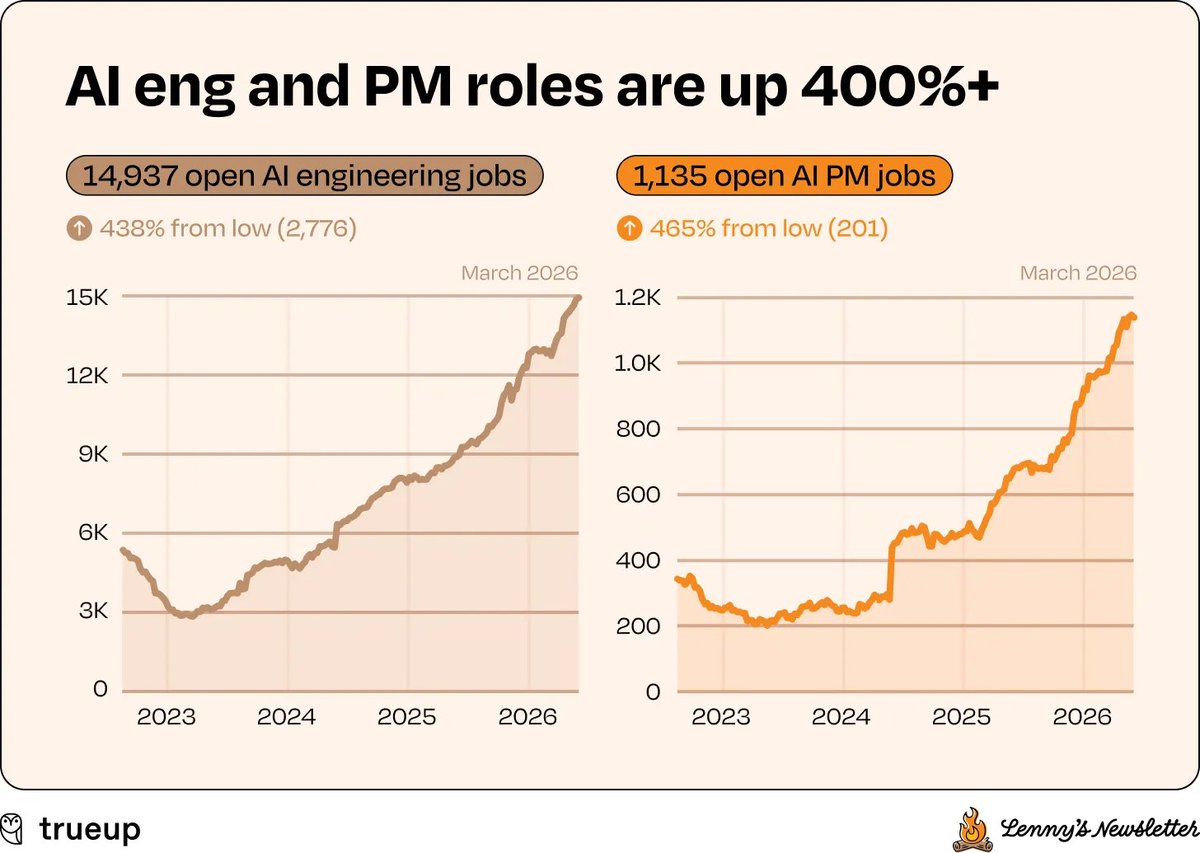
STATE OF THE PRODUCT JOB MARKET IN EARLY 2026 In spite of the headlines about layoffs and AI taking jobs, we’re actually seeing a lot of promising signs in tech hiring, and some interesting new trends: 1. PM openings are at the highest levels we’ve seen in over three years 2. AI hasn’t slowed the demand for software engineers (at least not yet) 3. AI roles in general are absolutely exploding 4. Design roles have plateaued 5. The Bay Area is increasing in importance 6. Remote work opportunities continue to decline 7. Despite ongoing layoffs, the overall number of tech jobs continues to grow More in 🧵
Lenny Rachitsky tweet media
English
135
235
1.4K
1.1M
Ben Erez
Ben Erez@ViableBen·
I think of PMs less as mini-CEOs and more as CEO amplifiers. The mini-CEO framing bugs me. It implies PMs have authority they don't have and sets up new PMs to fail by giving them the wrong mental model. The ego does like it though. Lately, I've been thinking of a different framing of the PM in context to the CEO which is more akin to a PM as a CEO node. Imagine a mesh wifi network in your house. You've got a main router generating the signal. Then you've got mesh routers placed around the house that pick up that signal and amplify it. The CEO is the router. They set the vision, the strategy, the priorities. They generate the signal. The PM is a mesh router. Their job is to tune into that signal and make sure every decision in their corner of the product is consistent with it. PMs amplify. CEOs don't want their PMs to be mini-CEOs. CEOs want PMs who make decisions the way the CEO would if they were sitting in their seat. Do you see the difference?
English
1
0
3
214
Ben Erez
Ben Erez@ViableBen·
Zuck renamed Facebook to Meta bc of the Metaverse vision. Now that they’re killing Metaverse, what’s the new company name going to be? Wrong answers only
English
3
1
1
289
Ben Erez
Ben Erez@ViableBen·
We just launched our Insider Loops guide for Google PM interviews. It's way more interesting than I expected. Marc & I spent the last few weeks talking to Google PMs across different orgs and candidates actively going through the loop. We quickly realized that Google's PM interviews are going through a lot of change, and there's variance even within Google about how interviews are evolving. Some of the variable that can influence the structure of the loop include the org a candidate is targeting, their level, and even whether the target role includes "AI" in the title. If you're L5+ and targeting an AI role at Google Cloud, there's a 60-70% chance you get routed into what is basically a different onsite design (unique rubrics, interview types, panel selection, etc). And the best part: you might not even be told which version of the loop you're entering. The content of the interviews is changing too: ↳ Standalone behavioral questions like "tell me about your biggest weakness" have mostly been phased out across Google. ↳ They still evaluate Googleyness and leadership, but it comes through how you handle product and execution questions now, not through dedicated behavioral rounds. ↳ Estimation is evolving in parts of the org too, moving from standalone Fermi problems to analytical thinking embedded in product context. ↳ The technical/system-design round for PMs got replaced in mid-2024 with an execution and cross-functional round. ↳ No more algorithm questions, but they still expect technical fluency throughout. And then team matching. You can clear every interview, get HC approval, and still not get an offer if no team claims you within about 8 weeks. Want the full rundown? Our Google guide covers the full process across orgs (excluding Waymo and DeepMind which are their own thing), including what's changing and what's being evaluating in each of the loops variants. Check it out at insiderloops.com
English
0
0
1
234
Ben Erez retweetet
Dr. Dominic Ng
Dr. Dominic Ng@DrDominicNg·
4. AI makes it hard to tell who's cheating - Did they write that essay? - Did they build that portfolio? - Did they solve that take-home or did ChatGPT? The interview question changes from "what did you produce?" to "can you think in front of me?"
English
15
28
1.3K
201.7K