Roseanne - O’win is here!

11.5K posts

Roseanne - O’win is here! banner
Roseanne - O’win is here!

Roseanne - O’win is here!

@WritingOutLoud2

#PB Writer |Writing Consult FINDING CHRISTMAS | O’WIN & the MOON | ALICE IN THE PALACE | @scbwilongisland Insta: @writingoutloud | LL Searchlight Children’s ‘23
New York, USA Beigetreten Temmuz 2014
2.9K Folgt2.2K Follower
Roseanne - O’win is here! retweetet
𐌁𐌉Ᏽ 𐌕𐌉𐌌𐌉
Don’t EVER let your printer know you’ve waited until the last minute and you’re in a hurry, because it can sense fear.
English
226
4K
34.9K
494.5K
Roseanne - O’win is here! retweetet
All day Astronomy
All day Astronomy@forallcurious·
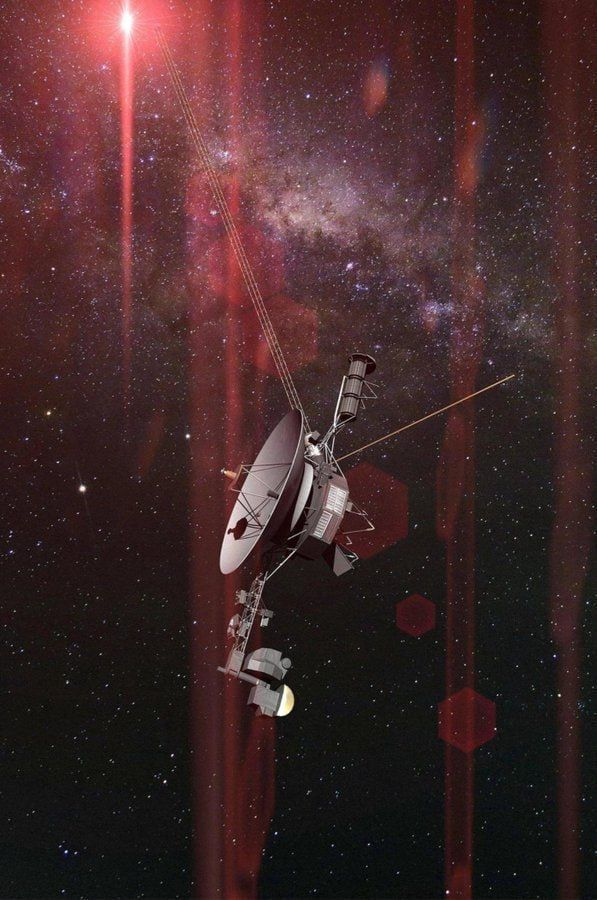
🚨: After travelling for almost 5 decades, and more than 15 billions miles, Voyager 1 is about to make history. It will soon reach one full light-day away from Earth!
All day Astronomy tweet media
English
177
927
5.7K
122.6K
Roseanne - O’win is here!
Roseanne - O’win is here!@WritingOutLoud2·
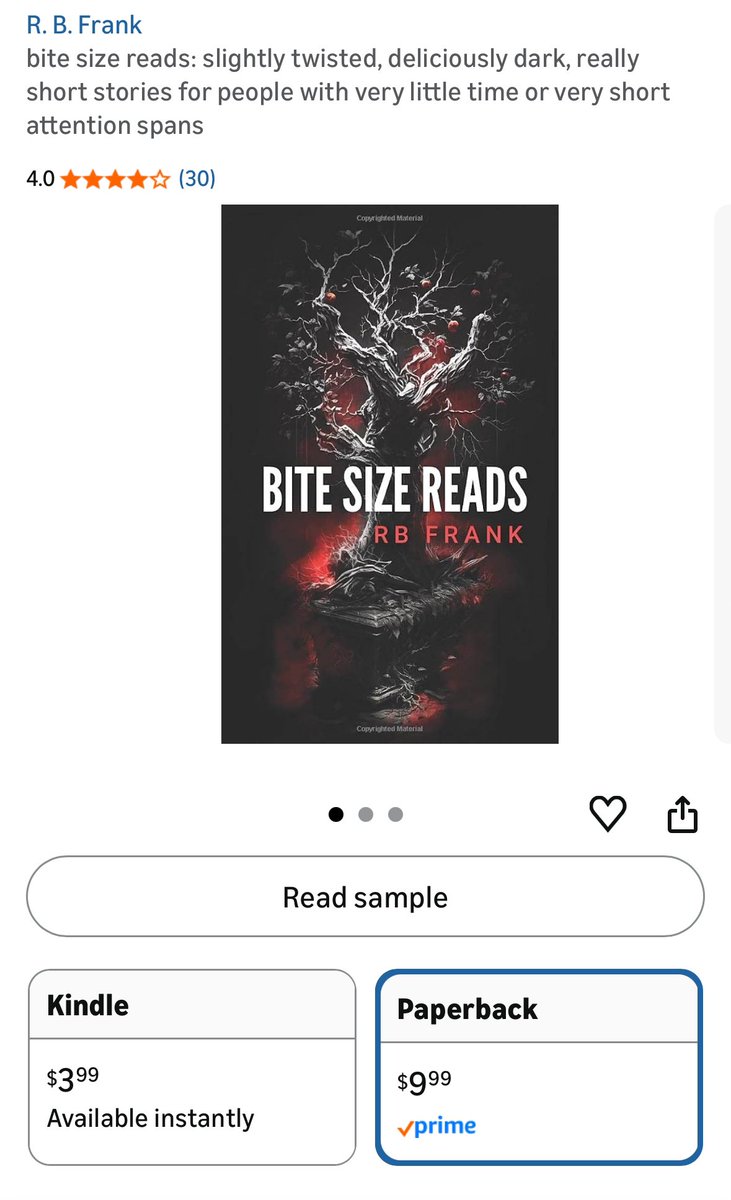
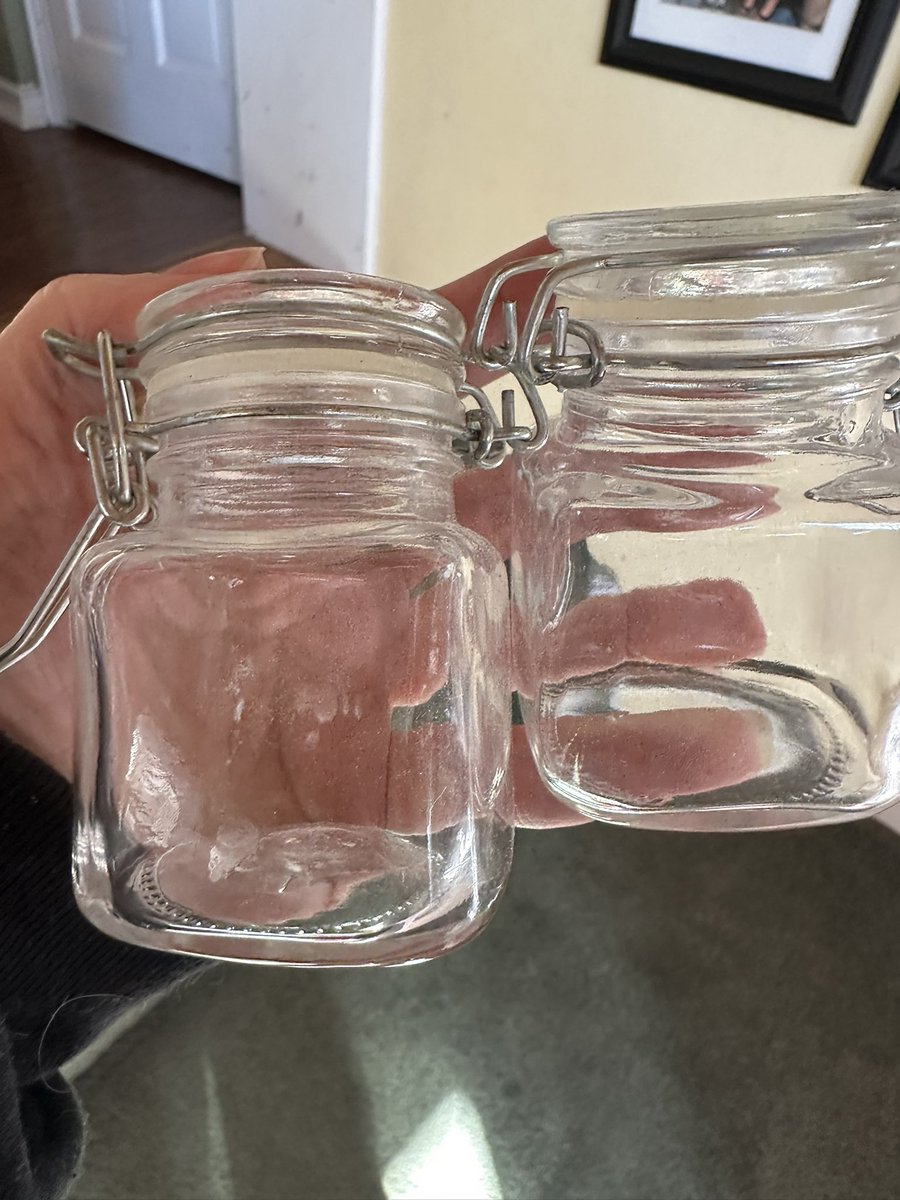
Who needs something out of the box? Bite Size Reads - a collection of short stories & flash fiction when you have zero time or a short attention span. Kindle is at mocha-schmocha price bit.ly/BiteSizeEbook Or pocket size print bit.ly/BSRNew
Roseanne - O’win is here! tweet mediaRoseanne - O’win is here! tweet media
English
0
0
0
19
Roseanne - O’win is here! retweetet
Christina Garnett
Christina Garnett@ThatChristinaG·
Losing an hour of time/sleep on International Women's Day feels like the most on brand thing this world has to offer.
English
200
10.4K
80.2K
1.1M
Roseanne - O’win is here!
Roseanne - O’win is here!@WritingOutLoud2·
Rewording. Using your own words. Explaining an idea without the original terminology means you internalized the information & made it your own. Classic educational pedagogy.
Math Files@Math_files

Most people think Richard Feynman was a genius because of his IQ, but an IQ test in high school reportedly placed his score around 125—impressive, but far below what you might expect. What actually set him apart was a habit he developed very early on: metacognitive monitoring of understanding. As a child, his father trained him to notice the difference between knowing a name and understanding the thing itself. When Feynman observed birds, his father taught him that simply learning to label them as birds didn’t matter. What mattered was how they lived, how they behaved, and why. That lesson stayed with him. As a student, Feynman became suspicious whenever an explanation felt simple but left him unable to reconstruct the reasoning himself. Phrases like “it’s obvious” or “it can be shown” were not reassuring to him; instead, they were red flags. Modern cognitive science explains why this matters. Familiarity produces what’s called fluency, and fluency is routinely mistaken for understanding. People feel most confident precisely when their comprehension is actually the thinnest. Feynman learned to treat confidence itself as something to examine. Confusion, for him, wasn’t a failure—it was diagnostic information. A practical way to train this habit yourself is to stop mid-study and ask whether you could explain the idea without using the original terminology. Wherever your explanation breaks down, that’s the true boundary of your understanding.
English
0
0
0
25
Roseanne - O’win is here!
Roseanne - O’win is here!@WritingOutLoud2·
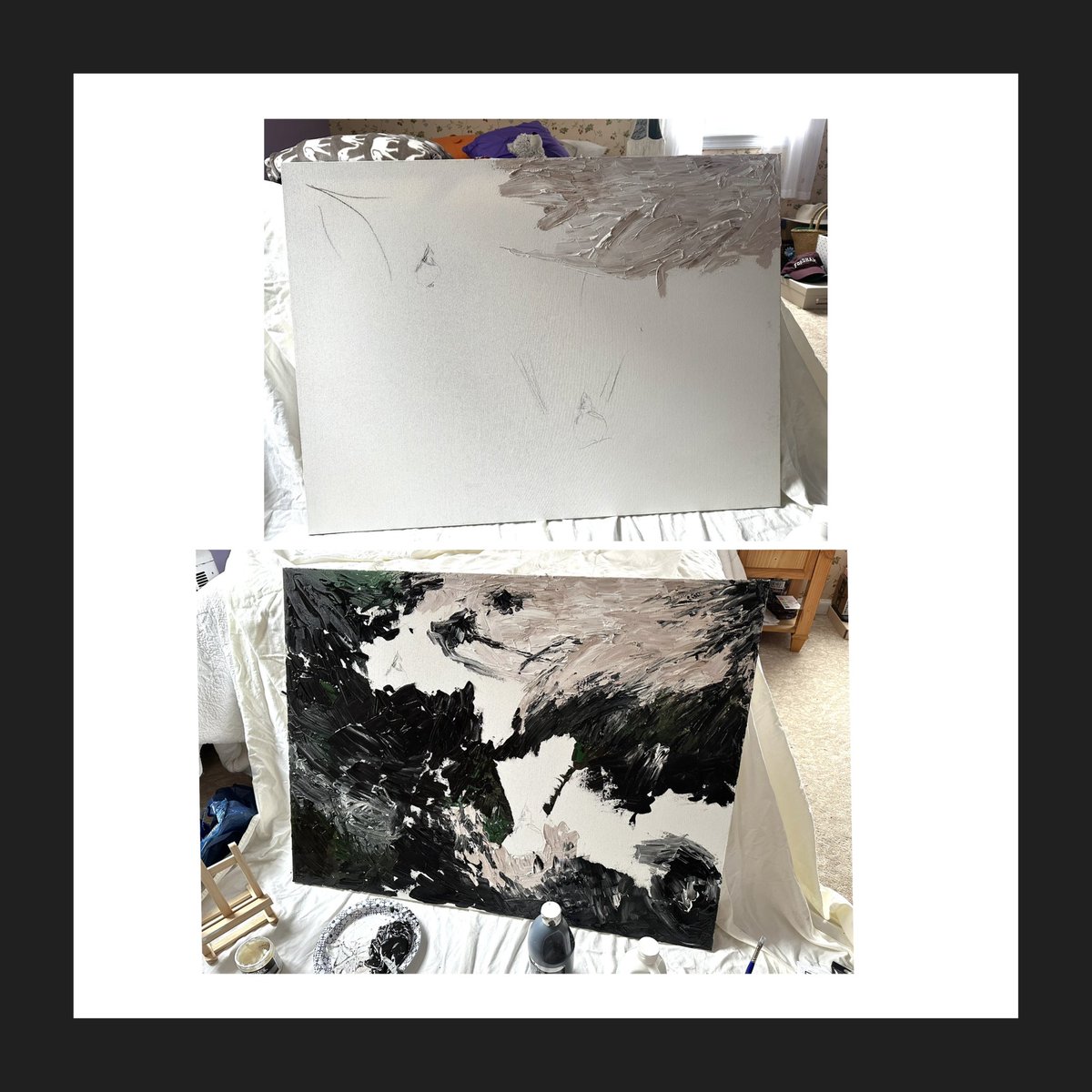
The painting in the beginning… and we’re at the hot mess, awkward adolescent stage.
Roseanne - O’win is here! tweet media
English
0
0
0
32
kuri
kuri@authorkurikuri·
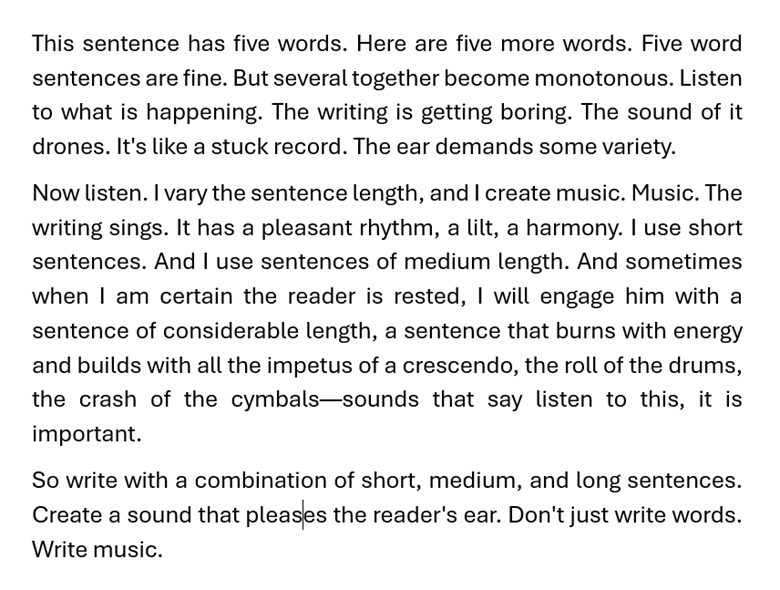
apparently people are discoursing about writing, so here's the writing advice i've personally found most useful (usually credited to gary provost)

kuri tweet media
English
51
6K
35.2K
883.7K
Roseanne - O’win is here! retweetet
Dr. Lemma
Dr. Lemma@DoctorLemma·
Forty-nine years ago, NASA launched a message into the deep unknown that is still traveling further away from us every single second. Attached to both Voyager spacecraft is a gold-plated copper record acting as a time capsule from Earth. It was designed to tell the story of our world to any extraterrestrial life that might find it millions of years from now. The contents are incredibly diverse, featuring greetings in 55 different languages and a 90-minute selection of music ranging from the classical genius of Bach to the rock and roll energy of Chuck Berry.  The record also contains sounds of wind, thunder, and animal calls, along with 116 images encoded in analog form. Perhaps the most intimate detail is the recorded brainwaves of a young woman who was thinking about the history of ideas and the experience of falling in love.  Today, the Voyager probes are more than 15 billion miles away from Earth, officially in interstellar space. They have long outlasted their original mission and are the most distant human-made objects in existence. Even after the spacecraft eventually go dark, these golden records will continue to drift through the silence of the galaxy for billions of years.  If you could put one song on a record to represent humanity today, what would it be?
English
12
17
100
36.3K
Roseanne - O’win is here!
Roseanne - O’win is here!@WritingOutLoud2·
This is long but well worth it. Let kids be bored & figure it out. (Yes, I’m a parent & a former early childhood teacher.)
Dr Danish@operationdanish

The Case for Childhood Boredom. A strange thing has quietly disappeared from childhood. Boredom. For most of human history, boredom was unavoidable. Childhood unfolded in long, uneven stretches of time that nobody bothered to organize. Summer afternoons drifted by without a schedule, car rides lasted hours with nothing but the passing landscape, and children spent entire days outside with only a loose instruction to be home before dinner. And something curious tended to happen in those empty spaces. Children invented things. A stick became a sword, and then a fishing rod, and then, without warning, a wand capable of defeating imaginary monsters. A patch of grass became a battlefield. A cardboard box became a spaceship. Entire worlds emerged out of nothing more than idle time and a restless mind. Neuroscientists now understand that the brain behaves differently in those moments. When external stimulation fades, a network deep in the brain called the default mode network begins to activate. It is the circuitry associated with imagination, memory integration, and abstract thinking. When the mind has nowhere specific to go, it begins to wander, and while it wanders it starts connecting dots that rarely meet during structured activity. Creativity often lives in that wandering. Modern childhood, however, has undergone a quiet redesign. Empty time has been steadily replaced with organized activity. Sports leagues, tutoring sessions, music lessons, enrichment programs. Even the small gaps between activities tend to be filled with screens engineered with extraordinary precision to eliminate boredom the moment it begins to appear. Parents worry when boredom surfaces. A child announcing “there’s nothing to do” can feel like a problem waiting to be solved, a signal that the environment lacks sufficient stimulation. But boredom is simply the brain beginning a different mode of operation. The mind starts generating its own stimulation instead of consuming someone else’s. Look closely at the childhoods of unusually creative people and a pattern emerges. Steve Jobs spent long stretches wandering the neighborhoods of Silicon Valley, exploring electronics shops and experimenting in garages. Albert Einstein famously described hours of quiet daydreaming as a child, staring out windows and imagining physical problems in his head. J.K. Rowling began inventing elaborate stories long before she had any audience for them. Each of them had something that has become surprisingly rare. Psychological whitespace. Modern childhood often resembles a corporate calendar. Every hour accounted for. Every activity supervised. Every quiet moment quickly filled by a glowing rectangle designed by teams of behavioral scientists whose job is to make sure attention never drifts into silence. And yet many of the qualities parents hope their children will develop—creativity, resilience, independence—tend to emerge from precisely the conditions we have learned to eliminate. Unstructured time confronts a child with a deceptively simple problem. What should I do next? That question trains the brain in powerful ways. It forces the mind to generate ideas, to tolerate the mild discomfort of inactivity, and eventually to invent something interesting enough to fill the gap. Children who rarely encounter boredom often struggle to resolve it on their own. They wait. They look outward for stimulation rather than inward for possibility. Childhood boredom, in that sense, becomes a kind of workshop. It is the place where imagination practices building things from nothing, where the mind experiments freely without instruction, and where curiosity slowly learns how to entertain itself. Left alone long enough, the mind begins to wander. And wandering minds have a peculiar habit of discovering entirely new worlds.

English
0
0
1
21