Mekin

9.9K posts

Mekin banner
Mekin

Mekin

@_mekin

Democratising entrepreneurship with https://t.co/sqIjomZnRD & https://t.co/Ua9rfNPo8K Indian; techie; learner; educationist; sport lover; pet parent

Bangalore Beigetreten Mart 2008
2.5K Folgt11.6K Follower
Angehefteter Tweet
Mekin
Mekin@_mekin·
Why Scale Impact? This is a question I am asked a lot, especially amongst Development sector(Non Profits) professionals. and my response is not as a technologist, because you can but as a citizen - because we must. To me - this question is like asking: why social change? 🧵
English
6
12
53
0
Mekin retweetet
Aviral Bhatnagar
Aviral Bhatnagar@aviralbhat·
It's a good time to remember that India's statistical middle class is 2L INR / year, not per month 50% of India by percentile is at this number, which is what a gig worker earns in India People earning 2L per month are in India's top 1% and not "middle class"
English
94
134
1.6K
165.1K
Mekin
Mekin@_mekin·
ZXX
0
0
4
238
Mekin
Mekin@_mekin·
ZXX
2
0
6
332
Mekin retweetet
Prukalpa ✨
Prukalpa ✨@prukalpa·
All the research says humans need purpose. Work — even mundane — gives us that. Europe is already piloting “back to work” programs to address mental health in retired populations. But in a world where AI does everything better than any individual… Where do humans find meaning? Some thoughts 👇 1/ In a world of abundance, does status shift? From money/power → health, longevity, happiness? 2/ Happiness seems to come from: • Deep human connection • A sense of purpose So where do we find those? Community? Religion? Something new? 3/ Do we actually reach abundance? Or do we get extreme inequality instead? San Francisco already feels like a preview: 20-year-old billionaires & homelessness — often within a mile of each other. 4/ If inequality widens, who takes care of everyone else? 5/ Does this mean core AI infrastructure should be treated like public goods? Railroads. Electricity. The internet. The role of public institutions has never been as important as it is today.
sam lessin 🏴‍☠️@lessin

A bunch of people have written me back saying this was the best newsletter I have ever sent (flattering) ... so here it is for those who don't subscribe: AI Is Not a Labor Crisis. It Is a Meaning Crisis.

English
3
3
23
4K
Mekin retweetet
Vivek Chauhan
Vivek Chauhan@vivek_chauhan·
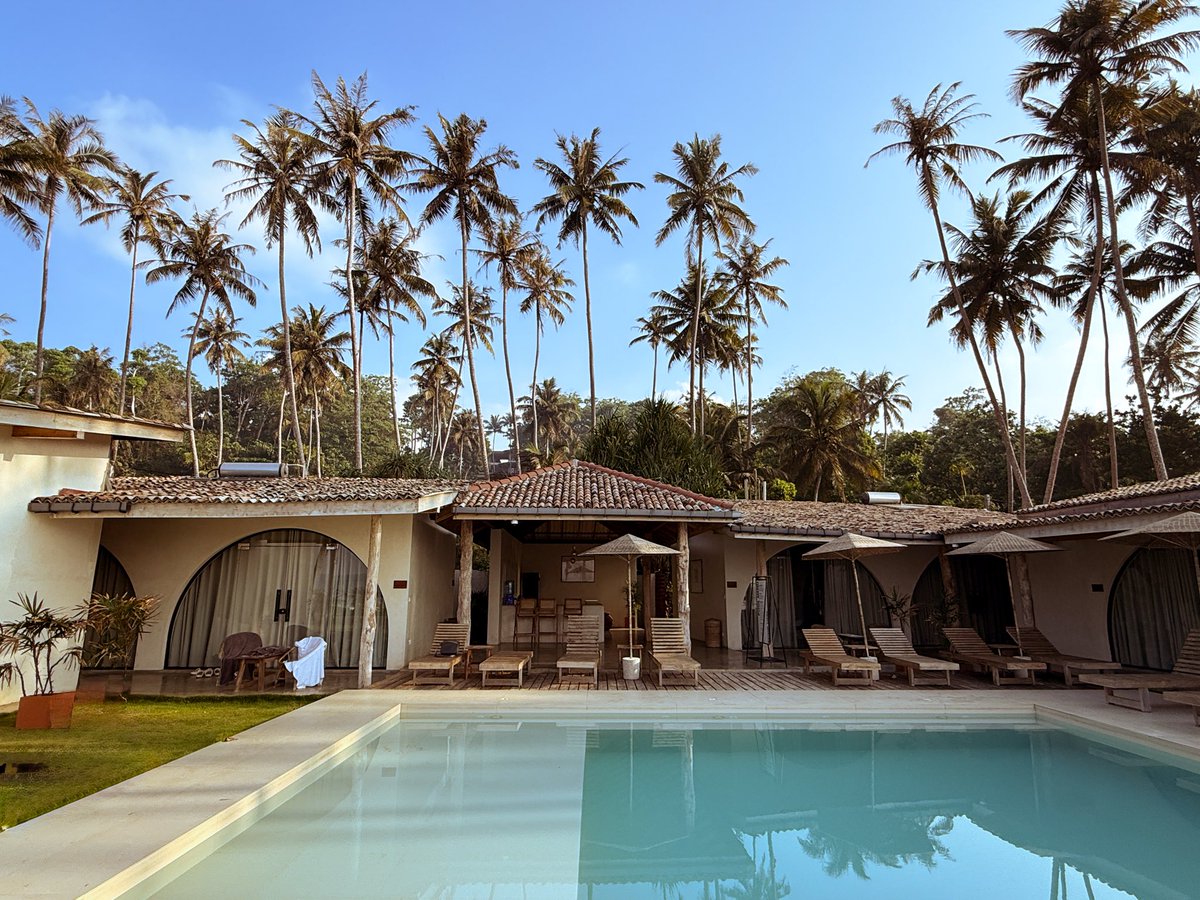
While Postcard Galle remains highlight of all the Srilanka stays during the Srilanka South Coast trip, we have been pleasantly surprised by small boutique stay experiences ! Close to Mirissa / Welligama / Ahamgama and not too far from Hiriketiya, this one was right on the beach with amazing views all around ! @_mekin has marked this for next time as a fantastic location for surfing. Sharing a few pics and videos.
Vivek Chauhan tweet mediaVivek Chauhan tweet mediaVivek Chauhan tweet mediaVivek Chauhan tweet media
Vivek Chauhan@vivek_chauhan

@_mekin and I Just finished staying at The Postcard, Galle and this surely is one of the most underrated property in @PostcardHotel collection. It deserves much more love for sure. Thanks @KapilChopra or selecting this gem. Can highly recommend for an absolute “Do Nothing” holiday. The place has everything needed to calm down and rejuvenate. If you have iota of doubt about how the experience is going to be, I can guarantee that Shivani, Teekshan, and the entire team will make every moment memorable. Fantastic food, stunning interiors, and serene views all around. Couldn’t have asked for more……. #srilanka #galle #srilankatrip #LuxuryTravel #thepostcard #thepostcardgalle #travel

English
1
1
4
1.3K
Mekin retweetet
Aakash Gupta
Aakash Gupta@aakashgupta·
The scariest finding in this paper: the subjects couldn't tell it was happening. UPenn ran this study on 48 healthy adults. One group slept 8 hours. Another slept 6. Another slept 4. For 14 straight days. They tested cognitive performance every 2 hours from 7:30am to 11:30pm. The 6-hour group's reaction times, working memory, and sustained attention deteriorated on a near-linear curve. By day 14 they were performing at the same level as someone who hadn't slept at all in 48 hours. The 4-hour group hit that threshold by day 6. Here's the part that should unsettle everyone who thinks they "do fine" on 6 hours: the subjects' self-reported sleepiness flatlined after the first few days. Their brains kept getting worse. Their perception of how impaired they were stopped updating. The cognitive decline was invisible to the person experiencing it. The researchers found a hard threshold. Any wakefulness beyond 15.84 hours in a day produces cumulative neurobiological cost. That cost compounds every single day you exceed it and does not reset with a weekend of sleeping in. About 35% of American adults sleep less than 7 hours a night. 40% of those get 6 hours or less. In 1942 that number was 11%. We built an entire professional culture around a sleep schedule that this paper says is functionally equivalent to pulling consecutive all-nighters. "I'm fine on 6 hours" is the most common response to sleep research. The first thing chronic sleep debt destroys is your ability to notice chronic sleep debt.
Nicholas Fabiano, MD@NTFabiano

Sleeping <6h a night for 2 weeks reduces cognitive performance equal to 2 nights of total sleep deprivation.

English
221
3K
19.8K
5.4M
Mekin retweetet
P.S. I Love ME
P.S. I Love ME@ps_ilove_me·
🚨In 1990s, Stanford researcher Dr. Robert Sapolsky discovered something that should have broken the internet by now. He was studying dopamine pathways in primates and found that the brain doesn't just adapt to repeated stimulation. It actively fights back. When you flood dopamine receptors consistently, the brain deploys what neuroscientists call "opponent processes." For every artificial high you create, your nervous system generates an equal and opposite neurochemical low. Not eventually. Immediately. The system is designed to maintain balance, so it starts producing compounds that directly counteract dopamine while you're still experiencing the dopamine hit. This means every notification, every scroll, every digital reward doesn't just give you a high followed by a return to baseline. It gives you a high followed by a crash below baseline. You end up in neurochemical debt. Tech companies never publicized this research. They probably never read it. They were too busy discovering that variable ratio reinforcement schedules could keep users engaged for hours. They built addictive systems by accident, then refined them into addiction machines once they realized what they'd stumbled onto. Your phone delivers an average of 80 dopamine hits per day. Your ancestors got maybe 5. Each hit triggers opponent processes that create a corresponding low. By the end of a typical day of normal phone usage, your baseline dopamine is running in negative territory. You feel flat, restless, vaguely unsatisfied, and hungry for stimulation because your brain chemistry is literally below zero. You think you're bored. You're chemically depressed by artificial highs. The opponent process theory explains why nothing feels interesting anymore. Your brain isn't broken. It's precisely calibrated to maintain neurochemical balance, and you keep throwing that balance off with artificial intensity. Every Instagram hit requires an equal Instagram crash. Every TikTok high gets paid for with a TikTok low. Every notification rush gets balanced with notification emptiness. Your reward system is running a neurochemical deficit that grows larger every day. Sapolsky's research revealed something even more disturbing: opponent processes don't just create temporary lows. They become permanent changes to your baseline dopamine production. Chronic overstimulation doesn't just make you tolerant to digital rewards. It makes you insensitive to natural rewards. The sunset that would have captivated your great-grandfather becomes invisible to you not because sunsets got worse, but because your dopamine system needs intensity levels that sunsets can't provide. A good conversation becomes boring not because conversations got less interesting, but because your brain requires the rapid-fire stimulation of social media to register engagement. You've accidentally trained your reward system to ignore everything that isn't artificially amplified. This connects to research from Dr. Anna Lembke at Stanford, who found that people who undergo complete digital fasting for just 30 days show measurable increases in dopamine receptor density. Their brains literally regrow sensitivity to natural rewards. Food tastes better. Music sounds more complex. Social interactions become genuinely engaging again. But there's a catch that nobody talks about: the first two weeks of dopamine detox feel like clinical depression. Your brain has been chemically dependent on artificial stimulation for years. Removing that stimulation creates actual withdrawal symptoms. Restlessness, anxiety, inability to focus, emotional flatness, and desperate cravings for digital input. Most people interpret these symptoms as evidence that they need their phones. Actually, they're evidence that they've been neurochemically dependent on their phones without realizing it. The withdrawal period isn't a bug. It's proof the reset is working. What happens after week three is remarkable. Colors become more vivid. Conversations become genuinely absorbing. Simple pleasures like hot coffee or cool air become satisfying in ways you forgot were possible. Your brain rediscovers that reality contains enough complexity and beauty to hold your attention without artificial amplification. You don't need more interesting content. You need more sensitive reward systems. The solution isn't better apps or more engaging entertainment. The solution is restoring your brain's factory settings for what constitutes a worthwhile experience. Sapolsky's opponent process research suggests this can happen faster than anyone expected. Every day you don't artificially spike your dopamine, your baseline moves a little higher. Every natural reward you pay attention to rebuilds receptor density. Every moment of boredom you endure without reaching for stimulation strengthens your capacity for sustained focus. Ancient humans lived in a world that provided exactly the right amount of stimulation to keep their reward systems healthy. Enough challenge to stay engaged, enough calm to stay balanced, enough novelty to stay curious, enough routine to stay stable. We built a world that provides 10 times too much stimulation and wonder why nothing feels rewarding anymore. Your brain is not the problem. Your environment is the problem. Change the environment, and the brain heals itself automatically.
P.S. I Love ME tweet media
Darshak Rana ⚡️@thedarshakrana

x.com/i/article/2042…

English
145
2.7K
8.8K
1.1M
Mekin retweetet
Benji Taylor
Benji Taylor@benjitaylor·
“I’ll figure it out” has gotten me further than any plan I’ve ever made
English
279
1.3K
8.9K
611.3K
Mekin retweetet
Vivek Chauhan
Vivek Chauhan@vivek_chauhan·
@_mekin and I Just finished staying at The Postcard, Galle and this surely is one of the most underrated property in @PostcardHotel collection. It deserves much more love for sure. Thanks @KapilChopra or selecting this gem. Can highly recommend for an absolute “Do Nothing” holiday. The place has everything needed to calm down and rejuvenate. If you have iota of doubt about how the experience is going to be, I can guarantee that Shivani, Teekshan, and the entire team will make every moment memorable. Fantastic food, stunning interiors, and serene views all around. Couldn’t have asked for more……. #srilanka #galle #srilankatrip #LuxuryTravel #thepostcard #thepostcardgalle #travel
Vivek Chauhan tweet mediaVivek Chauhan tweet mediaVivek Chauhan tweet media
English
1
3
22
15.9K
Mekin retweetet
India Leaders for Social Sector
India Leaders for Social Sector@ILSS_Official·
ILSS Leadership Program is an intensive program designed to inspire, empower and enable high-quality talent from diverse backgrounds to take up leadership roles in the development sector.
English
44
263
1.1K
5.4M
Mekin retweetet
Aakash Gupta
Aakash Gupta@aakashgupta·
Your romantic partner is the single highest-dose pharmacological input in your daily environment. Bryan Johnson frames this as poetry. The data is more violent than that. The Harvard Study of Adult Development tracked people for over 80 years. Relationship quality at age 50 predicted physical health at age 80 better than cholesterol, income, or career success. The mechanism is a specific neuroendocrine cascade. A supportive partner triggers oxytocin release, which suppresses cortisol, downregulates HPA axis activation, reduces systemic inflammation, and slows telomere attrition. Your cells literally divide longer before hitting senescence. The person sleeping next to you is either extending or compressing your biological clock at the chromosomal level, every single night. Now run the numbers on the poison side. Married adults in one sample had a telomere T/S ratio of 1.70. Unmarried adults: 1.58. That gap held after controlling for diet, exercise, smoking, obesity, and social support. Divorced men in a Swedish cohort showed 46% higher relative mortality risk. A separate study of 3,526 adults found marital disruption was associated with shorter telomere length even after adjusting for neuroticism and lifetime traumatic events. The inflammatory profile of a high-conflict marriage looks nearly identical to the biomarker signature of chronic work stress or long-term caregiving burden. This is the part people miss. Bryan said “somewhere between medicine and poison.” The pharmacology is more binary than that. Oxytocin from a quality partnership lowers blood pressure, reduces sympathetic nervous system activation, and improves immune surveillance. Chronic cortisol from a bad one drives the same oxidative damage to telomere cap structures that accelerates every major age-related disease. There is no neutral. The dose is always running. A 2003 study found that more frequent partner hugs correlated directly with lower resting blood pressure and heart rate. The cardiovascular system responds to your primary attachment bond the way a tissue responds to a drug. Dose, frequency, duration. “Medicine and poison” is the right frame. But Bryan undersold the dosage. This is the single largest uncontrolled variable in every longevity protocol on Earth, and almost nobody is tracking it.
Bryan Johnson@bryan_johnson

It’s obvious in retrospect, but wasn’t intuitively clear earlier in life: your primary life partnership is somewhere between medicine and poison. Kate is medicine. Her mind tickles me, touch soothes, and essence animates. No life decision more important than who you journey with

English
56
676
5.6K
999.5K
Mekin retweetet
Susanta Nanda IFS (Retd)
Susanta Nanda IFS (Retd)@susantananda3·
Man stops traffic to allow safe passage to the elephant’s herd… They understand. Reciprocates with thanks & waves at him💕
English
255
2.9K
13.9K
355K
Mekin retweetet
Madhav Sharma
Madhav Sharma@MadhavSharma·
Dear Rahul Dravid, As an Indian cricket fan who watched you through decades with the patience of the greatest fast bowlers in world cricket history, I write this with a heart full of emotion. You are not merely a cricketer. You are a role model, an inspiration, the most technically perfect batsman the game has ever seen. Every time you walked to the crease, a quiet poetry unfolded. Against McGrath’s relentless precision, Akram’s deadly swing, Warne’s mesmerising guile, you became an unshakeable wall. Your technique flawless, your patience infinite, your focus a masterclass in discipline. We felt safe, secure, almost serene knowing you stood between chaos and the scoreboard. You played for the team always. Opener, number three, middle order, even emergency wicketkeeper; no role too small, no sacrifice too great. Selfless, silent, steady. Those marathon innings, thousands of balls faced, bowlers broken, foundations laid for others to shine; they taught us grit, humility, true service. You brought peace amid panic, order to collapse, pride without noise. Your quiet centuries in adversity, your understated celebrations, your unwavering character inspired generations to cherish technique over flash, patience over power, team over self. Thank you, Wall of India, for every minute at the crease, for every sense of safety you gifted us, for proving greatness can be calm, consistent, and profoundly beautiful. With deepest respect and endless gratitude, A lifelong fan Madhav Sharma
Madhav Sharma tweet media
English
44
290
1.7K
82.1K
Mekin retweetet
Rajdeep Sardesai
Rajdeep Sardesai@sardesairajdeep·
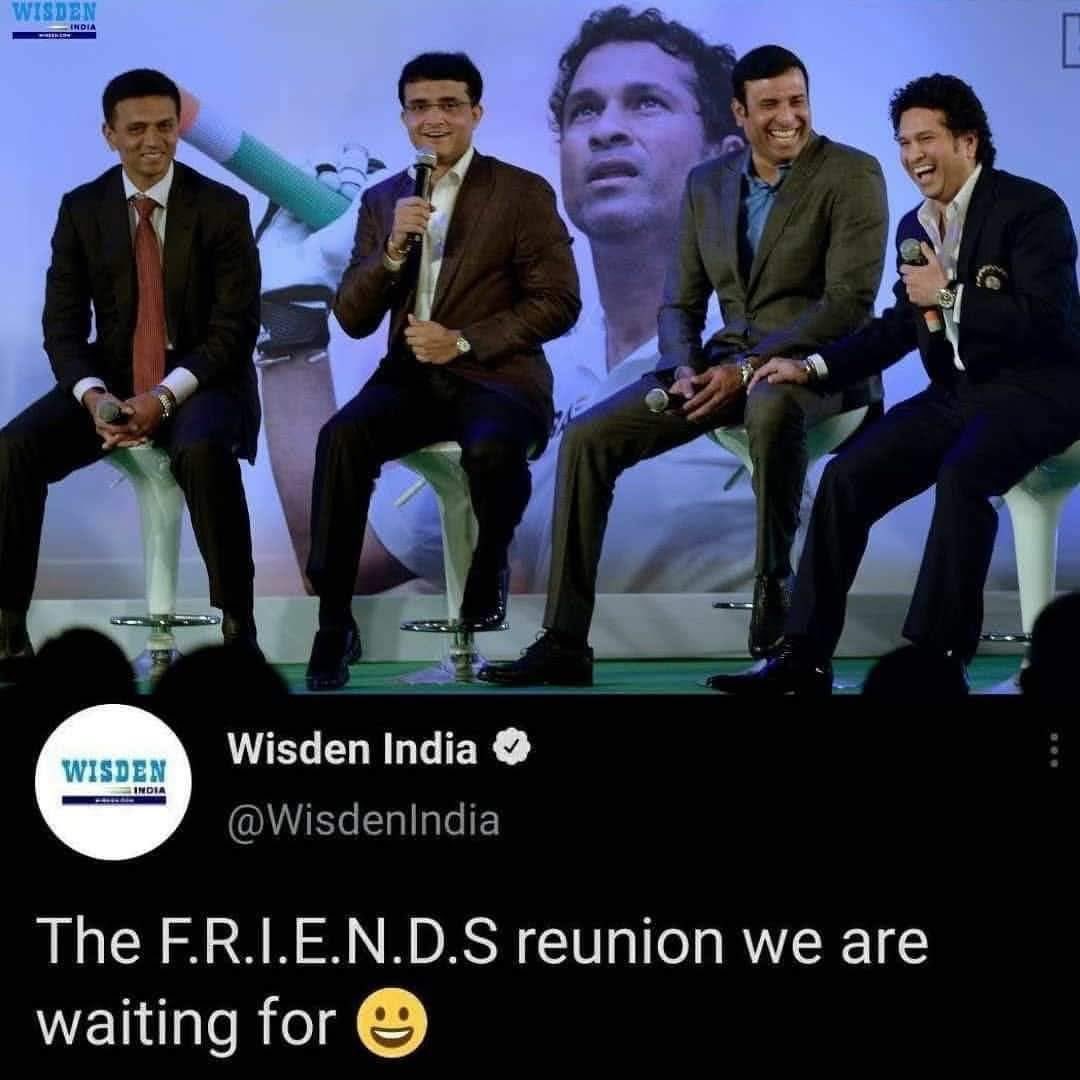
Special day: Today marks 25 years of India’s famous win against Australia after following on at Eden. BUT it wasn’t just the win on the ground, it was also what the victory meant beyond the boundary. It is my belief that Sourav Ganguly @SGanguly99 , Sachin Tendulkar @sachin_rt , VVS Laxman @VVSLaxman281 , Anil Kumble @anilkumble1074 and Rahul Dravid are amongst the finest 5 people I have had the privilege to meet. When Indian cricket was at its lowest after the match-fixing crisis, these FABULOUS 5 men in white gave Indian cricket its self-respect back. Salute and thank you!🇮🇳👍 (while we remember Eden for the Laxman-Dravid partnership, don’t forget @harbhajan_singh spell on the final day!)
Rajdeep Sardesai tweet mediaRajdeep Sardesai tweet media
English
38
118
1.1K
51.7K
Mekin retweetet
signüll
signüll@signulll·
the most underrated hire right now is a great product person. when i say product person i'm def not talking about a product manager. perhaps i think there has to be somewhat of a new role. i don't have a good name for it yet but maybe something like "product thinker".. someone with an intuitive grasp of the product as it exists, where it's soft, where it sings, & how to iterate it toward something even sharper. in some sense, this person has to cohesively hold in their head where this product should be 2 years from now & work backwards from that. i say this cuz when building was hard, engineering was the bottleneck & the status hierarchy often reflected that. building is no longer hard. which means the variance in outcomes has shifted almost entirely to judgment on what to build, how to sequence it, & how to talk about it. & the story matters as much as the thing. internally, it organizes the team around a shared model of why. externally, it shapes the interpretive frame users bring to their first experience. you can't retrofit narrative onto a product & expect it to land, it has to be load bearing from the start. the rarest version of this person sits at the intersection of culture & deep technology. someone genuinely bilingual. they know what's technically possible & they know which cultural currents are real vs. ephemeral. that combo is what separates products that feel inevitable from products that feel assembled. before ppl clap back with this person has always been valuable, i know.. i am just saying now they might be the most *important* person in the room. their value compounds like never before.
English
449
747
6.3K
1.4M
Mekin retweetet
Andrew Curran
Andrew Curran@AndrewCurran_·
Striking image from the new Anthropic labor market impact report.
Andrew Curran tweet media
English
556
2.3K
13.4K
7.3M