Angehefteter Tweet
Lode Nachtergaele
3.1K posts

Lode Nachtergaele
@cast42
Moved to https://t.co/XPXglk1E86 Mix between starter/builder/fixer/hacker/dreamer. AI builder. Cycling & snow fun. https://t.co/croJKzcep6

leuven, belgium Beigetreten Mart 2007
2.4K Folgt848 Follower

@dimitristrobbe Als je via F3 naar brussel fietst geraak je relatief veilig in Zavemtem maar om dan bijvoorbeeld naar dit stuk langs de autostrade te komen is nog behelpen. Maar toch proficiat voor dit stukje dat een overwinning is op koning auto. De geesten rijpen helaas traag...
Nederlands

@Domestique___ You should also take the winddirection into account. If next year they ride 47km/h with headwind, it may be harder....
English

48.91 km per hour with 54.8 km of cobbles - Inside 🇫🇷 Roubaix's record-breaking 2026 edition
📰 domestiquecycling.com/en/features/48…
📸 Cor Vos

English

@karpathy For the moment I use openclaw with a skill for ingesting: github.com/cast42/notes The skill is here: github.com/cast42/notes/t… It used progressive disclosure principles to make the repos easy for agents.
English

LLM Knowledge Bases
Something I'm finding very useful recently: using LLMs to build personal knowledge bases for various topics of research interest. In this way, a large fraction of my recent token throughput is going less into manipulating code, and more into manipulating knowledge (stored as markdown and images). The latest LLMs are quite good at it. So:
Data ingest:
I index source documents (articles, papers, repos, datasets, images, etc.) into a raw/ directory, then I use an LLM to incrementally "compile" a wiki, which is just a collection of .md files in a directory structure. The wiki includes summaries of all the data in raw/, backlinks, and then it categorizes data into concepts, writes articles for them, and links them all. To convert web articles into .md files I like to use the Obsidian Web Clipper extension, and then I also use a hotkey to download all the related images to local so that my LLM can easily reference them.
IDE:
I use Obsidian as the IDE "frontend" where I can view the raw data, the the compiled wiki, and the derived visualizations. Important to note that the LLM writes and maintains all of the data of the wiki, I rarely touch it directly. I've played with a few Obsidian plugins to render and view data in other ways (e.g. Marp for slides).
Q&A:
Where things get interesting is that once your wiki is big enough (e.g. mine on some recent research is ~100 articles and ~400K words), you can ask your LLM agent all kinds of complex questions against the wiki, and it will go off, research the answers, etc. I thought I had to reach for fancy RAG, but the LLM has been pretty good about auto-maintaining index files and brief summaries of all the documents and it reads all the important related data fairly easily at this ~small scale.
Output:
Instead of getting answers in text/terminal, I like to have it render markdown files for me, or slide shows (Marp format), or matplotlib images, all of which I then view again in Obsidian. You can imagine many other visual output formats depending on the query. Often, I end up "filing" the outputs back into the wiki to enhance it for further queries. So my own explorations and queries always "add up" in the knowledge base.
Linting:
I've run some LLM "health checks" over the wiki to e.g. find inconsistent data, impute missing data (with web searchers), find interesting connections for new article candidates, etc., to incrementally clean up the wiki and enhance its overall data integrity. The LLMs are quite good at suggesting further questions to ask and look into.
Extra tools:
I find myself developing additional tools to process the data, e.g. I vibe coded a small and naive search engine over the wiki, which I both use directly (in a web ui), but more often I want to hand it off to an LLM via CLI as a tool for larger queries.
Further explorations:
As the repo grows, the natural desire is to also think about synthetic data generation + finetuning to have your LLM "know" the data in its weights instead of just context windows.
TLDR: raw data from a given number of sources is collected, then compiled by an LLM into a .md wiki, then operated on by various CLIs by the LLM to do Q&A and to incrementally enhance the wiki, and all of it viewable in Obsidian. You rarely ever write or edit the wiki manually, it's the domain of the LLM. I think there is room here for an incredible new product instead of a hacky collection of scripts.
English

@skalskip92 Make a cli with good --help and json output optimised for agents
English

@Sonos I tried again with the just released version of the Sonos app on Android 16 on pixel 10 pro. The Sonos base stays bricked. Worked like a charm last Saturday and connection with play 5 us seamlessly.
English

@Pieterjanvl @maartenvhb Peter Steinberger bewees al het tegendeel. Dat een Adobe kerel zevert verbaast me nieks.
Nederlands

'Een miljardenbedrijf met 1 engineer en 1000 AI bots gaat niets van belang oplossen. Een team (security)engineers die met AI kunnen werken, wel.' @maartenvhb van Adobe #cybernova

Nederlands
Lode Nachtergaele retweetet
I highly recommend reading Sam Schillace's series of blog posts about AI (and sometimes other stuff): sundaylettersfromsam.substack.com
Do @sschillace a favor and subscribe!
English

For those starting @claude code: read this practical guide barts.space/getting-starte… from Bart. @bcherny you will like this!
English

@embeddingshapes How difficult can it be. Just a frontend to SQLite/ duckdb and visualisation if mermaid diagrams...
English

@mynameisceline Wut, there is a Trump font named after George Trump ;-)
English

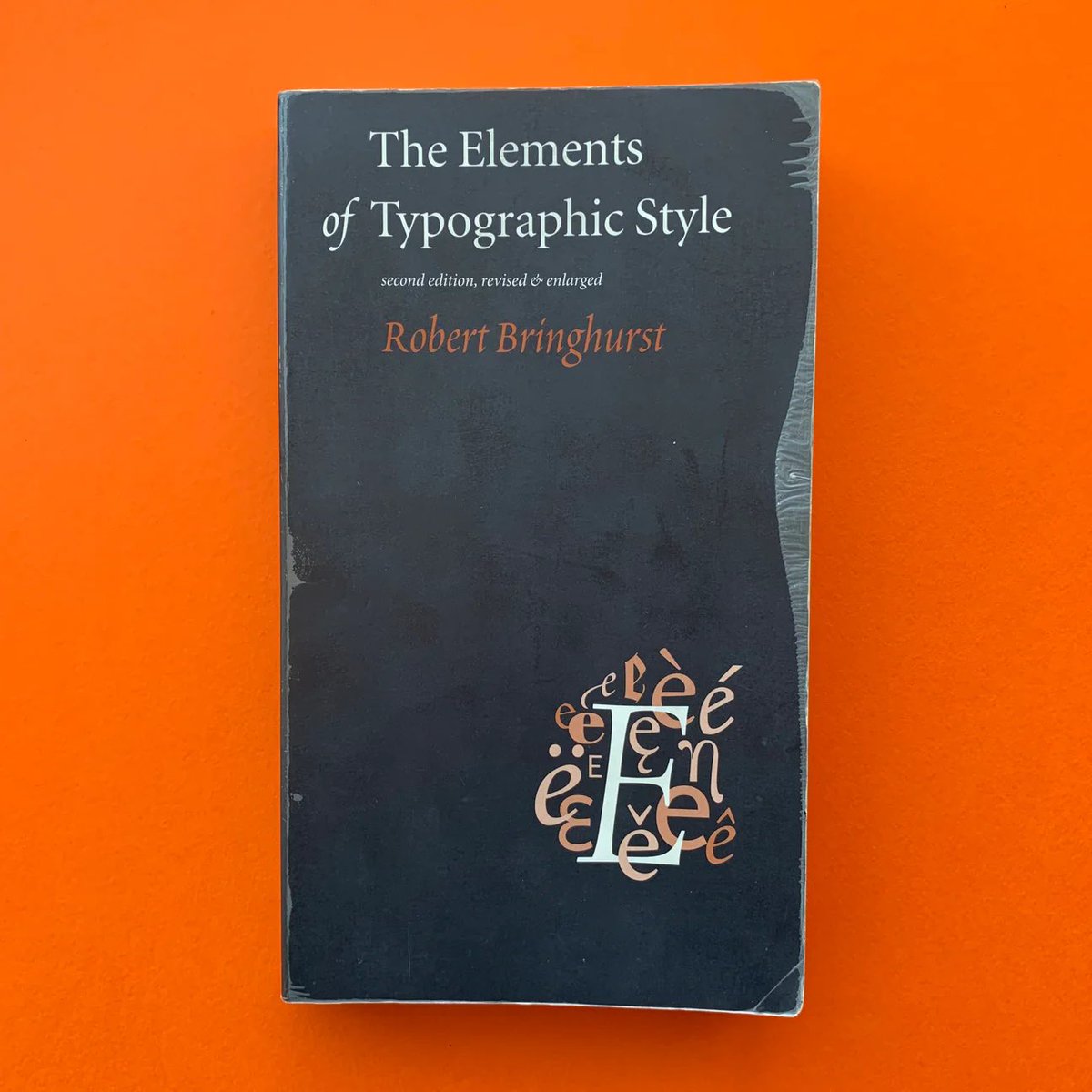
PDF here readings.design/PDF/the_elemen…, photo from theprintarkive.co.uk/products/2841-… (physical copies are sadly very $$$ now)
English

@PythonHub My template is similar: github.com/cast42/python-… Main difference: no copier (just ask your agent to scaffold it), justfile instead of makefile, zensical for documentation, and no prek /Docker yet.
English

copier-astral
Fast Python project template with Astral's toolchain (uv, ruff, ty) + pytest, MkDocs, Typer, GitHub Actions, Docker
github.com/ritwiktiwari/c…
English

@simonw @nbbaier I made a version based on your blogpost here: github.com/cast42/webtools in the .agents directory
English

@nbbaier That's a great idea for a skill, I should try knocking up my own version of that
English

I decided to make an agent skill for @simonw's cool HTML Tools technique. It's been working great so far.
github.com/nbbaier/agent-…
English

@aaiBoek De laatste modellen AI schrijven behoorlijk goed code. Daar ga je met je jaren ervaring wel even aan het denken. Welke impact precies is niet duidelijk maar dat de impact groot is/zal zijn is duidelijk.
Nederlands

Fascinating read that explains to programmers how openclaw works, of course they use Flask for API's
nader dabit@dabit3
English

@pamelafox Are there already github actions with prek: x.com/charliermarsh/…
See github.com/cast42/python-…
Charlie Marsh@charliermarsh
I've been really happy with `prek`, a pre-commit implementation in Rust (powered by uv :)) A bunch of us on the Astral team started using it organically, and we officially migrated the Ruff and ty repositories to prek this week.
English

TIL: all the cool kids are using prek instead of pre-commit, as its faster (Rust) and fully compatible with .pre-commit-config.yaml!
prek.j178.dev
(where "cool kids" == fastmcp, cpython, fastapi, ruff, ty, etc)
English

@lennysan @alisohani @openclaw I use my openclaw to create markdown notes of things I want to remember: github.com/cast42/notes The idea is to make them retrievable with qmd (or semtools or own search cli...) so I can easily find back things.
English

Do you use @openclaw in some super impactful or fun way?
I'd love to know.
Please share your 1-2 favorite use cases in the comments.
If it's awesome, I'll feature you in the newsletter.
Big bonus points for screenshots of what it looks like in action (and any tips for setting it up).
English