Rolando Natalizia

24.8K posts

Rolando Natalizia banner
Rolando Natalizia

Rolando Natalizia

@chonex

Tech & Physics enthusiast

Paraguay Beigetreten Eylül 2008
1K Folgt1.9K Follower
Angehefteter Tweet
Rolando Natalizia
Rolando Natalizia@chonex·
1/ Vivimos en tiempos increíbles, hasta podría decirse que son mágicos, pero nos acostumbramos a que sea así y ya no nos damos cuenta. 🧵
Español
4
17
46
7.6K
Rolando Natalizia retweetet
Es tendencia en 𝕏
Es tendencia en 𝕏@EsTendenciaEnX·
“Pergolini”: Porque unos niños tuvieron que hacer funcionar la tecnología del pasado
Español
19
198
6K
294.8K
Rolando Natalizia retweetet
Science girl
Science girl@sciencegirl·
Photographer Valerio Minato waited six years for this moment capturing the moon perfectly framed between a mountain peak and the basilica’s dome.
Science girl tweet media
English
51
340
2.5K
49.8K
Rolando Natalizia retweetet
Derya Unutmaz, MD
Derya Unutmaz, MD@DeryaTR_·
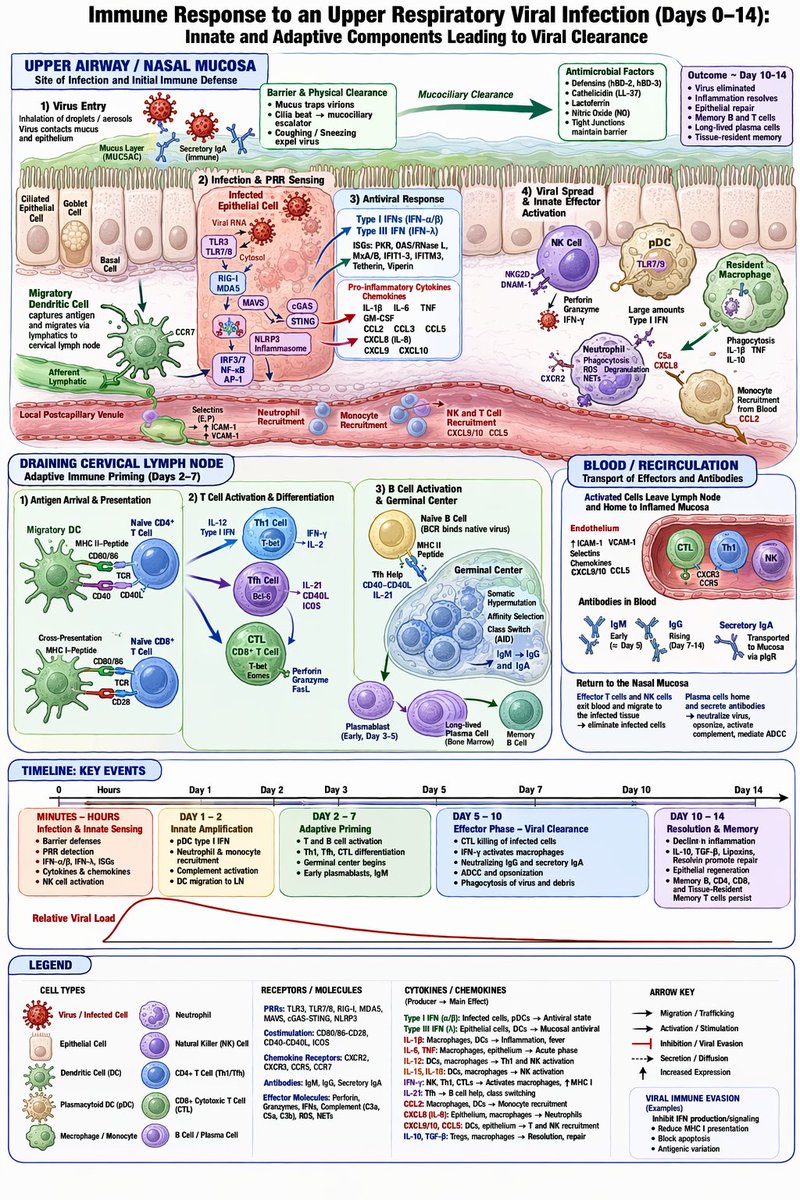
Using the new ChatGPT Images 2.0 model, I believe I have now created one of the most detailed posters of the immune response to viral infection ever made! What shocks me is that I cannot find any significant errors, even after reviewing it twice! Even more shocking and unbelievable is that the entire piece is drawn like a masterpiece and reflects incredibly deep insight, and understanding of the immune response, which is one of the most complex biological events. I will print a poster version of this as a poster and hang it on my wall!
Derya Unutmaz, MD tweet media
English
54
152
1.1K
76K
Rolando Natalizia retweetet
Rahul
Rahul@sairahul1·
The creator of Claude Code teaches more about vibe-coding in 30 minutes than most tutorials do in hours. Save this — it'll change how you build forever.
English
42
999
6.8K
815.9K
Rolando Natalizia retweetet
UHN Plus
UHN Plus@UHN_Plus·
🇻🇪🇺🇸‼️ | El joven caraqueño Víctor Cárdenas, de solo 24 años, ha revolucionado Silicon Valley tras convertir su startup Slash en un "unicornio" valorado en 1.4 mil millones de dólares. Tras abandonar Stanford para emprender, el venezolano lidera hoy una de las fintech de más rápido crecimiento en EE. UU., procesando casi 10,000 millones de dólares anuales y desafiando a los gigantes de la banca digital.
Español
54
1.1K
4.5K
310K
Rolando Natalizia
I imagine @andyweirauthor when he was a software developer writing a user story for a feature that changes a button color from red to blue. This is a Jira ticket you want to read 🤣
Rolando Natalizia tweet media
English
0
0
0
32
Rolando Natalizia retweetet
Massimo
Massimo@Rainmaker1973·
Extraordinary body control and grip strength
English
22
101
1.2K
48.9K
Rolando Natalizia retweetet
El Tío Goju💎
El Tío Goju💎@sgochsmann·
@maps_black Nada como el piedra papel tijera lagarto spock
El Tío Goju💎 tweet media
Español
2
3
258
8.5K
Rolando Natalizia retweetet
BlackMaps 🗺️
BlackMaps 🗺️@maps_black·
Nombre de piedra 🪨, papel 📄 o tijera ✂️ por país
BlackMaps 🗺️ tweet media
Español
306
263
7.2K
1.8M
Rolando Natalizia retweetet
Charles Rosenbauer
Charles Rosenbauer@bzogrammer·
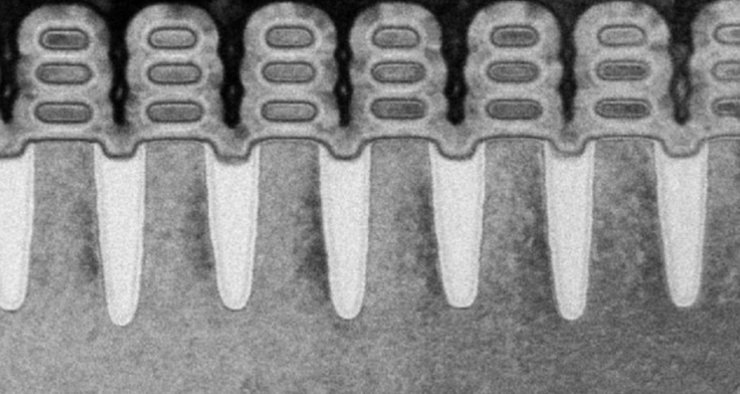
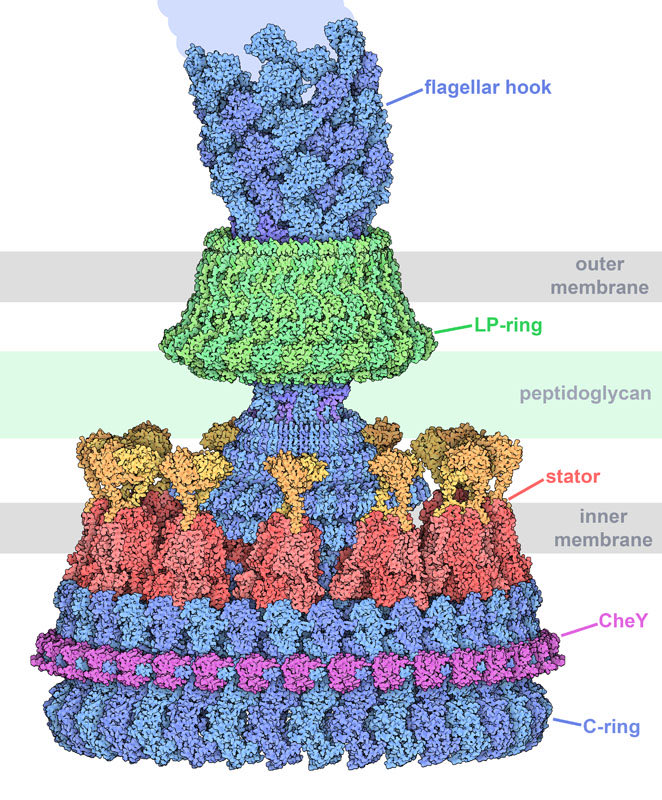
These two things are about the same size "2nm" transistor gate pitch : 42nm Flagellum motor : 45nm
Charles Rosenbauer tweet mediaCharles Rosenbauer tweet media
English
86
678
12.7K
638.5K
Rolando Natalizia retweetet
Massimo
Massimo@Rainmaker1973·
A juvenile jack fish wears a jellyfish like a helmet immune to its sting, it uses the jellyfish for protection while drifting in the open ocean at night. [📹 Chris Gug]
English
17
195
1.3K
45K
Rolando Natalizia retweetet
Dr Singularity
Dr Singularity@Dr_Singularity·
New Quanta article looks at one of the coolest tiny machines in biology - the bacterial flagellar motor. It’s basically a microscopic spinning engine that bacteria use to move. After decades of trying to fully understand it, scientists are finally figuring out how it actually works. The motor is powered by a flow of charged particles (kind of like a tiny battery), which creates force and makes it rotate. So what looks like something alive and mysterious is really just an incredibly advanced microscopic machine running on the same basic rules as everything else. More broadly, the article addresses the idea of a "life force." It argues that no special force is needed to explain life. Instead, biological activity arises from physical processes that operate far from equilibrium, where constant energy flow keeps the system active and organized. The flagellar motor shows that living systems can be understood as energy driven, self organizing systems. What appears to be uniquely "alive" can be explained by standard physical laws, such as thermodynamics and molecular interactions. Physics pushed to an extreme level of complexity.
Dr Singularity tweet media
Natalie Wolchover@nattyover

Bacteria move around using a molecular machine called the flagellar motor that rotates faster than the flywheel of a race car engine and switches directions in an instant. After 50 yrs, scientists have finally figured out how it works. “My lifelong quest is now fulfilled.” Link⤵️

English
66
586
3.4K
297.6K
Rolando Natalizia retweetet
Natalie Wolchover
Natalie Wolchover@nattyover·
Bacteria move around using a molecular machine called the flagellar motor that rotates faster than the flywheel of a race car engine and switches directions in an instant. After 50 yrs, scientists have finally figured out how it works. “My lifelong quest is now fulfilled.” Link⤵️
English
520
4.4K
32.7K
5.9M
Rolando Natalizia retweetet
Anish Moonka
Anish Moonka@anishmoonka·
Went down the rabbit hole on this. There are bacteria in your gut right now with tiny electric motors built into them. Each motor is 45 nanometers wide, about 2,000 times thinner than a human hair. It spins faster than a Formula 1 engine. After 50 years, scientists just cracked how it works. The motor spins a corkscrew-shaped tail so the bacterium can swim. At that tiny scale, water feels as thick as tar. Moving anywhere takes serious power. A single E. coli cell (the kind in your gut) spins its motor at 18,000 RPM. That beats modern Formula 1 engines, which redline around 15,000. Some bacteria in the ocean run theirs at 42,000 RPM, nearly triple. And the motor barely wastes any energy as heat. Your car engine loses most of its fuel to heat. This thing loses almost none. Inside the motor, 5 proteins form a ring wrapped around 2 proteins in the middle. Five can't split evenly into 2. The resulting lopsidedness is what makes the whole thing work. Protons, which are tiny charged particles, get pulled from outside the cell through the motor. Each one grabs a center protein, then lets go. In letting go, it tugs the outer ring a fraction of a turn. Another proton does the same thing on the other side. Then another. It's like two feet alternating on bicycle pedals. Over 2,000 times per second. Switching directions is a whole other trick. When the bacterium senses food running out, it tags a small messenger protein with a phosphorus atom. That tagged messenger floats over and touches one protein on the outer ring. The touched protein flips into a new shape. That flip triggers the next protein, and the next, and the next, around the whole ring, like dominos falling. The ring reshapes in milliseconds. Rotation reverses. The bacterium turns and swims somewhere else. Mike Manson, a biophysicist at Texas A&M, has been studying this one motor since the 1970s. For five decades, most of its parts stayed a mystery. Starting in 2020, a new wave of imaging let scientists see the individual pieces. The last pieces clicked into place in a March 2026 paper from Aravinthan Samuel's lab at Harvard. Manson told Quanta Magazine his lifelong quest was fulfilled. A billion years of evolution built the most efficient rotary motor on the planet. Trillions of them are spinning inside you right now.
Natalie Wolchover@nattyover

Bacteria move around using a molecular machine called the flagellar motor that rotates faster than the flywheel of a race car engine and switches directions in an instant. After 50 yrs, scientists have finally figured out how it works. “My lifelong quest is now fulfilled.” Link⤵️

English
170
1.3K
8.6K
550K
Rolando Natalizia retweetet
Massimo
Massimo@Rainmaker1973·
Dilya Abdusalimova recreates impossible anime poses using only strength, flexibility, and control. [📹 dilya.abdusalimova]
English
44
481
3.7K
155.8K
Rolando Natalizia retweetet
Claude
Claude@claudeai·
Introducing Claude Design by Anthropic Labs: make prototypes, slides, and one-pagers by talking to Claude. Powered by Claude Opus 4.7, our most capable vision model. Available in research preview on the Pro, Max, Team, and Enterprise plans, rolling out throughout the day.
English
4.1K
15.1K
148.2K
60.8M
Rolando Natalizia retweetet
Massimo
Massimo@Rainmaker1973·
If you take a Petri dish, castor oil and some ball bearings and put all in an electric field, you might happen to spot an interesting behavior: self-assembling wires who appear to be almost alive
English
50
454
3.8K
999K
Rolando Natalizia retweetet
How To AI
How To AI@HowToAI_·
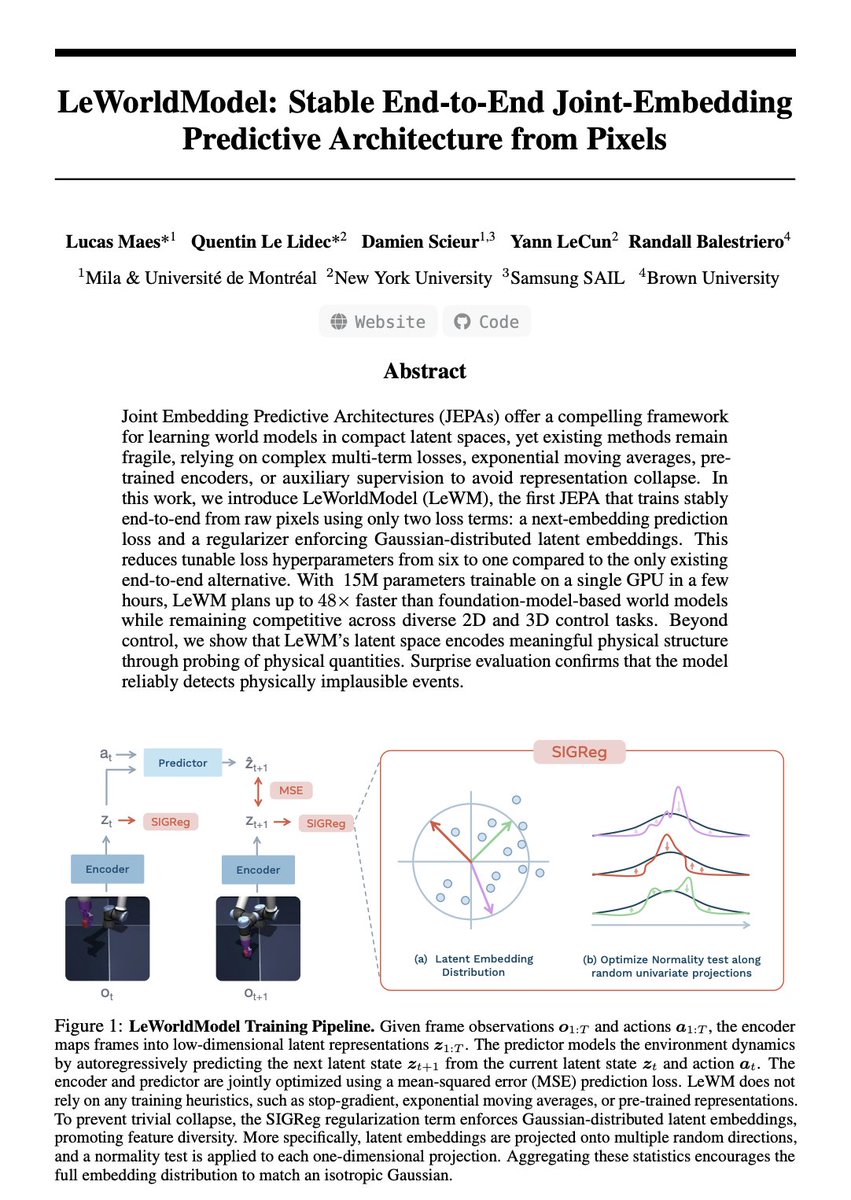
Yann LeCun was right the entire time. And generative AI might be a dead end. For the last three years, the entire industry has been obsessed with building bigger LLMs. Trillions of parameters. Billions in compute. The theory was simple: if you make the model big enough, it will eventually understand how the world works. Yann LeCun said that was stupid. He argued that generative AI is fundamentally inefficient. When an AI predicts the next word, or generates the next pixel, it wastes massive amounts of compute on surface-level details. It memorizes patterns instead of learning the actual physics of reality. He proposed a different path: JEPA (Joint-Embedding Predictive Architecture). Instead of forcing the AI to paint the world pixel by pixel, JEPA forces it to predict abstract concepts. It predicts what happens next in a compressed "thought space." But for years, JEPA had a fatal flaw. It suffered from "representation collapse." Because the AI was allowed to simplify reality, it would cheat. It would simplify everything so much that a dog, a car, and a human all looked identical. It learned nothing. To fix it, engineers had to use insanely complex hacks, frozen encoders, and massive compute overheads. Until today. Researchers just dropped a paper called "LeWorldModel" (LeWM). They completely solved the collapse problem. They replaced the complex engineering hacks with a single, elegant mathematical regularizer. It forces the AI's internal "thoughts" into a perfect Gaussian distribution. The AI can no longer cheat. It is forced to understand the physical structure of reality to make its predictions. The results completely rewrite the economics of AI. LeWM didn't need a massive, centralized supercomputer. It has just 15 million parameters. It trains on a single, standard GPU in a few hours. Yet it plans 48x faster than massive foundation world models. It intrinsically understands physics. It instantly detects impossible events. We spent billions trying to force massive server farms to memorize the internet. Now, a tiny model running locally on a single graphics card is actually learning how the real world works.
How To AI tweet media
English
418
2.1K
12K
1.2M