Fiona

38.1K posts

Fiona banner
Fiona

Fiona

@DerryBanShee

Rower, parkrunner, Derry girl. Ho/hum

UK Beigetreten Nisan 2009
3.7K Folgt7K Follower
Fiona retweetet
No Men in Women's Prisons
No Men in Women's Prisons@NoMinWPrisons·
Women in Scottish prisons are repeatedly requesting emergency contraception after sexual relations with men housed in their jails, a former convict has revealed. This is not an isolated incident. Vulnerable women are being put at risk. dailyrecord.co.uk/news/scottish-…
English
5
34
74
548
Fiona retweetet
Cathy Devine
Cathy Devine@cathydevine56·
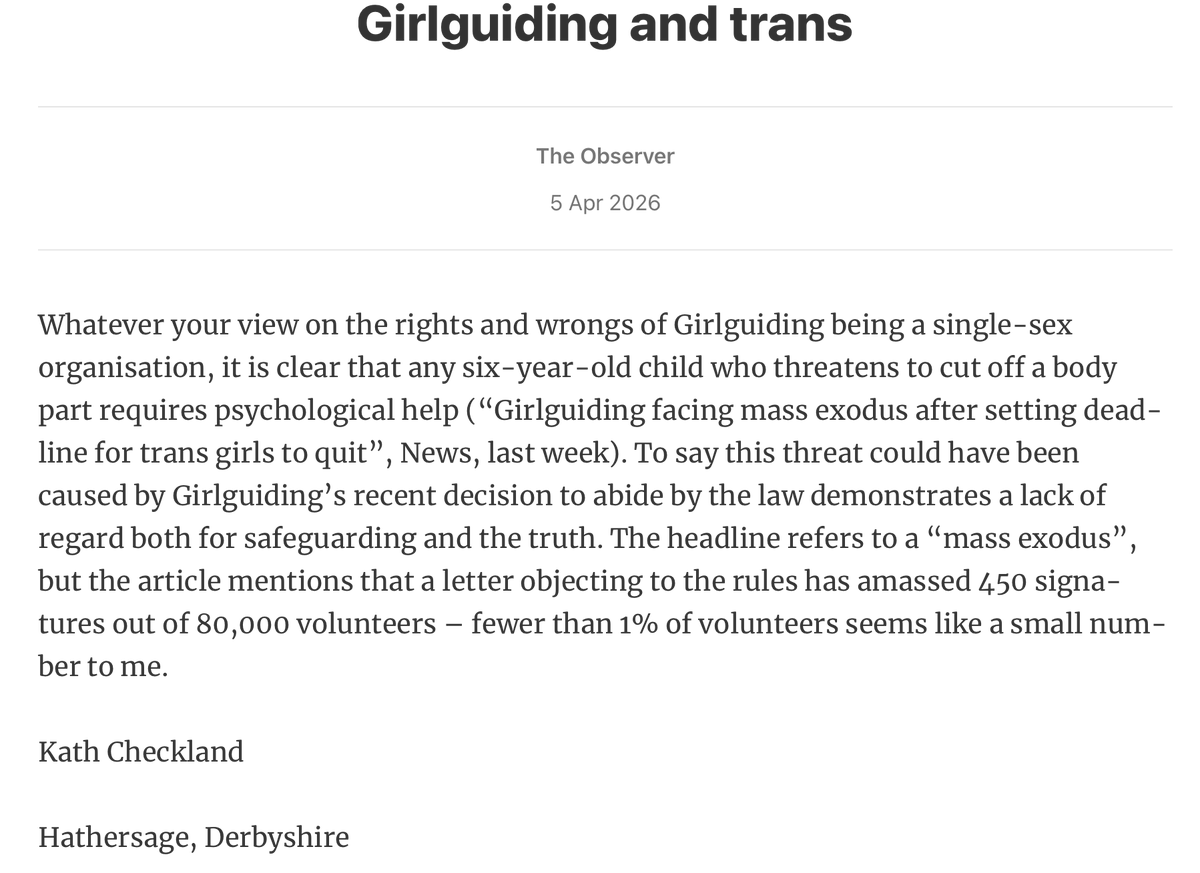
Wow. This is the research that every single country including the UK should have been doing. 'psychiatric morbidity increased markedly during follow-up—rising from 9.8% to 60.7% in feminising gender reassignment and from 21.6% to 54.5% in masculinising gender reassignment'
SEGM@segm_ebm

📰A new Finnish study reports that youth gender transitions (under age 23) did not improve mental health symptoms. For some youth, medical gender reassignment may have had a negative impact. Link ⬇️ /1

English
14
130
487
11.3K
Fiona retweetet
🎸 Rock History 🎸
🎸 Rock History 🎸@historyrock_·
The oldest known image of Keith Richards, published around 1140 AD 😂
🎸 Rock History 🎸 tweet media
English
217
2.5K
13.6K
255.3K
Fiona retweetet
Sam Morgan
Sam Morgan@CrunchAlias·
“The categories ‘male’ and ‘female’ are irrelevant and impossible to define. However, the social stereotypes and expectations given to those irrelevant categories are the most important and undeniable phenomena in the known universe.” - “Trans” activism
English
33
277
1.8K
20.6K
Fiona retweetet
Fiona retweetet
Carm5012
Carm5012@Carm5012·
When you support a 50 year old man that wants to use teenage girls changing rooms under the guise of being 'kind' have a think about who and what you are extending your kindness to because it's certainly not the young girls
English
12
272
2.2K
22.4K
Fiona retweetet
James Dreyfus
James Dreyfus@DreyfusJames·
Excellent to see this masterclass doing the rounds again…
English
229
1.8K
9.2K
248.3K
Fiona retweetet
Imtiaz Mahmood
Imtiaz Mahmood@ImtiazMadmood·
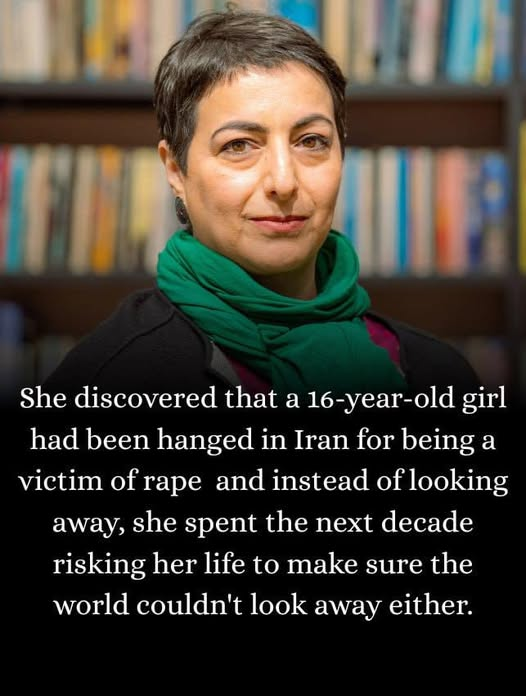
n 2004, a journalist named Asieh Amini came across a story from a small town in northern Iran. A 16-year-old girl named Atefeh Sahaaleh had been publicly hanged. The official charge: "acts incompatible with chastity." The reality, which Amini uncovered through careful, dangerous investigation: Atefeh had been repeatedly raped by a neighbor and other men beginning when she was nine years old. She had been neglected by her family and paid to keep silent — money she used simply to survive. At 13, Iran's morality police arrested her. A judge sentenced her to one hundred lashes. Under Iranian law, a woman could be sentenced to lashings three times — the fourth offense carried the death penalty. She was 16 when they hanged her. Amini wrote the story. Her newspaper refused to publish it. Another paper refused as well. A women's publication finally agreed to run an edited version. She kept going. Born in 1973 in the Mazandaran province of northern Iran — one of four sisters who spent their childhood painting, reading, and playing outdoors — Amini had built her career as a journalist through the brief flowering of press freedom following President Khatami's election in 1997, editing a women's affairs newspaper called Zan until hardline clerics shut it down in 1999. She had known the Iranian state's capacity for silencing voices. She had not yet known the full depth of what it was capable of doing to girls. After Atefeh, she knew. Case after case began reaching her. Leyla — a 19-year-old with diminished mental capacity, herself a victim of child rape, facing execution. The judge in her case told Amini plainly that Leyla was a threat to family life because of her "sexual availability." Amini enlisted human rights lawyer Shadi Sadr, published Leyla's story, drew international attention, and helped get her out of prison and into the care of a women's organization in Tehran. One life at a time. One story at a time. Against a legal system that had no interest in being exposed. In 2006, Amini discovered that despite a government moratorium on stoning — a directive issued in 2002 that carried no binding legal force — a man and woman had been stoned to death in Mashhad for adultery. The judge claimed he answered only to Sharia law. The Ministry of Justice denied the stoning had happened. State media attacked Amini's credibility. That October, Amini and Sadr co-founded the Stop Stoning Forever (SSF) campaign — systematically documenting stonings occurring across Iran and sharing their findings through colleagues abroad who could publish without fear of arrest. The state took notice. In March 2007, Amini was among 33 women arrested during a silent sit-in at a Tehran courthouse. During interrogation she realized — with the specific clarity of someone who had been investigating surveillance — that the police had been investigating her for some time. She was released after five days. Her phones, she was certain, were tapped. Her movements tracked. She kept reporting. The sustained pressure of the work eventually took its physical toll — stress-induced symptoms that included headaches, vision problems, and muscle paralysis forced her to step back briefly while her partners reorganized the campaign from outside Iran. She recovered. She continued. In 2009, following the disputed reelection of Mahmoud Ahmadinejad, Amini was among the demonstrators beaten in the protests that swept Iran. She continued reporting — under pseudonyms, in the chaos. Then came the warning: police were questioning prisoners about her. She needed to leave. She had been invited to a poetry festival in Sweden. She took her daughter Ava and she went. They did not come back. Amini settled eventually in Norway, supported by the International Cities of Refuge Network — a program that protects writers facing state persecution. From exile, she continued her advocacy, published two books of Norwegian-language poetry, and kept doing what she had always done: making sure that the stories of girls and women the Iranian state wanted silenced were heard by the world instead. She was awarded the Human Rights Watch Hellmann/Hammett Award in 2009 — the same year she fled. The Oxfam Novib/PEN Award in 2012. The Ord i Grenseland prize in 2014. Asieh Amini picked up a pen in a country that punished women for existing outside the law's narrow definitions — and she used it, at enormous personal cost, to push against every wall that pen could reach. The girl from Mazandaran who dreamed of becoming a painter and writer became something rarer and harder: A witness who refused to look away. And a voice that — no matter how many times the state tried to silence it — kept finding new ways to be heard.
Imtiaz Mahmood tweet media
English
70
2.4K
6.1K
161.4K
Fiona retweetet
Sisters Heal
Sisters Heal@sisters_heal·
Sisters Heal is proudly single sex. We were set up by women for women and will always hold the single sex boundary. It’s important that survivors know there is no shame in healing in a single sex space. We set this up for you. We’re doing it because we want to 💜 @SarahSurviving
English
24
296
2.3K
23.5K
Leigh Polaroid Taylor
Leigh Polaroid Taylor@JapanesePolar·
@acts_grassroots Really looking forward to Bridget coming to speak with us at Haughton le Spring, Sunderland, on 11th April.
Leigh Polaroid Taylor tweet media
English
1
5
27
478
Fiona retweetet
#199 Days Later
#199 Days Later@acts_grassroots·
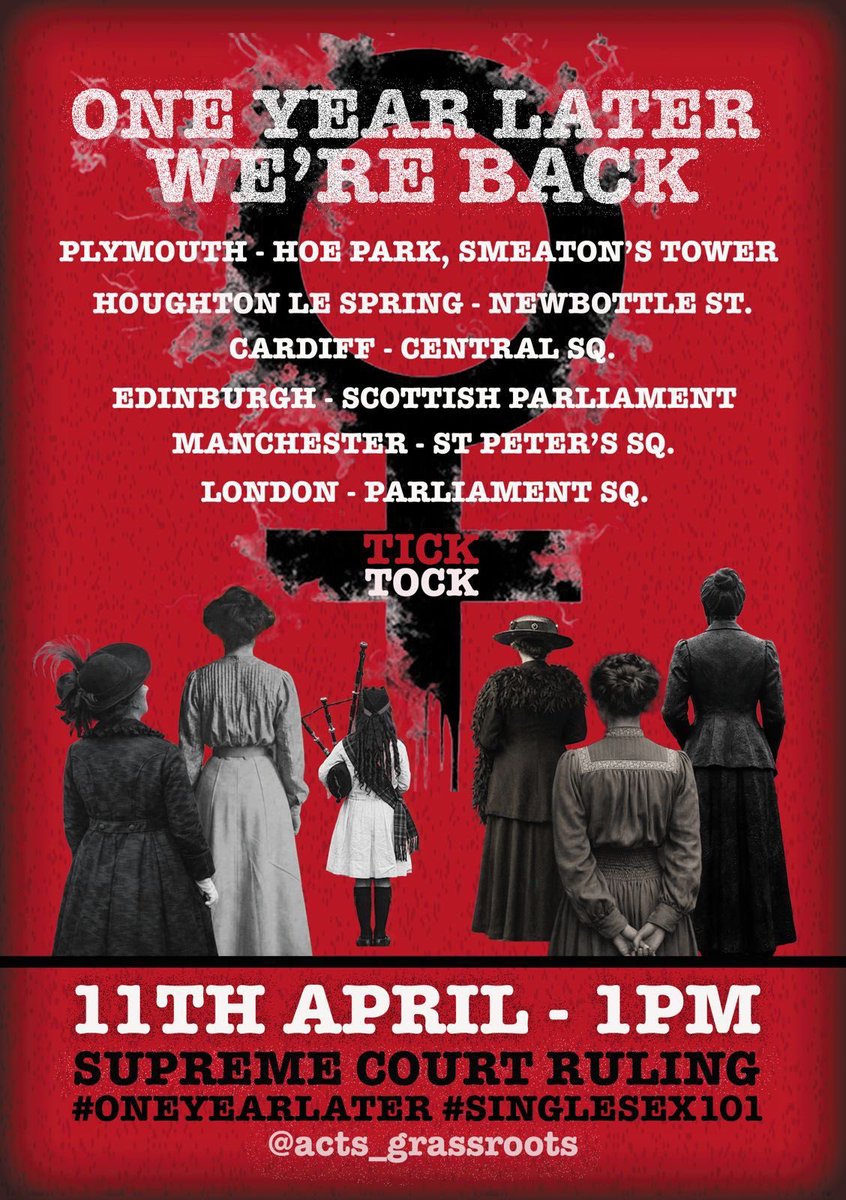
#OneYearLater since the Supreme Court's ruling on sex = biology...and what has the government done? NOTHING Join us Sat 11 April 1pm #TickTockTimeIsUp #SingleSex101 London, Manchester, Edinburgh, Cardiff, Plymouth, Sunderland, Belfast, Vienna, Berlin, Düsseldorf, Paris.
English
18
294
562
37K
Fiona retweetet
Camus
Camus@newstart_2024·
Dr. Angus Dalgleish — one of Britain’s most respected oncologists and immunologists — is sounding a serious alarm. He warns that we’ve entered a new dark age in universities, scientific research, and government, driven by political correctness and woke ideology. Dalgleish calls it a cancer that has infected the heart of academia and the soul of the civil service. Political correctness, he says, is fundamentally anti-scientific: it decides in advance what you’re allowed to say, observe, and conclude. Truth becomes secondary to dogma. He compares the current denial to alcoholism — nothing gets fixed until institutions first admit there’s a deep problem. It’s a sobering warning from a senior scientist who has watched the rot spread for years. The clip is only 1:56 long, but it hits hard. Are we already too far gone, or is there still time to push back before these institutions completely lose their ability to seek truth?
English
132
2.7K
7.4K
152.5K
Fiona
Fiona@DerryBanShee·
@SandyBoynton @melliellimelli I also remember that card 😃. I bought it for a friend c 1986. The clever rhyme has been in my head ever since. I sometimes wonder, if I said “Hippo birdie two ewes” to someone, would they know what I meant!
English
2
0
23
545
Sandra Boynton
Sandra Boynton@SandyBoynton·
This card of mine, for Recycled Paper Products, is from 1975. Oddly, I remember the place (our tiny apartment in Oakland, California) and process ("Is this too obscure? Oh well.") of drawing it. #HippoBirdieTwoEwes
Sandra Boynton tweet media
English
485
313
3.7K
45K
Fiona retweetet
Kathleen Stock
Kathleen Stock@Docstockk·
Incredible review of my new book Do Not Go Gentle in the Daily Mail, from avowed supporter of Dignity in Dying Bel Mooney: "I gladly admit she has all but changed my mind." Kathleen Stock on Assisted Dying ... it degrades us ALL dailymail.co.uk/home/books/art… via @MailOnline
English
44
352
1.6K
132.1K
Fiona retweetet
Hazel Moon Audio
Hazel Moon Audio@HazelMoonAudio·
Voicing Germaine Greer for a quote in #TerfIsland by @DerryBanShee was both an honour and a challenge. I wanted to bring some of her courageous spirit and just saying it like it is. Link to first 5 mins in comments
Hazel Moon Audio tweet media
English
1
3
6
226