
Equal

76 posts

Equal banner
Equal

Equal

@equaldotin

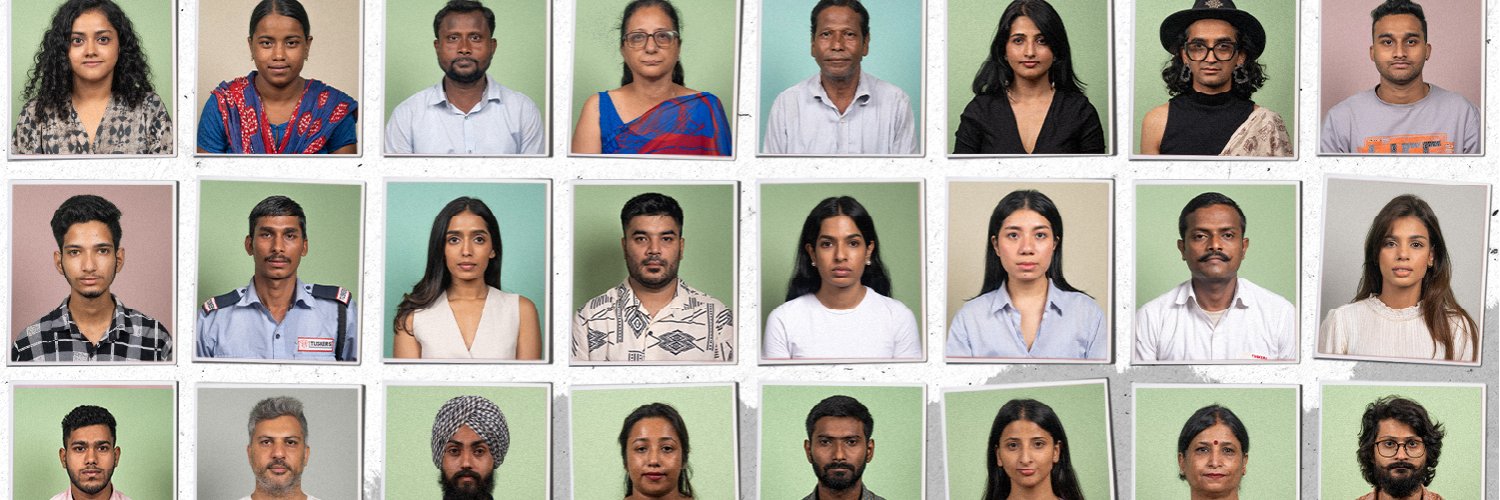
Your identity goes way beyond your ID. Real Indians. Real Stories. Real Identities. Supercharge Your ID 👉🏻 https://t.co/mPMEAHI5rv

Beigetreten Temmuz 2023
47 Folgt562 Follower
Equal
Equal@equaldotin·
I found my path to art quite unexpectedly. Ten years ago, I was working in account management in an ad agency. However, I felt the need to shift my career and pursue my passion for graphic design. With a mass communication degree and an artistic sense that was more intuitive than technical, I was determined to create a career in the creative industry. I explored various art forms and found myself drawn to contemporary art. Pursuing a career as an artist can be financially challenging, with a long incubation period before artists receive recognition and financial success. However, the rewards of creating meaningful work are immeasurable. I approached art as a potential profession. Starting from a place of passion is crucial, but as I delve deeper into the art world, I see myself falling in love with the work. I love site-specific installations as a medium. It's about creating art that complements the space and using materials available in the surroundings. It's a creative and technical process that requires attention to detail and patience. I spend time staring at the work and making small adjustments to perfect it. However, it's not always easy to balance it with self-care. After I finish a piece, I often feel exhausted, and I need to remind myself to take a break. For my dissertation, I began exploring the word 'flow'. For example, I would freeze an icicle, and watch as paint dripped onto the canvas, showing that as a visual. Or, I would inject colour into transparent water and watch how it flows slowly. During this time, an artist friend said that all the experiments are controlled and I need to be in the flow to challenge myself. Her words stuck with me, and I realized that the way I approached my work was very clinical and focused on the output rather than the process. I started making flow an integral part of every project, whether it's an action or an expression. I try to let go of the need to control and allow my creativity to flow freely. Shashwath, 31, on making art. We, at Equal, believe that your identity goes way beyond your ID. While we manage the first two letters for you, welcome to a page where you can speak about the rest.
English
0
0
2
1.3K
Equal
Equal@equaldotin·
“There was a skatepark roughly ten steps from my house. I saw young boys jump off the rails and have fun with it. I’ve grown up watching these guys, and it did not come as a surprise when I first thought about doing the same. I did not have the resources or the training. All I had was courage – the tall rails, slopes, and tracks did not deter me from giving it a shot. Once in, all I could think of was doing the next big stunt. My confidence and guts brought me to the park, but my mentor led me to pursue this earnestly. He saw something in me and encouraged me to dive in headfirst. He also gifted me a skateboard and shoes; that is how I got closer to my dream. Weekends became my jam – I would spend hours at the park, soaking in every tip and trick, gradually honing my skills. And let me tell you, that feeling when you nail your first trick? Pure magic. From doing tricks at the park and coaching kids younger than me to my first national competition, it has been a journey mixed with excitement and nerves. Representing my city and winning medals was huge, especially at the age of 20. The journey up until now wasn’t all without hurdles. Convincing my parents, dealing with sceptics, and navigating the ups and downs of being a skater in India had its challenges. But with the support of my parents, mentors, and the tight-knit skating community, I powered through. Skateboarding is not just a hobby for me; it is a way of life. I have learnt that consistency and pure determination are elemental in your path towards becoming a professional. It’s taught me grit, resilience, and the importance of chasing your dreams, no matter what. And now, as I coach up-and-coming skaters and advocate for more recognition of the sport, I am reminded of just how far I have come.” – Antish, 22, on pursuing an unconventional sport. We, at Equal, believe that your identity goes way beyond your ID. While we manage the first two letters for you, welcome to a page where you can speak about the rest.
English
0
0
1
946
Equal
Equal@equaldotin·
“For any work that is to be done by your own hands, how you feel while doing the work is important. Because all your emotions get transferred to whatever you're making. I consider paan to be just like food. Reading your first-time customers, knowing what your old customers like, the ratio of masala and flavours - all these thing come with time. My grandfather started this shop in 1972 and I have learned everything from him. So from then till now, I love to eat paan and feed paan. I passed on my knowledge to my three sons and now they are in the same business. My only hope is that they transfer this knowledge to their kids too because what is passed on through generations can't be bought. It's priceless. Be it weddings abroad, celebrity weddings or weddings in the family, we know what needs to be done. But just coming here daily, opening my shop and serving my first customer brings me a familiar sense of peace. I have a great memory, so even if someone comes to my shop once or twice, I would remember how sweet they like their paan. My most memorable customer has been Sharukh Khan, who was a regular while he was studying. But if I were to be honest, whoever comes to the* shop, and leaves as a happy person, that person is my favourite customer in that moment.” -Dilip Kumar, 58, on loving to eat paan and feeding paan. We, at Equal, believe that your identity goes way beyond your ID. While we manage the first two letters for you, welcome to a page where you can speak about the rest.
English
0
0
0
558
Equal
Equal@equaldotin·
“In the 1960s, the Indian Air Force thought of having a dog squad for the first time since other countries already had dog squads. My father was in the Air Force police at the time, and he became the first dog master in India. He would train dogs of CMs and commissioners, and I’d go with him to see his training sessions. In 1988, when I was in the 10th grade, I taught some basic commands to a friend’s dog for the first time. My father didn’t know I was working as a trainer, and after I was done training, I took him to show how I had trained the dog. He just corrected a few things. That was my first dog training experience, although it was a little secret. I got five hundred rupees for my work. I used to get one rupee from my family, so I didn’t even know what to do with so much money. I was thrilled. I don’t do it for the money, though. If trainers want money and find a rich family, they extend the training to a few months. I get a lot of cases, so I want to complete the training faster. My fastest so far has been three days. It’s not just about training a “bachha”. It also involves counselling the family. Usually, first-time parents pamper their kid a lot and don’t discipline them enough. And sometimes the dog can get aggressive too but I have my techniques. I get to know about the pet a bit from their family, I analyse their behaviour and respond accordingly. Each dog and breed has a different personality, so I understand that. I’m like a guru to them. If I’ve completed training and their parent plays one of my YouTube videos, the bachha gets excited when they hear my voice, thinking their guru has come. They’re excited to be dropped off at my creche as well. My wife has also become their guru ma. There are always dogs at our crèche, so it feels strange when there isn’t one. I get to learn a lot from them too. I’ve gotten better and faster at my work only because of them. And I’m grateful for that.” – Sanjay Dobhal, 50, on running Dogshaala. We, at Equal, believe that your identity goes way beyond your ID. While we manage the first two letters for you, welcome to a page where you can speak about the rest.
English
0
0
1
523
Equal
Equal@equaldotin·
“It was love at first pot for me. I was going through a really low phase in my life and I didn’t know what to do. Pottery was always something I wanted to try, so I went for a class. I sucked at it. It was challenging, but I felt it was also very humbling and grounding, and I wanted to challenge myself, so I went back and did a three-month course.  When I create work for myself, I just let it sort of flow. I like creating simple yet highly functional pieces. If I create a bowl, people should be able to use it for decoration, they should be able to eat out of it, or even if it’s just left on the dining table, it should look like it belongs there. It should be a conversation starter. I want people to be curious about my work.  I made a series of these monster tea light houses that look like whimsical fairy-like houses, and in the evening, if you put a tea light in it, it’ll cast monster-like shadows on your walls. I don’t have any for you to take pictures of right now because they sell out so fast. I enjoy working with cafes and restaurants because they come up with such fresh ideas. I once had a 400-piece order from a cafe, which I had to do in two months. The process takes so long, we had just one unit and one kiln, and you can only keep so many pieces in a furnace at a time. Space becomes an issue. Another thing is if you have a 100-piece order, you have to create 120 or 150 pieces because anything can go wrong during the process. But we managed to fulfil the order, and I learnt so much in that process. I have my own studio, Studio Nendo, which means sculpting things in Japanese. I love Japan, the artistry, their ideologies, and the way they put artisans on a pedestal. I just feel a connection to the country. I visited last year, and I fell in love with it. Even the smallest restaurants serve food in handmade pottery, which is just mind-blowing for me.” – Srishti Sindhu, 29, on love at first pot. We, at Equal, believe that your identity goes way beyond your ID. While we manage the first two letters for you, welcome to a page where you can speak about the rest.
English
0
0
0
389
Equal
Equal@equaldotin·
#InternationalWomensDay “It’s just a given now. Be it a party or a low-key get-together, the cake is my responsibility. It’s convenient since I don’t have to hunt for gifts. This is not something that started after the opening of Altogether Experimental. I got into baking because of my grandmother, and her cakes were something I was known for. All school friends would be excited to try out the dry cakes and swiss rolls she made. The smell of freshly baked goods was my house smell. At a very young age I found that being in the kitchen makes me happy so culinary school was the only way to go. During my training years, I learned a lot about how things are done. And things that shouldn’t be done. This entire industry is male-dominated and women often find it difficult to keep up with things. Not because of a lack of talent or dedication, but due to external factors like security issues if you’re working late at night and lack of empathy when it comes to menstruation. So when I opened my own café, I wanted to change everything I did not like when I was working for someone else. It just so happened that the openings for my kitchen crew only had female candidates. And when I saw that, I asked myself why not? My kitchen is a girls’ world. If someone can’t make it to work due to cramps, others step in without hesitation. It used to be heart-wrenching to see the amount of food that was wasted, so it was a conscious decision to make as much as possible in-house. From the breads to the jams, we get to control how much we produce. My main goal is to keep experimenting, as it often leads to great things, like our signature floral cake decor patterns.” -Chef Anukriti Anand, 28, on being a baker We, at Equal, believe that your identity goes way beyond your ID. While we manage the first two letters for you, welcome to a page where you can speak about the rest. #EqualIndia #WomensDay2024 #WomenInBusiness #WomenSupportWomen
English
0
0
1
274
Equal
Equal@equaldotin·
“I have always been into tech, whether it's website development or ethical hacking – being in front of the screen has always been my safe space. Once I finished my degree in Computer Science, I decided to experiment more and join a graphic design course. I enjoyed those classes so much that I decided to pursue visual arts. People usually start with 2D animation and then move to 3D, but I was so excited by all of this that I started with the latter first. I entered a contest where you work in teams to recreate a movie in 3D; my team chose Kung Fu Panda 3. We worked on it for six months and secured third place. The confidence and even a little ego boost after winning something is insane. So I kept going with my experiments. I moved to Delhi to work at a studio that creates web-comics. While animating comics, I was exposed to so many different art styles, such as animating a comic created using the indigenous art style of Africa. Last year, I took part in an international contest where I created a dragon moving across a multiverse. It had claymation, pixelation, 2D, 3D and so many more styles in one video, and that's why it's probably my favourite piece of work yet. I won the first prize and I realised two things here – first, that I need to keep pursuing this, and second, that I love to win. Ben Marriot is an Australian artist and motion designer who I admire a lot. He once commented on one of my works, and for me, that was a fanboy moment. So just a few words of appreciation and trophies here and there keep me motivated. My only motivation is that I want to be someone who is behind some of the most diverse motion designs. I don't like sitting idle, so I'm sure this will help me accomplish my goal soon." – Vishav Arora, 26, on being an experimental motion designer We, at Equal, believe that your identity goes way beyond your ID. While we manage the first two letters for you, welcome to a page where you can speak about the rest.
English
0
0
0
265
Equal
Equal@equaldotin·
“I have these Angel cards for yes or no answers, so before this interview, I thought I’d check with the cards. I got a yes, so I decided to do the interview. Tarot has always been something I’ve been fascinated by. I used to read about it and see it on TV as well. So, in 2010, I got these cards and started reading books about tarot. Initially, I didn’t take it very seriously because I was working as a lawyer in the Lucknow High Court and was studying for the PCS Judicial exam as well. Over time, as I did tarot sessions for friends and family, I realised that it gave me a lot of happiness. It felt like my calling. More people started reaching out to me through word of mouth, and they kept coming back for sessions. I don’t do it for the money. I love the interactions I have with people. I love being able to help people. People have even called me in the middle of the night when they’re going through problems. A lot of the younger generation reaches out to me for relationship issues, and I counsel them as well when needed. Sometimes, I just have to tell them to focus more on their career. I’ve been doing sessions online since 2020 and sometimes at events like BoHo Bazaar too in Delhi. I’ve also learnt about crystal healing, spice healing, chakra cleansing, and reiki, among others, and I want to keep learning and growing more. And maybe someday, I'll also teach people tarot.” – Vishnupriya Saxena, 37, on her calling, tarot. We, at Equal, believe that your identity goes way beyond your ID. While we manage the first two letters for you, welcome to a page where you can speak about the rest.
English
0
0
0
250
Equal
Equal@equaldotin·
“My family and I moved from the US to India when my father had to undergo surgeries for cancer. He was the kind of man who didn’t smoke, drink or eat outside food, so when he was diagnosed with cancer, it was a huge shock. I started researching and found out that pesticides in crops have actually surpassed cigarettes in becoming the leading cause of cancer. I come from a family of business people, I had done my MBA, I’d worked in tech, and I didn’t know anything about farming, but I really wanted to do something about the pesticide issue. I wanted to make a difference. I studied a lot, met with farmers, did courses online and found out about hydroponics. Hydroponics is an agricultural technology that lets us grow plants without soil, and because of that, it cuts out the pesticides, urea, fungicides and other harmful chemicals that go into the soil. In this way, we control everything from the temperature within the farm to the nutrients that a plant gets, keeping it as healthy as possible without any harmful chemicals. There were challenges in setting up the farms, but I believe if there are no challenges, there's no fun. We now have farms in multiple locations across India. The bigger challenge, however, is always to let people know that spending a little extra for pesticide-free produce is an investment in their health. They know pesticides are bad, but we love to take shortcuts and spend less when we can without realising how much it will cost us later. Farmers often go ahead with whatever products or seeds a company is pushing them to use. They get incentives for that. And that may not always be the best choice for end consumers, so I also want more educated people to enter the agriculture sector and make a difference.” – Chandan Varshney, 34, on being a hydroponics farmer. We, at Equal, believe that your identity goes way beyond your ID. While we manage the first two letters for you, welcome to a page where you can speak about the rest.
English
0
0
0
237
Equal
Equal@equaldotin·
“I might not be the ideal road trip partner, because I always like to play my playlist. My friends enjoy it, or at least they pretend to. If there's a specific beat in my head I need to play it, or in the best-case scenario, make it. My journey with music began when I started playing the guitar as a ten-year-old. I was in the school band and played acoustic and electronic at every possible school celebration. This was the same time when electronic and deep house music started gaining popularity. All the global artists were coming to India for their tours. And this is when the switch from guitar to production happened. I still play the guitar and everything I know about bass and harmonious blends comes from there. But when I make my tracks, I find the process a better and easy-flowing outlet to express myself. The tracks I make when I'm annoyed vs the ones that are made in a happy mood have a few differences - how aggressive the drop is, how consistent the tempo is and all that. I think the music my brother played had a huge influence on me. He used to listen to heavy rock and metal, and I, as a seven-year-old, used to play the same songs during playdates. My mom never approved of it, but maybe a part of her knew that it was because I was genuinely enjoying it. And even when I started my law degree and then started practising, making music was all I could think of. Be it a casual hang-out plan or a full-blown party, I'm glad friends and friends of friends know who to come to for music. I think my goal when it comes to music would of course be about gaining as much recognition as possible but also expanding the group of people who genuinely enjoy what I make.” Aryaman Singh, 25, on always being found next to his music console We, at Equal, believe that your identity goes way beyond your ID. While we manage the first two letters for you, welcome to a page where you can speak about the rest.
English
0
0
0
348
Equal
Equal@equaldotin·
“After school, I was expected to go into hotel management like a lot of my relatives, but I asked my parents to let me take a year off to explore something in sports. They agreed. So, in 2018, I moved from Rishikesh to Gurgaon and came across Mixed Martial Arts (MMA). I found it interesting and joined an academy.  At first, I wondered what I was doing here. Things were so much easier at home. I didn’t have friends or know a lot of people, but my academy was good, and my coach told me to just keep showing up every day and to train.  I wanted to try everything, but my coach suggested I build a base first. I started with jiu-jitsu and eventually got into MMA. It just had more money. I started learning wrestling, boxing, kickboxing, and Muay Thai and kept practising the moves till the different forms worked almost naturally for me. Soon, it was time for my first fight, and it was like nothing I’d ever expected. I entered the cage and felt like my hands weren't moving. There was so much pressure, I was nervous, and I was just swinging. It was the toughest fight. The first one usually is for anyone because you don’t know what to expect. I won a lot of competitions after that. I’ve competed in amateur and semi-pro matches, and now I’m all set to go professional. I want to represent India and show people that Indian fighters can do well at the international level.  My parents don’t watch my matches. It’s too much fighting for them. But they’re always supportive.”  – Aman Gusain, 24, on being an MMA fighter. We, at Equal, believe that your identity goes way beyond your ID. While we manage the first two letters for you, welcome to a page where you can speak about the rest.
English
0
0
0
201
Equal
Equal@equaldotin·
“When I take my dogs for a walk, the community dogs start barking; it's almost as if my dogs have their own welcome anthem. However, my dogs know their purpose and continue doing what they like to do. There are a few things from my time in the army that have stayed with me. Like waking up at the same time, my preference for chai over coffee, and the impact 26/11 left on me. One thing that was clear after those attacks was that everybody should know how to emerge as a survivor or victor. And that was the start of FITCOMB, a Functional Intense & Tactical Combat training institute. I have a black belt in Karate and I’m trained in underwater knife fighting, kali and using fire arms but my favourite are sharp-edged weapons. I love to train with knives and even the logo of FITCOMB is a knife. One of my favourites is a karambit – curved knives that come from the Philippines. To further hone my skills, I am going to the Philippines soon for training. For me, self-defence is not a matter of a few hours daily. It's about a mindset. This mindset is about first being situationally aware, which is often mistaken for paranoia but simply means to be alert about where you are. Second, never feel or appear like a target, which would mean you need to have the knowledge and skill to defend yourself. The will to get back home safe in the face of adversity and trusting yourself is very important. So all these things stay with me and even help me when I sit on my motorbike to go offroading over the weekends. All 7 days of the week, I wake up early, I've never missed a sunrise. I work, train, and socialise because I enjoy doing that and go to bed before eleven,a routine some may find dull because it’s a highly disciplined one. But it’s one that brings me fulfilment. And works really well for my schedule-loving dogs too.” - Captain Jaipreet or Joe, 54, on self defense We, at Equal, believe that your identity goes way beyond your ID. While we manage the first two letters for you, welcome to a page where you can speak about the rest.
English
0
0
1
175
Equal
Equal@equaldotin·
“My interest in flowers grew when I started working closely with a relative who has been involved in selling flowers for more than a decade. Before this, I was just one of the many with a B.Com and computer engineering degree. My desk job just wasn't making me happy. I always wanted to be a business owner. So when I decided to strike out on my own, I realised there was nothing better than flowers for two reasons. Firstly, there had to be a good financial return because I have a family and need money to live. The flower business is such that you always get double of what you put in. Secondly, flowers are so beautiful. Searching for the prettiest flowers, maintaining them—what else could I ask for? Flowers come straight from the soil, so even in Delhi, they make me feel like I'm close to nature. Unlike other florists who sell a wide variety of flowers, my focus is solely on lilies because they are my favourite. One of the reasons is that the scent of oriental lilies is my favourite. Even at home, when I have to make up after a fight, I get my wife lilies, not roses. My day starts at 2 AM when I source the freshest flowers for the day. I have to be at my shop by 5 AM because setting up flowers, putting fresh water for all, and arranging them attractively takes time. Then the day goes on—I have my fixed deliveries and some people place their orders over the phone. At the Chattarpur Phool Mandi, I have managed to make friends whom I can call family. The 2 AM-7 PM shift doesn't feel that long because of them. Running the shop at the phool mandi keeps me busy, but I want to open my own online business. Maybe it will be different from others because I will only sell lilies.”
 - Veersen, 28, on loving and selling lilies 

We, at Equal, believe that your identity goes way beyond your ID. While we manage the first two letters for you, welcome to a page where you can speak about the rest.
English
0
0
0
140
Equal
Equal@equaldotin·
“I was always passionate about motorcycles, and one of my relatives gifted me one when I was in the 9th grade. I was thrilled, and I’d ride it everywhere. The Royal Enfield was one of my favourites though. My uncle had one, the Indian Army and government organisations used them, and the image just built up in my mind. I’d decided that one day I’d have a Royal Enfield of my own. I worked in my family's construction business from 1978 to 1982, and then I got in a bad accident and was bedridden for 2-3 years. In 1985-86, I started buying and selling motorcycles. I was operating out of my bed – I’d buy a bike, catch hold of a mechanic, and ask him to refurbish it or rebuild it for me. My house was close to the market, so people would come and ask if I was interested in selling the motorcycles. The business grew bigger, and over time, I started renting out motorcycles to people and organising road trips for groups. A lot of foreigners come to do road trips around India. Some used to buy motorcycles and take them back to Europe, some left their jobs and started tour companies here for people visiting from their respective countries. I'd provide the bikes for them. I’ve even helped people learn how to ride motorcycles. I've only had ups in this business, no downs, because I don't count things materialistically. I calculate my life in terms of the relationships I've built, and the good times I've had. I don't know how these last 25-30 years have passed. I wish time stopped, and I could relive the years. My dream of owning a Royal Enfield really did come true through this business. Many more than one now.” – Lalli Singh, 59, on his love for motorcycles. We, at Equal, believe that your identity goes way beyond your ID. While we manage the first two letters for you, welcome to a page where you can speak about the rest.
English
0
0
0
180
Equal
Equal@equaldotin·
“When I was in college and on a 2k budget, my friends and I travelled General Class. We’d stand all night or sit near the toilets, skip the hotel, sleep on the beach instead and explore places around Bangalore. I tried all kinds of local beers, saved the caps and turned them into a keychain. That keychain’s on my backpack and goes everywhere with me. I've turned masala dabbas into artsy salt and pepper shakers—took the labels off and doodled on them. I had some M-seal lying around, so I turned it into a character. I’d collect all the wooden spoons that came with food deliveries at my workplace, which no one used, and doodled on them to the extent that my colleagues come and give me their wooden spoons now. I want to make a wall full of such spoons and display them someday. I enjoy the process and try to do something different in terms of my style every now and then, even if it's the smallest detail, like a nose. I don’t think there’s such a thing as messing up an illustration or any piece for that matter because there’s beauty in that imperfection too. The piece becomes unique in its own way. I want my work to be like that—unique. At some point, I want to have my own studio space and do my own illustrations and designs, have an interactive element to it, have pottery, printing—all kinds of things on all kinds of surfaces. My goal is to take these ordinary things no one cares about and make art from them.” – Kanishk Patel, 23, on turning the ordinary into art. We, at Equal, believe that your identity goes way beyond your ID. While we manage the first two letters for you, welcome to a page where you can speak about the rest.
English
0
0
0
171
Equal
Equal@equaldotin·
“I wasn’t always an autowala. I had a data entry job, but at one point in my career, I had a lot of family emergencies, so I had to take days off from work. My mom and sister had health issues, and then one day, my wife was in the hospital, about to deliver. My boss said I’d taken enough days off and that I couldn’t leave. The doctor said they wouldn’t deliver the baby unless I signed the forms. I was let go. I started driving this auto after that. Friends and neighbours would mock me and say, “Jo tera business tha, ussi ko profession bana diya?” My father had a travel business, so he had cars and drivers. We had flats we’d put on rent, but I needed to support my family in any way I could. This auto came to the rescue. I take people from one place to another. But more than that, if anyone needs help, even in the middle of the night, if they need to go to a hospital, I’ll put my personal work aside and be there for them with my auto. I don’t look at what time it is or see whether or not they can pay me. I just pick up my keys and go. Someday, I want to do a job again. I want to have a regular schedule, wear better clothes, and care about my grooming a little more. But for now, I enjoy dropping and picking up my two daughters from school, and they enjoy it too.” – Mukesh Kumar, 37, on driving his auto. We, at Equal, believe that your identity goes way beyond your ID. While we manage the first two letters for you, welcome to a page where you can speak about the rest.
English
0
0
0
196
Equal
Equal@equaldotin·
“Even though I've got five cycles, the orange and black one is my favourite one because I have a lot of memories with it. I even had some parts shipped all the way from Canada to get it fixed up. People don't understand this, but cycles should be treated like the human body. You know, the whole washing-drying-moisturising routine we follow? Well, cycles deserve that TLC too. My parents had their hearts set on me becoming an engineer, but all I wanted was to be out of the classroom. After finishing my B-tech, I landed a regular job in the corporate world. A few years later, I started having health issues. I knew I had to do something about it, so I started cycling at a sports fitness centre. That was eight years ago. I began with 15 km rides, and now I'm documenting my epic journeys to places like Manali-Leh or Rishikesh. Mountain biking is my passion, even though it doesn't exactly pay the bills. So, I decided to put my skills to good use and started working at a workshop. A lot of people think fixing cycles is rocket science, and once the cycle starts to deteriorate, they give up cycling. This happens especially after people become teenagers. I wanted to change that perception, so I started my YouTube channel, showing people that changing a cycle chain isn't a big deal. The one thing that keeps me going is how my consistency inspires other people. One of them was this young man who used to see me reporting at the starting point of our route on time every day. That dedication was enough for him to give cycling a shot, and that makes me happy.” – Raghav Singh, 34, on his love for cycles and cycling. We, at Equal, believe that your identity goes way beyond your ID. While we manage the first two letters for you, welcome to a page where you can speak about the rest.
English
0
0
0
105
Equal
Equal@equaldotin·
“My friends don’t like watching historical movies or shows with me. They say I point out all the inaccuracies. My connection with history started with coins. Dad used to get me coins from when he travelled, and, at thirteen, grandma gave me a box of coins from my great-great grandfather who’d been in the carpet business and had collected coins from the Bengal Presidency and from traders he worked with from greater Russia, Iran, the kingdoms of Nejd and Hejaz. Eventually, I became the youngest member of the coin collector club in Jamshedpur, where I lived, and used to spend all my pocket money on coins. Not everything is super expensive just because it’s old—some cost just two-three thousand rupees. To me, they aren’t just pieces of metal used as currency. They give clues about the way people lived and what was important to them. They have stories behind them. There’s a story of Ghalib writing a couplet meant for the first coin to be minted after India’s independence—this was just before the 1857 revolt. When the revolt failed, the British questioned him about the couplet and stopped his pension. That’s how he died in poverty. Fascinating, right? I have a very rare coin which was minted for only twenty-odd days for Mohammad Ibrahim, some for Razia Sultan, some from Didda Rani’s era, who was the only female monarch of Kashmir. There’s also a coin of Ahmed Shah Abdali’s—he’s infamous for massacring people, but it is history. I’m fascinated by the later Mughal era—the period from the fall of Aurangzeb to the British Empire. When an empire is blooming, historians praise it, but when it’s declining, critics write about the period more, which I think makes it more believable.” – Shah Umair, 29, on numismatics. We, at Equal, believe that your identity goes way beyond your ID. While we manage the first two letters for you, welcome to a page where you can speak about the rest.
English
0
0
0
139
Equal
Equal@equaldotin·
“When you hear Bastar, you start to worry a bit. You think it’s a Naxalite area, and you think of the danger, but it was far from that. It’s a beautiful place in Chhattisgarh. My role there, as a football coach, was to train over a hundred girls, some as young as six. They don’t speak Hindi, only Halbi or Gondi, and they don’t maintain eye contact, or at least they didn’t at the beginning because I was an outsider. But they loved to play football and watch us play. In 2022, I was coaching Mata Rukmani FC, a team that had never made it to the knockout stages of the Subroto Cup in the past ten years. The goal was set. It rained five out of seven days in Bastar just before the Subroto Cup. The ground was muddy, and, at some places, the water came up to the knees. The question was—Should we train or should we stay home? For those two to three months, the team came to the ground and trained every single day despite the rain. They probably didn’t have more than two or three jerseys, and before one even dried, it was time to put it on and go practise again. At one point, I started to get a fever, and my stomach was hurting a lot. I thought I was just sick because of the weather, so I sat on the side and did my best to continue to train the team. One of the girls brought me hot water, and by the end of the sessions, they begged me to go home and rest and said they’d continue training. When I found out I had both dengue and typhoid, my father asked me to come back home, but I couldn’t leave. We’d come so far. My father ended up coming to Raipur and travelled with the team and me for competitions. We came to Delhi, we beat Delhi, and we beat Kerala, and we made it to the Quarter Finals. It still gives me goosebumps. I believe everybody has to fight for their dreams, and I believe the girls did that. I want to continue instilling that in my teams because that’s the one thing that can make a difference in their lives.” – Yogesh Kumar Jangra, 27, on coaching Mata Rukmani FC. We, at Equal, believe that your identity goes way beyond your ID. While we manage the first two letters for you, welcome to a page where you can speak about the rest.
English
0
0
1
184