
Equity Scientist
1.1K posts

Equity Scientist
@equityscientist
Scientist (Drug discovery) | Business Analysis | Value Investment | Financial Behaviour| NISM certified Research Analyst !!!
India runs one of the most unusual policy experiments in the world. Since 2014, any sufficiently large Indian company is legally required to spend a fixed share of its profits on social causes. Not just disclose it. Actually spend. No other major economy on earth does this.🧵👇


This is a wild chart. It makes me laugh every time I see it. And it’s not only the absurdity of the level of French pensions, the French also retire years earlier than other Europeans. It has worked as long as the markets absorbed more French debt, it won’t last forever. Enjoy.

SHOCKING: 85% of the UPI market share is owned by American Corporations.
Pakistan currently has 16 Billion dollars as Forex Reserves. Out of 16 Billion Dollars: - 3.5 Billion Dollars is deposited by UAE - 5 Billion Dollars by Saudi Arab - 4 Billion Dollars by China Out of 16 Billion Dollars, 12.5 Billion Dollars are Long term Loans or Deposits which cannot be used by Pakistan. Pakistan currently have 3.5 billion Dollars of its own forex reserves. In April, Pakistan has to pay : 1.3 billion dollars towards payment of Eurobond. 3.5 Billion Dollars to UAE Total Reserves Left : 11 Billion Dollars Out of 11 Billion Dollars : 9 Billion Dollars cannot be used as they are safe Reserves by Saudi and China. Imagine having 2 billion dollars to run country for a month!! Imagine if Saudi and China start recovering their money!!
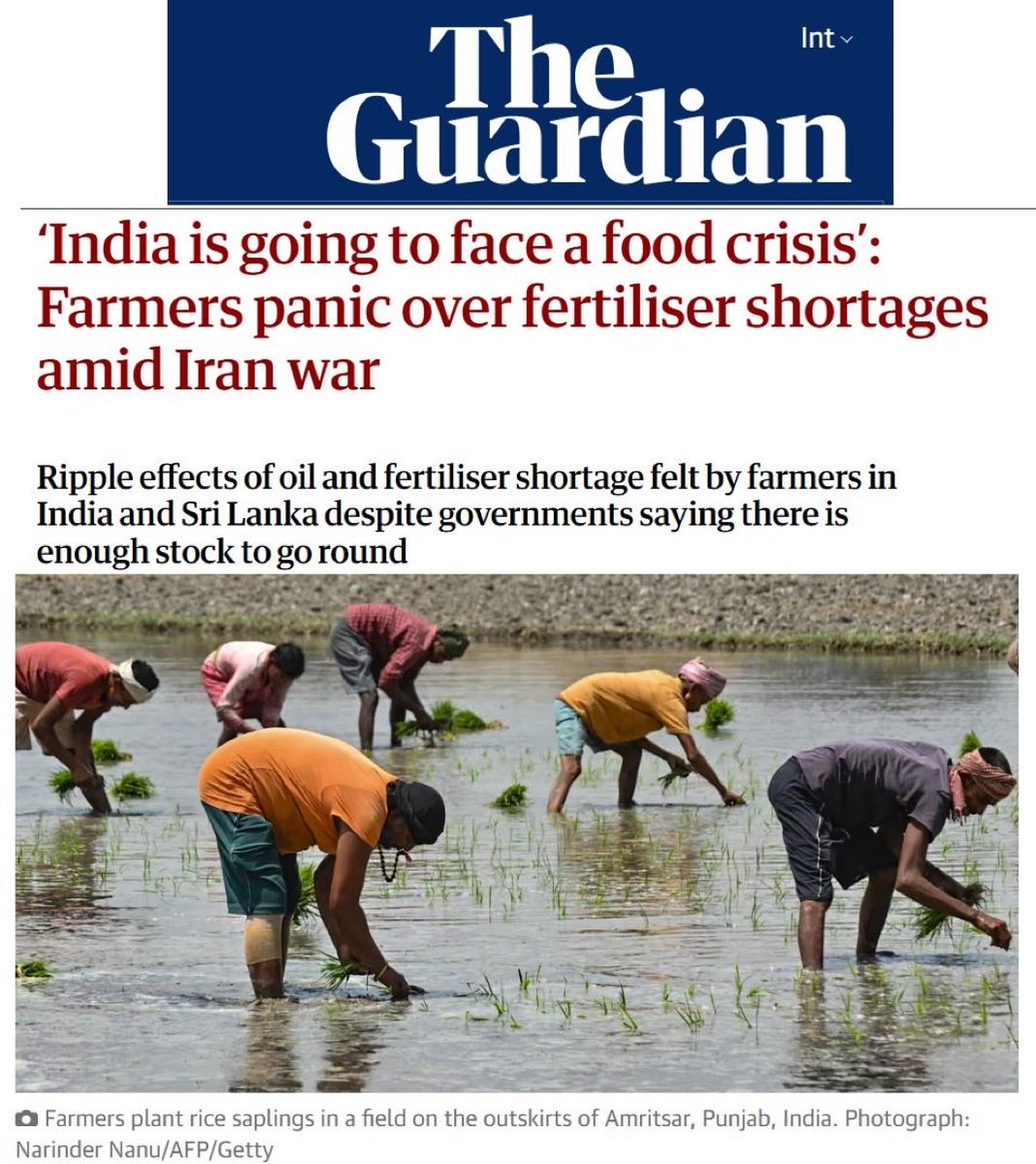
🇮🇳 India’s fertilizer puzzle: subsidies, localization, and structural bottlenecks For India, fertilizer is no longer just a farm issue, it is now tied to LNG dependence, fiscal costs, and food security ! India knows fertilizer dependence could eventually become a constraint on its growth story. Yet policy progress still appears slower than the strategic importance of the issue. This may be just as important as manufacturing productivity or digital services, because a large share of India’s population still ultimately depends on agriculture for income and food security ! Chart 1) Subsidy burden remains structurally high. The top-right chart is striking: * total fertilizer subsidy rises from roughly ₹70,000 crore in FY2019 * peaks above ₹2.4 lakh crore in FY2023 * remains close to ₹1.6–1.9 lakh crore through FY2027 estimates Important: Support for indigenous urea remains the largest component at roughly ₹85–95k crore, while imported urea support fluctuates around ₹20–35k crore depending on global price conditions. A smaller but still important share comes from recovery payments, which account for roughly 5–10% of the total subsidy pool in recent years. 2) Imported LNG dependency is the real vulnerability. The bottom-left chart explains the core risk. Domestic gas use in fertilizer production falls from roughly: ~43% in FY2019 to ~15% by FY2024–26 At the same time, imported LNG rises toward ~85%. This is the real bottleneck: India’s fertilizer system is increasingly linked to global LNG price volatility. Actually, this is not only a farm subsidy issue. It is also an energy import risk problem. 3) The left chart shows a clear structural trend: omestic gas use in India’s fertilizer sector falls steadily from around 43% in FY2019 to nearly 15% by FY2024–26, while imported LNG rises to almost 85%. This means fertilizer production is becoming increasingly exposed to global LNG volatility. 4) Price spread keeps the subsidy trap alive. The bottom-right chart shows why localization is urgent. The spread between domestic gas and spot LNG: * jumps above $20/MMBtu in FY2022 * peaks near $22.5 in FY2023 * still remains elevated into FY2027 estimates This gap directly feeds the subsidy bill. As long as India relies on expensive spot LNG, the government is effectively absorbing imported energy volatility through fertilizer subsidies. Source: @ieefa_institute by @PurvaJain31

BREAKING: New US intelligence reports suggest that Iran may "increase its regional sway" as a result of the Iran War through their control of the Strait of Hormuz, per Reuters. Details include: 1. Intelligence suggests that Iran is "unlikely" to open the Strait of Hormuz "any time soon" 2. Intelligence suggests that Iran's control over Hormuz "provides the only real leverage" it has over the US 3. As a result, Iran may actually end up gaining regional influence from the Iran War, US intelligence suggests 4. US officials note that Trump also has said that other countries "have far more at stake in preventing this outcome" than the US The Strait of Hormuz is quickly becoming the focus of this war.
🚨Indian Pharma sector clocks $29 billion exports by end of February in FY26.
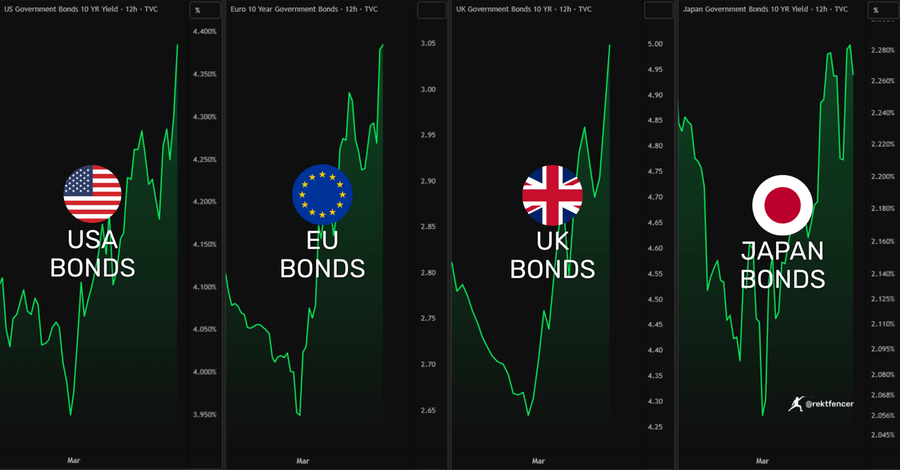
Excellent charts from Goldman.
🚨One month of war. Here's what it costs at the pump. 🇵🇭 Philippines gasoline +54% | diesel +82% 🇳🇬 Nigeria +49% | +66% 🇦🇺 Australia +42% | +52% 🇺🇸 United States +30% | +41% 🇨🇦 Canada +25% | +37% 🇫🇷 France +17% | +28% 🇩🇪 Germany +17% | +31% 🇨🇳 China +10% | +11% 🇬🇧 UK +10% | +18% 🇯🇵 Japan +2.5% | +2.5% Notice the pattern? The poorest countries pay the most. The most exposed pay double on diesel. China with coal and pipelines barely moves. Japan strategic reserves still holding. This isn't an oil price chart. It's a map of who prepared and who didn't. Read my latest article on it link 👇 open.substack.com/pub/themerchan…