ETH CALI

1.1K posts

ETH CALI banner
ETH CALI

ETH CALI

@ethcali_org

Cultivamos el Jardín Infinito de @ethereum en el pacífico colombiano 🇨🇴

Zona America Colombia Beigetreten Aralık 2022
705 Folgt736 Follower
ETH CALI retweetet
ethereum.org Community
ethereum.org Community@ethdotorg·
Catch up with the latest on Ethereum's next network upgrade: Glamsterdam Planned for H1 2026, the upgrade will make Ethereum faster for everyone, support L1 scale, improve node sustainability, and more. Here’s what you need to know...
ethereum.org Community tweet media
English
3
28
112
4.7K
ETH CALI
ETH CALI@ethcali_org·
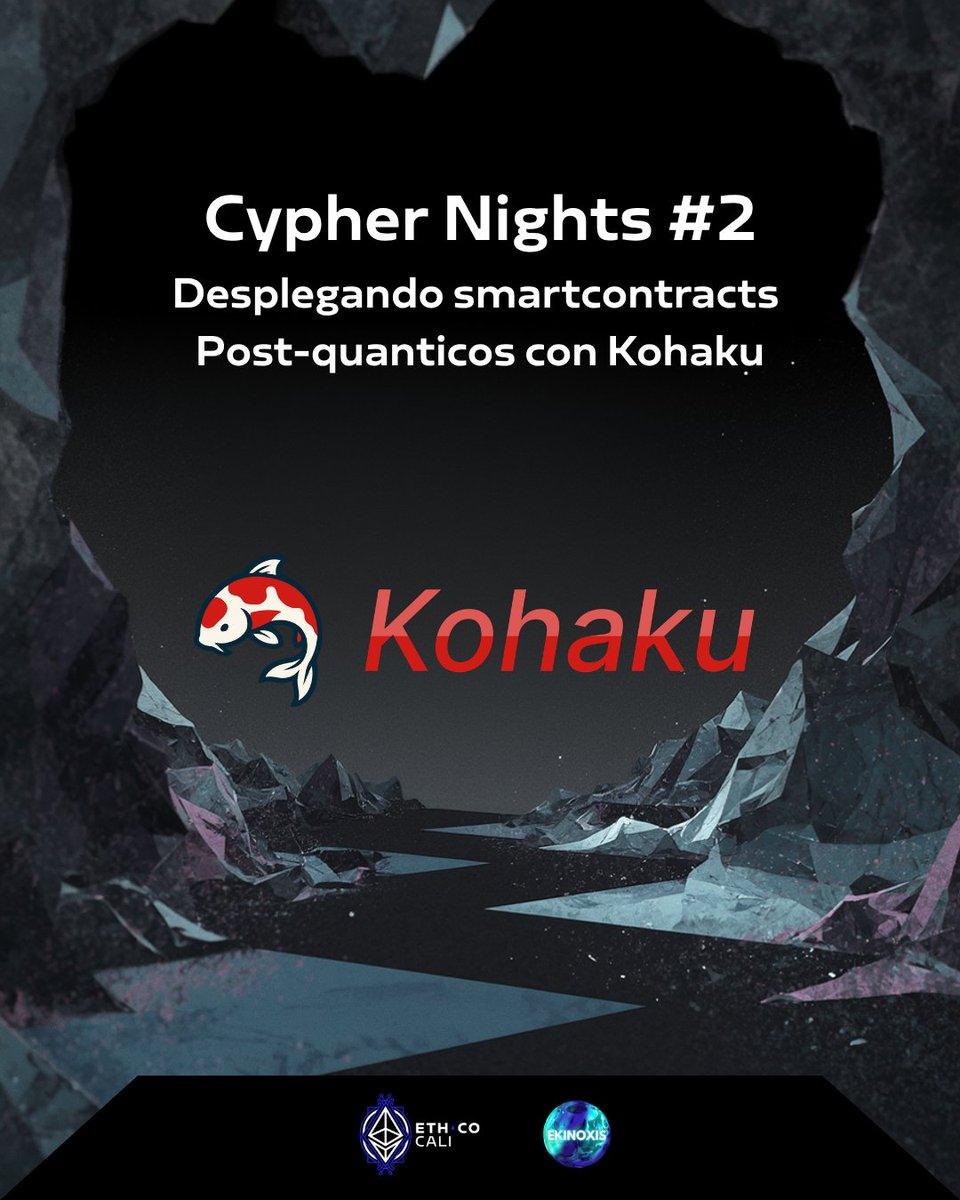
Cypher Nights #2, noches dedicadas a seguridad, privacidad y open source software. Esta vez nos sumergimos en la frontera de la criptografía: Desplegando Smart contracts postcuánticos con #Kohaku. 🛡️ Si te apasiona la seguridad de red y quieres ver herramientas de ciberseguridad de vanguardia en acción, este es el lugar. •⁠ ⁠Día: Martes, 24 Marzo •⁠ ⁠⁠Hora: 18:00 - 20:00 •⁠ ⁠⁠Lugar: discord.gg/269Qpf3rb2
ETH CALI tweet media
Español
1
1
2
110
ETH CALI retweetet
Ethereum Foundation
Ethereum Foundation@ethereumfndn·
Today, several teams at the EF are launching pq.ethereum.org, a dedicated resource for Ethereum's post-quantum security effort. What started with early STARK-based signature aggregation research in 2018 has grown into a coordinated, multi-team effort, all open source. The Post-Quantum team and Cryptography teams, with help from the Protocol Architecture and Protocol Coordination teams, have been working on this body of work for 8+ years. At pq.ethereum.org you'll find: - How PQ impacts each protocol layer - The full PQ roadmap (strawmap.org) - Open resources: repos, specs, papers, EIPs - FAQ: 14 questions across 5 categories, written by the PQ team - A 6-part lean Ethereum interview series (@zeroknowledgefm) - Interest form for the 2nd Annual PQ Research Retreat (Cambridge, UK, Oct 2026) - 10+ client teams are already building and shipping devnets weekly through PQ Interop. All the work is public and all of it is open. pq.ethereum.org
English
90
236
955
88.2K
ETH CALI retweetet
Token Terminal 📊
Token Terminal 📊@tokenterminal·
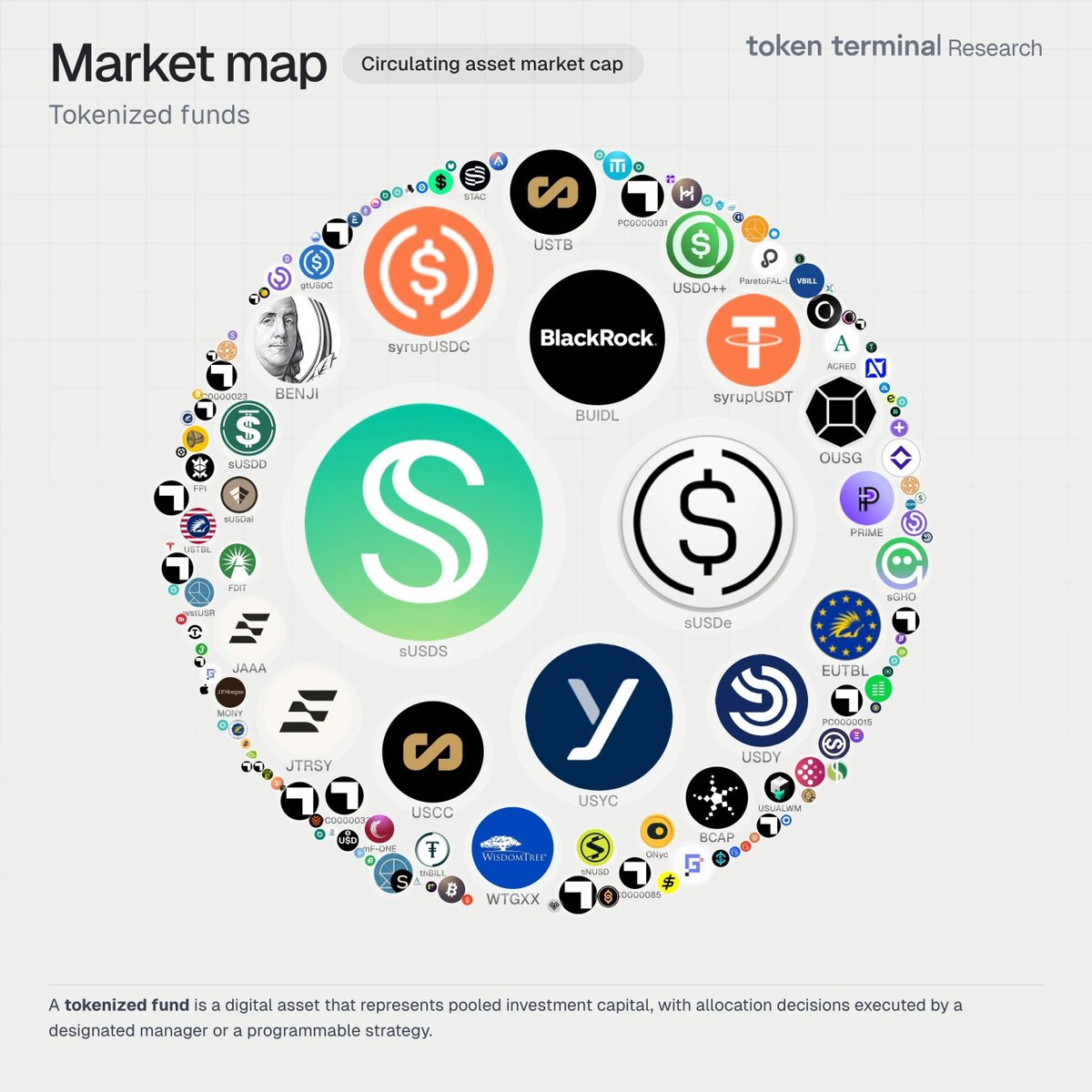
in the category of tokenized yield crypto-native issuers like @SkyEcosystem and @ethena have so far out-competed their TradFi counterparts a race to follow 👇
Token Terminal 📊 tweet media
English
7
5
35
4.2K
ETH CALI retweetet
Web3Privacy Now
Web3Privacy Now@web3privacy·
Neocypherpunk Summit — Funkhaus Berlin, June 14. We're looking for partners to co-curate thematic rooms: 🔐 Cryptography as Civic Infrastructure 🏴 Resistance Networks 🌐 Open Protocols & Digital Autonomy ⚖️ Digital Rights & Legal Defense 🤝 Privacy for the Commons 🤖 AI, Power & the Surveillance Economy Get involved ⬇️ tally.so/r/mVxvgN
Web3Privacy Now tweet media
English
1
8
46
3.1K
ETH CALI retweetet
Akshay 🚀
Akshay 🚀@akshay_pachaar·
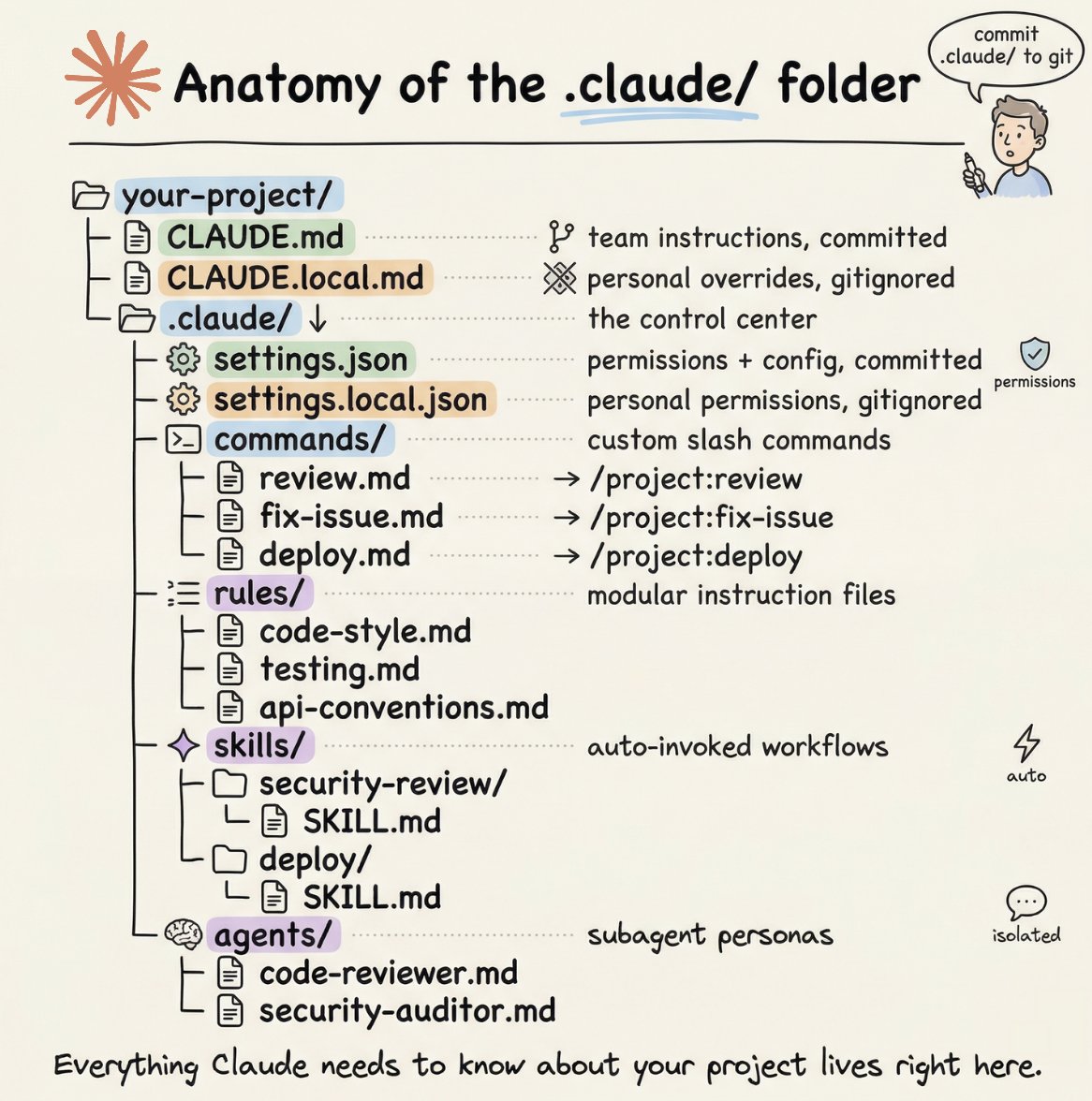
How to setup your Claude code project? TL;DR Most developers skip the setup and just start prompting. That's the mistake. A proper Claude Code project lives inside a .𝗰𝗹𝗮𝘂𝗱𝗲/ folder. Start with 𝗖𝗟𝗔𝗨𝗗𝗘.𝗺𝗱 as Claude's instruction manual. Split it into a 𝗿𝘂𝗹𝗲𝘀/ folder as it grows. Add 𝗰𝗼𝗺𝗺𝗮𝗻𝗱𝘀/ for repeatable workflows, 𝘀𝗸𝗶𝗹𝗹𝘀/ for context-triggered automation, and 𝗮𝗴𝗲𝗻𝘁𝘀/ for isolated subagents. Lock down permissions in 𝘀𝗲𝘁𝘁𝗶𝗻𝗴𝘀.𝗷𝘀𝗼𝗻. There are two .𝗰𝗹𝗮𝘂𝗱𝗲/ folders: one committed with your repo, one global at ~/.𝗰𝗹𝗮𝘂𝗱𝗲/ for personal preferences and auto-memory across projects. The .𝗰𝗹𝗮𝘂𝗱𝗲/ folder is infrastructure. Treat it like one. The article below is a complete guide to 𝗖𝗟𝗔𝗨𝗗𝗘.𝗺𝗱, custom commands, skills, agents, and permissions, and how to set them up properly.
Akshay 🚀 tweet media
Akshay 🚀@akshay_pachaar

x.com/i/article/2034…

English
212
1.5K
12.2K
2M
ETH CALI retweetet
ETHCluj
ETHCluj@ETHCluj·
Excited to welcome by our side another wonderful community - our friends from @ethcali_org joining us as community partners 🇨🇴 They are a grassroots Ethereum community building the future of the Colombian Pacific region through education, developer meetups, hackathons, and real Web3 experimentation. We share a strong alignment in growing communities and nurturing collaborations across the ecosystem.
ETHCluj tweet media
English
4
3
13
458
ETH CALI retweetet
Geode Labs
Geode Labs@geodelabs·
(1/2) Ethereum exists to give more people more freedom, in every corner of the world. 🪽 ETHStars is where the builders carrying that forward come to learn, connect, and earn - find your next job, grant, hackathon, event. We just redesigned it to look like what it is. ✨ ethstars.xyz
Geode Labs tweet media
English
5
6
38
3.8K
ETH CALI
ETH CALI@ethcali_org·
Totalmente alineado con esta definicion de @EthPrague! - La comunidad: No solo asiste, la comunidad manda. El cronograma y la vibra los definen ustedes: - Builders (Hackers): Los que tiran código y construyen el futuro línea a línea. - Founders (Doers): Quienes transforman ideas abstractas en realidades tangibles y sostenibles. - Entusiastas Tech: Mentes curiosas de otros ecosistemas por igual. - Exploradores: Invitamos a quienes no viven en el mundo cripto para generar conexiones inesperadas y disruptivas. - Escépticos y Reguladores: Queremos dialogar. Buscamos entenderlos con la misma apertura con la que esperamos que nos entiendan a nosotros.
ETHPrague@EthPrague

x.com/i/article/2029…

Español
1
1
5
104
ETH CALI
ETH CALI@ethcali_org·
Totally aligned with these strategies: since 2022, we have staked ETH for every sponsorship, grant, and QF round won for our local community. Our process is simple yet powerful: 1. Receive stablecoins. 2. Stake ETH to use as collateral via @aave. 3. Borrow USDC to fuel our operations. While we don't recommend this for 100% of a treasury, we believe ETH communities should consider this kind of commitment to help secure the network. For us, this strategy was the engine that powered our 2025 activities, allowing us to achieve more with leaner funding. $ETH is the ticker; $staking is the strategy.
vitalik.eth@VitalikButerin

The Ethereum Foundation is using DVT-lite to stake 72,000 ETH: firefly.social/post/x/2026218… My hope for this project is that in the process, we can make it maximally easy and one-click to do distributed staking for institutions. Choose which computers run your nodes, make a config file where they all have the same key, and then from there everything gets set up automatically. The idea that "running infrastructure" is this scary complicated thing where each person participating must be a "professional" is awful and anti-decentralization, and we must attack it directly. It should be a docker container or nix image or similar, one click or command line per node, enter the same key in each node, and they automatically find each other, the networking is set up, the DKG happens, and the staking begins. I also plan to use this soon, and I hope more institutions holding ETH can stake in this way. We want the authority over staking nodes to be highly distributed, and the first step to doing this is to make it easy.

English
0
3
8
162
ETH CALI retweetet
Dune | We Are Hiring!
Dune MCP is live 🔌 Plug Dune directly into @claudeai, @ChatGPTapp, @cursor_ai, and more. Search tables. Write queries. Build charts. Check Usage. All from a single prompt. 💻 Your AI just became a Dune power user.
English
107
116
1.2K
214.3K
ETH CALI retweetet
Coinbase Developer Platform🛡️
x402 is the checkout proof of concept for the internet. Just like a business can accept multiple payment methods, an x402-enabled service can support multiple chains. The merchant defines what they accept → the client chooses how to pay. Watch @programmer's talk from @EthereumDenver:
English
25
25
214
123.4K
ETH CALI retweetet
niko
niko@saintniko·
most interesting things happening in ai x crypto right now - @bankrbot llm gateway connects payments to compute, helping agents become self-sustaining - @DXRGai terminal pro builds the largest agentic trading experiment we’ve ever seen (with $5m vol in first hour, completely autonomous) - @flowdotbid launches agentic capital markets, nine minute auctions where agents register tokens, discover a price, and seed liquidity (built on cca) what else did I miss?
English
70
40
339
65.4K
ETH CALI
ETH CALI@ethcali_org·
En resumen: no es magia instantánea, pero sí mejoras reales y seguras. Primero reduces comisiones a la mitad o menos en 2026, luego las bajas muchísimo más hacia 2029. Ethereum pasa de ser caro y lento a algo mucho más usable para millones de personas normales. Paso a paso, sin riesgos grandes.
Español
0
0
2
33
ETH CALI
ETH CALI@ethcali_org·
Más adelante (2027-2029): - Se usan comprobaciones matemáticas inteligentes que hacen que tu celular o computadora normal pueda verificar todo sin esfuerzo. - Más espacio para datos sin que se vuelva pesado. - Empiezan poco a poco y van aumentando hasta que sea el sistema principal. - La capacidad puede multiplicarse por 10 o más (hacia cientos de millones o más por bloque). Qué cambia para ti: - Las comisiones en la red principal caen drásticamente (80-95% menos que ahora en momentos de alta demanda). - Todo se hace más rápido (confirmaciones en segundos en lugar de minutos). - Puedes usar la red base directamente para más cosas sin depender tanto de capas extras, y sigue siendo seguro y sin que una sola persona controle todo.
Español
1
0
1
38
ETH CALI
ETH CALI@ethcali_org·
En @ethereum es como una autopista para enviar dinero y usar aplicaciones. Hoy en día, cuando hay mucha gente, se pone lenta y las comisiones (fees) suben mucho. @VitalikButerin explicó un plan realista para mejorarla bastante, paso a paso. Te lo explicamos en este hilo 🧵
vitalik.eth@VitalikButerin

Now, scaling. There are two buckets here: short-term and long-term. Short term scaling I've written about elsewhere. Basically: * Block level access lists (coming in Glamsterdam) allow blocks to be verified in parallel. * ePBS (coming in Glamsterdam) has many features, of which one is that it becomes safe to use a large fraction of each slot (instead of just a few hundred milliseconds) to verify a block * Gas repricings ensure that gas costs of operations are aligned with the actual time it takes to execute them (plus other costs they impose). We're also taking early forays into multidimensional gas, which ensures that different resources are capped differently. Both allow us to take larger fractions of a slot to verify blocks, without fear of exceptional cases. There is a multi-stage roadmap for multidimensional gas. First, in Glamsterdam, we separate out "state creation" costs from "execution and calldata" costs. Today, an SSTORE that changes a slot from nonzero -> nonzero costs 5000 gas, an SSTORE that changes zero -> nonzero costs 20000. One of the Glamsterdam repricings greatly increases that extra amount (eg. to 60000); our goal doing this + gas limit increases is to scale execution capacity much more than we scale state size capacity, for reasons I've written before ( ethresear.ch/t/hyper-scalin… ). So in Glamsterdam, that SSTORE will charge 5000 "regular" gas and (eg.) 55000 "state creation gas". State creation gas will NOT count toward the ~16 million tx gas cap, so creating large contracts (larger than today) will be possible. One challenge is: how does this work in the EVM? The EVM opcodes (GAS, CALL...) all assume one dimension. Here is our approach. We maintain two invariants: * If you make a call with X gas, that call will have X gas that's usable for "regular" OR "state creation" OR other future dimensions * If you call the GAS opcode, it tells you you have Y gas, then you make a call with X gas, you still have at least Y-X gas, usable for any function, _after_ the call to do any post-operations What we do is, we create N+1 "dimensions" of gas, where by default N=1 (state creation), and the extra dimension we call "reservoir". EVM execution by default consumes the "specialized" dimensions if it can, and otherwise it consumes from reservoir. So eg. if you have (100000 state creation gas, 100000 reservoir), then if you use SSTORE to create new state three times, your remaining gas goes (100000, 100000) -> (45000, 95000) -> (0, 80000) -> (0, 20000). GAS returns reservoir. CALL passes along the specified gas amount from the reservoir, plus _all_ non-reservoir gas. Later, we switch to multi-dimensional *pricing*, where different dimensions can have different floating gas prices. This gives us long-term economic sustainability and optimality (see vitalik.eth.limo/general/2024/0… ). The reservoir mechanism solves the sub-call problem at the end of that article. Now, for long-term scaling, there are two parts: ZK-EVM, and blobs. For blobs, the plan is to continue to iterate on PeerDAS, and get it to an eventual end-state where it can ideally handle ~8 MB/sec of data. Enough for Ethereum's needs, not attempting to be some kind of global data layer. Today, blobs are for L2s. In the future, the plan is for Ethereum block data to directly go into blobs. This is necessary to enable someone to validate a hyperscaled Ethereum chain without personally downloading and re-executing it: ZK-SNARKs remove the need to re-execute, and PeerDAS on blobs lets you verify availability without personally downloading. For ZK-EVM, the goal is to step up our "comfort" relying on it in stages: * Clients that let you participate as an attester with ZK-EVMs will exist in 2026. They will not be safe enough to allow the network to run on them, but eg. 5% of the network relying on them will be ok. (If the ZK-EVM breaks, you *will not* be slashed, you'll just have a risk of building on an invalid block and losing revenue) * In 2027, we'll start recommending for a larger minority of the network to run on ZK-EVMs, and at the same time full focus will be on formally verifying, maximizing their security, etc. Even 20% of the network running ZK-EVMs will let us greatly increase the gaslimit, because it allows gas limits to greatly increase while having a cheap path for solo stakers, who are under 20% anyway. * When ready, we move to 3-of-5 mandatory proving. For a block to be valid, it would need to contain 3 of 5 types of proofs from different proof systems. By this point, we would expect that all nodes (except nodes that need to do indexing) will rely on ZK-EVM proofs. * Keep improving the ZK-EVM, and make it as robust, formally verified, etc as possible. This will also start to involve any VM change efforts (eg. RISC-V) firefly.social/post/lens/1040…

Español
1
4
7
198
ETH CALI retweetet
Suhail Kakar
Suhail Kakar@SuhailKakar·
introducing polymarket cli - the fastest way for ai agents to access prediction markets built with rust. your agent can query markets, place trades, and pull data - all from the terminal fast, lightweight, no overhead
English
353
355
6.2K
1.7M