Fernando

7K posts

Fernando banner
Fernando

Fernando

@fertej9

Veterinario y Doctor en reproducción animal. Ahora trabajando en el Ministerio de Agricultura, Pesca y Alimentación. Emigrado de la España vaciada. 🇺🇦

Madrid, España Beigetreten Haziran 2016
279 Folgt576 Follower
Fernando retweetet
Sama Hoole
Sama Hoole@SamaHoole·
In 1946 the British government introduced free school milk for every child in the country. One third of a pint, every school day, from the age of five to the age of fifteen. The milk was whole. Full-fat. From British dairy herds. It was delivered to the school gate in small glass bottles with foil caps and left on the doorstep in metal crates, where it sat in the sun until morning break if the weather was warm and developed a slightly suspect taste that an entire generation of British adults can still describe with uncomfortable precision. The generation that grew up on school milk was, by every anthropometric measure, the healthiest generation of British children ever recorded. Average height increased. Bone density improved. Dental health, despite the sugar in everything else, improved. Iron deficiency rates among school-age children dropped. The growth charts that the Ministry of Health had been keeping since the war showed a consistent, measurable, year-on-year improvement that tracked precisely onto the introduction of the milk programme. In 1971 Margaret Thatcher, then Education Secretary, cut free school milk for children over seven. The tabloids called her Thatcher the Milk Snatcher. She was vilified. She kept the policy. The next generation of British children, the ones who grew up without the daily third of a pint, were measurably less healthy than the one before. The growth charts show it. The dental records show it. The conscription medicals, while they lasted, showed it. The thing the milk had been providing, the calcium, the vitamin D, the vitamin A, the complete amino acid profile, the conjugated linoleic acid, the fat-soluble nutrients that a growing skeleton requires in order to reach its genetic potential, was no longer arriving at morning break in a glass bottle with a foil cap. It was replaced, eventually, by nothing. Or by a carton of fruit juice. Or by a packet of crisps from the vending machine that appeared in the school corridor in the 1990s. The generation that drank the milk is now in its seventies and eighties. They are, on average, taller, stronger-boned, and longer-lived than the generation that came after them. The milk was not magic. The milk was milk. It was the thing the body needed, delivered at the time the body needed it, at a cost the government considered acceptable until it didn't. The cost of not providing it has been rather higher.
Sama Hoole tweet media
English
1.4K
4.6K
18.1K
1.6M
Fernando retweetet
J. Pascual
J. Pascual@JuanPascual4·
1/ Asturias y Cantabria, invierno 2026. Cientos de incendios en pocas semanas. Y algunos -por ignorancia o mala fe- sentencian: “son los ganaderos”. Incluso hay quien propone eliminar la ganadería y dejar el monte a los ungulados silvestres. A algunos puede sonarles bien, pero no funcionaría. Abro hilo 🧵
J. Pascual tweet media
Español
8
20
43
3K
Fernando retweetet
J. Pascual
J. Pascual@JuanPascual4·
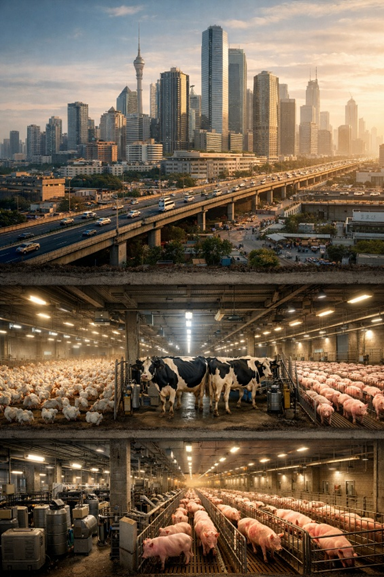
1/ La ganadería intensiva no nació en el campo. Nació por la ciudad. Es el resultado directo de lo que la sociedad pidió durante décadas: más alimentos más baratos y siempre iguales, homogéneos Fue un proceso consecuencia de la urbanización. Abro hilo: 👇👇👇
J. Pascual tweet media
Español
5
93
176
9.6K
Fernando retweetet
Oscar GR 🧬 Genomics 🐄🦠
Oscar GR 🧬 Genomics 🐄🦠@OscarGenomics·
Demostración con uno de los artículos científicos con más datos y de mayor duración de que la carne no es el problema. El problema era no saber interpretar los estudios ni los análisis estadísticos. Caso cerrado. Aunque algunos tardarán en quererse enterar.
Sama Hoole@SamaHoole

October 2022: Nature Medicine publishes the most comprehensive red meat analysis ever conducted. Global Burden of Disease study. 204 countries. 30 years of data. This study did what previous research refused: account for healthy user bias. What's healthy user bias? People who avoid red meat also exercise more, smoke less, drink less, eat more vegetables, see doctors regularly, higher income, better education. Previous studies compared "red meat eaters" to "avoiders" without controlling for these lifestyle clusters. They weren't comparing meat to no meat. They were comparing healthy lifestyle to unhealthy lifestyle. The 2022 study controlled for these factors. Isolated red meat from lifestyle package. Results: Unprocessed red meat showed NO significant association with: - Heart disease - Stroke - Type 2 diabetes - Colorectal cancer Conclusion: "No robust evidence for health risks from unprocessed red meat." The correlation used to demonize red meat for 50 years disappears when you control for lifestyle. Media coverage: Essentially none. Largest dietary analysis ever published. In Nature Medicine. One of the most prestigious journals. Buried. Why? Because it destroys the foundation of plant-based advocacy. Contradicts dietary guidelines. Suggests 50 years of warnings were based on confounded correlation. Two consecutive years of comprehensive global analyses showing red meat is fine after proper controls. Both largely ignored. Compare to any weak observational study showing correlation. Those get headlines. The 2022 study should have ended the debate. Instead it disappeared while your doctor still tells you to limit red meat based on 1980s epidemiology. The study exists. You can read it. Then watch guidelines ignore it completely.

Español
0
13
25
2.8K
Fernando
Fernando@fertej9·
Programa de cría de Latxa, un buen ejemplo de la evolución de la mejora genética ganadera y de su búsqueda constante de la eficiencia, para mejorar la rentabilidad del ganadero. interempresas.net/ovino/Articulo…
Español
0
1
0
28
Fernando retweetet
Luis Planas Puchades
Luis Planas Puchades@LuisPlanas·
Las nuevas técnicas genómicas (NTG) son muy importantes para el sector agroalimentario. Permiten mejorar los rendimientos de los cultivos, a la vez que la sostenibilidad de las producciones agrarias. Por eso, España tiene mucha ambición en relación en la regulación de las NGT.
Español
21
72
139
3.1K