Jamila khan
56K posts

Jamila khan
@gemthatiam
love life and live life with gratitude 🙏🏼 and compassion. Be that person who you want to see in others. 🤗
Baltimore, Maryland Beigetreten Mart 2009
2.2K Folgt3.9K Follower
Angehefteter Tweet
Jamila khan retweetet

"On the night of December 18, 1994, a 27-year-old woman named Alison Botha did something completely ordinary. She dropped a friend home after a quiet evening of pizza and board games in Port Elizabeth, South Africa, grabbed her laundry from the backseat, and walked toward her apartment building.
She never made it inside.
A man with a knife forced his way into her car. He made her drive. He stopped to pick up a second man. Together, they took her to a deserted clearing in the dark outskirts of the city — far from any road, far from any voice that could help her.
What happened next is almost impossible to write, and yet it happened.
She was raped. She was stabbed in the abdomen more than 36 times. Her throat was slashed 17 times — so deeply that her head could no longer hold itself upright. They left her in the dirt, certain that no one survives that. One of them said exactly those words before they walked away.
But she was still breathing.
Alone in the dark, with her body barely held together, Alison made a decision. Not a loud one. Not a dramatic one. Just a quiet, fierce refusal to disappear.
First, she wanted them to be found. Using the last strength in her fingers, she scratched two names into the sand — the names she had caught during the attack. Beneath them, she wrote four words: I love Mom.
Then she began to move.
One hand pressed against her abdomen to keep her organs inside. The other held her head in place so it wouldn't fall backward. She crawled. She fell. She got up. Her vision came and went. The pain should have made thought impossible. But something deeper — a stubborn, unbreakable sense that her life still mattered — kept pulling her forward.
She reached the road.
At around 2:45 in the morning, a young student named Tiaan Eilerd was driving that same stretch of road when he saw something on the white line. He stopped. He stayed with her. He called for help. He would later say he believed he was meant to find her at that exact moment — and that night changed the entire direction of his life. He went on to become a medical doctor.
At the hospital, the surgical team had never seen anyone arrive in that condition and still be alive. She was not expected to survive the operation. She was not expected to make it through the night.
She survived both.
Unable to speak at first, she identified her attackers from a formal lineup — in a case that became the first in South African legal history to use a two-way mirror to protect a victim from facing her attacker. Frans du Toit and Theuns Kruger were arrested, convicted, and sentenced to life imprisonment in 1995.
But Alison wasn't done fighting.
At a time when survivors were expected to stay silent, she spoke. She wrote a book called I Have Life. She stood on stages across more than 30 countries, telling her story not as a victim, but as proof that the human will to survive is more powerful than the worst things humans can do to each other. She had two sons — something doctors had once told her might never be possible.
Then, in July 2023, after nearly 30 years, her attackers were granted parole without her being properly consulted. She found out by phone call.
The stress of that news contributed to a massive brain aneurysm on September 25, 2024. She required emergency surgery to stop the bleeding, then a second surgery for fluid buildup. She lost movement. She lost speech. She had to relearn how to stand, how to talk, how to exist in a body that had already survived the unsurvivable — twice.
And still, from her hospital bed, she sent messages of hope.
On February 4, 2025, the Minister of Correctional Services revoked the parole. Both men were returned to prison.
Alison continues her recovery today. In a recent message to the people who had supported her, she wrote:
""Whatever you're going through, it's just a patch. It might hit you unexpectedly and feel heavy, but if you keep moving forward, you'll come out the other side. Joy and happiness are waiting there for all of us. I WILL be okay.""
She once said her life was too valuable to let go of.
She has proven it — not once, but over and over again, one impossible inch at a time.
If this story moved you, share it. Someone out there needs to read it today."

English
Jamila khan retweetet

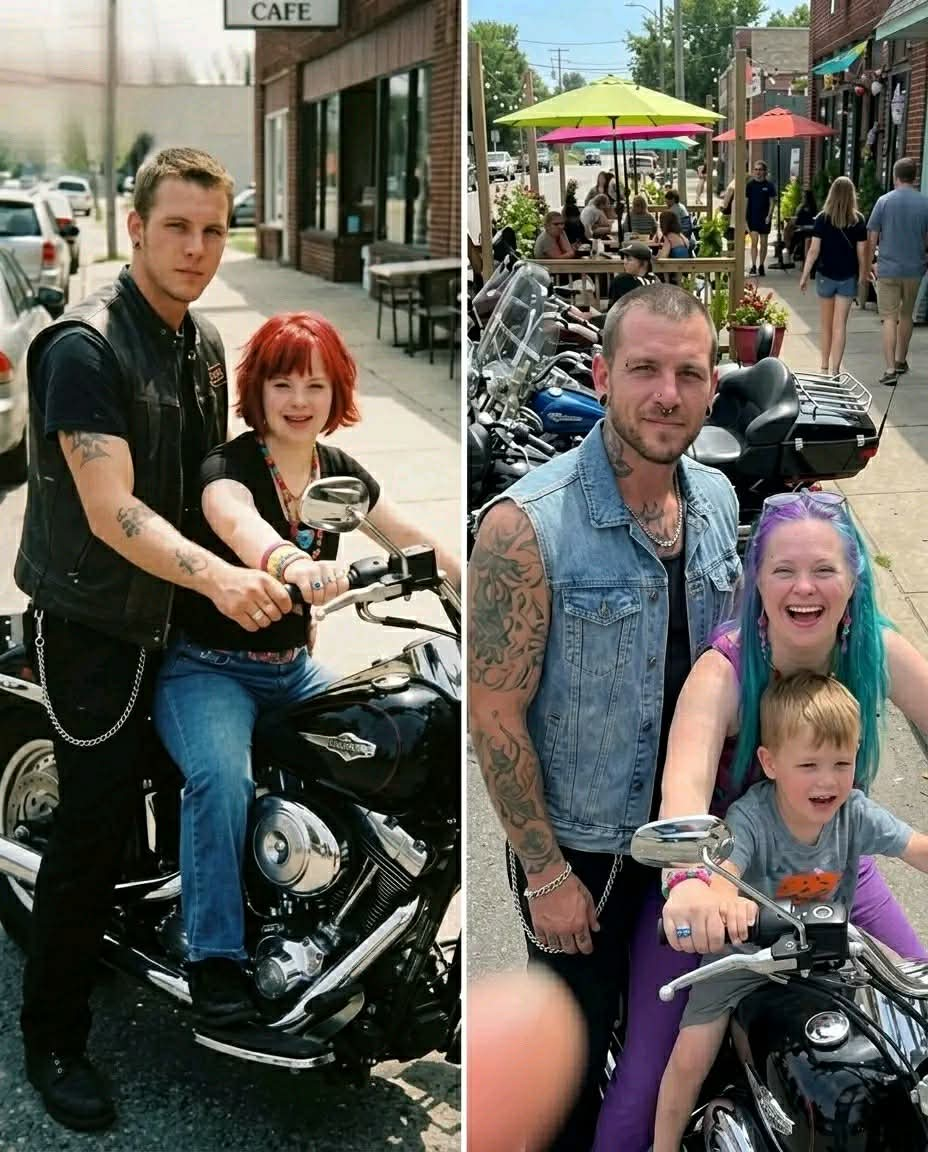
"If you marry that woman with Down syndrome, you're out of my will."
My mother said it plain as day. No hesitation.
I was 25 when I met Hannah. It was a small café near my workshop — the kind of place where the chairs don't match and the coffee is always slightly too hot. She was sitting alone by the window, reading.
On our very first date, she looked at me and said, quietly and without any drama: "I have Down syndrome. I live with my parents. I just wanted you to know that up front — no surprises."
I didn't say much. I just thought: whoever raised this woman did something right.
When I told my family, my mother said I'd ruin my future. That people would talk. That she wouldn't help us. A few friends stopped calling — slowly at first, then all at once.
Hannah never argued with any of them. She never once asked me to defend her or fight for her. She just kept showing up — meeting me after work, ordering the same chamomile tea, making me laugh at things I hadn't noticed before.
Coffee became dinners. Dinners became Sunday mornings. One year later, I proposed in the same church where I was baptized, surrounded by the twelve people who hadn't walked away.
We married that same year.
Ten years later, we are raising our son, Caleb. Every night, Hannah falls asleep holding my hand. Every morning, Caleb climbs into our bed before either of us is ready to be awake. That's our family. The one they said wouldn't last.
Last month, I ran into an old friend who had stopped calling. He looked at a photo of the three of us on my phone and said, "You look really happy, man."
"I am," I said. And that was enough.
My mother never changed her mind. She missed the wedding. She's missed every birthday Caleb has had.
I don't tell this story for sympathy. I tell it because someone out there is standing exactly where I stood — being told that love has conditions, that the people who are supposed to be in your corner get a vote on who deserves to be in your life.
They don't.

English
Jamila khan retweetet

Funeral Prayer for Shahida Ahmad Sahiba
Shahida Ahmad Sahiba, wife of Mirza Naseem Ahmad Sahib, passed away at the age of 91. She was a Moosiya and the daughter of the niece of the Promised Messiah (as), Hazrat Sahibzadi Amtul Hafeez Begum Sahiba and Hazrat Nawab Abdullah Khan Sahib. Her son writes that she showed great love, treated everyone with kindness, and was deeply hospitable, even wishing to extend her home to serve others more.
She would win hearts and support people in difficulty with great resolve. Huzoor (aba) stated that he personally witnessed her spirit of sacrifice and exceptional hospitality. In her later years, after becoming wheelchair-bound, she never complained and remained grateful. She regularly recited the Holy Qur’an, advised prayers for the less fortunate, maintained a positive outlook, disliked negativity about others, and cared deeply for her household staff. When one servant married, she became emotional, saying her home would not feel the same without her.
May Allah grant her forgiveness and mercy. Ameen.
(Friday Sermon, 17th April 2026)
#FridaySermon #MTAi
English
Jamila khan retweetet

Respected Bashir Ahmad Rafiq (1931-2016), former Imam of The Fazl Mosque, London, standing next to Hazrat Khalifatul-Masih IV (rta)
Jamila khan@gemthatiam
Indonesia

@razabeena May he rest in peace. So sorry for your loss. Fathers sure are the best.❤️🙏🏼
English
Jamila khan retweetet

I collapsed in a Tesco car park in Wolverhampton on a Wednesday.
Not dramatically. Just sat on the cold concrete with my bags beside me and could not get up. 3 months in England. No job yet. The last of my money was in those bags. Food for five days if I stretched it.
A woman stopped.
White hair. Heavy coat. She crouched down beside me on the wet ground and asked in a voice that had no agenda in it whatsoever if I was alright.
I said yes. She did not leave.
She sat beside me on that concrete like it was a perfectly reasonable place to sit and asked where I was from. I said Nigeria. She said her son volunteered in Katsina in 2011 for one the NGOs and came back changed. Said kindness over there saved him once when he got lost & trapped and he spent the rest of his life trying to return it.
She helped me up. Drove me home. Would not come inside.
At the door she pressed £40 into my hand.
Said her son would want her to.
Her son had died in 2019.
I did not know what to do with £40 and a dead stranger's kindness.
So I passed it forward.
That is all any of us can do.
English

Jamila khan retweetet


Where there is a will there is a way✅
Warfare Analysis@warfareanalysis
Two medical students from Gaza managed to restore the library of one of the oldest mosques in Gaza, which was bombed by Israel.
English
Jamila khan retweetet

Remember Dan Price...that CEO who took a pay cut so he could pay all his employees a minimum annual wage of $70,000? Here’s what happened next:
“Six years later after the decision that others said would destroy his business, Dan reports that revenue has tripled, the customer base has doubled, 70% of his employees have paid down debt, many bought homes for the first time, 401(k) contributions grew by 155% and turnover dropped in half. His business is now a Harvard Business School case study.”
In his own words:
“6 years ago today I raised my company's min annual salary to $70k. Fox News called me a socialist whose employees would be on bread lines.
Since then our revenue tripled, we're a Harvard Business School case study & our employees had a 10x boom in homes bought.
Always invest in people.”
Courtesy of Craig Henley

English
Jamila khan retweetet

Guarding Against Shirk in Every Form
“An Arab named Abdul Muhyi printed many cards bearing a photograph of the Promised Messiah (as). When the Promised Messiah (as) learned that his photograph had been printed on postcards, he became very displeased and said, ‘We had our photograph taken for a religious necessity. We do not approve that our photograph be turned into a means of livelihood or anything that may lead toward shirk.’ Those cards were then destroyed.”
▶️ Stream the full Friday Sermon now on the MTAi App, via mta.tv, or via youtube.com/mtaonline.
(Friday Sermon, 10th April 2026)
#FridaySermon #MTAi.
English

@theRealYLH Pakistan zindabad!
Credit given for this Nobel effort, Alhumdolilah
English
Jamila khan retweetet