

imorisakura
181 posts


Testnet's already poured, just waiting for the token to be ready to brew."

English


For decades, we built software as tools. You clicked the button. The software responded. It never had goals of its own, never managed a budget, and never decided what to do next. That relationship is starting to change. AI agents don't just assist us anymore, they plan, reason, execute tasks, and increasingly operate with a level of autonomy that traditional software was never designed for.
Once software becomes a workforce instead of a tool, the questions change completely. It's no longer just about whether an agent can complete a task. It's about what it's allowed to access, how much it can spend, which systems it can interact with, and whether every action can be verified afterward. Intelligence alone isn't enough when software begins acting on behalf of humans.
That's why I think the next generation of infrastructure won't be built around bigger models alone. It will be built around identity, policy, accountability, and trust. The companies shaping this layer may end up being just as important as the ones building the models themselves, because autonomous systems don't just need intelligence, they need boundaries.
The biggest shift in AI isn't that software is becoming smarter. It's that software is becoming a workforce.
@RialoHQ @subzero_Labs
English

The future isn t built by isolated technologies it s built by connected systems
@RialoHQ is creating a unified execution layer where privacy verification and interoperability work together by design Instead of relying on fragmented infrastructure, developers can build secure applications that scale across networks with confidence
One stack One vision Infinite possibilities

English

Imagine giving an AI agent the freedom to act..
Without boundaries.
Without security.
Without privacy.
Sounds risky, right?
We solves that with three foundational pillars designed for the next era of AI and blockchain.
Because powerful AI deserves even stronger infrastructure.

English

One blockchain. Endless possibilities.
Why manage countless services when @RialoHQ brings everything together?
🤖 AI Agents
💸 Payments
🌐 DeFi
🏙️ RWA
💰 Lending
🔗 Web2 ↔ Web3
Less complexity. More building. 🚀
#Rialo #BuildOnRialo #Web3 #AI

Chimil@chimil607
Rialo is building a blockchain where developers can create automated payments, AI agents, DeFi, RWA, lending, and Web2 ↔ Web3 applications—all with native infrastructure and a smoother user experience. Less complexity. More innovation. ⚡️ @RialoHQ #Rialo
English
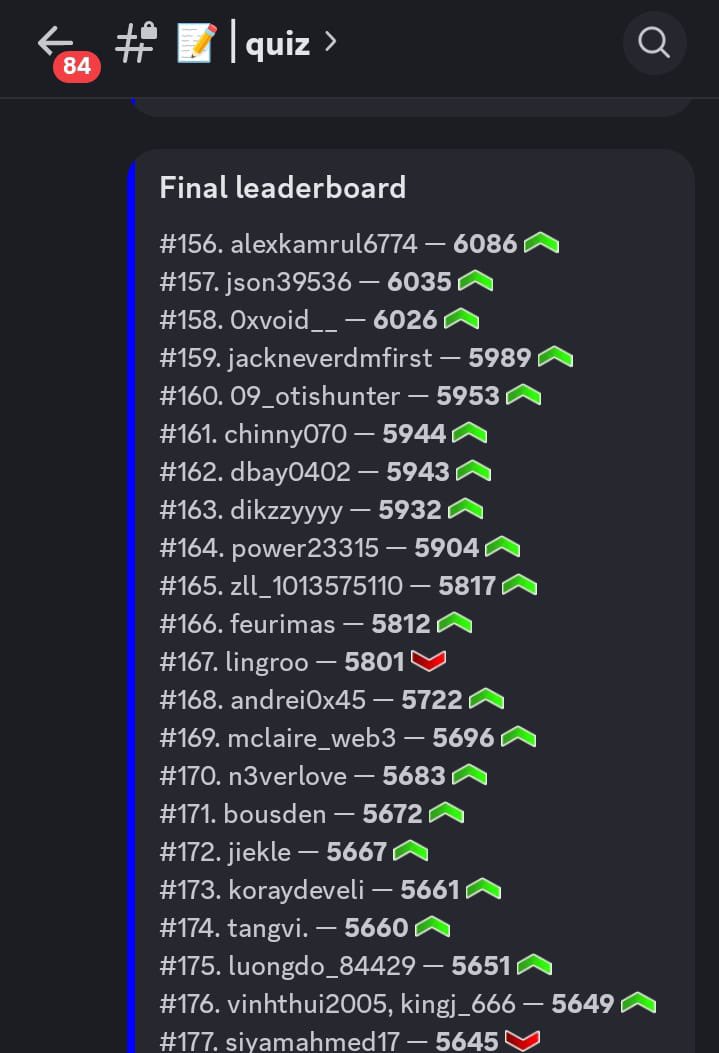
Didn’t win first place, but finishing in the Top 187 out of hundreds of participants isn’t too bad. Another solid addition to my airdrop hunter portfolio.

English
Español

Indonesia
Wondering what is Rialo?
Here’s why more people are starting to pay attention to @RialoHQ. 👇
Rialo isn’t trying to add another layer to Web3.
Its goal is to remove unnecessary complexity so developers can focus on building instead of managing fragmented infrastructure.

English
English

Filipino
English

English
Indonesia

Indonesia
English

@imorisakura @RialoHQ @ericargent31113 @0x_kippo @0x_vibevortex Grialo buddy. rialo is the only way to connect between web2 to web3
English
English

Euskara
English

English
We’ve spent years imagining what Web3 could become.
Not just another blockchain, but an ecosystem where building and using decentralized apps feels as simple as using the internet.
That’s the vision @RialoHQ is bringing to life. 🧵👇

English
Filipino

Español
Filipino
had so much fun in our first event in rialo! ⚽
thanks everyone for joining, and big shoutout to @0xyuhuu96 & @cepodrrr for making this happen together🔥
congrats to the winners and see u in the next quiz guys🤎
@RialoHQ


English
For years, blockchains have relied on a simple principle: every validator independently re executes every transaction to reach consensus. This replicated execution model has been fundamental to ensuring trust and security, but it also introduces significant trade offs. As applications become more sophisticated, repeating the same computation across every node becomes increasingly inefficient, consuming unnecessary computational resources while limiting scalability.
Proof Carrying Computation (PCC) offers a different approach. Instead of requiring every validator to perform the same computation, a designated prover executes the workload once and generates a cryptographic proof that the computation was performed correctly. Validators then verify the proof rather than repeating the entire process themselves. This shifts blockchain verification from redundant execution to efficient proof validation while preserving trustless guarantees.
This architectural change has important implications for modern blockchain applications. By eliminating repeated execution across the network, PCC allows complex workloads to be processed more efficiently without requiring every validator to reproduce the same results. As computational demands continue to grow, this model provides a more scalable foundation for decentralized systems while maintaining cryptographic verifiability.
@RialoHQ adopts this model as part of its blockchain architecture, enabling applications to execute sophisticated computations while relying on proof verification instead of replicated execution. Rather than treating computation and consensus as inseparable processes, @RialoHQ separates execution from verification, allowing each to be optimized independently.
As blockchain applications expand beyond simple asset transfers into financial infrastructure, AI, and data intensive workloads, reducing redundant computation becomes increasingly important. Proof Carrying Computation represents an evolution in how decentralized networks process information, replacing repeated execution with verifiable proofs that maintain security while improving efficiency.
@itachee_x @ericargent31113

English