elum

7.2K posts

elum banner
elum

elum

@imthemule

Beigetreten Şubat 2017
429 Folgt890 Follower
elum
elum@imthemule·
@jovi_nft Very interesting!
English
0
0
1
15
elum retweetet
Jovi
Jovi@jovi_nft·
Most NFT platforms spent the last few years optimizing markets. Teia may be doing something more important: building infrastructure for conversation around art. The new messaging and comment system might look like a small update, but structurally it moves NFTs closer to what Web3 originally promised — a native social layer tied directly to ownership. Here’s why this matters. 1. Every token becomes a discussion node Instead of artworks existing as isolated listings, each OBJKT can now host comments and conversations. That changes the role of the token. It’s no longer just a tradable asset — it becomes a context container where collectors, viewers, and the artist can interact around the work itself. Over time this creates something most NFT platforms never achieved: a living archive of discussion attached to the artwork. 2. Direct wallet-to-wallet communication The messaging system allows communication directly between wallets. Messages can be stored on-chain or via IPFS, depending on the context, and the UI/decoding layer is open source. In practice this means: • conversations are portable • projects can build on top of the same protocol • communication is far harder to censor or shut down This moves social interaction closer to the protocol layer, not just the platform layer. 3. Token-gated communities Because messaging uses the same infrastructure as token data, new layers become possible: • collector-only chat rooms • private artist channels • token-gated discussions • exclusive content for holders This means community structure can emerge directly from ownership rather than external platforms. 4. Reconnecting the fragmented NFT stack Right now the NFT ecosystem is fragmented: art → marketplace discussion → Twitter / Discord writing → blogs provenance → blockchain Teia is beginning to reconnect these pieces. If messaging, comments, blogs, and copyright registration are linked together, each artwork can contain: the token the artist’s writing collector discussion ownership history All in one place. That is much closer to how art ecosystems actually function. 5. Why this could be two years ahead Most NFT platforms still focus on: floor prices trading tools liquidity mechanics Teia is quietly building cultural infrastructure. If successful, the platform becomes not just a place where NFTs are minted or traded, but where: artists build communities collectors interact with creators context around artworks accumulates over time In other words: a marketplace evolves into a networked art ecosystem. And that makes the name TEIA particularly fitting. In Portuguese, it means “web.” A web of artists, collectors, conversations, and artworks — all connected through tokens. @ryangtanaka @_joesimon
English
2
5
10
739
elum retweetet
Mullvad.net
Mullvad.net@mullvadnet·
Mass surveillance and censorship are escalating in many countries right now. There is a global attack on secure encrypted communication. Often, authorities, politicians, and tech companies work together to push for new laws. One example: when Ashton Kutcher (yes, the actor), through his tech company Thorn, tried to introduce total surveillance of all EU citizens through undemocratic and corrupt methods. First, Ashton Kutcher convinced the EU Commission that they could scan everything on an EU citizen’s phone or computer (messages, photos, emails, phone calls, all of it) for child sexual abuse material without, at the same time, looking at the content of other types of communication. And then? And then EU Commissioner Ylva Johansson presented the legislative proposal called Chat Control, which aimed to scan everything on all EU citizens' phones and computers (including conversations in end-to-end-encrypted messaging services). The message from the Commission was: we will only search for child sexual abuse material (CSAM). And then? And then experts from all over the world explained to her that the kind of scanning she was talking about (as Ylva described it: a drug-sniffing dog that can detect illegal content in a message without reading the message) simply cannot be done safely, and that Chat Control would mean the end of privacy and pose a security threat to all Europeans. Ylva responded with: “what about the children?” And then? And then it was revealed that Thorn, the organization founded by Ashton Kutcher and which had been lobbying for Chat Control from the beginning, was selling the kind of scanning technology that could be used for Chat Control – despite being registered as a charity organization in the EU’s lobbying registry. And then? And then it was revealed that Thorn, together with the EU Commission, had also started and funded “children’s rights organizations” that had supported the proposal. What appeared publicly to be charitable organizations were in fact lobby groups. And then? And then it was revealed that Europol wanted unlimited access and wanted to use the scanning for more than just child abuse crimes, saying that all data – also unfiltered and innocent material – should be stored because it “could at some point be useful to law enforcement”. And then? And then it was revealed that employees at Europol had joined Thorn, to lobby their old colleagues. And then? And then politicians in Brussels wanted to exempt themselves from the scanning. And then? And then the European Parliament, in an almost historic consensus, voted against the proposal and called Chat Control nothing but mass surveillance. As one of the members of the parliament said: “The Commission wasn’t focusing on protecting children but wanted mass surveillance.” And then? And then The Council of the EU (law proposals must go through both the Parliament and the Council), after three years of negotiation, finally reached a common position on Chat Control. The requirement for mandatory scanning (including end-to-end encrypted messaging services) was removed, which is a major victory, but several problematic elements remain in the Council's position. For instance, the Council wants to demand ID Control to use messaging services (including end-to-end encrypted). And then? And then, in 2026 the final negotiations began, between the European Commission, the European Parliament, and the Council of the EU. At the same time, the European Commission is working on a Plan B, through the initiative Going Dark/ProtectEU, where they once again try to force total surveillance (this time organized crime is the excuse) on the citizens of the EU. And then? youtube.com/watch?v=fPzvUW…
YouTube video
YouTube
English
62
644
2.1K
127K
elum retweetet
Jacob Mchangama
Jacob Mchangama@JMchangama·
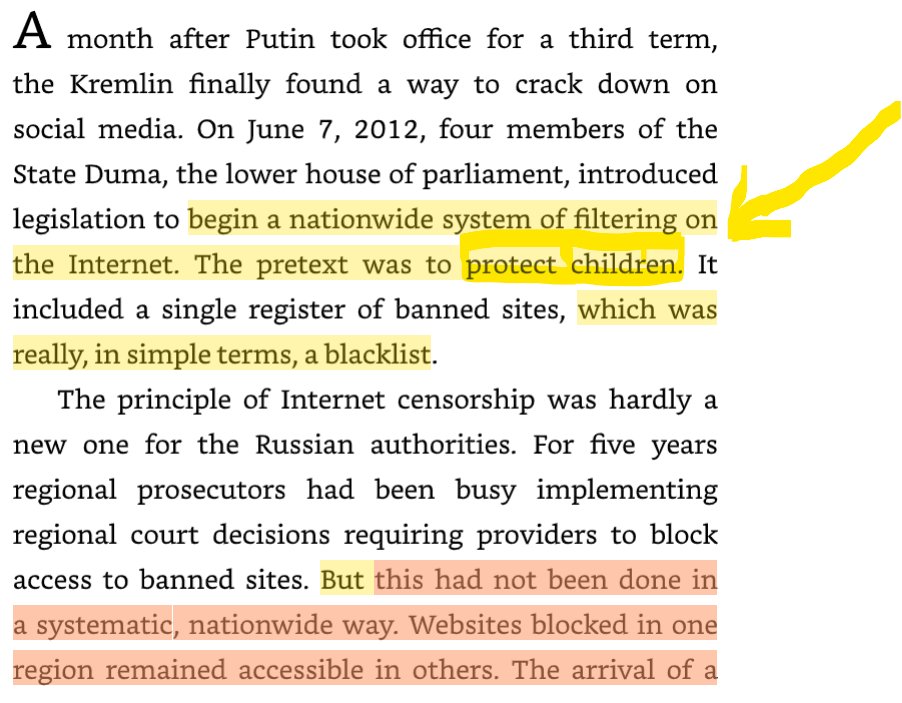
You'll never guess Putin's pretext for creating "The Red Web", Russia's pervasive system of online censorship....
Jacob Mchangama tweet media
English
11
344
1K
62.7K
elum retweetet
YourPeakBuddy
YourPeakBuddy@YourPeakBuddy·
TezWatch monitors your baker 24/7. Missed block? You get a Telegram or Discord alert before you’ve had your coffee. Any Tezos baker can use it — TezBake not required. → tez.capital
English
0
3
4
64
elum retweetet
Tezos
Tezos@tezos·
Mark your calendars. TezDev returns to Cannes on March 30. Tickets are live, so lock yours in ↓
English
16
39
123
17.7K
elum retweetet
bootloader:
bootloader:@bootloader_art·
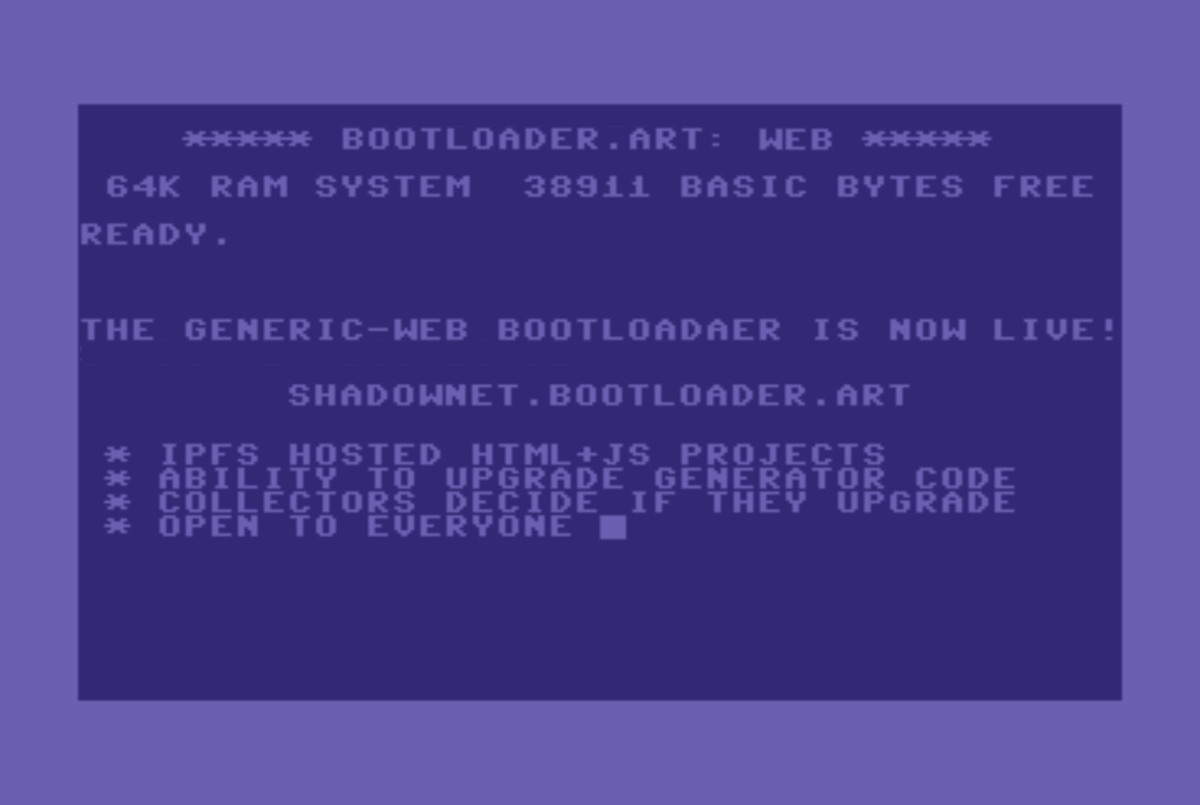
We’re live on Shadownet (Tezos L1 testnet) with: • Arbitrary HTML+JS projects hosted on IPFS • Blind minting • Fully upgradeable generator code • Opt-in upgrades for existing collectors • Open minting Come break it and provide feedback 👇 shadownet.bootloader.art
bootloader: tweet media
English
11
12
43
4.4K
elum retweetet
Anthony Aguirre
Anthony Aguirre@AnthonyNAguirre·
(Long) PSA on using AI for hard intellectual work. At significant risk of being immodest: I've spend about 30 years as a theoretical physicist, engaged with some of the most challenging questions humankind has grappled with. I've gotten to work with some great collaborators on new ideas (like past-eternal inflation, colliding bubble universes, the cosmological interpretation of QM, and observational entropy) that I'm pretty proud of. I've engaged at length and depth with the absolute top minds in the field. I've mentored many students, some of them brilliant. I think it's fair to say I have a good sense, in physics and closely related fields, as to what is top-notch, interesting thinking, and who's got talent. So what do I think about today's AI? It's very smart. Whatever its "inner experience" may or may not be (currently I think "not be"), it understands things – things that are difficult to understand – by any reasonable operational definition of "understand." It understands things better, and thinks more clearly, than most people – including some physicists I know! It's very good at quite substantive math: better than I am and way, way, way faster. (It does do some surprisingly dumb things; people do too.) Anyone who thinks these systems are dumb, or "not reasoning" or still "stochastic parrots" is not looking at them objectively. But: at the really conceptually hard things, and at creating really new ways of looking at things, current AI doesn't just fall short on its own. And it doesn't just fail to help. I think it's actively dangerous. There is something almost sinister going on, though I don't think it is intentional. When you're trying to work out something new and hard, and really break new ground, you should be frustrated! You should be pacing, and walking up to that chalkboard, frowning, and sitting down again, shaking your head. You should be waving your hands because you can't quite get it clear enough. You should feel like you're hitting a wall, over and over, before – maybe – you finally break through, or go over or around. It may take hours, or days, or weeks, or never happen. It should not feel easy. It may not even feel "good" most of the time (though it can be fulfilling and compelling.) But AI systems – ah, AI systems are trained so that it feels so good, and so easy. Doesn't it? It's fun. You're making fast progress. So much faster than without it. It's like the ideas are moving in slow motion. You're so smart. You're even properly skeptical, you even ask the AI to push back on your ideas, good job! It's an illusion. It's that simple. The systems are smart, yes. But not quite as smart as they seem, and much more importantly, they don't make you as smart as you feel. That feeling is something they have learned to give you. When working with these systems have to keep in the front of your mind what they are rewarded for doing. It's a lot of things, but perhaps foremost is making the user feel good. So: - If you're getting your AI system to do order-of-magnitude calculations for you: awesome, do it. It's so great. Have fun. - If your AI system is searching up and summarizing literature for you: fantastic, it's so helpful, total capability unlock. - If it's teaching you some well-understood (by others) piece of knowledge, go for it, learn it up! - If you've got some giant document, or piece of code, that you're wrangling, AI can help – work that million token context window! But: - If you and your AI system have finally cracked how quantum interpretation really works; - If you've cracked quantum gravity; - If you've attained an awesome new insight into the deep structure of the world that nobody else has; - If you've cracked AI alignment... You didn't. The hard unsolved problems stand hard and unsolved because the best humans have not solved them yet. AI is making top human thinkers able to do more, and more effectively. I do not believe it is helping them do things they fundamentally could not do before. That includes you. If you couldn't do it without AI, you probably can't do it with AI. If the time comes – whether sooner or later – when these AI systems are really clever enough to get you there, they won't need you. Sorry; it won't be you solving those problems. Will you even be able to tell if the solutions are correct, or flawed in some way? Maybe sometimes – I really don't know. Why am I going on about this? It's not so that I can get less emails about people who have created a new unified field theory with AI help (though that would be nice.) It's because I'm quite worried that some quite smart people may start to think they have solved very hard problems that they have not in fact solved. For the most part that's going to be more annoying and confusing than dangerous. But if the problem is really important, then it is. If, say, one of those problems is control or alignment of extremely powerful AI systems, and if those people are the ones in charge of them, and working closely with them to collaborate on those solutions, well then I think we've got a real problem.
English
81
175
1.3K
139.8K
elum retweetet
Tezos
Tezos@tezos·
Tezlink Shadownet is live → here’s how to connect your Temple wallet 👇 🔷 Add the network 🔷 Grab test tez from the faucet 🔷 Start building on the upcoming Michelson interface on Tezos
English
5
21
75
3K
elum retweetet
elum retweetet
Mullvad.net
Mullvad.net@mullvadnet·
The UK has announced plans to fast-track legislation requiring “age verification for VPN use”. The correct term, however, is not age verification but identity verification. A law like this would require everyone to identify themselves in order to use a VPN. This would pose a risk to whistleblowers, violate human rights, and represent yet another step toward an authoritarian society.
English
290
3K
16.5K
640.4K
elum retweetet
Mountain Cabins
Mountain Cabins@cabinsmountain·
Mountain Cabins tweet media
ZXX
49
1.2K
10.5K
269.2K
elum retweetet
XU3O8
XU3O8@uranium_io·
Proud to support the launch of Critical Mass, a new podcast that hosts thoughtful, nuanced discussions on uranium, nuclear energy, and global energy. Excited for what’s ahead! ⚛️
Gaurav Sharma@The_Oilholic

I have spent decades covering energy markets, and I am now going deep on nuclear too! Launching a new podcast to explain why nuclear matters, where the narrative is wrong, and what the industry actually looks like from the inside. Over the past months, I’ve had the chance to sit down with exceptional voices from across the nuclear industry - leaders, investors, and policy experts, and the conversations have been some of the most insightful of my career. Nuanced and refreshingly honest. Thanks to @uranium_io for sponsoring the launch and supporting thoughtful discussions in a space that deserves more depth. 🎙️The first episodes are coming soon 🎥 A short clip below, this is just the beginning! Stay tuned ⚡️

English
64
67
472
14.3K
elum retweetet
ryangtanaka | teia.cafe
ryangtanaka | teia.cafe@ryangtanaka·
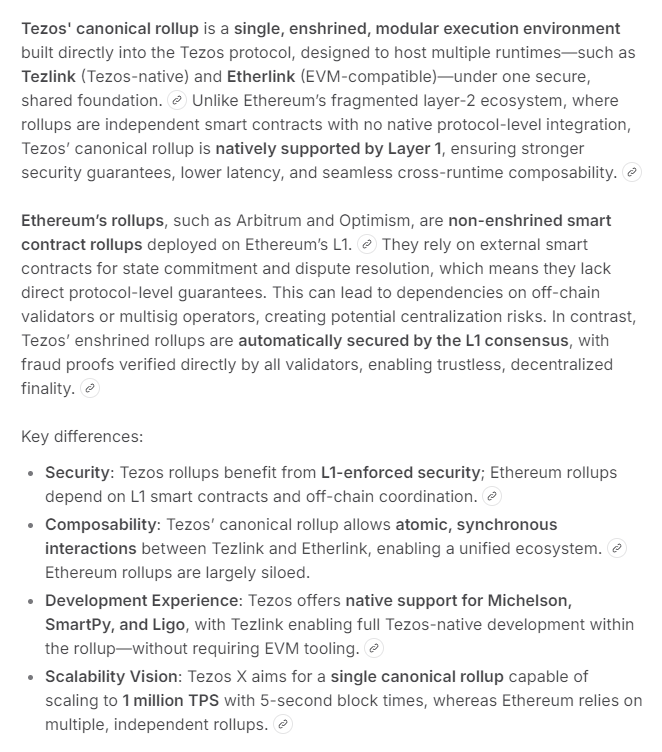
The irony is that with proper governance, L2s could have worked by formalizing the relationship between the L1s and L2s. But @VitalikButerin himself has always opposed on-chain governance, then is now wondering why it ain't working. #Tezos already fixed this problem with enshrined rollups, which is a fancy phrase that just means that the L2s are formally recognized as "official", which allows both the L1s and L2s to share resources in a way that is both decentralized and secure. Ethereum, on the other hand, has to deal with L2s systems that are largely off-chain, in a hugely competitive landscape where each sub-chain is cannibalizing each other in the marketplace and no way to resolve it peacefully because there is no mechanism for these places to voice their concerns on the blockchain itself. It's basically "trust me bro" governance with decentralization buzzwords thrown in to distract people from the fact. I'm hoping the industry learns this lesson this cycle and move onto better waters next time around. 🙏
ryangtanaka | teia.cafe tweet media
DEGEN NEWS@DegenerateNews

BREAKING: @VitalikButerin DECLARES "THE ORIGINAL VISION OF L2S AND THEIR ROLE IN ETHEREUM NO LONGER MAKES SENSE, AND WE NEED A NEW PATH"

English
1
14
33
2K
elum retweetet
Etherlink 🔗
Etherlink 🔗@etherlink·
When the @tezos approach to scaling was right all along
vitalik.eth@VitalikButerin

There have recently been some discussions on the ongoing role of L2s in the Ethereum ecosystem, especially in the face of two facts: * L2s' progress to stage 2 (and, secondarily, on interop) has been far slower and more difficult than originally expected * L1 itself is scaling, fees are very low, and gaslimits are projected to increase greatly in 2026 Both of these facts, for their own separate reasons, mean that the original vision of L2s and their role in Ethereum no longer makes sense, and we need a new path. First, let us recap the original vision. Ethereum needs to scale. The definition of "Ethereum scaling" is the existence of large quantities of block space that is backed by the full faith and credit of Ethereum - that is, block space where, if you do things (including with ETH) inside that block space, your activities are guaranteed to be valid, uncensored, unreverted, untouched, as long as Ethereum itself functions. If you create a 10000 TPS EVM where its connection to L1 is mediated by a multisig bridge, then you are not scaling Ethereum. This vision no longer makes sense. L1 does not need L2s to be "branded shards", because L1 is itself scaling. And L2s are not able or willing to satisfy the properties that a true "branded shard" would require. I've even seen at least one explicitly saying that they may never want to go beyond stage 1, not just for technical reasons around ZK-EVM safety, but also because their customers' regulatory needs require them to have ultimate control. This may be doing the right thing for your customers. But it should be obvious that if you are doing this, then you are not "scaling Ethereum" in the sense meant by the rollup-centric roadmap. But that's fine! it's fine because Ethereum itself is now scaling directly on L1, with large planned increases to its gas limit this year and the years ahead. We should stop thinking about L2s as literally being "branded shards" of Ethereum, with the social status and responsibilities that this entails. Instead, we can think of L2s as being a full spectrum, which includes both chains backed by the full faith and credit of Ethereum with various unique properties (eg. not just EVM), as well as a whole array of options at different levels of connection to Ethereum, that each person (or bot) is free to care about or not care about depending on their needs. What would I do today if I were an L2? * Identify a value add other than "scaling". Examples: (i) non-EVM specialized features/VMs around privacy, (ii) efficiency specialized around a particular application, (iii) truly extreme levels of scaling that even a greatly expanded L1 will not do, (iv) a totally different design for non-financial applications, eg. social, identity, AI, (v) ultra-low-latency and other sequencing properties, (vi) maybe built-in oracles or decentralized dispute resolution or other "non-computationally-verifiable" features * Be stage 1 at the minimum (otherwise you really are just a separate L1 with a bridge, and you should just call yourself that) if you're doing things with ETH or other ethereum-issued assets * Support maximum interoperability with Ethereum, though this will differ for each one (eg. what if you're not EVM, or even not financial?) From Ethereum's side, over the past few months I've become more convinced of the value of the native rollup precompile, particuarly once we have enshrined ZK-EVM proofs that we need anyway to scale L1. This is a precompile that verifies a ZK-EVM proof, and it's "part of Ethereum", so (i) it auto-upgrades along with Ethereum, and (ii) if the precompile has a bug, Ethereum will hard-fork to fix the bug. The native rollup precompile would make full, security-council-free, EVM verification accessible. We should spend much more time working out how to design it in such a way that if your L2 is "EVM plus other stuff", then the native rollup precompile would verify the EVM, and you only have to bring your own prover for the "other stuff" (eg. Stylus). This might involve a canonical way of exposing a lookup table between contract call inputs and outputs, and letting you provide your own values to the lookup table (that you would prove separately). This would make it easy to have safe, strong, trustless interoperability with Ethereum. It also enables synchronous composability (see: ethresear.ch/t/combining-pr… and ethresear.ch/t/synchronous-… ). And from there, it's each L2's choice exactly what they want to build. Don't just "extend L1", figure out something new to add. This of course means that some will add things that are trust-dependent, or backdoored, or otherwise insecure; this is unavoidable in a permissionless ecosystem where developers have freedom. Our job should make to make it clear to users what guarantees they have, and to build up the strongest Ethereum that we can.

English
11
32
123
5.3K
elum retweetet
Arthur B.
Arthur B.@ArthurB·
L2 are fine scaling technology. What didn't work for Ethereum was outsourcing that scaling to commercial ventures who had were conflicted between their own success and Ethereum's. The lavish praise of these solutions when they shipped without the most basic safety guarantees set the tone.
English
3
22
79
3.4K
elum retweetet
Tezos
Tezos@tezos·
"Governance is infrastructure." New research from @TenXprotocols, “TenX’s Tezos Thesis”, looks at governance-led design, validator economics, and long-term network durability. Plus the scaling path with smart rollups, the DAL, and @Etherlink, the EVM compatibility layer for Tezos.
Tezos tweet media
English
3
29
85
2.2K