Jay Paul

1K posts

Jay Paul banner
Jay Paul

Jay Paul

@jaypaul

Crypto Research & DeFi-Native Capital Allocation || Managing Partner @TriplePointStr || Personal views, not investment advice.

United States Beigetreten Mayıs 2022
190 Folgt175 Follower
Jay Paul retweetet
Stani
Stani@StaniKulechov·
We respect the decision of Chaos Labs to step down as one of the two risk managers for the Aave DAO. We want to thank Chaos Labs for their work over the years. They have been a valuable partner to the Aave DAO, and their contributions have helped Aave grow and mature. There is no disruption to the Aave Protocol, its smart contracts, asset listings, or network deployments, and we will work closely with Chaos Labs during the offboarding process. Aave operates with a two-layer economic risk model that has been managed by Chaos Labs and LlamaRisk. While this model does create tension between risk managers from time to time, we believe it has been valuable in safeguarding Aave. We strongly support maintaining a two-layer approach and will continue supporting this model, alongside an additional technical risk layer managed by Aave Labs. Over the past weeks, we held discussions with the Chaos team regarding next steps, as Chaos was exploring winding down its risk consultancy services business (and had already begun winding down some agreements with other protocols). We were generally supportive of a 2× increase in their risk management payment to $5M, but not supportive of $8M without a separate addendum at a later stage if the workload proved higher than anticipated. What we did not support were other elements of the proposal, including setting Chaos Labs as the sole risk manager and using Chaos Labs price oracles instead of Chainlink on all new deployments, as well as adopting Chaos Labs vaults as the default vaults (which are not yet audited) for all B2B integrations. While we do not see issues with these Chaos products or their future viability, we strongly believe that, given the scale of the Aave protocol, it should maintain at least a two-layer risk management model and vendor lock-in free vaults. Additionally, given the strong track record with Chainlink, we prefer to continue supporting Chainlink for price oracles, which our users are currently more comfortable with at scale. Regarding Aave V4, the architecture introduces isolated risk markets through Spokes, new liquidation logic, and governance-controlled parameters that give the DAO more granular control over how it manages risk across different markets and assets. We held multiple risk calls with Chaos Labs employees in attendance well before V4 went live, and the feedback we received during those sessions does not align with the concerns expressed in their post. For the immediate future, Aave Labs will work closely with LlamaRisk to ensure a smooth transition and uninterrupted risk coverage for the protocol. LlamaRisk already serves as a risk contributor to the Aave DAO and has deep familiarity with the protocol’s architecture and parameters. We support LlamaRisk increasing their budget to accommodate this additional workload and expanding their team as needed. Aave Labs will also contribute engineering and analytical resources wherever necessary to support this transition. We also want to thank the entire Chaos Labs team for their contributions over the years, as they have helped bring the protocol we built into its current level of maturity.
English
54
66
620
136K
Jay Paul
Jay Paul@jaypaul·
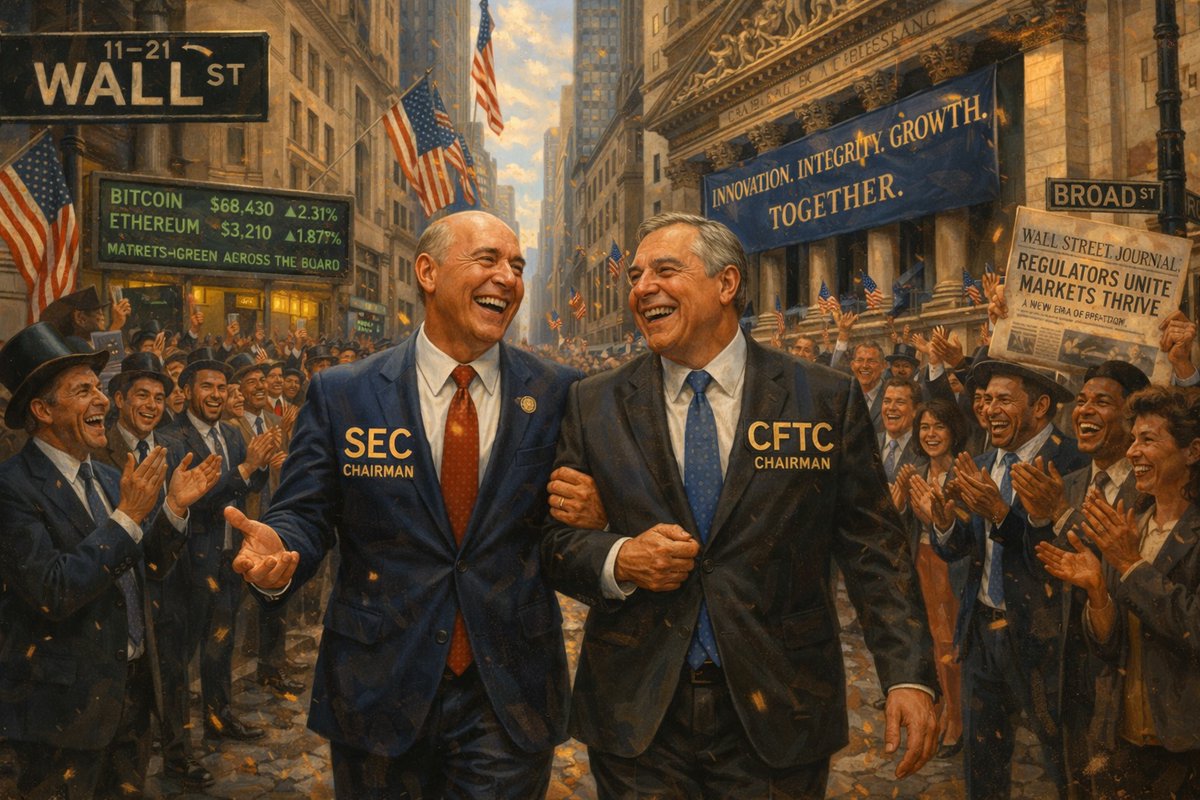
For over a decade, the biggest regulatory question in crypto has been: who oversees what? In March, we finally got an answer. The @SECGov and @CFTC issued joint guidance that classifies digital assets into five categories with clear jurisdictional boundaries. That alone would have made March noteworthy. But the month also brought a new payments blockchain from @stripe and @paradigm and a @Google research paper that puts Bitcoin's quantum vulnerability as close as 2029. Our Crypto Market Recap for March 2026 walks through all three stories and shares our perspective on what comes next. Read the full recap: triplepointstrategy.com/insights/mar-2… Get future recaps in your inbox: triplepointstrategy.com/subscribe
Jay Paul tweet media
English
0
0
0
8
Jay Paul retweetet
Diana
Diana@InvestWithD·
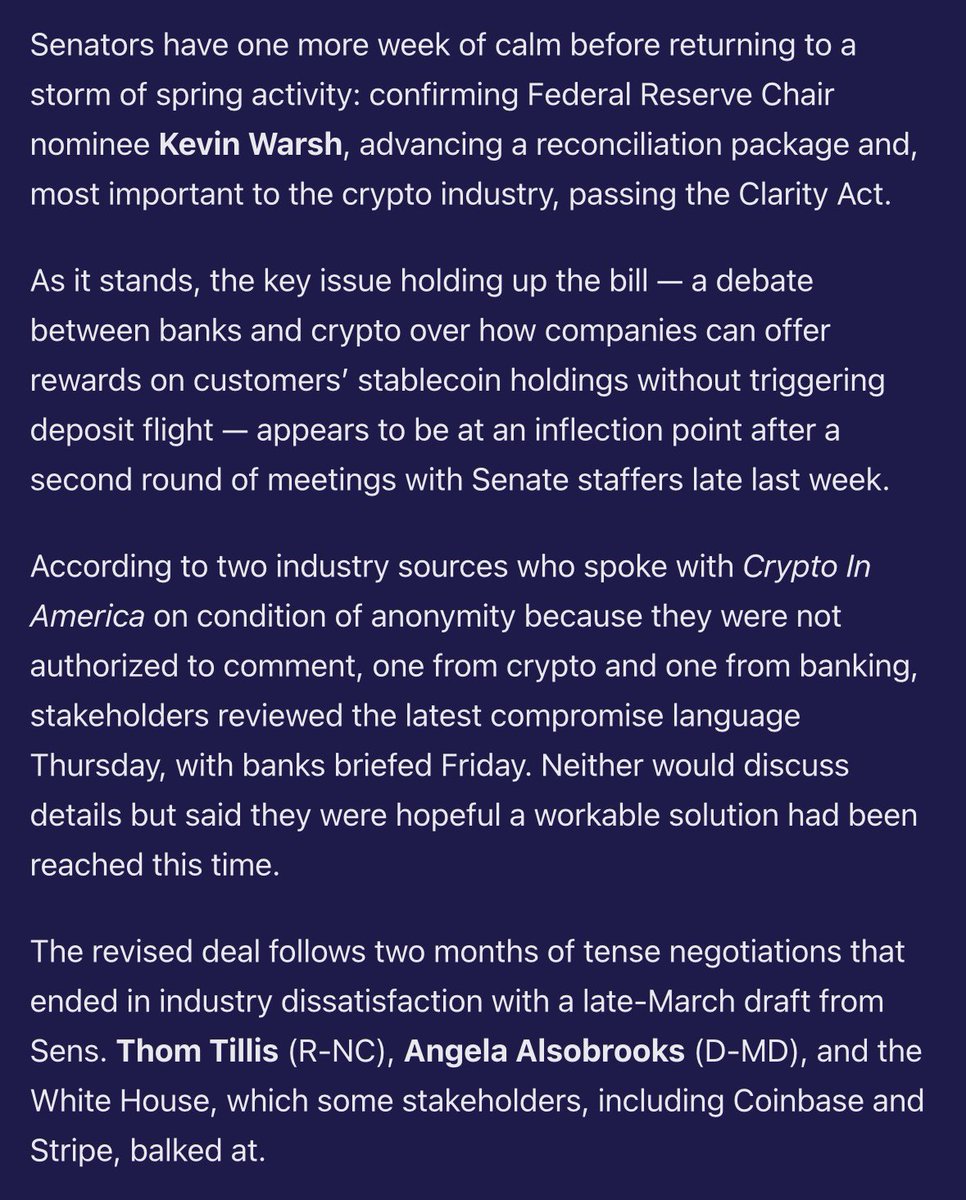
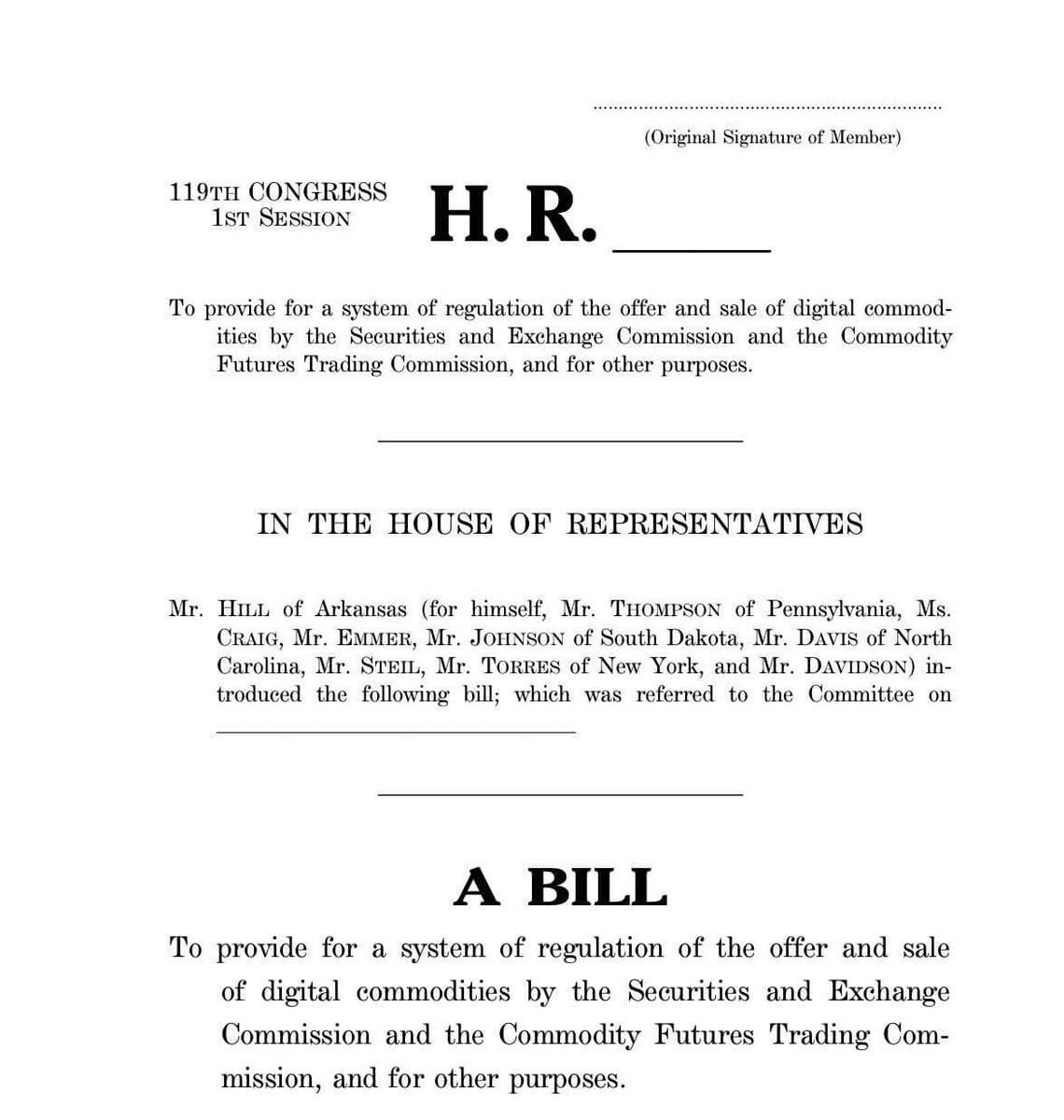
🚨UPDATE: CLARITY Act Markup Expected SECOND HALF OF APRIL — Sources Say Deal Was FINALIZED ON FRIDAY 🤯🔥 After weeks of delays, negotiations around the CLARITY Act may have just reached a BREAKTHROUGH. 👀 According to industry sources, a new CLARITY Act compromise version was REVIEWED Thursday and FINALIZED ON FRIDAY between crypto firms, banks, and policymakers. 😳 The MAIN issue holding everything back was: 👉 whether stablecoins can offer rewards / yield 👉 without triggering deposit flight from banks Now sources say that debate may FINALLY be resolved. 🤯 Turns out when @Coinbase CLO @iampaulgrewal gave a 48 hours deadline, it may have been TRUE. 😵 Senate Banking Committee (@BankingGOP) has NOT released details yet. Markup is expected in the LAST 2 WEEKS of APRIL. ✅ More to come. I'll keep updating.
Diana tweet mediaDiana tweet media
Diana@InvestWithD

x.com/i/article/2037…

English
42
201
847
110.8K
Jay Paul retweetet
Token Terminal 📊
Token Terminal 📊@tokenterminal·
Ethereum is the #1 chain in terms of application TVL, stablecoin supply, and tokenized RWA market cap. Now the network is catching up also in terms of performance. The cost to transact on @ethereum is at an all-time low, while the onchain activity is at an all-time high.
Token Terminal 📊 tweet media
English
13
22
119
6.3K
Jay Paul retweetet
Google
Google@Google·
We just released Gemma 4 — our most intelligent open models to date. Built from the same world-class research as Gemini 3, Gemma 4 brings breakthrough intelligence directly to your own hardware for advanced reasoning and agentic workflows. Released under a commercially permissive Apache 2.0 license so anyone can build powerful AI tools. 🧵↓
English
684
3.1K
20.3K
7.2M
Jay Paul retweetet
Etherealize
Etherealize@Etherealize_io·
Coinbase Institutional Research: "ETH is increasingly being moved into low-turnover ownership buckets"
Etherealize tweet media
English
11
41
341
12.1K
Jay Paul retweetet
Drift
Drift@DriftProtocol·
Drift Protocol is experiencing an active attack. Deposits and withdrawals have been suspended. We are coordinating with multiple security firms, bridges, and exchanges to contain the incident. This is not an April Fools joke. We’ll provide additional updates from this account as more information is available to share.
Drift@DriftProtocol

We are observing unusual activity on the protocol. We are currently investigating. Please do not deposit funds into the protocol while we investigate. This is not an April Fools joke. Proceed with caution until further notice. We’ll provide additional updates from this account.

English
550
243
1.3K
835.7K
Jay Paul retweetet
Watcher.Guru
Watcher.Guru@WatcherGuru·
JUST IN: Elon Musk's SpaceX confidentially files for IPO, Bloomberg reports.
Watcher.Guru tweet mediaWatcher.Guru tweet media
English
336
453
4.8K
308K
Jay Paul
Jay Paul@jaypaul·
4/ The Alt-L1 narrative is a fundraising wrapper. The roadmap was always L2.
English
0
0
0
11
Jay Paul
Jay Paul@jaypaul·
3/ Once the project is funded and the token is live, the plan is to pivot back to L2 after a year or so. The L2 ecosystem is still a strong long-term bet… but good luck making that case to short-sighted investors given the recent price action of L2 tokens.
English
1
0
0
17
Jay Paul
Jay Paul@jaypaul·
1/ Conspiracy theory. VCs know that an EVM-compatible Alt-L1 can’t compete with Ethereum. But their LPs don’t know that.
English
1
0
0
20
Jay Paul retweetet
Zack Voell
Zack Voell@zackvoell·
“Past a certain age, a man who has a deep understanding of the Ethereum roadmap can be a bad thing.”
Zack Voell tweet media
English
19
48
995
33.9K
Jay Paul
Jay Paul@jaypaul·
Ethereum will be ready for Q-Day. Will your bank be ready?
English
0
0
0
27
Jay Paul retweetet
Rand Group
Rand Group@cryptorand·
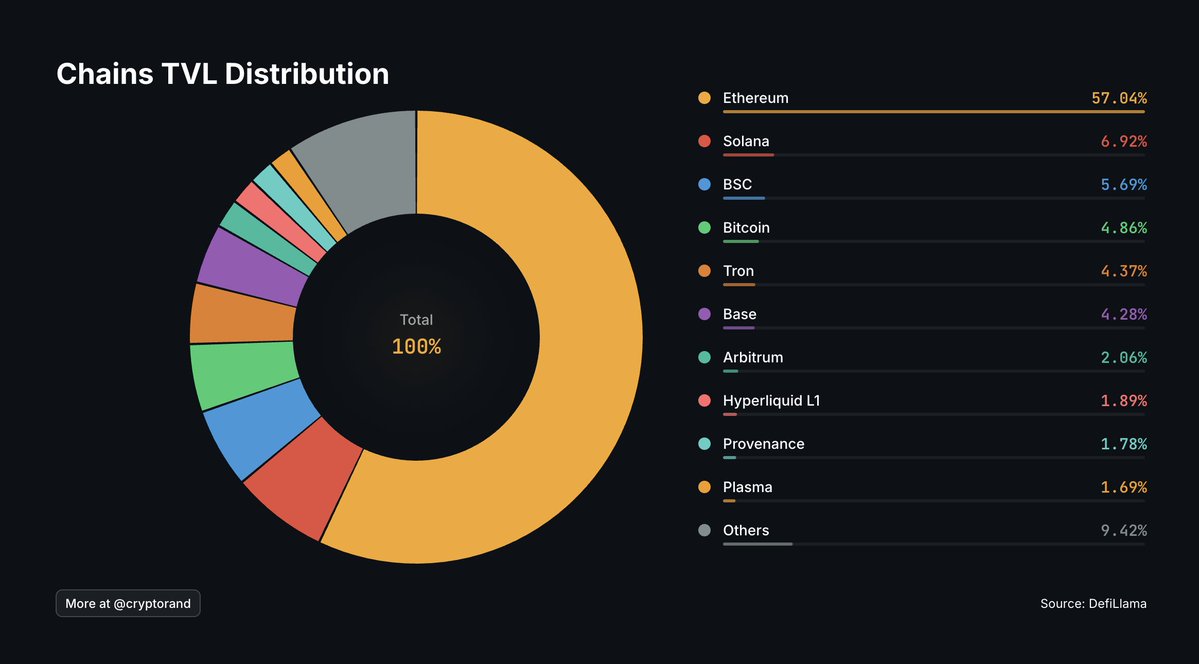
4 years of ETH killer discourse. Hundreds of L1 launches. Billions in VC funding. Ethereum went from ~60% TVL dominance to… 57%
Rand Group tweet media
English
24
48
298
26.3K
Jay Paul
Jay Paul@jaypaul·
Quantum computers are the White Walkers of crypto.
English
0
0
0
20
Jay Paul retweetet
Justin Drake
Justin Drake@drakefjustin·
Today is a monumentous day for quantum computing and cryptography. Two breakthrough papers just landed (links in next tweet). Both papers improve Shor's algorithm, infamous for cracking RSA and elliptic curve cryptography. The two results compound, optimising separate layers of the quantum stack. The results are shocking. I expect a narrative shift and a further R&D boost toward post-quantum cryptography. The first paper is by Google Quantum AI. They tackle the (logical) Shor algorithm, tailoring it to crack Bitcoin and Ethereum signatures. The algorithm runs on ~1K logical qubits for the 256-bit elliptic curve secp256k1. Due to the low circuit depth, a fast superconducting computer would recover private keys in minutes. I'm grateful to have joined as a late paper co-author, in large part for the chance to interact with experts and the alpha gleaned from internal discussions. The second paper is by a stealthy startup called Oratomic, with ex-Google and prominent Caltech faculty. Their starting point is Google's improvements to the logical quantum circuit. They then apply improvements at the physical layer, with tricks specific to neutral atom quantum computers. The result estimates that 26,000 atomic qubits are sufficient to break 256-bit elliptic curve signatures. This would be roughly a 40x improvement in physical qubit count over previous state-of-the-art. On the flip side, a single Shor run would take ~10 days due to the relatively slow speed of neutral atoms. Below are my key takeaways. As a disclaimer, I am not a quantum expert. Time is needed for the results to be properly vetted. Based on my interactions with the team, I have faith the Google Quantum AI results are conservative. The Oratomic paper is much harder for me to assess, especially because of the use of more exotic qLDPC codes. I will take it with a grain of salt until the dust settles. → q-day: My confidence in q-day by 2032 has shot up significantly. IMO there's at least a 10% chance that by 2032 a quantum computer recovers a secp256k1 ECDSA private key from an exposed public key. While a cryptographically-relevant quantum computer (CRQC) before 2030 still feels unlikely, now is undoubtedly the time to start preparing. → censorship: The Google paper uses a zero-knowledge (ZK) proof to demonstrate the algorithm's existence without leaking actual optimisations. From now on, assume state-of-the-art algorithms will be censored. There may be self-censorship for moral or commercial reasons, or because of government pressure. A blackout in academic publications would be a tell-tale sign. → cracking time: A superconducting quantum computer, the type Google is building, could crack keys in minutes. This is because the optimised quantum circuit is just 100M Toffoli gates, which is surprisingly shallow. (Toffoli gates are hard because they require production of so-called "magic states".) Toffoli gates would consume ~10 microseconds on a superconducting platform, totalling ~1,000 sec of Shor runtime. → latency optimisations: Two latency optimisations bring key cracking time to single-digit minutes. The first parallelises computation across quantum devices. The second involves feeding the pubkey to the quantum computer mid-flight, after a generic setup phase. → fast- and slow-clock: At first approximation there are two families of quantum computers. The fast-clock flavour, which includes superconducting and photonic architectures, runs at roughly 100 kHz. The slow-clock flavour, which includes trapped ion and neutral atom architectures, runs roughly 1,000x slower (~100 Hz, or ~1 week to crack a single key). → qubit count: The size-optimised variant of the algorithm runs on 1,200 logical qubits. On a superconducting computer with surface code error correction that's roughly 500K physical qubits, a 400:1 physical-to-logical ratio. The surface code is conservative, assuming only four-way nearest-neighbour grid connectivity. It was demonstrated last year by Google on a real quantum computer. → future gains: Low-hanging fruit is still being picked, with at least one of the Google optimisations resulting from a surprisingly simple observation. Interestingly, AI was not (yet!) tasked to find optimisations. This was also the first time authors such as Craig Gidney attacked elliptic curves (as opposed to RSA). Shor logical qubit count could plausibly go under 1K soonish. → error correction: The physical-to-logical ratio for superconducting computers could go under 100:1. For superconducting computers that would be mean ~100K physical qubits for a CRQC, two orders of magnitude away from state of the art. Neutral atoms quantum computers are amenable to error correcting codes other than the surface code. While much slower to run, they can bring down the physical to logical qubit ratio closer to 10:1. → Bitcoin PoW: Commercially-viable Bitcoin PoW via Grover's algorithm is not happening any time soon. We're talking decades, possibly centuries away. This observation should help focus the discussion on ECDSA and Schnorr. (Side note: as unofficial Bitcoin security researcher, I still believe Bitcoin PoW is cooked due to the dwindling security budget.) → team quality: The folks at Google Quantum AI are the real deal. Craig Gidney (@CraigGidney) is arguably the world's top quantum circuit optimisooor. Just last year he squeezed 10x out of Shor for RSA, bringing the physical qubit count down from 10M to 1M. Special thanks to the Google team for patiently answering all my newb questions with detailed, fact-based answers. I was expecting some hype, but found none.
English
328
1.2K
5.8K
1.5M