Jay Kahn

1.9K posts

Jay Kahn banner
Jay Kahn

Jay Kahn

@jstatistic

Economist covering repo, Treasuries, money markets—markets that work quietly but fail loudly. Views my own.

Washington, DC Beigetreten Ekim 2014
335 Folgt2.2K Follower
Jay Kahn
Jay Kahn@jstatistic·
Great discussion between Bill Nelson and @DavidBeckworth on balance sheet design (with a kind mention from Nelson of our trilemma note).
Macro Musings@Macro_Musings

New episode! Bill Nelson on the Current Predicament with the Fed’s Balance Sheet Watch Bill and @DavidBeckworth discuss Bill’s infamous email list, the ratchet effect from QE, Bill’s congressional testimony, the BPI’s Bank Treasurers Survey, how they think the Fed should shrink the balance sheet, whether the Fed is profitable, and much more.

English
0
1
6
868
Jay Kahn
Jay Kahn@jstatistic·
@aRishisays Even if you could replicate Bloomberg's data access and were starting fresh, why would you replicate a 1990s keyboard-driven UI???
English
1
0
4
556
Rishi Mishra
Rishi Mishra@aRishisays·
So tired of this! Perplexity isn’t going head to head with Bloomberg! What these larpers don’t know is that not every trader has or even needs access to a Bloomberg Terminal! Many people use Refintiv and other platforms which are much, much cheaper! So if anything, that’s your first line of competition. Not Bloomberg. Also, equity traders may not understand this but there’s a world outside of Nvidia! There are so many markets where you need OTC quoted from Dealers. You expect to fetch that from Yahoo Finance and Fred? Any platform, to be useful, needs to provide seamless access to data first, and then the ability to manipulate or visualize the data using charts or dashboards, feed into your algorithms, and then trades. And once you have all that, you’re competing with Refiniv, assuming they don’t improve their offerings significantly by then! But even assuming this can be done, it still won’t matter because of what truly stands Bloomberg apart - Network Effects! So, no matter how many retail traders use Perplexity to create tools to analyze Nvidia earnings, it will never be a threat to Bloomberg. Only when the largest players start using it, especially for the non-listed stuff, can it become a serious competitor. Until I can find everyone I need on the messenger of that platform, I can’t do away with Bloomberg. As much as I’d like Bloomberg to feel threatened - so that they improve some of their stuff - it’s under no threat, because they know they are not competing on price!
ₕₐₘₚₜₒₙ@hamptonism

Perplexity just became the the first Al company to truly go head-to-head with the Bloomberg Terminal... Using Perplexity Computer (with no local setup or single LLM limitation), it was able to build me a terminal with real-time data to analyze $NVDA using Perplexity Finance:

English
11
4
104
40.1K
Jay Kahn
Jay Kahn@jstatistic·
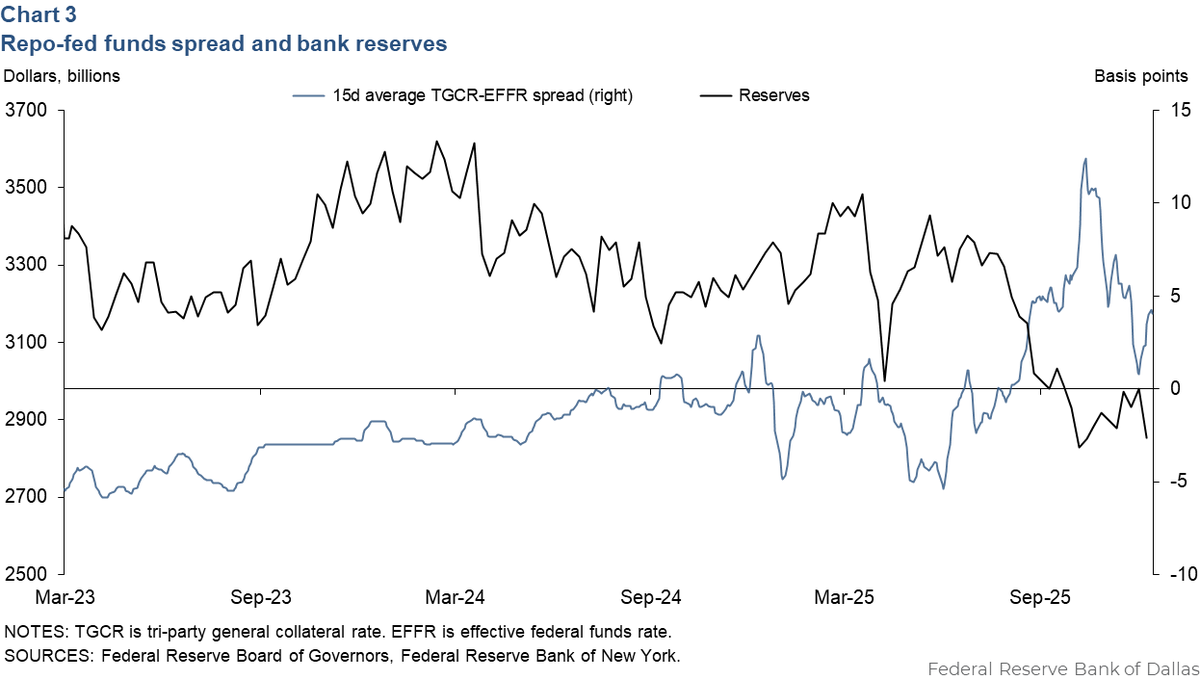
Why are repo liquidity and interbank liquidity so disconnected? Rosie Levy and Matt McCormick have a great new article at the Dallas Fed 👇
Jay Kahn tweet media
English
2
2
9
1K
Jay Kahn
Jay Kahn@jstatistic·
I get a lot out of talking to market participants. But equilibrium is the core thing economics brings to the table: for every seller, there has to be a buyer. Everything else is just tools built around that insight.
English
0
0
2
200
Jay Kahn
Jay Kahn@jstatistic·
You can roll your eyes at “equilibrium” all you want, but I distinctly remeber asking a senior trader why there was no liquidity and he said: “Because nobody is buying.” Stupid question on my part—why would he know?—but also the point. Somebody has to think about equilibrium.
English
1
0
4
339
Jay Kahn retweetet
Jay Kahn
Jay Kahn@jstatistic·
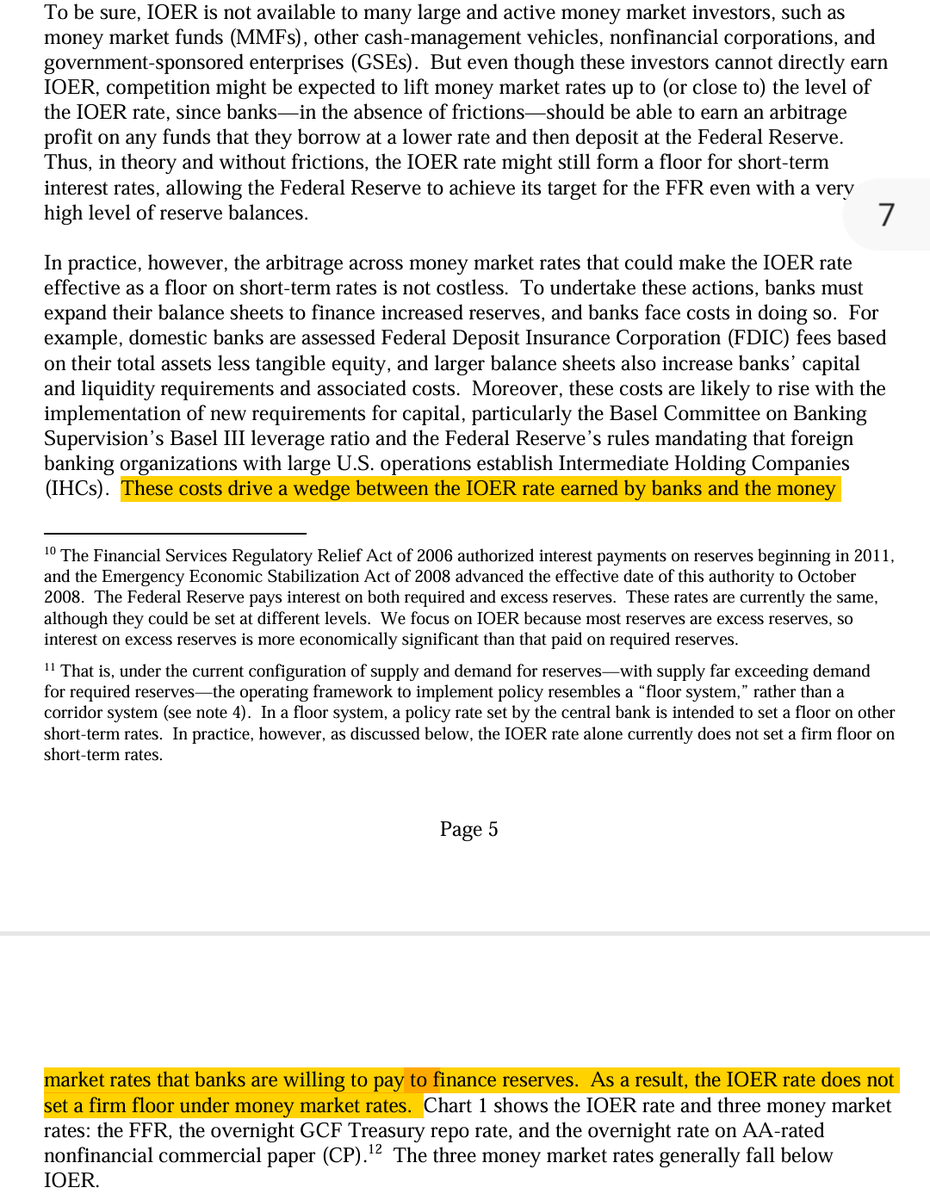
No one really knows how big the U.S. repo market is. Or rather, no one 𝑑𝑖𝑑. We combed through the appendixes to a decade of annual reports for over 150 dealers and banks to get the full picture. The total? $12 trillion, almost doubling previous estimates.
Jay Kahn tweet media
English
12
105
366
83.4K
Jay Kahn
Jay Kahn@jstatistic·
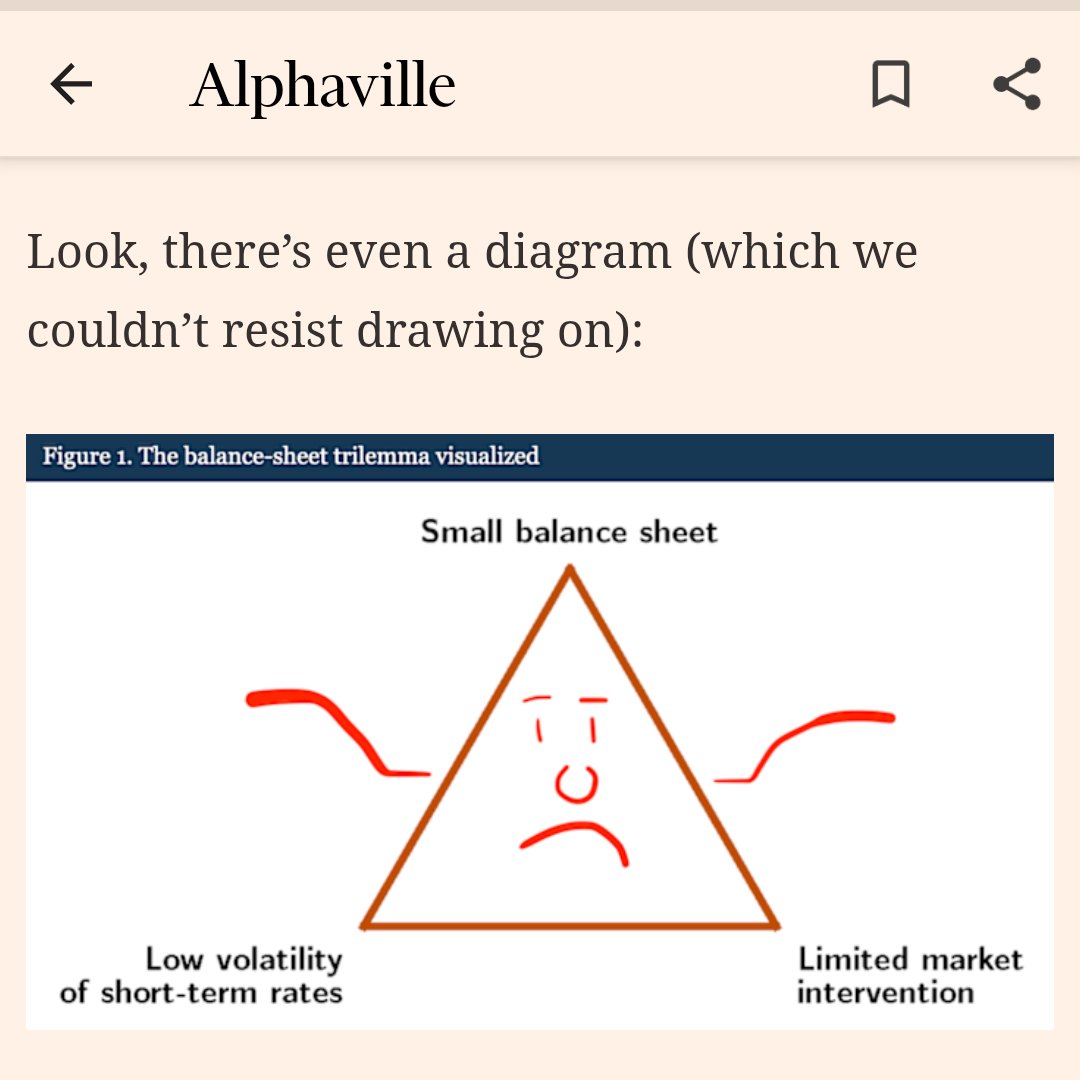
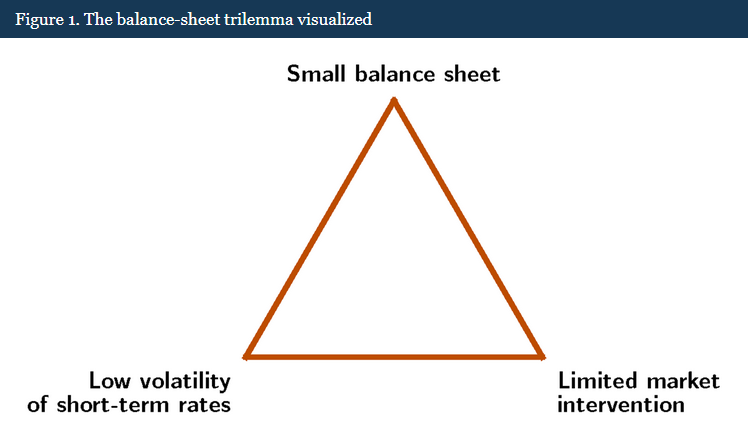
Our latest FEDS Note offers a new lens for focusing on the tradeoffs involved in setting the size of central bank balance sheets: The central bank balance-sheet trilemma
Jay Kahn tweet media
English
1
6
27
7.5K
Jay Kahn
Jay Kahn@jstatistic·
@tylermacro10 @BlacklionCTA I think of IORB as an anchor, with RRP forming more of a (somewhat porous) floor now, but it depends which market you're looking at. We've seen money market rates both above and below IORB in quite recent memory.
English
0
0
0
16
Jay Kahn retweetet
Bloomberg
Bloomberg@business·
The Federal Reserve has to grapple with the question of how big its balance sheet should be after it stopped shrinking its $6.5 trillion portfolio, according to economists at the central bank bloomberg.com/news/articles/…
English
1
8
12
12.2K
Jay Kahn
Jay Kahn@jstatistic·
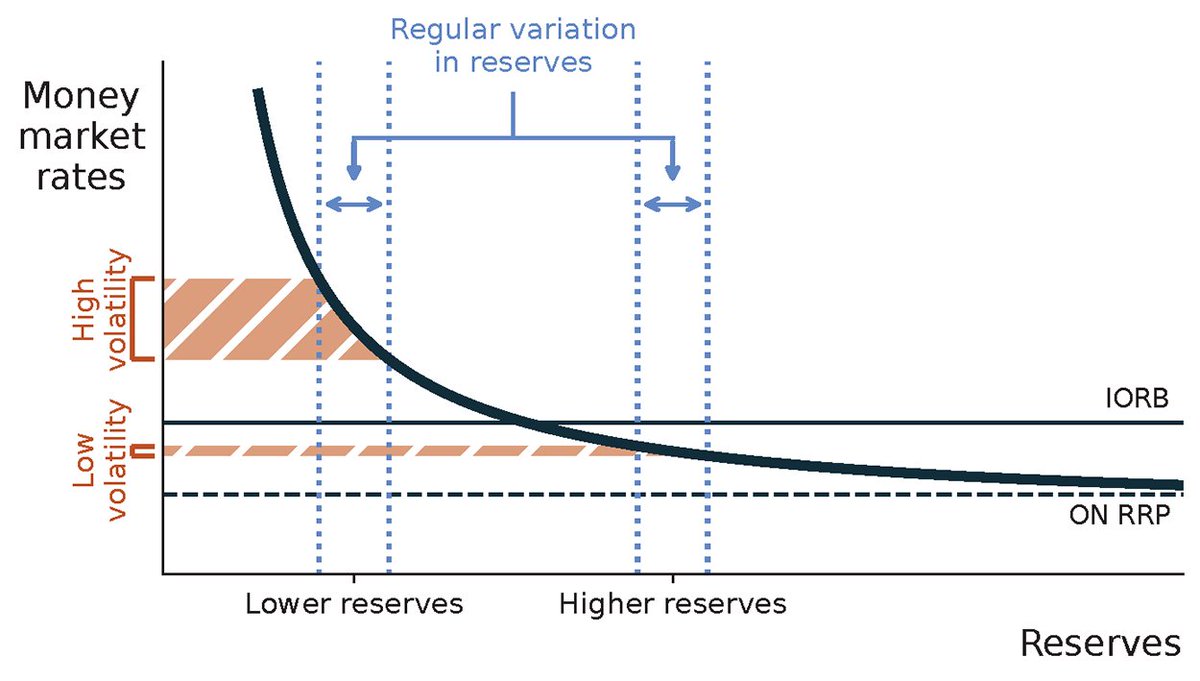
The trilemma arises because, with a small balance sheet and lower levels of reserves, rates become sensitive to small shifts in demand. A small balance sheet requires choosing between volatility in interest rates or more frequent operations to offset these regular shifts.
Jay Kahn tweet media
English
3
3
12
2.4K