Gonzalo Schettini

3.7K posts

Gonzalo Schettini banner
Gonzalo Schettini

Gonzalo Schettini

@lic_schettini

🇺🇾 Politólogo | Mag. en Com. & Marketing • Democracia republicana y liberal • Contra toda forma de autoritarismo

Montevideo Beigetreten Ekim 2013
546 Folgt719 Follower
Oscar N. Ventura
Oscar N. Ventura@ONVentura·
Un artículo largo, pero importante. Si no lo leen se van a quedar sin saber qué es el efecto Zeigarnik, que es justamente la razón por la cual no van a poder dejar de leerlo.
Ihtesham Ali@ihtesham2005

A Soviet psychologist walked into a café in 1927 and watched a waiter do something impossible. He remembered every open order at every table. Perfectly. Without notes. Without effort. Then a table paid their bill. She asked him to repeat the order. He couldn't remember a single item. She spent the next two years figuring out why. What she found is now the operating system underneath every platform fighting for your attention. Her name was Bluma Zeigarnik, and she was a graduate student at the time, sitting with her professor Kurt Lewin, watching the waiters work the room. What caught her attention was something so ordinary that it had been happening in restaurants for centuries without anyone asking why. The waiters could remember every open order with perfect accuracy. Table four wanted the schnitzel with no sauce. Table seven had changed their wine twice. Table twelve owed for three coffees and a dessert. Every detail, held without effort, without notes, without any visible system at all. But the moment a table paid their bill, the information vanished. Completely. Lewin tested it on the spot. He called a waiter back minutes after a table had settled up and asked him to recite the order. The waiter could not do it. Not partially. Not approximately. The information was simply gone. Zeigarnik went back to her lab and spent the next two years turning that observation into one of the most replicated findings in the history of psychology. Here is what she proved, and why it changes how you think about attention, memory, and almost every piece of media you have ever consumed. She gave participants a series of tasks. Some tasks they were allowed to finish. Others were interrupted before completion. Then she tested recall across both groups. The unfinished tasks were remembered at nearly twice the rate of the completed ones. Not slightly better. Nearly twice. The brain was holding the incomplete work in a state of active tension, returning to it, keeping it warm, refusing to file it away. The finished tasks were closed, archived, released. The unfinished ones were still running. She called it the resumption goal. When the brain commits to a task and cannot complete it, it opens a file that stays open until resolution arrives. That open file consumes a portion of your cognitive bandwidth whether you are thinking about it consciously or not. It surfaces in idle moments. It pulls at the edge of your attention during other work. It is the thing you find yourself thinking about in the shower when you were not trying to think about anything at all. This is not a flaw in human cognition. It is a feature. The brain evolved to finish things. An open loop is a signal that something important is unresolved. Keeping that signal active increases the probability that you will return to it and complete it. In an environment where most tasks had real survival stakes, this was an extraordinarily useful mechanism. In the modern world, it is the most exploited vulnerability in human attention. Netflix did not invent the cliffhanger. But it industrialized it in a way no medium before it ever had. When a show ends on an unresolved question, it does not just create curiosity. It opens a file in your brain that stays active until the next episode closes it. The autoplay countdown that begins at 15 seconds is not a convenience feature. It is a precise calculation about how long the average person can tolerate an open loop before the discomfort of not knowing overrides every other intention they had for the evening. One more episode is not a choice. It is your brain doing exactly what it was designed to do: return to what is unfinished. The writers who built Lost, Breaking Bad, and Succession understood this intuitively without ever reading a psychology paper. Every episode ended on an open question. Every season finale answered three things and opened five more. The entire architecture of prestige television is a Zeigarnik machine running at industrial scale. But television is not where this gets dangerous. Every notification on your phone is an open loop. Every unread email is an open loop. Every task you wrote on a list and have not yet crossed off is an open loop. Each one is consuming a small but real portion of your available attention, pulling fractionally at your focus, degrading your capacity to be fully present in whatever you are actually doing right now. TikTok's algorithm does not just serve you content you like. It serves you content that ends one loop and immediately opens another, keeping the resumption system permanently activated so the cost of stopping always feels higher than the cost of continuing. The research on this accumulation effect is striking. Psychologists studying cognitive load have found that unfinished tasks do not sit passively in memory. They actively interrupt. They surface at the wrong moments. They are the reason you are reading something and suddenly remember an email you forgot to send. The brain is not malfunctioning. It is running its resumption system exactly as designed. It is just running it across forty open loops simultaneously, in an environment that generates new ones faster than any human nervous system was built to process. The most important practical implication Zeigarnik's research produced is one that most people use backwards. David Allen built his entire Getting Things Done system on the insight that the only way to close a cognitive open loop is to either complete the task or make a trusted commitment to complete it later. Writing something down in a system you actually trust has the same effect on the brain as finishing it. The file closes. The bandwidth is released. This is why writing a task down feels like relief even before you have done anything about it. You have not solved the problem. You have simply told your brain that the loop is registered and will be returned to, which is enough for the resumption system to stand down. The inverse is equally true and far more destructive. Every task that lives only in your head, unwritten and unscheduled, is an open loop burning cognitive resources around the clock. The mental cost is not proportional to the size of the task. A tiny nagging obligation consumes the same active tension as a major project. Your brain does not discriminate by importance. It discriminates by completion. Zeigarnik published her findings in 1927. The paper sat in academic literature for decades before anyone outside psychology paid attention to it. Then television got good. Then the smartphone arrived. Then the entire attention economy was engineered, largely by people who understood intuitively what she had proven scientifically: an open loop is the most powerful hook available to anyone who wants to hold human attention. Netflix knew it. Instagram knew it. Every designer who ever made a notification badge red instead of grey knew it. The café in Vienna is long gone. The mechanism she discovered there is now the operating system underneath every platform fighting for your time. Every "to be continued." Every unread notification. Every thread that ends with "part 2 tomorrow." All of it is the same waiter, the same unpaid bill, the same brain refusing to let go of what it has not yet finished. Zeigarnik noticed it over coffee in 1927. A century later, it is the most valuable insight in the history of media. And nobody taught it to you in school.

Español
5
5
21
2.5K
Gonzalo Schettini
Gonzalo Schettini@lic_schettini·
Fantástico. Esto podría demostrar, profe, que no todo tipo de examen o evaluación sirve para determinar el nivel de conocimientos de un estudiante. No sirve la evaluación que te deja “sentir que sabés”. Sirve la que te obliga a demostrar que realmente podés usar lo que aprendiste; es decir, la que te exige razonar e inferir.
Español
0
0
0
20
Gonzalo Schettini
Gonzalo Schettini@lic_schettini·
El poder de las redes sociales es real. Cuando denunciamos, incomodamos. Cuando insistimos, generamos cambios. Sigamos. Lo estamos logrando ✌️ @grazianopascale @ElOjoChurrinche @ONVentura @Diego__RS
Subrayado@Subrayado

#AHORA | La Policía realiza controles a vehículos en la zona de Punta Carretas en el marco de los Operativos Ñandubay. El segundo jefe de Tránsito dijo a #Subrayado que trabajan en puntos que son denunciados para solucionar el problema de las aglomeraciones de motos. Los detalles con @miguechagas

Español
3
10
20
224
Sergio
Sergio@sergioguichon·
@lgvignolo @lic_schettini Te aseguro que ni con las imágenes de las cámaras hacen algo. Ya lo he visto y vivido y nada, todo sigue igual. De todas formas las imágenes de las cámaras podés publicarlas y seguir dejando pegados a los políticos y al ministerio
Español
1
0
0
5
Gonzalo Schettini
Gonzalo Schettini@lic_schettini·
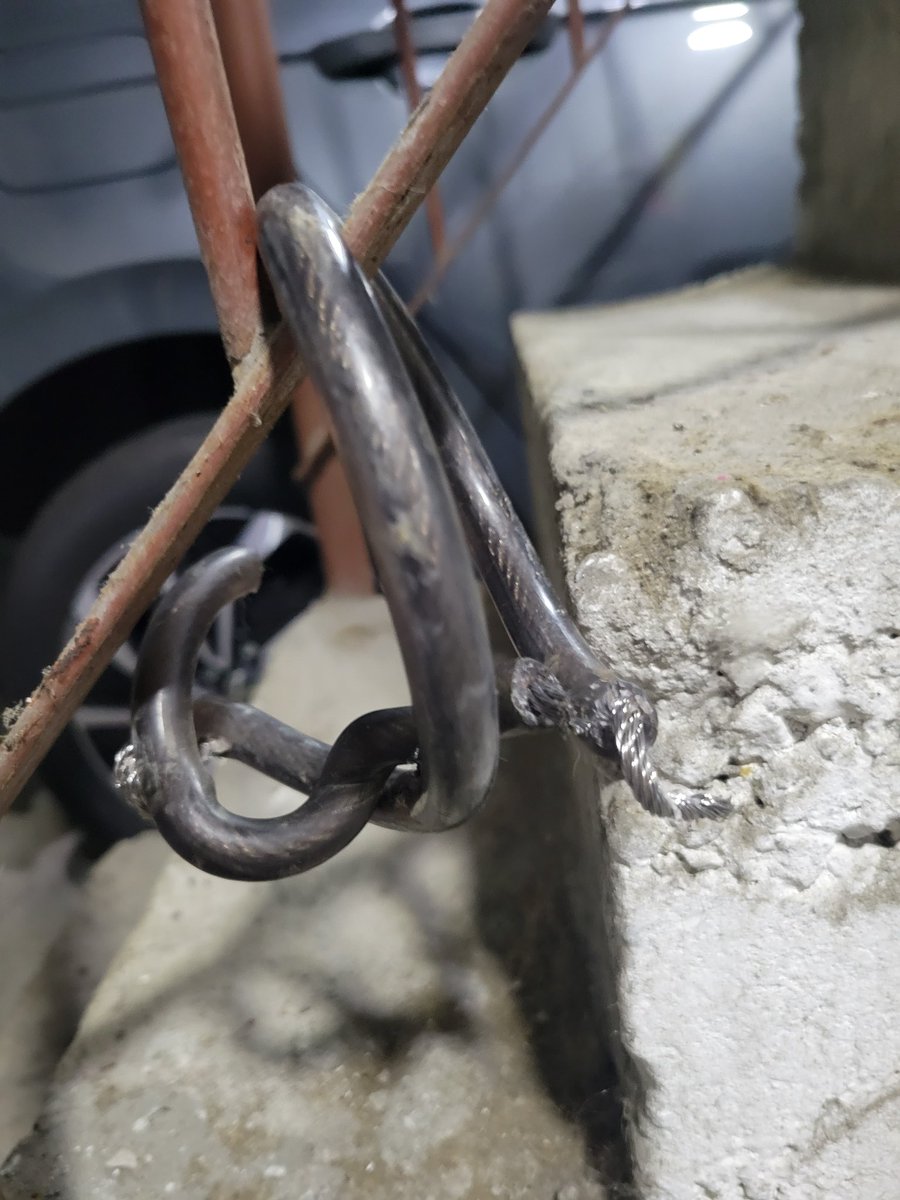
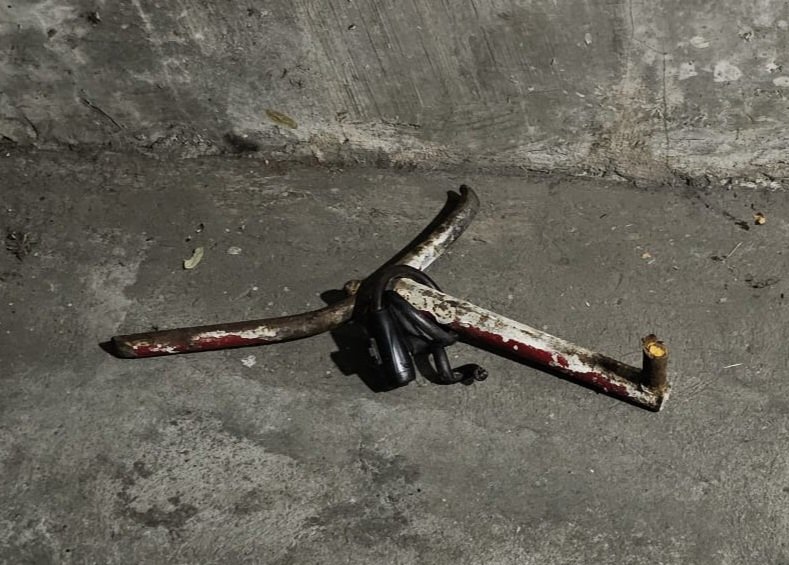
🚨 Parque Rodó: zona liberada En la madrugada volvieron a entrar a mi edificio. Es la cuarta vez en seis meses. Siempre por el garaje: al principio aprovechaban descuidos; las últimas dos veces, directamente forzando la cortina con barras de hierro. Ya robaron cinco bicicletas. Anoche se llamó a la policía. No apareció. Vivo en Luis Piera esq. Jackson, en el Municipio B a dos cuadras de la embajada de EE.UU. y a una de la sede del Mercosur. Supuestamente, una zona “privilegiada” en materia de seguridad. La realidad es otra. Los vecinos estamos indignados y con miedo. Existe una sensación de impotencia frente a la falta de respuesta de las autoridades. Esto ya no es un hecho aislado, es un problema recurrente y estructural. Y aun así, sigue sorprendiendo. Es necesario movilizarnos, denunciar y visibilizar lo que está pasando. La situación es grave. Y la ausencia de presencia policial en el Parque Rodó también. #MunicipioB #Seguridad #CarlosNegro @Minterioruy @CNegro7 @Municipiob @PatriciaSoria_ @pachasanchez @jdiazalmeida @DCaggiani @Constanza_FA @JavierGarcia_Uy @camboue @DipRodrigoGoni @Maferauer @GabrielGianoli @PedroBordaberry @RobertSilvaUy
Gonzalo Schettini tweet mediaGonzalo Schettini tweet media
Español
56
248
543
36.2K
Código Binario
Código Binario@cimarron06·
@portalmvd Te cobran impuestos para que guardes la basura en tu casa...los montevideanos son subnormales
Español
1
1
7
43
Montevideo Portal
Montevideo Portal@portalmvd·
IM ENTREGA CONTENEDORES EN LA TEJA La IM entregó contenedores intradomiciliarios a 30.000 familias de La Teja y retirará 79 de la vía pública. Mario Bergara destacó un “cambio sustancial” en la gestión de residuos y proyecta llegar a 420.000 hogares. La medida busca mejorar la limpieza urbana, reducir basura en la vía pública y fomentar la clasificación de residuos, con impacto directo en la convivencia y el ambiente. Contexto La entrega forma parte del Plan Limpieza impulsado por la IM, que ya se implementa en municipios E, D, A y G, además del Cerro, como parte de una estrategia integral de gestión de residuos. Testimonios Mario Bergara afirmó que están “convencidos” de que la iniciativa “va a cambiar la forma” de gestionar residuos. También señaló que vecinos ya perciben “un cambio sustancial” y lo toman “con mucha ilusión”.
Montevideo Portal tweet media
Español
14
3
21
4.2K
Gonzalo Schettini
Gonzalo Schettini@lic_schettini·
@MariellaFe61404 @n_rgumeno @CNegro7 En realidad, la izquierda no es el problema si existe un compromiso genuino con la democracia republicana. El problema es que buena parte de la dirigencia frenteamplista sigue viendo en el socialismo marxista su paradigma. Y eso no es el Uruguay que queremos.
Español
0
0
0
6
Gonzalo Schettini
Gonzalo Schettini@lic_schettini·
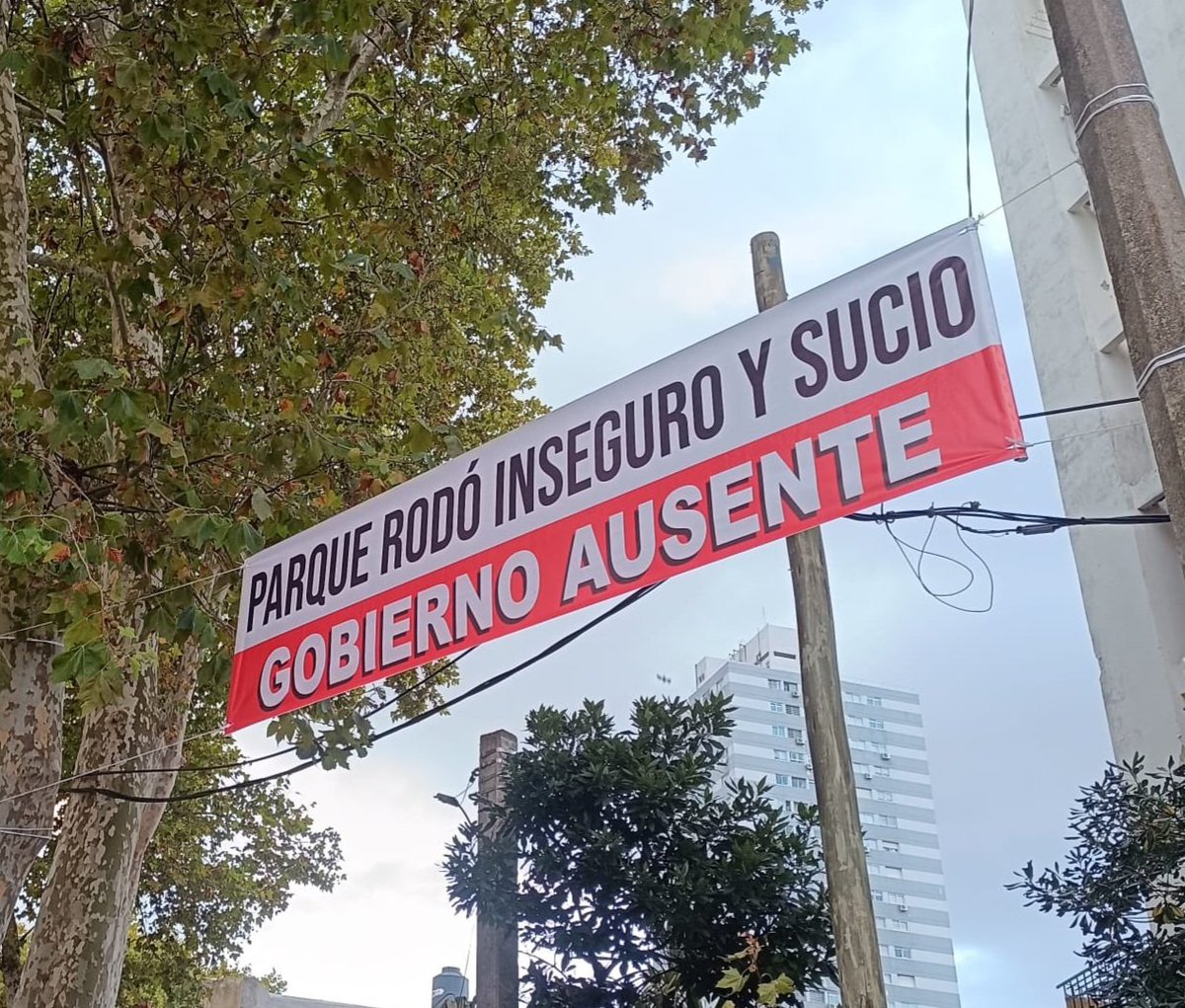
⚠️ Parque Rodó: cuando el Estado se retira. Impresiona la cantidad de vecinos denunciando lo mismo. No son hechos aislados: el barrio está siendo copado por los malandras, mientras la presencia policial brilla por su ausencia, incluso los fines de semana. Sr. ministro @CNegro7, ¿el “plan integral” anunciado hace tres días incluye patrullaje real esta noche? ¿Alguna autoridad va a asumir la responsabilidad? Porque cuando el Estado se retira, el delito avanza. Y el Estado no puede, no debe estar ausente. #MunicipioB #ElUruguayInseguro #CarlosNegro #GobiernoAusente @Minterioruy @Municipiob @PatriciaSoria_ @pachasanchez @jdiazalmeida @DCaggiani @Constanza_FA @JavierGarcia_Uy @camboue @DipRodrigoGoni @Maferauer @GabrielGianoli @PedroBordaberry @RobertSilvaUy
Gonzalo Schettini tweet media
Español
10
129
245
3K
lolo_ctc
lolo_ctc@camitorres1982·
@lic_schettini @ElOjoChurrinche @CNegro7 Impreciona q sean cabeza de termos, colgando esa porqueria, suciedad. Y hablo de todos los q se piensan q con eso convencen o logran un voto. Es lo contrario!!!
Español
2
0
1
101
Peppymiller
Peppymiller@peppymille_r·
@lic_schettini @portalmvd Déjate de joder con esa visión de "ancianos". Tremenda jornada, la gente entusiasmada y Montevideo más limpia. Vi a funcionarios de la @montevideoIM acompañando vecinos y vecinas y las soluciones particulares que están comunicando por Wpp en el grupo que está el propio @Leoherou
Español
3
1
1
33
Gonzalo Schettini
Gonzalo Schettini@lic_schettini·
⚠️ La basura no se gestiona: se padece. ¿Por qué un anciano tiene que cargar un contenedor por la incapacidad de la Intendencia de Montevideo de gestionar adecuadamente los residuos en la vía pública? ¿Por qué los vecinos terminan haciendo lo que le corresponde al Estado? Pero, según dijo el intendente Mario Bergara, los vecinos se van a sus casas “ilusionados”… Porque frente al fracaso de 35 años de gestión, parece que no hay otra alternativa. #Contenedores #Basura @montevideoIM @Mario_Bergara @JavierGarcia_Uy @camboue @DipRodrigoGoni @Maferauer @GabrielGianoli @MartinLemaUy @matildeantiauy @memeruizalcalde
Montevideo Portal@portalmvd

IM ENTREGA CONTENEDORES EN LA TEJA La IM entregó contenedores intradomiciliarios a 30.000 familias de La Teja y retirará 79 de la vía pública. Mario Bergara destacó un “cambio sustancial” en la gestión de residuos y proyecta llegar a 420.000 hogares. La medida busca mejorar la limpieza urbana, reducir basura en la vía pública y fomentar la clasificación de residuos, con impacto directo en la convivencia y el ambiente. Contexto La entrega forma parte del Plan Limpieza impulsado por la IM, que ya se implementa en municipios E, D, A y G, además del Cerro, como parte de una estrategia integral de gestión de residuos. Testimonios Mario Bergara afirmó que están “convencidos” de que la iniciativa “va a cambiar la forma” de gestionar residuos. También señaló que vecinos ya perciben “un cambio sustancial” y lo toman “con mucha ilusión”.

Español
0
0
0
132
Gonzalo Schettini
Gonzalo Schettini@lic_schettini·
@Buellgz En mayo perdimos el municipio B por 1785 votos. FA: 20621 CR: 18836. Falta poco.... se van... Estoy de acuerdo con movilizarse u denunciar. Las redes son el 5to. poder y el sistema lo sabe.
Español
0
0
1
144
Ultratón
Ultratón@Buellgz·
@lic_schettini Nos vamos a tener que empezar a mover nosotros, alguna marcha o algo hay que hacer, no podemos seguir de brazos cruzados. Nos viven tomando el pelo.
Español
1
0
1
218
Gonzalo Schettini retweetet
Fernanda Auersperg
Fernanda Auersperg@Maferauer·
Mentir desde la página de Presidencia es GRAVE. Desde hace años hay respuesta los 365 días y durante la gestión anterior se avanzó fuertemente en brindar respuestas 24 horas y específicas. El Plan Invierno solo reforzaba la atención y respuesta a lo estructural de todo el año.
Presidencia Uruguay@compresidencia

Durante años, la política de situación de calle funcionó en invierno y de noche. Como si el problema desapareciera con el calor o con la luz del día. A partir de ahora los centros están abiertos todo el año, a toda hora. Porque la realidad no espera.

Español
54
221
485
16.7K
Rafael
Rafael@Rafael01·
@lic_schettini Se puede si, Pero el hecho de no me alcanza la vida (si se hace el cambio) para poder verla como debería ser.
Español
1
0
1
23
Rafael
Rafael@Rafael01·
@lic_schettini Montevideo es zona liberada, ya la gente ni se gasta en llamar a la policía a no ser por temas de seguro y otros tramites, la escalada de motochorros, pichis, rastrillos y falopa ya no tiene vuelta atrás. Hay una solución pero la ideología puede mas que vidas en la calle.
Español
1
0
3
189