
Angehefteter Tweet
Essie 🐳🍉
58.6K posts

Essie 🐳🍉
@luvsblind22
She/Her. Elder millennial. Occasionally a lawyer.
Beigetreten Mart 2011
755 Folgt420 Follower
Essie 🐳🍉 retweetet

Bobo amputa nagpapasahod tayo ng bobo sa senado. Kingina nakakapikon

Filipino
Essie 🐳🍉 retweetet

GULAY PARA SA TSUPER
PAG-ASA PARA KAY JODDEL
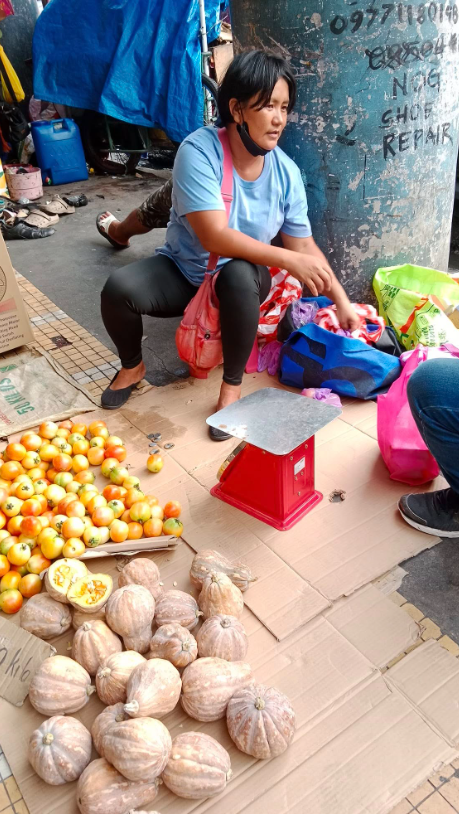
We are now humbly seeking sponsorships and donations for our upcoming Community Pantry dedicated to PUV drivers. We aim to distribute vegetables and basic goods to our hardworking tsuper heroes on the road.
This initiative will also support Ate Rowelyn from Nueva Ecija, a mother who sells vegetable to sustain the needs of her child, Joddel, who is currently battling Chronic Kidney Disease Stage 5.
Any form of help is greatly appreciated whether by sharing this post, donating in kind items or financial donations. 1/2

English
Essie 🐳🍉 retweetet

Nuclear weapons aren't produced in universities, schools, hospitals, airports, museums, football stadiums, emergency services, police stations, and media buildings.
The US and Israel are totally unleashed with no red lines. Civilians and civilian infrastructure are not a target.

English
Essie 🐳🍉 retweetet


Essie 🐳🍉 retweetet

China is one of the signatories to UNCLOS and yet it continues to issue radio warnings that declare ‘my airspace’ over Scarborough Shoal. That is not law; it is intimidation dressed up as authority.
International law is clear: the Philippines’ rights in its maritime zones are grounded in UNCLOS, and the 2016 Arbitral Award clarified key legal issues and rejected claims that contradict the Convention. No amount of repetition can turn an unlawful claim into a lawful boundary.
If China is sincere about regional stability and ongoing Code of Conduct discussions, it should start by acting like it: stop coercive radio challenges, stop pretending invented ‘airspace’ is legitimate, and follow internationally accepted safety rules so aircraft and crews are not put at risk.
The Philippines will remain calm, professional, and present upholding its rights without provoking conflict but it will not be talked out of its own waters and skies by announcements that international law does not recognize.
#WestPhilippineSea #NationalSecurity #ChinasDelussionalClaims #WPSAtinIto
China pulse 🇨🇳@Eng_china5
NOW The People’s Liberation Army issued a warning to the Philippine aircraft: Philippine C-208 aircraft, this is Chinese Navy vessel No. 554. You have entered my airspace over Huangyan Island. To avoid miscalculation, please leave immediately.
English
Essie 🐳🍉 retweetet

Essie 🐳🍉 retweetet

Hello, anyone interested in supporting our onion farmers in Nueva Ecija?
Php 200 per sack (around 7-8 kg)
+ Php 100 share sa lalamove to Manila
Pick-up will be in Malabon City.

English
Essie 🐳🍉 retweetet

The crazy thing about this is no one will call them radicalized for leaving the states to go fight in the Middle East. And yet it very much is radicalization.
Clash Report@clashreport
IDF announces the killing of a soldier in Lebanon: Sergeant Moshe Yitzchak HaCohen Katz, 22, from New Haven, Connecticut.
English
Essie 🐳🍉 retweetet

Essie 🐳🍉 retweetet

The pope condemned war and Israel’s response was to kick a cardinal out of Jerusalem and cancel Palm Sunday mass for the first time in centuries. CATHOLICS YOU ARE NOW ON FRAUD WATCH IF YOU TAKE THIS SITTING DOWN!
English
Essie 🐳🍉 retweetet

The Pope gave a clear message today: participating in the Iran war is a violation of the Catholic faith.
If this was a moment of crystallization for you, you are entitled to an honorable discharge as a conscientious objector. Call us now to file: 1-800-379-2679
English
Essie 🐳🍉 retweetet

On Palm Sunday, as we commemorate the entry of Jesus in Jerusalem, we remember that the Christians of Palestine, the most ancient Christian community in the world, continue to be persecuted, harassed, killed, bombed, imprisoned and denied prayers at their holy sites by Israel for over 77 years:
Pals@palsofnations
1940, Jerusalem, Palestine 🇵🇸 Blessed Palm Sunday ☦️✝️🌿
English
Essie 🐳🍉 retweetet

Shadia’s tent has been flooded and her hearing device is broken too, please donate and share to help her and her family survive!!
🔗: chuffed.org/project/157051…
Shadia Hamad@shad37046
My family’s livelihood is at risk 💔 I need your support to repair our tent and fix my hearing device 🙏 Any contribution or even sharing means a lot to us chuffed.org/project/157051…� @ainiladra @Carl_Fr_Gauss @CarrieCnh12 @MissPavIichenko @oliveegirl @Louis_Allday
English
Essie 🐳🍉 retweetet

There is no ethical consumption of HBO’s Harry Potter series theverge.com/report/901818/…
English
Essie 🐳🍉 retweetet

NOT A SINGLE DONATION RECEIVED!!!
chuffed.org/project/112615…
Check Pinned@lifa_80
Very grateful for the people who donated recently, please keep donating to help us to reach our goal of £7,000 chuffed.org/project/112615 @tnega74 @TurboKitty @g_abe2 @SnowHimbo @leigh_fall @katalin_pota @ReznorokRoll @BolshevikBeyond @brennusdamenace @sudanfundshare
English
Essie 🐳🍉 retweetet

Look at this photo.
A woman holds up a noose and a lethal injection, celebrating Israeli plans to introduce the death penalty for Palestinians.
Her husband holds a gun labelled 'occupation', a plane labelled 'expulsion', and a house labelled 'settlement'.
This grinning, leering spectre is the deputy speaker of the Knesset, the Israeli Parliament.
youtube.com/watch?v=kpZefo…

YouTube

English
Essie 🐳🍉 retweetet

Essie 🐳🍉 retweetet

We’re about to have a trillionaire and there’s still people out there living paycheck to paycheck who oppose a wealth tax
English
Essie 🐳🍉 retweetet
Punishing me by closing my wife's bank account.
What does she have to do with all this?! She's just an EU ordinary citizen, and has nothing to do with politics or diplomacy!
Human rights in Europe in 2026.

English
Essie 🐳🍉 retweetet

Also note that Israel has not even tried to justify the assassination of Fatima and her photojournalist brother though they clearly hunted her specifically and made sure to kill her after she survived the initial strikes.
Perhaps they worry about the optics of justifying the killing of a prominent female journalist. So they are simply saying nothing about her.
Abubaker Abed@AbubakerAbedW
“The drone struck her twice down the road after she survived from the first two strikes.” They desperately wanted to assassinate Fatima Fatouni. Look at their barbarism and terrorism.
English