Maher Akraa

4.3K posts

Maher Akraa banner
Maher Akraa

Maher Akraa

@maherakraa

A narrative may color reality, but truth is colorless. Design Researcher / Journalist | PhD Student at @UZH_en @uzh_ikmz | Research Associate at @hslu

Beigetreten Nisan 2012
2K Folgt4.9K Follower
Angehefteter Tweet
Maher Akraa
Maher Akraa@maherakraa·
🧵 1: Overview Years before Assad's regime fell, reports like Amnesty International’s ‘Stop the Torture and Horror in Syria’s Prisons’ (2016) ©AI and the Syrian Network for Human Rights (SNHR) ©SNHR 2019 documentation of 72 torture methods across 50 detention centers exposed unimaginable brutality. Now, with newly uncovered images post-collapse in December 2024, the world finally sees how deeply entrenched this system was. #Syria #HumanRights Source: ©AI, ©SNHR
Maher Akraa tweet media
English
33
756
2.5K
369.6K
Maher Akraa
Maher Akraa@maherakraa·
I strongly agree. In fact, I deeply support every word. I urge everyone to reflect on @RamiJarrah message, a voice that has always stood with the oppressed and sacrificed so much for Syria’s freedom. We demand justice now. I especially stress the need to build a national narrative not only for Syria but for humanity, to honor the victims of Assad’s massacres, preserve the truth, and prevent manipulation. Memory must be protected and institutionalized to ensure such atrocities are never repeated anywhere in the world.
Rami Jarrah@RamiJarrah

The past few days have been horrific, and many are still trying to make sense of what has unfolded. The state must demonstrate its commitment to preventing such harm against civilians becoming a recurring norm. To that end, I believe the following (concurrent) steps must be taken: 1- A full, independent, and transparent inquiry must be launched into the events in Suwayda, documenting all violations and atrocities committed against innocent Sunni-Bedouin and Druze civilians. The findings must be made fully accessible to the public in a timely manner, and all those responsible, regardless of affiliation or allegiance, all perpetrators must be identified and face justice for their crimes. -------------------- 2- We must not allow the lack of transparency, prolonged silence, and mishandling of the Fact-Finding Committee’s report on the March 6–10 coastal massacres to become a template for state accountability. Especially after the report’s submission yesterday, the state attempts to empower the committee to forgo any public disclosure, even a press conference. When in fact, under international human rights law, especially in cases involving potential state violations, the public has a right to the full truth. Withholding the full report undermines accountability, violates victims’ rights, and obstructs justice. In that respect, the March findings must be released immediately, in full. Any redacted information for witness protection etc. must be strictly limited, independently supervised, and fully documented, and any press conference the committee wishes to conduct should serve as nothing more than to compliment the entire report and the methodology with which it was conducted being made fully accessible to the public, all this to achieve the following: • Restore/instill public trust in Syria’s legal system • Ensure that there is no doubt amongst the public that all those who gave orders, carried out, or helped conceal the atrocities on the coast are held fully accountable. • For the state to be taken seriously in facilitating the launch of an investigation into the events that occurred in Suwayda, or any other hereafter. -------------------- 3- Finally, and by no means the least, we must also not allow the absence of adequate justice for crimes committed by the former regime to hinder any of the above. It should be no secret that there is growing resentment among millions of Syrians whose lives were destroyed by the former regime, and over the delayed justice for the hundreds of thousands who were killed and disappeared over the past 14 years. That resentment is justified. We have every right to feel anger toward fellow Syrians who express outraged and seek justice for the atrocities committed in March on the coast and in Suwayda today, yet fail to even acknowledge the horrors endured by millions under the former regime, the vast majority of which were Sunni-Syrians. But now, all Syrians must be given the opportunity to reflect on these crimes, and that only reinforces the urgency of more serious efforts in pursuing justice for the victims of the former regime, which the state is tasked with accomplishing. Yes, this chapter of accountability is long and complex, one that will not be concluded anytime soon. It should therefore not be a cause to delay justice for today's crimes, but rather concrete simultaneous steps must be taken now to ensure justice being served is on the horizon. • Public trials of former regime culprits, (preferably televised) are needed to guarantee transparency and foster collective recognition across Syria of the crimes committed. A national narrative needs to be established. • Transparent enquiries into Syria's disappeared, whose families continue to grieve, many still without closure to this day. The outcome of such enquires must be shared with the public or at the very least those concerned, followed with memorial sites established for the victims. • Any broader investigation results must ultimately be made public, and the state must collaborate with all parties, including international organizations that have spent the past 14 years documenting these crimes. When institutions like the White Helmets, with their vast archive of documented evidence, are integrated into the state, the burden falls on the state to demonstrate that it is meaningfully utilizing that documentation. Otherwise, these institutions should be allowed to operate independently, not be obstructed. Delaying the above process only deepens the sense of abandonment felt by millions of the former regime's victims. It gives those in power, whoever they are, a ready-made excuse to delay accountability for crimes committed against civilians today or in the future, an excuse that will understandably go largely unchallenged by those who first, simply need to see a serious process begin to address the crimes of the former regime. -------------------- I strongly believe that anyone who dismisses the basic premise of the simultaneous three steps mentioned above, no matter their political stance, cannot be taken seriously on the issue of equal human rights, especially when they limit their demands to selective justice instead. Now one might argue that this will take resources, effort, and time that only overwhelm the state in these challenging times. Yet that would be a grave acknowledgment of an inability to implement justice. And in that case, international organizations should play a leading role instead, and the state must step aside and facilitate this. But if the state is serious in taking on these responsibilities, and if justice is prioritized, it’s achievable, because without it, a free Syria will absolutely fail. Those who disagree with what I've outlined should clearly identify what exactly they object to and why. Otherwise, they’re welcome to share their views elsewhere and spare us the distractions that do nothing but hinder desperately needed justice for all Syrians.

English
0
5
19
4K
Maher Akraa
Maher Akraa@maherakraa·
بعد أن شاهدتُ العشرات من الفيديوهات وقرأتُ العديد من المنشورات، وتبادلنا مئات المكالمات مع الأصدقاء حول واقعنا في سوريا اليوم، توقفت للحظة لأتساءل: ماذا فعلنا نحن السوريين حتى وصلنا إلى هذا المستوى من العنف والتوحّش في القتل والإذلال؟ لماذا هذه التوحش والقتل والتنكيل وكلّ أنواع الإهانات للإنسان في سوريا اليوم؟ ما حدث لأهلنا في السويداء من مجازر بحقّ الدروز والبدو وما سبق ذلك في الساحل السوري كان مرعباً بحقّ. لماذا هذا العنف المستشري ولماذا لا نتعلّم من تجاربنا السابقة؟ ألم يكن قتل وتهجير السوريين على يد نظام الأسد وإجرامه كافياً لنا جميعاً؟ ما جذور هذا العنف الطائفي والقبلي والسياسي الذي يفتت نسيجنا الاجتماعي؟ أين كان خطاب العقل حين سقط الأسد وكانت الفرصة لبناء دولة مدنية جامعة لكل السوريين دون تمييز؟ عن أي هوية وطنية جامعة نتحدث في ظل من يروّجون لكراهية الآخر ويدفعون شعبنا نحو مزيدٍ من الانقسامات؟ وما الذي حققته الحكومة الانتقالية التي نصبت نفسها من وحدة وطنية وهي تمنع أي حوار شامل وتفرض لوناً سياسياً واحداً؟ ولماذا يستمرّ بعض النشطاء والصحفيين وخاصة المقربين حالياً من هذه الحكومة الانتقالية في نشر خطاب الكراهية والدعوة للعنف؟ كيف ينامون وهم يساهمون في إذكاء روح الانتقام والتفرقة؟ كيف تسمح شخصية درزية منفردة لا تمثل جميع الدروز بدعوة إسرائيل للتدخل فتستغل تل ابيب هذه الدعوة ذريعة لقصف دمشق؟ ما جدوى ورقة العشائر والنفير العام إن لم تؤدّ إلا إلى المزيد من التمزّق والكراهية؟ أليس الوقت قد حان لوقف حمام الدم ومحاسبة كل من ارتكب المجازر خصوصاً في الساحل السوري والان في السويداء ؟ ألا نحتاج إلى إطلاق حوار وطني حقيقي يشارك فيه كل السوريين بكل أطيافهم ليبقى وطننا واسعاً للجميع؟ نحتاج الآن وبأسرع وقت إلى صوت العقل والحكمة لدى كافة السوريين لإيقاف خطاب الكراهية وخاصة المنتشر على وسائل التواصل الاجتماعي وإطلاق حملة لإيقاف الأخبار الكاذبة والمضللة.
Maher Akraa@maherakraa

1/5 After dozens of videos, countless posts, and hundreds of calls about today’s Syria, I paused to ask: How did we sink into such brutal violence and humiliation? Why this savagery killing, maiming, and insulting our humanity? The massacres in Sweida against Druze and Bedouin families, and earlier horrors on the Syrian coast, are truly terrifying.

العربية
0
2
6
771
Maher Akraa
Maher Akraa@maherakraa·
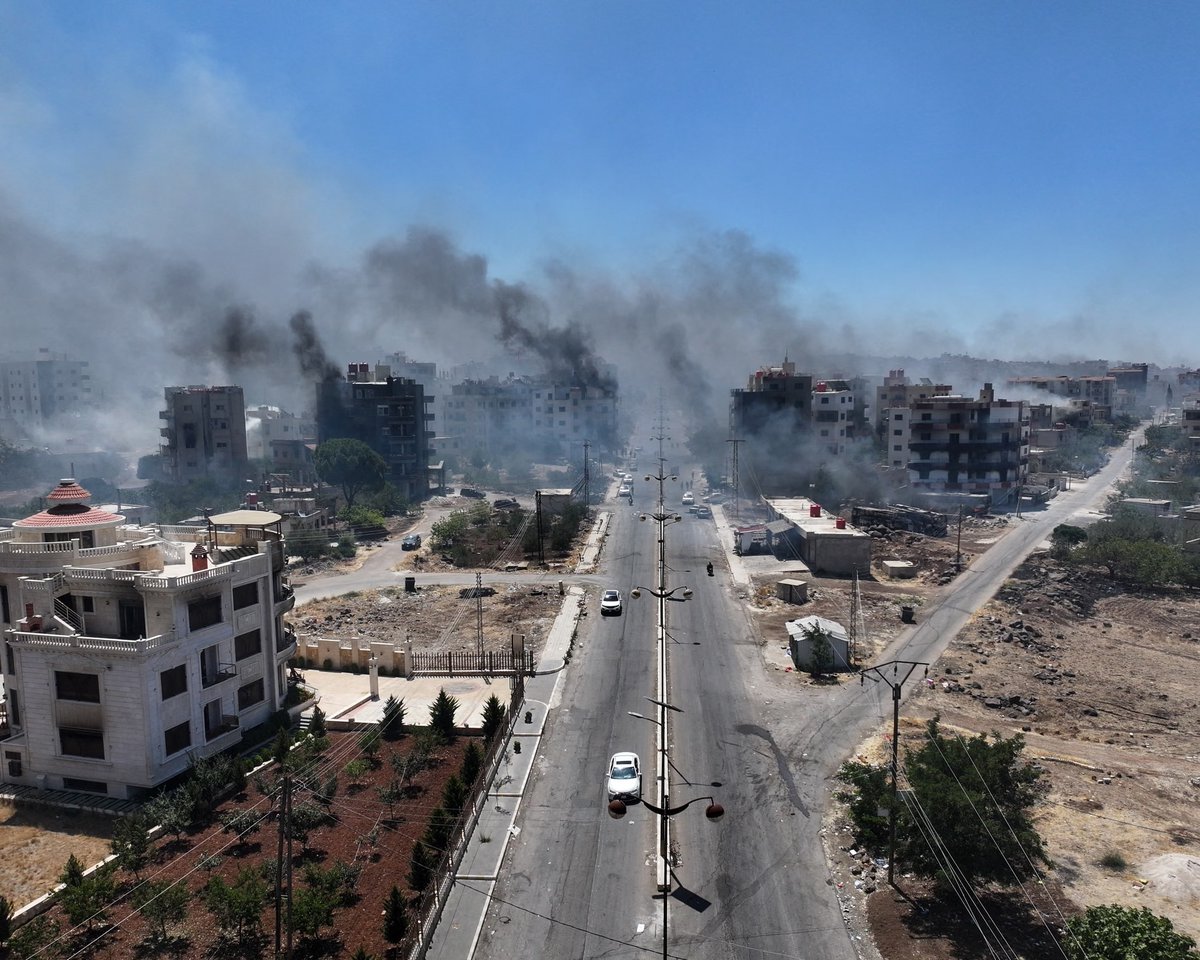
5/5 We urgently need the voice of reason and wisdom from all Syrians to end the hate speech flooding social media and launch a campaign against false and misleading news. Photo: © Omar Haj Kadour - AFP
English
1
1
6
244
Maher Akraa
Maher Akraa@maherakraa·
4/5 How can one lone Druze figure who doesn’t represent all Druze invite Israeli intervention, giving Tel Aviv a pretext to bomb Damascus? What good are “Arab tribal accords” and “general mobilization” if they only deepen our fractures and spread more hatred? Isn’t it time to stop the bloodshed and hold every perpetrator accountable?
English
1
1
5
303
Maher Akraa
Maher Akraa@maherakraa·
1/5 After dozens of videos, countless posts, and hundreds of calls about today’s Syria, I paused to ask: How did we sink into such brutal violence and humiliation? Why this savagery killing, maiming, and insulting our humanity? The massacres in Sweida against Druze and Bedouin families, and earlier horrors on the Syrian coast, are truly terrifying.
Maher Akraa tweet media
English
1
5
8
1.8K
Maher Akraa retweetet
Rami Jarrah
Rami Jarrah@RamiJarrah·
1/🧵A damming report has come out: "Syria’s government, including the Defense Ministry and president’s office, did not respond to a detailed summary of the findings of the report or questions from Reuters about the role of gov. forces in the massacres." reuters.com/investigations…
English
12
44
135
11.4K
Maher Akraa
Maher Akraa@maherakraa·
With the 54-year Assad family dictatorship finally over, what foundations will secure a peaceful Syria? Join us to explore this at Polit-Forum Bern’s @PolitForumBern panel: Syria after Assad: What is Needed for Peace? I’ll be speaking alongside Zaher Al Jamous @ZaherAljamous and Abdulla Ibrahim @erfanabdulla , with Helene Aecherli @aecherli guiding our exploration. 📅 Tuesday, 3 June 2025 🕡 18:30 – 20:00 📍 Podiumssaal, 4 OG, Demokratie-Turm (Käfigturm, Marktgasse 67, 3011 Bern) Join us in person or online, register here: polit-forum-bern.ch/veranstaltung/…
Maher Akraa tweet media
English
0
0
2
224
Maher Akraa
Maher Akraa@maherakraa·
March 15 – The Syrian Revolution: A Struggle for Freedom and Dignity Today marks 14 years since the Syrian people took to the streets, demanding freedom, dignity, and justice. What began in the cities of Daraa, Homs, Damascus, Aleppo, and beyond was not just a protest—it was a revolution against decades of oppression. It was never about bread; it was about human dignity. We paid the highest price—thousands of martyrs, prisoners who perished under torture, and millions forced into exile. But we never gave up. Now, after 54 years of Assad family rule, the tyrant Bashar al-Assad has fallen, and the regime that waged war on its own people with chemical weapons, barrel bombs, and brutal prisons is no more. But our revolution was never just against one man—it was against a system of oppression and single-party rule. The challenge ahead is to build a new Syria—one that belongs to all its people, ruled by justice, not fear. A Syria that honors the sacrifices of its people and never forgets the blood of its martyrs. To our martyrs who watered the land with their blood, to the detainees who never saw the light, to the exiled who dream of returning—We will not stop. We will not compromise. We will never forget. #SyrianRevolution #March15 #FreedomAndDignity
Maher Akraa tweet media
English
0
3
5
618
Maher Akraa
Maher Akraa@maherakraa·
The Syrian presidency's announcement of an independent committee to investigate the recent events in the coastal region may seem like a positive step toward uncovering the truth and achieving justice. However, for this initiative to be credible, the committee must operate with full transparency, ensure its findings are made public, and hold those responsible for these crimes accountable. The footage circulating and conversations with relatives and friends from the area reveal the horrifying scale of atrocities committed against Alawite civilians. However, it is equally crucial to remain vigilant against sectarian incitement, inflammatory rhetoric, and the spread of misinformation, which could further deepen societal divisions. The remnants of the regime are still active, and the growing sentiment of schadenfreude over the events in the coastal region is a dangerous factor that could escalate tensions. Pursuing and apprehending remnants of the regime is a national duty for all Syrians, and those responsible for the killing of Syrian public security officers must be held accountable. Accelerating the process of transitional justice and national reconciliation is an urgent necessity that cannot be delayed. A comprehensive national dialogue among all Syrians has become imperative. The continuation of authoritarian rule and a one-party system will not build a stable state but will only reinforce divisions. At the same time, there are clear indications that the discourse of Sunni victimhood is being politically exploited, which risks repeating the mistakes of the past instead of addressing them. The legacy of Assad—both father and son—has left deep wounds in Syrian society, and it will take decades to heal. The increasing fragmentation of Syrian society poses a grave threat, making it essential to develop new frameworks to address these divisions and prevent the recurrence of such tragedies.
Maher Akraa tweet media
English
0
0
1
308
Maher Akraa
Maher Akraa@maherakraa·
Everyone who participated in sectarian incitement and hate speech on social media or in public spaces prior to the massacre in the Syrian coast bears responsibility for its consequences. Likewise, journalists, activists, and defenders of Abu Muhammad al-Jolani, who played a role in fueling this incitement, must also be held accountable. There is no need to name them; their role is clear and well-known. Fighting the remnants of the regime is a national duty, but it does not justify overlooking other crimes or legitimizing hate speech that perpetuates violence. Transitional justice is essential for all Syrians, and there can be no genuine civil peace without accountability for everyone involved in incitement or crimes, regardless of their affiliation.
English
0
3
1
551
Maher Akraa
Maher Akraa@maherakraa·
Syria Between Violence and Collapse: The Need for a State, Not FactionsAfter the fall of the Assad regime, the state we dreamed of did not materialize; instead, chaos and division persisted. I've contacted relatives and friends on the Syrian coast, and what I heard was catastrophic: civilians being killed, videos documenting horrific crimes, and dangerous sectarian incitement. I belong to a family that spans Syria's spectrums—Arabic, Kurdish, Alawite, and Sunni—and today, I see how the hatred planted by Assad for decades has worsened. Journalists and activists now face a significant ethical responsibility: just as we documented the regime's crimes for ten years, we must now expose all the crimes being committed today. Justice is indivisible; we cannot demand accountability for the remnants of the regime while ignoring massacres against Alawite civilians simply because of their sectarian affiliation. Iran and remnants of the regime are still meddling on the coast, but what happened in recent days is no different from Assad's crimes: barbaric attacks on Alawite villages, executions, looting, and the absence of any legitimate authority. There is no state in Syria today, only factions dividing power, and reality confirms that Hay'at Tahrir al-Sham (led by Ahmad al-Shar’a, aka "Abu Mohammed al-Golani") has been the actual ruler since Assad's fall. At the recent "Victory" conference, the dissolution of factions was announced, but what actually occurred was a redistribution of power, evidenced by groups still operating under their factional names. Some of these factions are involved in fighting outside Syria, in Libya and Azerbaijan, while al-Golani continues to strengthen his grip, deluding himself that he has gained "legitimacy" from those factions to preside over Syria. The Catastrophic Reality of Syria TodayAccording to a United Nations Development Programme (UNDP) report, Syria has economically regressed 40 years due to the war. The GDP has dropped by 50%, and the poverty rate jumped from 33% before the war to 90% currently, with 66% of Syrians living in extreme poverty. The energy sector is nearly collapsed, and the country would need 55 years to return to pre-war levels if growth continues at the current slow pace. But the tragedy is not only economic but also moral and humanitarian. The regime, whose crimes were documented in thousands of photos and videos, notably the Caesar photos revealing the bodies of detainees in Assad's prisons, was an example of organized crime. Today, we see the same scene repeating, but with different hands. The factions attacking the Syrian coast under the pretext of pursuing remnants of the regime are documenting killings of civilians and even showcasing these crimes in clips that suggest a relish for violence, as if Syria has learned nothing from its tragedy. What Next?If there is a genuine intention for justice, it must start by holding all perpetrators of massacres accountable, regardless of their affiliations. There can be no transitional justice without comprehensive accountability. If we desire civil peace, there must be a national dialogue that brings together all Syrians, away from factionalism and sectarianism. What we are witnessing today is the natural result of 14 years of killing and destruction, where hatred has terrifyingly spread among Syrians. What to Do?Immediate cessation of sectarian crimes on the coast and withdrawal of all armed factions. Immediate protection for civilians from any sectarian revenge. Declaration of national mourning and an impartial investigation into the recent massacres. Launching a genuine political process that does not reproduce tyranny but builds a state for all Syrians. We cannot overthrow a criminal regime only to reproduce the same bloodshed with new faces. Syria needs a state, not new warlords. Syria Today: A Country Divided Between Powers and InfluenceSyria remains divided into different zones of influence, each controlled by a regional or international power: Russia, America, Turkey, and Israel, all having military bases and direct influence, while local powers either continue conflicts or try to solidify their control in the absence of any inclusive national project. Syria can only rise from this quagmire by building a civilian state based on the law, not on sects and factions. The continuation of the logic of revenge and the reproduction of violence will only lead to more division and destruction. The fundamental question today is not who governs Syria, but how can Syria return to being a homeland for all Syrians?
Maher Akraa tweet media
English
0
2
1
661
Maher Akraa
Maher Akraa@maherakraa·
🧵 (1/15) Imagine risking your life daily to document evidence of potential war crimes. That’s exactly what “Caesar” did—until he recently uncovered his true identity: First Warrant Officer Farid Al-Mazhhan, a Syrian from Daraa who once led forensic evidence at the Military Police in Damascus. His revelations offer a rare glimpse into the brutal inner workings of the Syrian regime’s detention system.
Maher Akraa tweet media
English
1
27
66
5.5K
Maher Akraa
Maher Akraa@maherakraa·
Since 2013, the world has seen the harrowing images that Caesar risked everything to expose. The evidence was undeniable. The world was not unaware—it watched, documented, debated. Yet, the machinery of torture continued, and the silence of the powerful spoke louder than the cries of the victims. This was not just a failure of justice; it was a failure of humanity. A test we failed—not once, but over and over again. Evil is not just in the hands that torture, but in the silence that allows it to persist. When massacres become routine headlines and suffering is reduced to numbers in reports, the true tragedy is not only in the crimes themselves but in their quiet acceptance as part of reality. The most dangerous regimes are not just those that oppress, but the societies that normalize oppression with their indifference. The images that emerged from the dungeons of death were never just records of the past; they were warnings for the present. They confront us with a question: Are we witnesses, or have we simply lost the ability to see? But silence is never neutral. It is complicity. The question is not whether history will remember these crimes—it will. The question is whether we will act before they repeat themselves. Justice delayed is injustice prolonged.
Maher Akraa tweet media
English
0
4
8
598
Maher Akraa
Maher Akraa@maherakraa·
(15/15) Caesar’s unmasking underscores the gravity of his evidence—and the sacrifices made to obtain it. His interview with Al Jazeera marks a turning point, amplifying the call for international solidarity and legal recourse. Will the global community rise to the challenge, or will silence prevail? References: Al Jazeera (@AJArabic) – Exclusive interview with Caesar (Al-Mazhhan) on “The Rest of the Story.” European Center for Constitutional and Human Rights (ECCHR) – Reports on structural investigations and universal jurisdiction cases. FIDH & Human Rights Watch – Documentation and advocacy for trials in France and beyond. BBC News, The Guardian, CNN, The New Yorker – Extensive coverage and analysis of the leaked Caesar Files. U.S. Department of State – Details on the Caesar Syria Civilian Protection Act (2019). Asharq Al-Awsat – Revelation of Osama Othman (Sami), Caesar’s key partner in smuggling the photographs.
English
1
0
1
431