Marco Pabst

3.6K posts

Marco Pabst banner
Marco Pabst

Marco Pabst

@marcopabst

CIO, PM. 30 years of investing and still loving it. No investment advice. No newsletter selling. Views are my own.

London Beigetreten Nisan 2009
883 Folgt4.3K Follower
Peter Stenström
Peter Stenström@PeterStenstrm·
Once again the fear-greed index was a good indicator. Those who were not fully invested over the past two days have likely missed out on roughly 6-7% or more in alpha. Several stocks rose 10–15% in a very short period. This reinforces my view that staying fully invested is the superior long-term strategy. As Warren Buffett has pointed out, even during wars, and potentially even during a world war, you want to be invested in strong businesses, because the value of money decreases over time. At the same time, Charlie Munger emphasized that the price of achieving outstanding returns is enduring significant volatility. A portfolio may decline by 50% two or three times over a century, and those unwilling to accept that reality are likely to settle for mediocre results as Munger pointed out. In other words, the combination of staying fully invested in high-quality businesses with good risk/reward and being mentally prepared for substantial drawdowns is what ultimately drives superior long-term performance.
Marco Pabst@marcopabst

You know what to do...

English
2
1
32
6.8K
Marco Pabst
Marco Pabst@marcopabst·
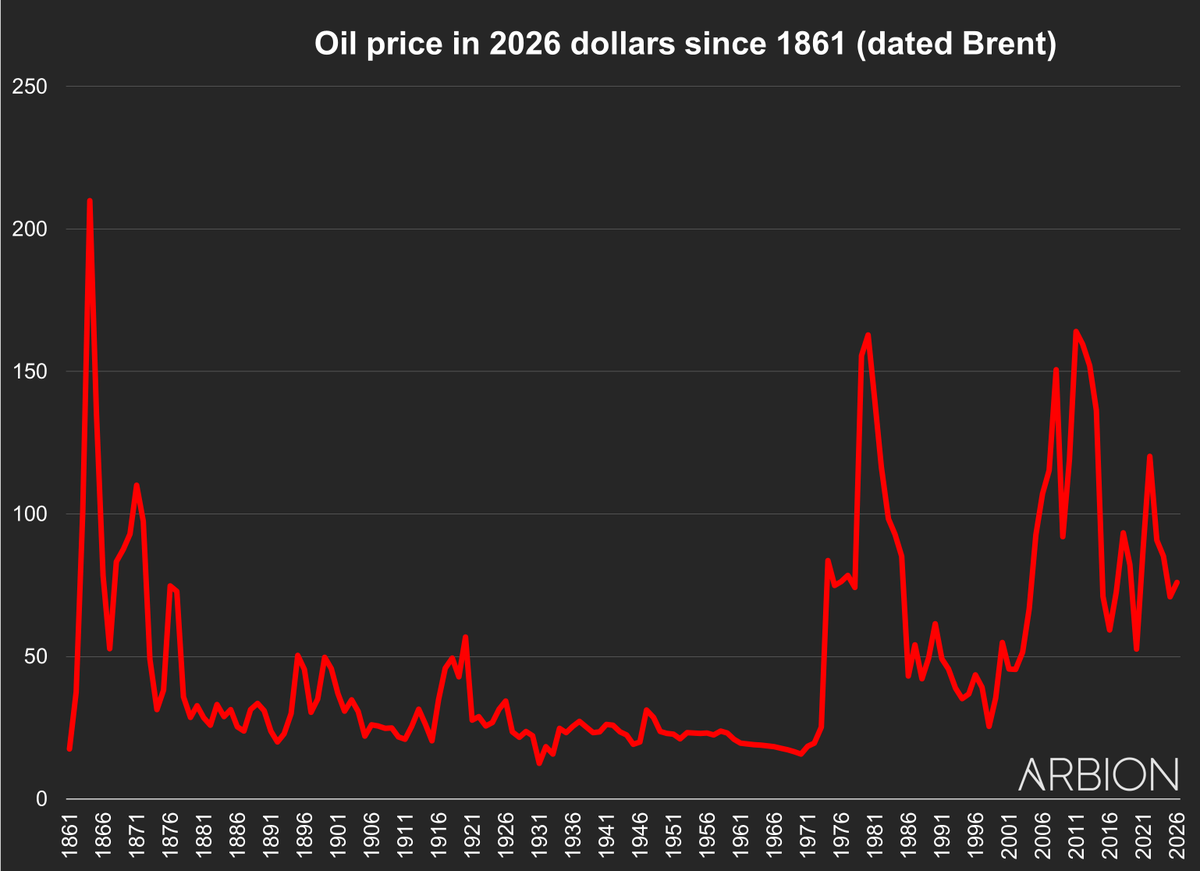
Financial commentators love to extrapolate from the last two data points to create a click-worthy story. However, in finance, historical context is always helpful when evaluating how bad a situation really is. While the war in Iran is certainly a problem for financial markets at the moment, it is by no means the greatest crisis the world has ever seen. As for oil, the commodity still has a long way to go before it reaches previous highs near $150. And it would have to stay there as the chart uses annual average real prices in 2026 dollars.
Marco Pabst tweet media
English
1
1
5
253
Marco Pabst
Marco Pabst@marcopabst·
You know what to do...
Marco Pabst tweet media
English
0
1
5
7.1K
Marco Pabst
Marco Pabst@marcopabst·
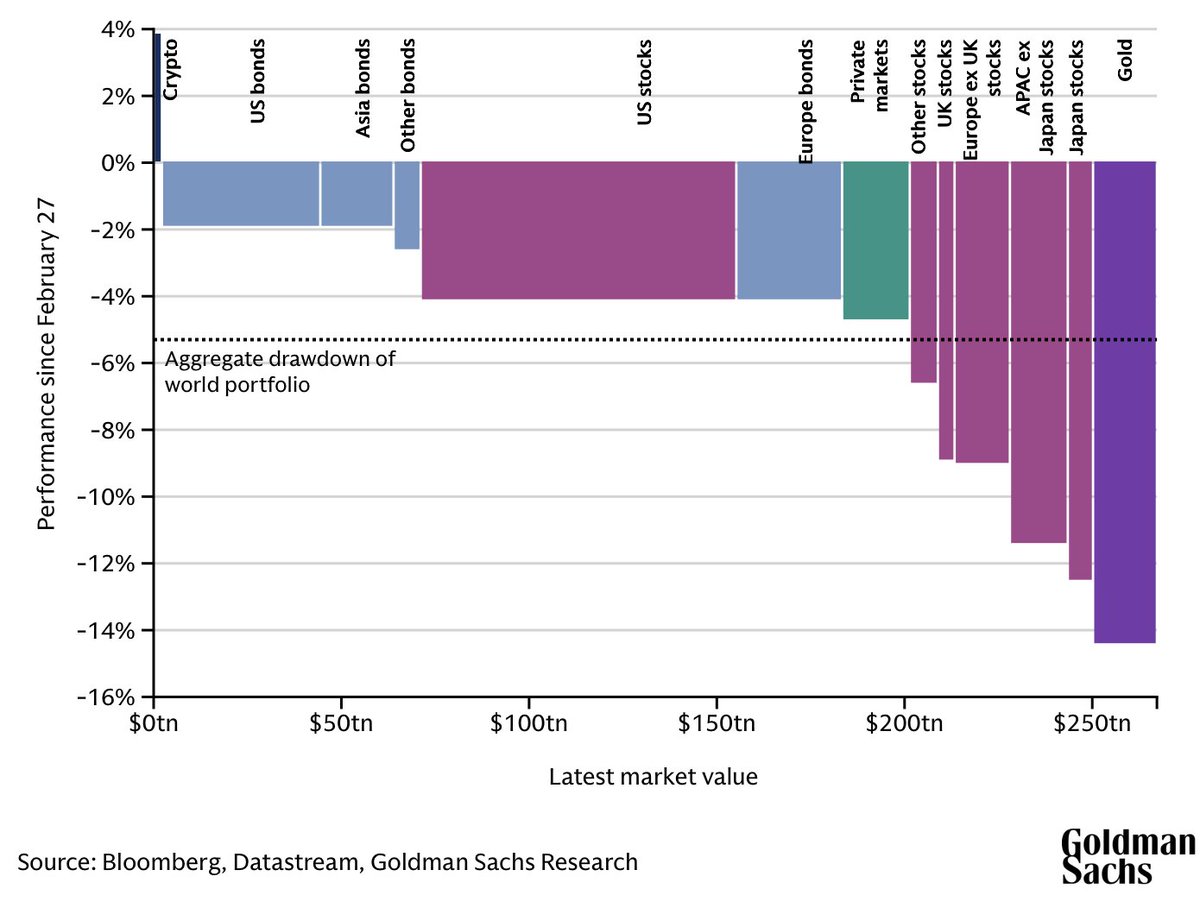
Markets since the Iran war started: Gold, Japan and EM equities provided the least cover. US equities and global bonds fared relatively well and so did crypto...
Marco Pabst tweet media
English
0
2
2
350
Marco Pabst
Marco Pabst@marcopabst·
Oil prices have doubled since the end of last year, raising fears of an oil price shock. Whether this triggers a recession will depend on how much further prices rise and how long they remain at these levels. However, some context is helpful. Unless prices jump by another 50% or more, recession risks appear overdone. The chart below assumes $100 oil for the remainder of 2026. Even under this assumption, we remain well below the pre- and post-2008 levels of oil consumption as a percentage of GDP. Moreover, the current level of oil intensity of Global GDP sits right at the average level since 2000! I am not suggesting that it is all green lights for investors, but it is important to analyse the current situation in its historical context and not panic at every sensationalist headline.
Marco Pabst tweet media
English
0
1
3
395
Marco Pabst
Marco Pabst@marcopabst·
Oil markets are pricing in an end to hostilities. The most affected oil contract - Oman crude - fell by $45 today, while West Texas Intermediate continues to trend lower. Oil markets, like most energy markets, are largely local in nature, and the sharp decline in Middle Eastern contracts, together with the massive backwardation across the curves, indicates that the recent price spike is temporary.
Marco Pabst tweet media
English
0
1
1
261
Marco Pabst
Marco Pabst@marcopabst·
🚨 After the war: a guide through the stock market battlefield This might be premature and may not age well, but it appears to me that we are approaching the end of the war with Iran. By this, I mean substantial exchanges of fire and huge resulting damage. I am sure skirmishes will continue for some time, but they are unlikely to have a material impact on financial markets. 👉 What areas of the market look interesting if the war simmers down over the coming days and weeks? 1️⃣ Travel-related stocks: from airlines to cruise companies and holiday booking websites. European airlines in particular could perform well, as tourists may avoid the Middle East for some time. 2️⃣ Software: software stocks initially came under pressure because of the AI threat, which was followed by rising bond yields. The former should be taken with a pinch of salt, and the latter is expected to reverse soon. 3️⃣ Logistics: transportation businesses sold off because of global disruptions and rising fuel costs, both of which are expected to normalise over the coming months. 4️⃣ Bonds: fixed income markets declined as they priced in higher expected inflation and a lower probability of further rate cuts. However, the oil spike is likely to cause only a temporary increase in inflation and, if anything, may bring forward recession risks, which would typically entail a combination of rate cuts and quantitative easing. Inflation expectations are therefore likely to reverse. 5️⃣ Financials: banks and housing-related stocks could do well in a post-war environment if yields and interest rates recede. We are also likely to see more policy measures in the US aimed at supporting the consumer ahead of the midterms later this year. 6️⃣ Last but not least - Middle Eastern equities: Probably too early but Dubai real estate stocks are worth to be put on a watch list. On the flip side, I believe these sectors could underperform: 1️⃣ Defence: most of them, especially in Europe, have not managed to make new highs and have been underperforming for some time. Valuations are high. 2️⃣ Oil: oil stocks outside the US rallied strongly on the back of higher oil prices in Europe and Asia. Performance now looks stretched. 3️⃣ Oil-derivative plays: several sectors have reflected the impact of higher oil prices on related products such as fertiliser, agricultural commodities and pipelines. As prices normalise, investors are likely to take profits. Special mention – precious metals: I am less certain about precious metals at this stage, but it appears that the uptrends were broken a few weeks ago and we could see selling from the Middle East as they try to defend pegged currencies and pay for war damage. The bullish argument is that yields are expected to ease, which usually benefits gold and silver. Interesting times! Good luck out there and do your homework before investing. No investment advice!
Marco Pabst tweet media
English
1
1
1
316
Marco Pabst
Marco Pabst@marcopabst·
🚨 Low PE distributions --> Low IRR If you are invested in private equity and your fund has not distributed more than 10–15% by year five, you may be in dire straits. In its 2026 Annual Review, Hamilton Lane published an interesting study showing a close correlation between the level of distributions received from a vintage by year five and ultimate IRRs. I had suspected there was some correlation, but I was surprised by how strong it actually is. The relationship makes sense because if a fund manager has no early wins and no home runs to return capital to investors, chances are the journey will be a long one, which almost always weighs on IRRs. Unfortunately, this is not something one can prepare for in advance, but investing with managers who focus rigorously on timely exits can help.
Marco Pabst tweet media
English
0
1
7
412
Marco Pabst
Marco Pabst@marcopabst·
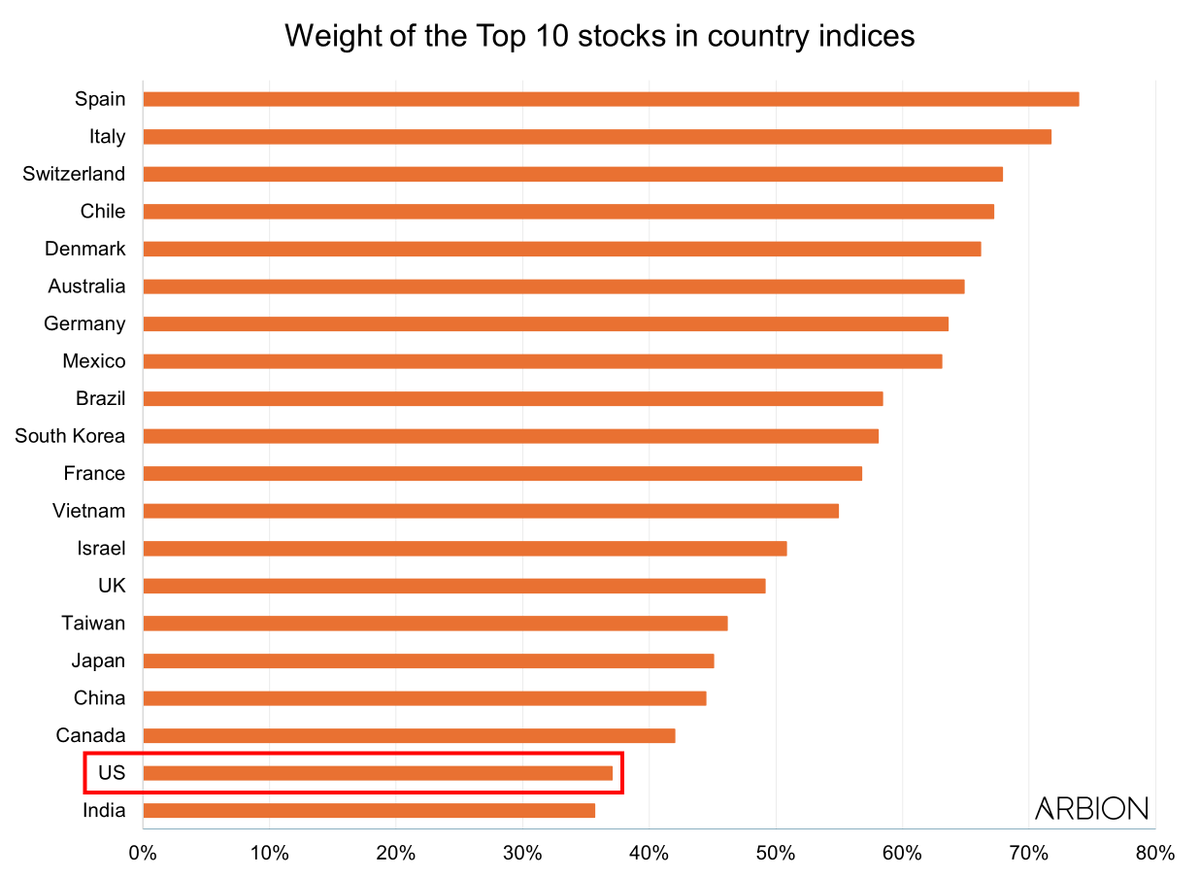
US index concentration is not a major problem You may have seen a report last week warning that S&P 500 index concentration could become a problem if SpaceX, Anthropic and OpenAI go public and enter the index this year. The top 10 largest stocks in the index currently make up just under 40% of the benchmark. To put this into international context, this makes the US the least concentrated major market after India. Large economies such as China, Brazil and most European countries have more concentrated stock markets than the US. In Spain, the top 10 stocks make up almost 75% of the index. I would make a few additional points: 1️⃣ It is still very uncertain whether any or all of these three companies will manage to go public this year. 2️⃣ There appears to be some real monkey business surrounding the possible NASDAQ 100 inclusion of SpaceX, with a consultation apparently underway to change a substantial number of rules in order to attract the IPO. 3️⃣ As things stand, SpaceX would account for just under 3% of the S&P 500, making it the 6th or 7th largest stock. OpenAI would enter at just over 1% and Anthropic at under 1%, meaning both would miss the top 10. This means US equity concentration is unlikely to change materially because of these upcoming IPOs and, in any case, is not a major problem compared with other countries.
Marco Pabst tweet media
English
0
1
3
284
Marco Pabst
Marco Pabst@marcopabst·
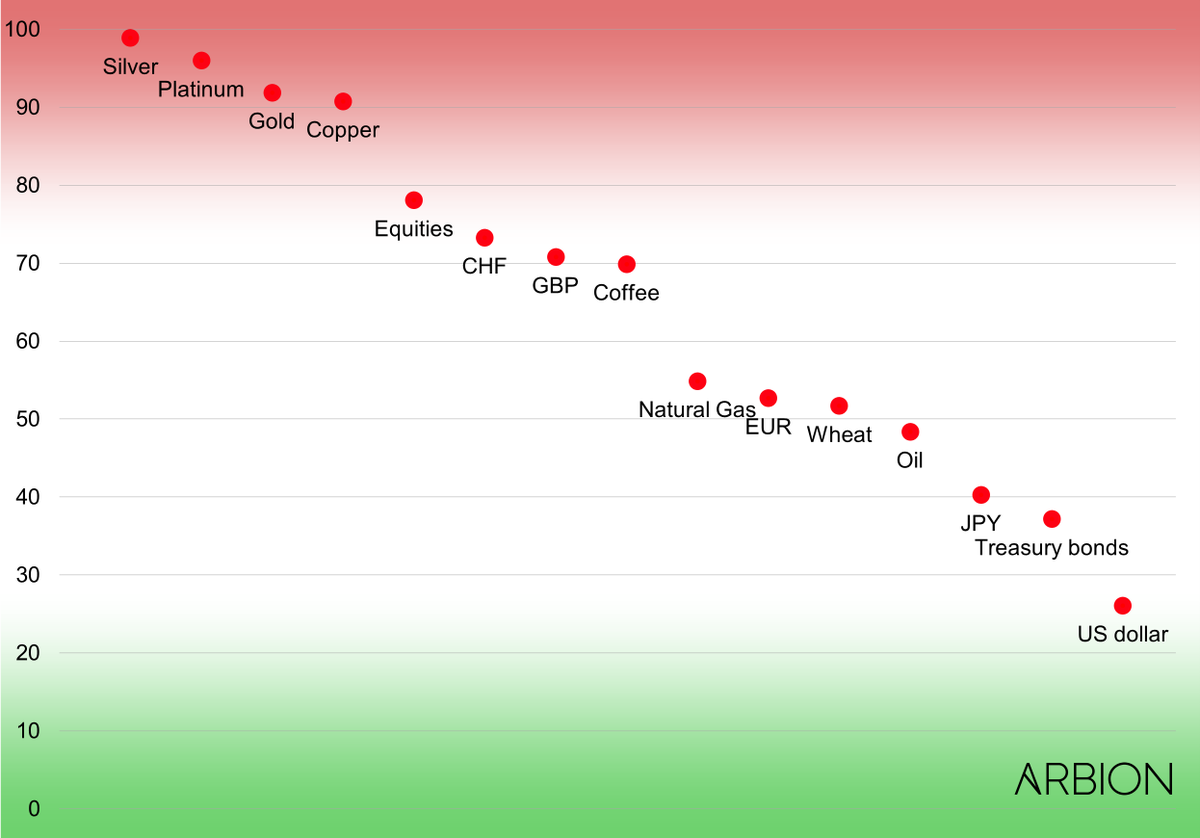
This is where current weekly sentiment ranks in percentile terms compared to its 20-year history. I know what I would be long, and short... (Data: Bloomberg, Consensus, Inc)
Marco Pabst tweet media
English
1
2
2
277
Marco Pabst retweetet
George Noble
George Noble@gnoble79·
This is the most SHAMELESS structural manipulation of a major index I've ever seen. SpaceX is preparing what could be the largest IPO in history. Target valuation: $1.75 trillion. That would make it the sixth-largest company in America on day one. And Nasdaq wants the listing so badly they're literally CHANGING how the Nasdaq-100 works. In February, Nasdaq published a "consultation" proposing sweeping changes to how companies enter the index. The timing is pure coincidence, of course. Just like it's pure coincidence that SpaceX has reportedly made fast index inclusion a CONDITION of listing on Nasdaq. Here's what they're proposing: A new "Fast Entry" rule would let any newly listed company whose market cap ranks in the top 40 of current Nasdaq-100 members get added to the index after just 15 trading days. No seasoning period. No liquidity requirements. Completely exempt from the standards every other company had to meet. Currently, new public companies typically wait up to a year before they're eligible for major index inclusion. That waiting period exists for a reason. It lets the market establish real price discovery. It protects passive investors from being forced into untested, illiquid stocks. And Nasdaq wants to throw all of that out. For ONE listing. But the Fast Entry rule isn't even the worst part... The real scandal is the 5x float multiplier. Right now, the S&P 500 uses a free-float adjusted methodology. If only 5% of a company's shares are available for public trading, the index weights you at 5% of total market cap. That's common sense. You weight a company based on what investors can actually buy. Nasdaq's current methodology already uses total market cap rather than free-float for weighting. But for very low-float stocks, they at least had a 10% minimum float threshold. Under the new proposal, that threshold DISAPPEARS entirely. Instead, any stock with less than 20% free float gets weighted at FIVE TIMES its actual float percentage, capped at 100%. Do the math on SpaceX: If SpaceX IPOs at $1.75 trillion and floats 5% of its shares, there would be roughly $87.5 billion worth of stock available for public trading. Under Nasdaq's proposed 5x multiplier, the index would weight SpaceX at 25% of its total market cap. That means passive funds would be forced to buy as if SpaceX were a $437.5 billion company. But only $87.5 billion of stock actually exists in the market. You are forcing hundreds of billions in passive buying into a $87.5 billion float. QQQ alone manages nearly $400 billion. The total Nasdaq-100 ecosystem represents over $1.4 trillion in exposure across ETFs, mutual funds, structured notes, and derivatives. Every single passive vehicle tracking this index would be REQUIRED to buy SpaceX at whatever price the market dictates. On Day 15. With zero price discovery. Zero track record as a public company. And a float so thin you could read through it. So what this actually does is it creates a structural wealth transfer mechanism. The passive bid from index funds pushes the stock price higher. That higher price benefits exactly one group of people: the insiders and early investors who own the other 95% of the shares. And when lock-up periods expire 90 to 180 days later? Those insiders sell into the artificially inflated passive bid. Your 401(k) is the exit liquidity. This is the fundamental corruption of indexing. Indexing used to be brilliant. Low cost. Efficient. You were free-riding on the price discovery done by active managers. The index reflected the market. Now the index IS the market. Trillions of dollars flow blindly into whatever the index tells them to buy. And the people who control the index methodology are changing the rules to serve the interests of a single IPO candidate. The S&P 500 requires companies to have at least 50% of shares available for public trading. It requires 6 to 12 months of seasoning. It uses free-float adjusted weighting so passive investors aren't buying phantom liquidity. Nasdaq is doing the exact opposite. 15 days. No float requirement. 5x multiplier on insider-held shares. Every passive investor in QQQ, QQQM, and every fund benchmarked to the Nasdaq-100 should understand what's about to happen: The rules are being rewritten to benefit IPO issuers and early-stage insiders, and your capital is the tool being USED to enrich them. 45 years in this business and I've watched Wall Street find creative new ways to separate retail investors from their money in every cycle. But usually they at least try to be subtle about it. This one they put in a PDF and called it a "consultation." What's your take?
English
339
962
4.5K
847.1K
Marco Pabst
Marco Pabst@marcopabst·
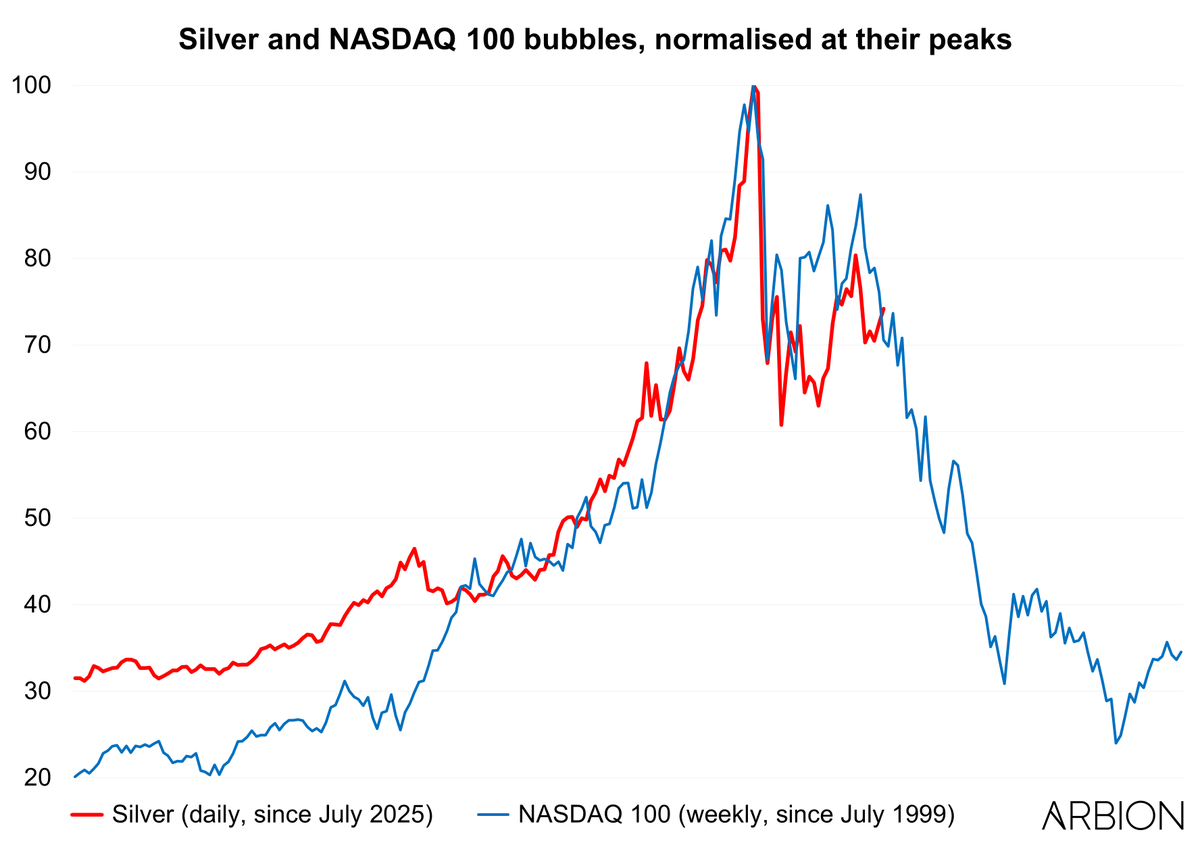
This probably won't age well but I find the comparison between the NASDAQ bubble and the recent silver move intriguing...
Marco Pabst tweet media
English
0
0
2
279
Marco Pabst
Marco Pabst@marcopabst·
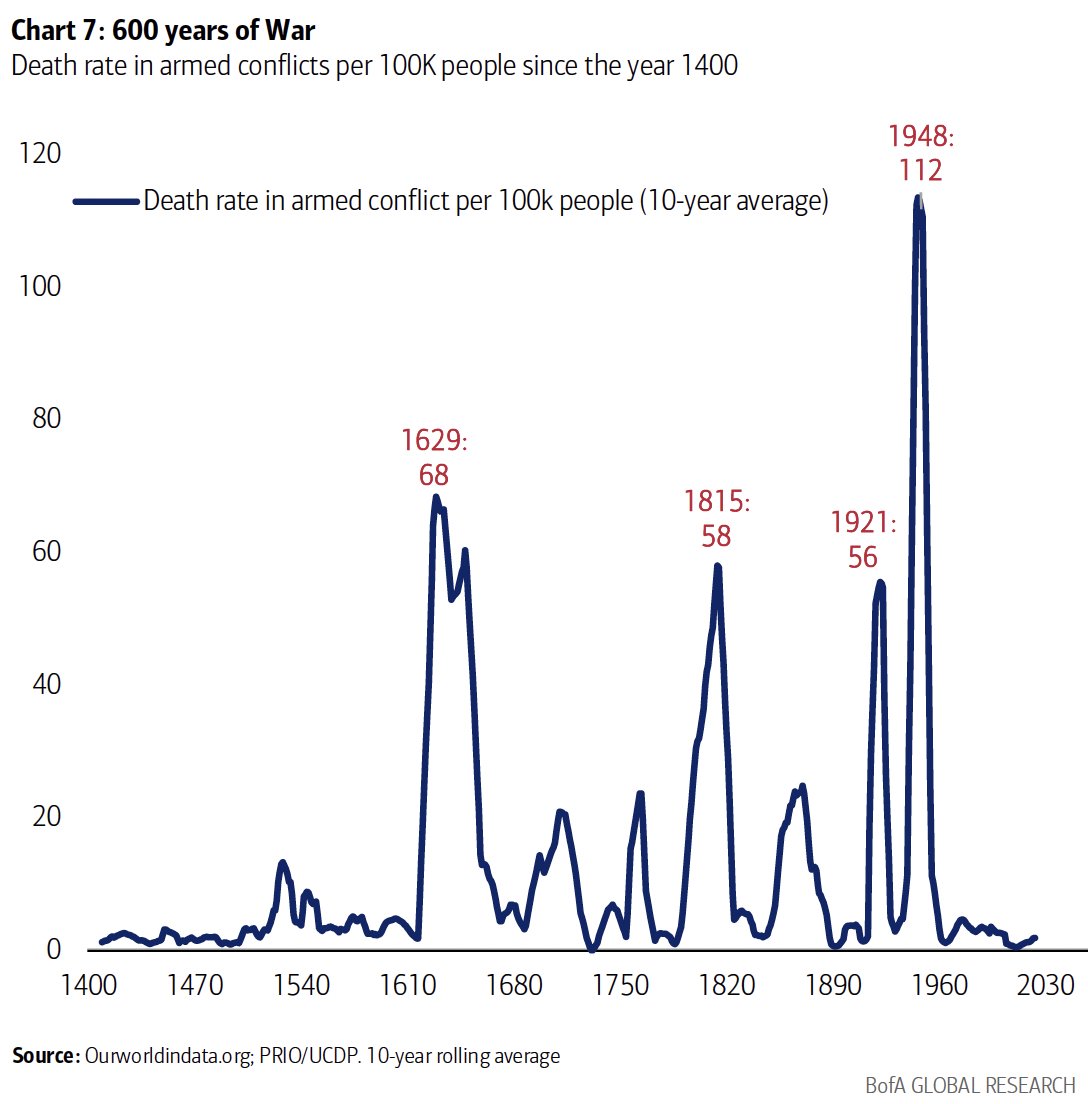
With all the doom and gloom every day, we should remind ourselves that we are living in the most peaceful period in 500 years.
Marco Pabst tweet media
English
0
0
2
349
Marco Pabst
Marco Pabst@marcopabst·
@vctrjmnz Yes, I was just sick of all the doom and gloom.
English
0
0
1
80
Marco Pabst
Marco Pabst@marcopabst·
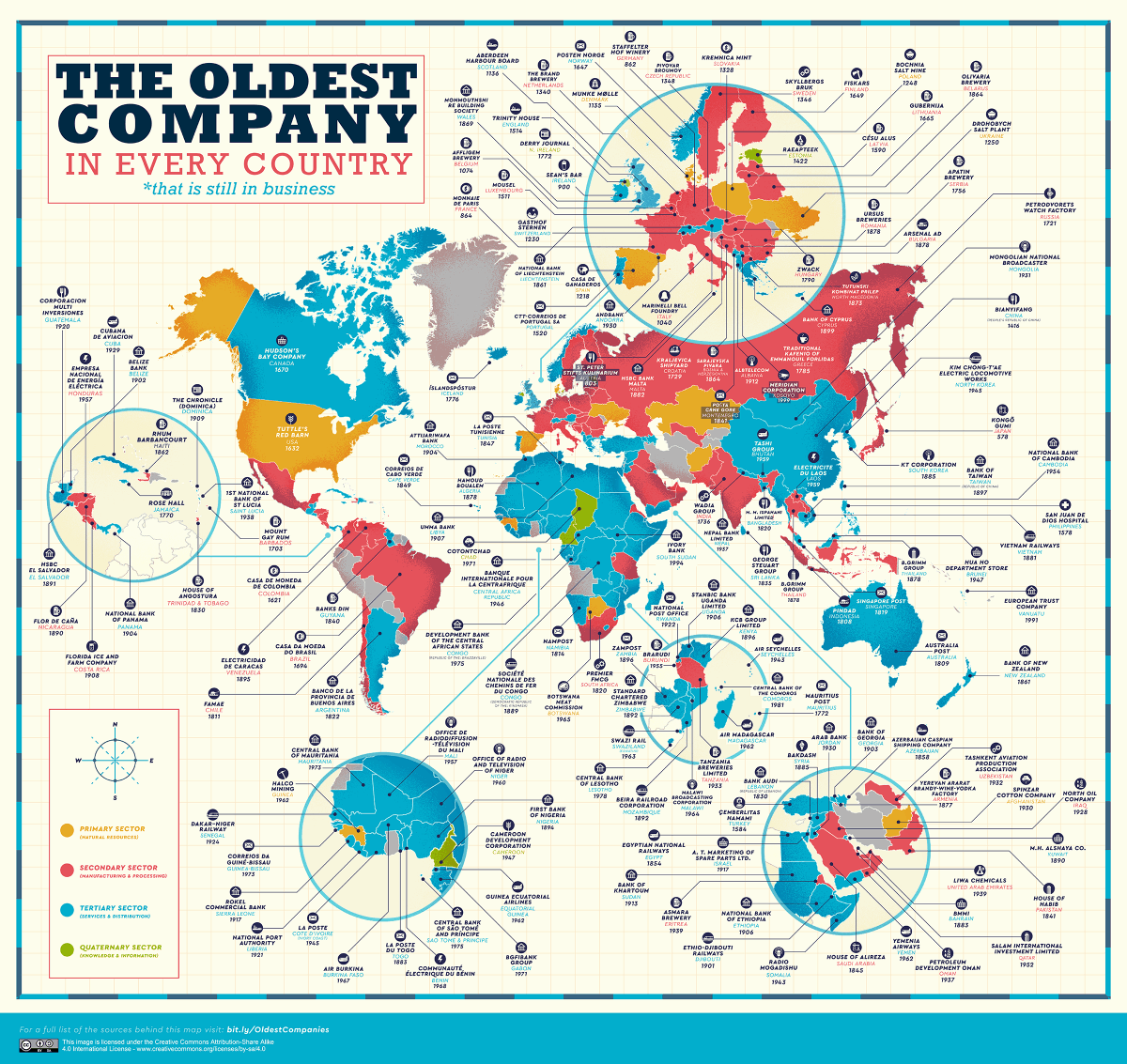
The oldest company in every country, that is still in business. Source: BofA
Marco Pabst tweet media
English
1
3
17
1.5K
Marco Pabst retweetet
Edi Rama
Edi Rama@ediramaal·
It’s high time to cut the rope and go straight to the point. The Islamic Revolutionary Guard Corps is a terrorist organization and it must be treated as such. Not only through sanctions against the Khomeinist Republic, but by officially calling it by its true name and listing it among terrorist organizations, as the United States and Canada have already done. Not only because we stand firm with Israel and with the peace-seeking brotherly Arab countries. Not only because we support the United States in militarily supporting Israel today under the leadership of President Donald Trump. Not only because the European Union, through President Ursula von der Leyen, has once again underlined today the murderous nature of the Tehran regime. But first and foremost, on a day like this, when acts, not just words, are required, in honoring the endless innocent victims of the bloody Islamic Revolutionary Guard Corps. Albania has faced firsthand the barbaric face of the Tehran regime through its cyber aggressions against our country. For us, this is not abstract geopolitics. It is national security, moral and legal clarity. Albania will act accordingly. We will call the Revolutionary Guard what it is and list it among terrorist organizations, and we call upon our European friends to do the same. We fully endorse every decisive effort to prevent once and for all the murderers in Tehran from acquiring nuclear or any other military capacity to harm Israel or any other peace-loving nation in the Middle East. Terrorism must be named. And once named, it must be stopped.
English
0
889
6.6K
1.1M
Marco Pabst retweetet
Bill Ackman
Bill Ackman@BillAckman·
President @realDonaldTrump will go down in history as one of the greatest and most consequential presidents we have ever had. His ability and willingness to make bold and consequential decisions for the benefit of future generations based on the hard and cold facts at hand rather than short-term political considerations is one of his greatest strengths. No longer are we governed by the politics of the weak who have brought us close to the edge with their weakness and self-interested short-termism. God bless our nation, our military, and our president. Let’s all pray for our troops who risk their lives on behalf of all of us so we can look forward to a world where evil is eliminated and good prevails. What we do in life echoes in eternity.
Open Source Intel@Osint613

BREAKING: 🔴🔴 U.S. PRESIDENT DONALD TRUMP: "A SHORT TIME AGO, THE UNITED STATES MILITARY BEGAN MAJOR COMBAT OPERATIONS IN IRAN."

English
7K
9.8K
65.2K
4.2M
Marco Pabst
Marco Pabst@marcopabst·
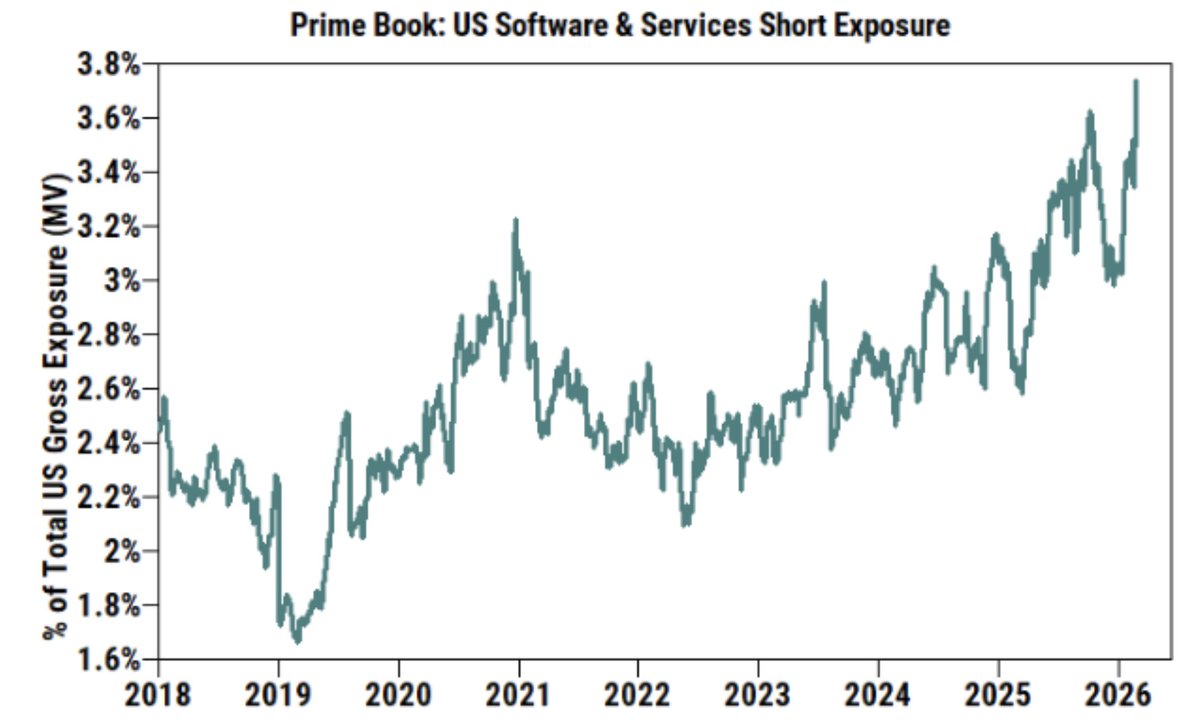
Have we reached peak bearishness on software stocks?
Marco Pabst tweet media
English
1
1
2
285
Marco Pabst
Marco Pabst@marcopabst·
@markgadala It appears to me you never worked in Finance to understand the moat of Bloomberg…
English
0
1
35
1.8K
Mark Gadala-Maria
Mark Gadala-Maria@markgadala·
A Bloomberg Terminal costs $24,000 a year. Someone just recreated one using Perplexity Computer for $200 a month. Bloomberg's moat was never the data, that's increasingly commoditized. It was the interface: thousands of keyboard shortcuts, proprietary screens, and muscle memory that finance professionals spent years learning. The switching cost wasn't price, it was retraining. AI agents collapse that moat. If Computer can replicate the interface and pull equivalent data from public sources, the only remaining lock-in is the chat network and real-time feeds. One is a social product. The other is a licensing negotiation. Bloomberg did $12.6 billion in revenue last year selling terminals. The first credible open-source alternative just got built in an afternoon.
ₕₐₘₚₜₒₙ@hamptonism

Perplexity just became the the first Al company to truly go head-to-head with the Bloomberg Terminal... Using Perplexity Computer (with no local setup or single LLM limitation), it was able to build me a terminal with real-time data to analyze $NVDA using Perplexity Finance:
English
328
437
2.6K
2.1M