Matt McDonnell

26.9K posts

Matt McDonnell banner
Matt McDonnell

Matt McDonnell

@mattmcd

Geek Code: GS/E d s: a+ C(++++) U W++ N+ w M PS+ PE Y+ X+ !tv b+++ DI+ D e++++ r++ y?

UK Beigetreten Haziran 2007
1.5K Folgt690 Follower
Angehefteter Tweet
Matt McDonnell
Matt McDonnell@mattmcd·
s=[1 1 1]';n=@(a)conv2(s,s',1*a,'same')-a;lf=@(a)n(a)==2&a|n(a)==3;a=rand(128)>0.8;for ii=1:500,spy(a);drawnow;a=lf(a);end #MATLAB
English
1
4
27
0
Matt McDonnell retweetet
Andrej Karpathy
Andrej Karpathy@karpathy·
LLM Knowledge Bases Something I'm finding very useful recently: using LLMs to build personal knowledge bases for various topics of research interest. In this way, a large fraction of my recent token throughput is going less into manipulating code, and more into manipulating knowledge (stored as markdown and images). The latest LLMs are quite good at it. So: Data ingest: I index source documents (articles, papers, repos, datasets, images, etc.) into a raw/ directory, then I use an LLM to incrementally "compile" a wiki, which is just a collection of .md files in a directory structure. The wiki includes summaries of all the data in raw/, backlinks, and then it categorizes data into concepts, writes articles for them, and links them all. To convert web articles into .md files I like to use the Obsidian Web Clipper extension, and then I also use a hotkey to download all the related images to local so that my LLM can easily reference them. IDE: I use Obsidian as the IDE "frontend" where I can view the raw data, the the compiled wiki, and the derived visualizations. Important to note that the LLM writes and maintains all of the data of the wiki, I rarely touch it directly. I've played with a few Obsidian plugins to render and view data in other ways (e.g. Marp for slides). Q&A: Where things get interesting is that once your wiki is big enough (e.g. mine on some recent research is ~100 articles and ~400K words), you can ask your LLM agent all kinds of complex questions against the wiki, and it will go off, research the answers, etc. I thought I had to reach for fancy RAG, but the LLM has been pretty good about auto-maintaining index files and brief summaries of all the documents and it reads all the important related data fairly easily at this ~small scale. Output: Instead of getting answers in text/terminal, I like to have it render markdown files for me, or slide shows (Marp format), or matplotlib images, all of which I then view again in Obsidian. You can imagine many other visual output formats depending on the query. Often, I end up "filing" the outputs back into the wiki to enhance it for further queries. So my own explorations and queries always "add up" in the knowledge base. Linting: I've run some LLM "health checks" over the wiki to e.g. find inconsistent data, impute missing data (with web searchers), find interesting connections for new article candidates, etc., to incrementally clean up the wiki and enhance its overall data integrity. The LLMs are quite good at suggesting further questions to ask and look into. Extra tools: I find myself developing additional tools to process the data, e.g. I vibe coded a small and naive search engine over the wiki, which I both use directly (in a web ui), but more often I want to hand it off to an LLM via CLI as a tool for larger queries. Further explorations: As the repo grows, the natural desire is to also think about synthetic data generation + finetuning to have your LLM "know" the data in its weights instead of just context windows. TLDR: raw data from a given number of sources is collected, then compiled by an LLM into a .md wiki, then operated on by various CLIs by the LLM to do Q&A and to incrementally enhance the wiki, and all of it viewable in Obsidian. You rarely ever write or edit the wiki manually, it's the domain of the LLM. I think there is room here for an incredible new product instead of a hacky collection of scripts.
English
2.7K
6.5K
54.6K
19.1M
Matt McDonnell retweetet
Google
Google@Google·
We just released Gemma 4 — our most intelligent open models to date. Built from the same world-class research as Gemini 3, Gemma 4 brings breakthrough intelligence directly to your own hardware for advanced reasoning and agentic workflows. Released under a commercially permissive Apache 2.0 license so anyone can build powerful AI tools. 🧵↓
English
725
3.1K
20.5K
7.6M
Matt McDonnell retweetet
Patrick McKenzie
Patrick McKenzie@patio11·
@conor64 I have a long, diverse, and individualized answer for you. Pervasive competence issues at the core domain of public health were bad; the repeated decision to do monstrous acts and drape the field’s moral authority on them was worse. worksinprogress.co/issue/the-stor…
English
3
15
443
11.1K
Matt McDonnell retweetet
Amin Karbasi
Amin Karbasi@aminkarbasi·
I left @GoogleResearch almost two years ago, so it makes me genuinely happy to see our work on polar quantization (my last project), which eventually led to extreme compression, being recognized there. It is a nice reminder that good fundamental work tends to find its place with time.
Google Research@GoogleResearch

Introducing TurboQuant: Our new compression algorithm that reduces LLM key-value cache memory by at least 6x and delivers up to 8x speedup, all with zero accuracy loss, redefining AI efficiency. Read the blog to learn how it achieves these results: goo.gle/4bsq2qI

English
46
102
2.6K
203.9K
Matt McDonnell retweetet
Sam Greydanus
Sam Greydanus@samgreydanus·
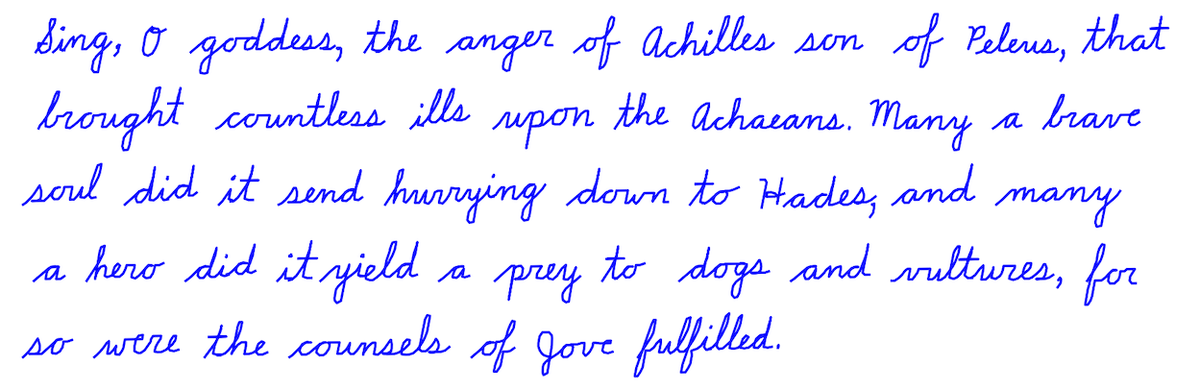
"The Cursive Transformer" is a project I finished about a year ago but forgot to post about. We trained a Transformer to write cursive! greydanus.github.io/2025/03/30/cur…
Sam Greydanus tweet media
English
6
23
277
13.6K
Matt McDonnell retweetet
Andrej Karpathy
Andrej Karpathy@karpathy·
Software horror: litellm PyPI supply chain attack. Simple `pip install litellm` was enough to exfiltrate SSH keys, AWS/GCP/Azure creds, Kubernetes configs, git credentials, env vars (all your API keys), shell history, crypto wallets, SSL private keys, CI/CD secrets, database passwords. LiteLLM itself has 97 million downloads per month which is already terrible, but much worse, the contagion spreads to any project that depends on litellm. For example, if you did `pip install dspy` (which depended on litellm>=1.64.0), you'd also be pwnd. Same for any other large project that depended on litellm. Afaict the poisoned version was up for only less than ~1 hour. The attack had a bug which led to its discovery - Callum McMahon was using an MCP plugin inside Cursor that pulled in litellm as a transitive dependency. When litellm 1.82.8 installed, their machine ran out of RAM and crashed. So if the attacker didn't vibe code this attack it could have been undetected for many days or weeks. Supply chain attacks like this are basically the scariest thing imaginable in modern software. Every time you install any depedency you could be pulling in a poisoned package anywhere deep inside its entire depedency tree. This is especially risky with large projects that might have lots and lots of dependencies. The credentials that do get stolen in each attack can then be used to take over more accounts and compromise more packages. Classical software engineering would have you believe that dependencies are good (we're building pyramids from bricks), but imo this has to be re-evaluated, and it's why I've been so growingly averse to them, preferring to use LLMs to "yoink" functionality when it's simple enough and possible.
Daniel Hnyk@hnykda

LiteLLM HAS BEEN COMPROMISED, DO NOT UPDATE. We just discovered that LiteLLM pypi release 1.82.8. It has been compromised, it contains litellm_init.pth with base64 encoded instructions to send all the credentials it can find to remote server + self-replicate. link below


English
1.4K
5.4K
28K
66.4M
Matt McDonnell retweetet
Weather Factory
Weather Factory@weatherfactory·
"The Grail was the first god-who-was-blood. The Flowermaker came from Light. The Beach-Crow was flesh. Hunger and Greed and Yearning are the matrix of appetite..." Happy #WorldStorytellingDay, from the frightful, sheer, no-man-fathomed depths of the Secret Histories! 💖
GIF
English
0
6
29
714
Matt McDonnell retweetet
Cambridge Beer Fest
Cambridge Beer Fest@cambeerfest·
Something to bear in mind? The theme for this year's Cambridge Beer Festival! Join us and raise your glasses to two iconic bears, both marking 100 year anniversaries: Winnie-the-Pooh and Paddington: tinyurl.com/4ffthmc5 #CBF2026 Dates: Monday 18 May through to Saturday 23 May
Cambridge Beer Fest tweet media
English
0
2
5
201
Matt McDonnell retweetet
Patrick McKenzie
Patrick McKenzie@patio11·
Complex Systems this week is with @philipkiely , who has recently written the book (literally) on Inference Engineering. We discussed what AI adoption looks like as an engineering matter in enterprises.
English
11
9
76
14.2K
Matt McDonnell retweetet
MMitchell
MMitchell@mmitchell_ai·
"AI" is not a stochastic parrot.🦜 I wrote this piece a couple weeks ago, but it was hard for me to finish up given AI's role in society and war over the past few weeks. I should share it at some point though. Not perfect, but here it is. @margarmitchell/no-ai-is-not-a-stochastic-parrot-a99e57766bed" target="_blank" rel="nofollow noopener">medium.com/@margarmitchel
English
11
26
160
33.8K
Matt McDonnell retweetet
Weather Factory
Weather Factory@weatherfactory·
This has no relevance whatsoever to our games. (h/t jelloloaf from Reddit, you rogue)
Weather Factory tweet media
English
0
9
69
1.9K
Matt McDonnell retweetet
Jina AI
Jina AI@JinaAI_·
jina-embeddings-v5-text is here! Our fifth generation of jina embeddings, pushing the quality-efficiency frontier for sub-1B multilingual embeddings. Two versions: small & nano, available today on Elastic Inference Service, vLLM, GGUF and MLX.
GIF
English
5
16
116
14.5K
Matt McDonnell
Matt McDonnell@mattmcd·
@karpathy Forth and other concatenative languages seem a natural fit on the generation side, I think I saw a recent HN post on this. Alternatively the LLM to DSL route where the LLM generates a constrained language with the correct abstractions. Possibly layers of DSLs
English
0
0
1
37
Andrej Karpathy
Andrej Karpathy@karpathy·
I think it must be a very interesting time to be in programming languages and formal methods because LLMs change the whole constraints landscape of software completely. Hints of this can already be seen, e.g. in the rising momentum behind porting C to Rust or the growing interest in upgrading legacy code bases in COBOL or etc. In particular, LLMs are *especially* good at translation compared to de-novo generation because 1) the original code base acts as a kind of highly detailed prompt, and 2) as a reference to write concrete tests with respect to. That said, even Rust is nowhere near optimal for LLMs as a target language. What kind of language is optimal? What concessions (if any) are still carved out for humans? Incredibly interesting new questions and opportunities. It feels likely that we'll end up re-writing large fractions of all software ever written many times over.
Thomas Wolf@Thom_Wolf

Shifting structures in a software world dominated by AI. Some first-order reflections (TL;DR at the end): Reducing software supply chains, the return of software monoliths – When rewriting code and understanding large foreign codebases becomes cheap, the incentive to rely on deep dependency trees collapses. Writing from scratch ¹ or extracting the relevant parts from another library is far easier when you can simply ask a code agent to handle it, rather than spending countless nights diving into an unfamiliar codebase. The reasons to reduce dependencies are compelling: a smaller attack surface for supply chain threats, smaller packaged software, improved performance, and faster boot times. By leveraging the tireless stamina of LLMs, the dream of coding an entire app from bare-metal considerations all the way up is becoming realistic. End of the Lindy effect – The Lindy effect holds that things which have been around for a long time are there for good reason and will likely continue to persist. It's related to Chesterton's fence: before removing something, you should first understand why it exists, which means removal always carries a cost. But in a world where software can be developed from first principles and understood by a tireless agent, this logic weakens. Older codebases can be explored at will; long-standing software can be replaced with far less friction. A codebase can be fully rewritten in a new language. ² Legacy software can be carefully studied and updated in situations where humans would have given up long ago. The catch: unknown unknowns remain unknown. The true extent of AI's impact will hinge on whether complete coverage of testing, edge cases, and formal verification is achievable. In an AI-dominated world, formal verification isn't optional—it's essential. The case for strongly typed languages – Historically, programming language adoption has been driven largely by human psychology and social dynamics. A language's success depended on a mix of factors: individual considerations like being easy to learn and simple to write correctly; community effects like how active and welcoming a community was, which in turn shaped how fast its ecosystem would grow; and fundamental properties like provable correctness, formal verification, and striking the right balance between dynamic and static checks—between the freedom to write anything and the discipline of guarding against edge cases and attacks. As the human factor diminishes, these dynamics will shift. Less dependence on human psychology will favor strongly typed, formally verifiable and/or high performance languages.³ These are often harder for humans to learn, but they're far better suited to LLMs, which thrive on formal verification and reinforcement learning environments. Expect this to reshape which languages dominate. Economic restructuring of open source – For decades, open-source communities have been built around humans finding connection through writing, learning, and using code together. In a world where most code is written—and perhaps more importantly, read—by machines, these incentives will start to break down.⁴ Communities of AIs building libraries and codebases together will likely emerge as a replacement, but such communities will lack the fundamentally human motivations that have driven open source until now. If the future of open-source development becomes largely devoid of humans, alignment of AI models won't just matter—it will be decisive. The future of new languages – Will AI agents face the same tradeoffs we do when developing or adopting new programming languages? Expressiveness vs. simplicity, safety vs. control, performance vs. abstraction, compile time vs. runtime, explicitness vs. conciseness. It's unclear that they will. In the long term, the reasons to create a new programming language will likely diverge significantly from the human-driven motivations of the past. There may well be an optimal programming language for LLMs—and there's no reason to assume it will resemble the ones humans have converged on. TL; DR: - Monoliths return – cheap rewriting kills dependency trees; smaller attack surface, better performance, bare-metal becomes realistic - Lindy effect weakens – legacy code loses its moat, but unknown unknowns persist; formal verification becomes essential - Strongly typed languages rise – human psychology mattered for adoption; now formal verification and RL environments favor types over ergonomics - Open source restructures – human connection drove the community; AI-written/read code breaks those incentives; alignment becomes decisive - New languages diverge – AI may not share our tradeoffs; optimal LLM programming languages may look nothing like what humans converged on ¹ x.com/mntruell/statu… ² x.com/anthropicai/st… ³ wesmckinney.com/blog/agent-erg…#issuecomment-3717222957" target="_blank" rel="nofollow noopener">github.com/tailwindlabs/t…

English
699
651
8K
1.2M
Matt McDonnell retweetet
Jina AI
Jina AI@JinaAI_·
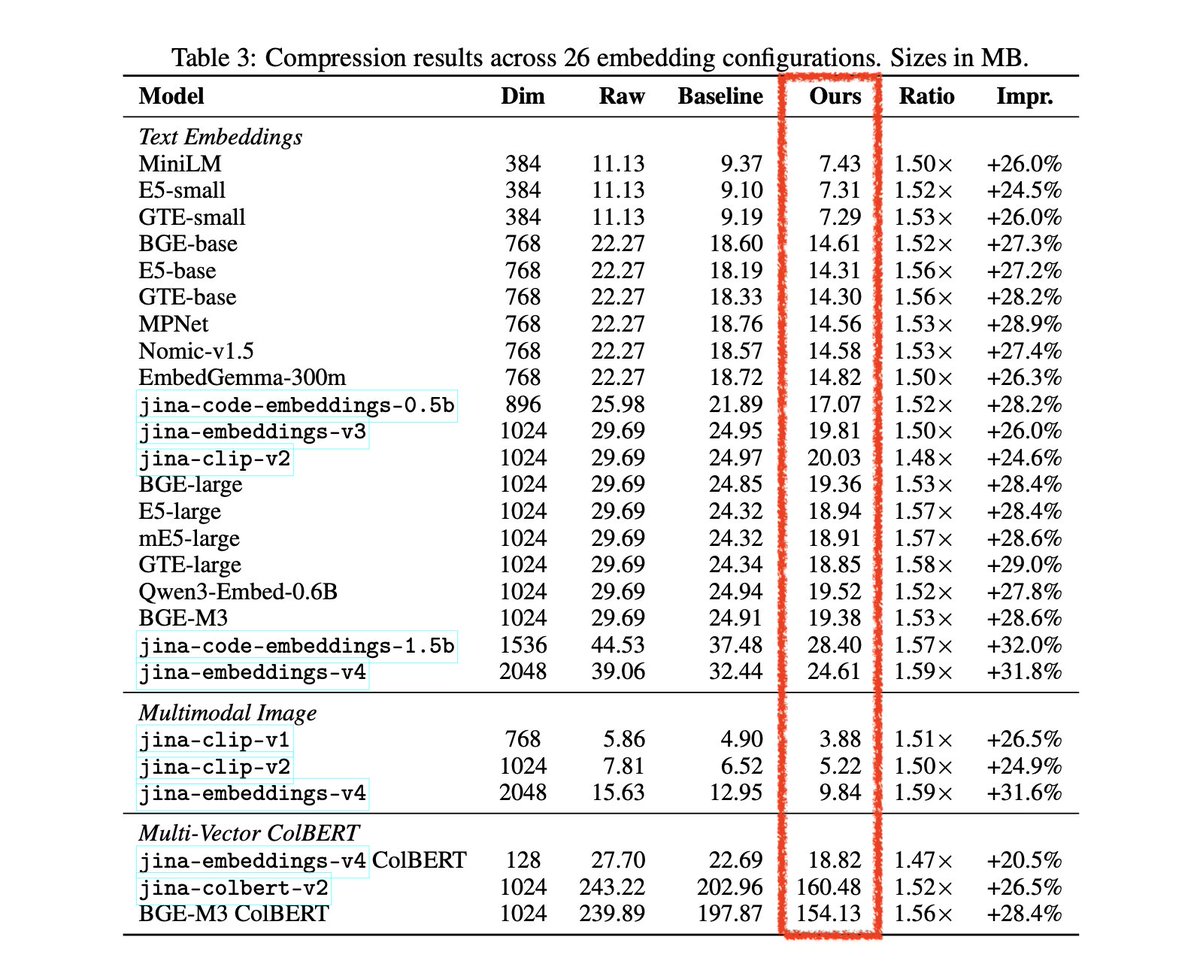
Convert your embeddings to spherical coordinates before compression - this trick cuts embedding storage from 240 GB to 160 GB, and 25% better than the best lossless baseline. Reconstruction is near-lossless as the error stays below float32 machine epsilon - so retrieval quality is preserved perfectly. Works across text, image, and multi-vector embeddings. No training, no codebooks.
Jina AI tweet media
English
10
65
540
35.3K
Matt McDonnell retweetet
snackula flow
snackula flow@residentgiant·
@BrianFargo Loved this game so much as a kid, even if I had no idea wtf I was doing in it. This version of Devo's "Some Things Never Change" is burned deep into my brain youtu.be/Ib8IYfcOnWU
YouTube video
YouTube
English
0
3
18
2.6K
Matt McDonnell
Matt McDonnell@mattmcd·
@patio11 On the 'keeping paperwork' aspect in your post, 'The Terrorist's Dilemma' by Jacob Shapiro is a good read on management of covert organizations.
English
0
0
4
143
Patrick McKenzie
Patrick McKenzie@patio11·
In finance, we don't have the luxury of pretending fraud was invented by political rivals. And so we've gotten good at detecting signals like, e.g., an account with CAGR higher than Uber's best ever. New at Bits about Money: bitsaboutmoney.com/archive/fraud-…
English
9
38
352
27K