

Walid
51 posts


I timed how long it takes to build a page for each awareness level using @ecomwize
Unaware → Advertorial → ⏱️ 5 min
Problem Aware → Listicle → ⏱️ 5 min
Solution Aware → Landing page → ⏱️ 5 min
Most Aware → Product page → ⏱️ 5 min
20 minutes = 4 pages → full funnel ready to go.
Meanwhile most brands are spending 3 weeks on one product page and sending all their Meta traffic to it.
Like + Comment "Funnel" and I'll DM you these 4 templates to implement right away.
(must be following)

English
Walid retweetet

2.4+ ROAS ads are shifting toward visuals like this
not ugc creators, influencers, or doctors talking on camera
just simple animated scenes showing the problem clearly
you see it instantly without needing explanation
one strong hook, one visual, one clear idea
it feels more like content than an ad
that’s why people don’t scroll past
no friction, no overexplaining, just instant understanding
these animations now work across multiple niches
gut health, weight loss, skincare, supplement offers
same structure, different angles, endless variations to test
one concept can generate dozens of creatives fast
rt + comment “digest” and i’ll send the setup
(follow for dm)
English


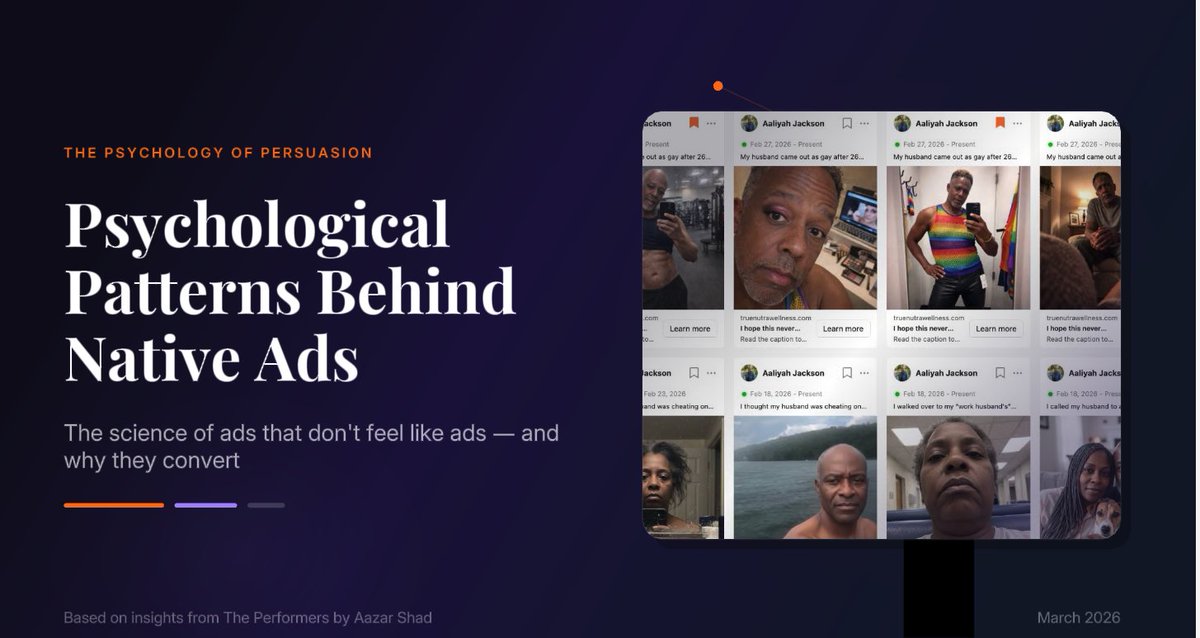
Native ads are crushing it on ad accounts.
I figured out how to make them with prompts.
Instead of 50+ hours analyzing winning hooks, copy them in a few clicks.
I made a deck of all of them with Moda.
(Usually charge $1000 for this)
Like and comment "Moda" and I'll send it.
English

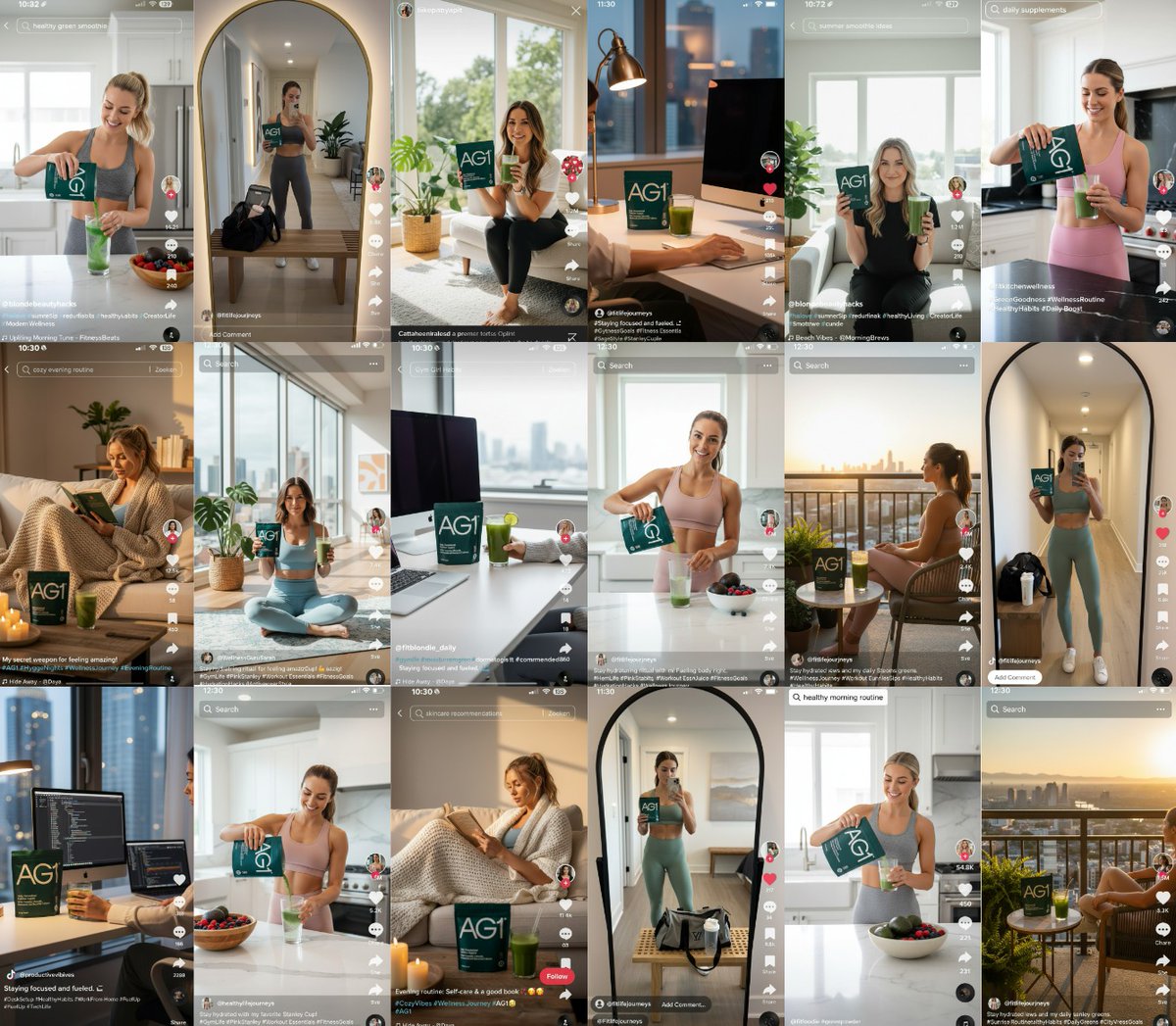
I turned Claude into an AI creative strategist trained on 10,100 AI ads with MakeUGC.
Not a copywriter.
Not a Canva template generator.
An actual performance creative operator.
Built on $100M+ in paid social spend, 1,000+ winning hooks, and failed angles that burned budget.
Comment “AD” and I’ll send the workflow.
English

I built 10 Claude Code skills for Meta Ads
They're free. Here's what they do: 👇
Operations:
bleed-check: finds ad sets burning cash with zero conversions, pauses them
rebalance: shifts budget from losers to winners automatically
fatigue-scan: catches creative fatigue before your CPMs spike
weekly-report: pulls KPIs, compares WoW, sends to Slack
Creative & Intelligence:
spy: scrapes competitor ads from the Ad Library, diffs weekly
bulk-creative: generates 50–500 ad variations, renders to PNG
hooks: writes 50+ copy variations using PAS, AIDA, BAB frameworks
deploy-ads: reads a manifest, creates campaigns via API in minutes
Setup & Architecture:
setup-capi: generates production-ready Conversions API code
audience-audit: finds overlap, maps funnel stages, fixes exclusions
How to use them:
Drop the .md files into .claude/commands/
Set your Meta access token
Type /bleed-check, /spy, /hooks — it just runs
~25 hours/week of manual work → automated.
No complex setup. No code to write.
Just slash commands.
Full skill files + setup guide in the article.
Comment "CLAUDE" and I'll share the link
(must be following!)

English

Claude Code + Nano Banana 2 is f*cking cracked 🤯
I built a skill inside Claude Code that writes JSON image prompts for Nano Banana 2, and the outputs look like they came from a professional photo shoot.
One plain-text prompt. Claude rewrites it as structured JSON with lighting, camera, composition, style, and negative prompts.
Then fires it off to Nano Banana 2.
All inside Claude Code.
Perfect for DTC brands and agencies who need high-volume ad creative without booking a shoot.
If you're using Nano Banana 2 for product shots and lifestyle images but every generation feels like pulling a slot machine lever — random lighting, inconsistent style, plastic skin, misspelled labels ...
This skill fixes the entire output:
→ You describe what you want in plain English
→ Claude rewrites it as a structured JSON prompt (lighting, camera angle, lens, depth of field, color grading — all of it)
→ Fires it to Nano Banana 2 via API
→ Saves the prompt + image in organized folders
→ You iterate on the style until it's dialed, then every output matches
No more slot machine prompting.
No more inconsistent brand imagery.
No more burning credits on unusable generations.
What you get:
- Photo-realistic product shots and lifestyle images on demand
- Full control over style, lighting, composition, and camera settings
- Saved JSON prompts you can reuse across every campaign
- A skill that gets smarter the more feedback you give it
Built 100% in Claude Code with a custom skill + Python scripts.
I put together a full playbook showing the exact skill, the JSON schema, and the workflow to set this up yourself.
Want the full playbook?
> Like this post
> Comment "BANANA"
And I'll send it over (must be following so I can DM)
English

Claude Code + Nano Banana 2 is f*cking cracked 🤯
I built a system inside Claude Code that researches any brand, writes 40 ad prompts from scratch, and fires them all to Nano Banana 2.
One brand name + one URL = 40 production-ready static ads.
All inside Claude Code.
I took @alexgoughcooper's brilliant framework and automated the whole thing inside Claude Code.
Perfect for DTC brands and agencies who need high-volume ad creative without briefing a designer or spending hours in Canva.
If you're finding winning ad concepts on Meta and manually recreating them one at a time in Higgsfield — copying prompts, pasting product details, tweaking aspect ratios, downloading, organizing...
This system eliminates the entire loop:
→ Give Claude a brand name and URL
→ It researches the brand's fonts, colors, packaging, and photography style
→ Builds a Brand DNA document from scratch
→ Fills in Alex's 40 proven ad templates (headline, us vs them, testimonial, UGC, review cards, stat callouts) with brand-specific details
→ Fires every prompt to Nano Banana 2 with your product photos as reference
→ Downloads finished ads into organized folders with an HTML gallery
No Higgsfield.
No manual prompt filling.
No copy-pasting between tools.
What you get:
→ 40 ad formats filled with your exact brand colors, fonts, and copy
→ 4 variations per format so you pick the best output
→ Product photos passed as reference so the model matches your real packaging
→ A reusable system — new brand, new folder, same pipeline
Built 100% in Claude Code with Nano Banana 2.
I put together a full playbook & Loom video showing the exact process to set this up yourself.
Want access for free?
> Like this post
> Comment "NANO"
And I'll send it over (must be following so I can DM)
English

I built 10 Claude Code skills for Meta Ads
They're free. Here's what they do: 👇
Operations:
bleed-check: finds ad sets burning cash with zero conversions, pauses them
rebalance: shifts budget from losers to winners automatically
fatigue-scan: catches creative fatigue before your CPMs spike
weekly-report: pulls KPIs, compares WoW, sends to Slack
Creative & Intelligence:
spy: scrapes competitor ads from the Ad Library, diffs weekly
bulk-creative: generates 50–500 ad variations, renders to PNG
hooks: writes 50+ copy variations using PAS, AIDA, BAB frameworks
deploy-ads: reads a manifest, creates campaigns via API in minutes
Setup & Architecture:
setup-capi: generates production-ready Conversions API code
audience-audit: finds overlap, maps funnel stages, fixes exclusions
How to use them:
Drop the .md files into .claude/commands/
Set your Meta access token
Type /bleed-check, /spy, /hooks — it just runs
~25 hours/week of manual work → automated.
No complex setup. No code to write.
Just slash commands.
Full skill files + setup guide in the article.
Comment "CLAUDE" and I'll share the link
(must be following!)

English
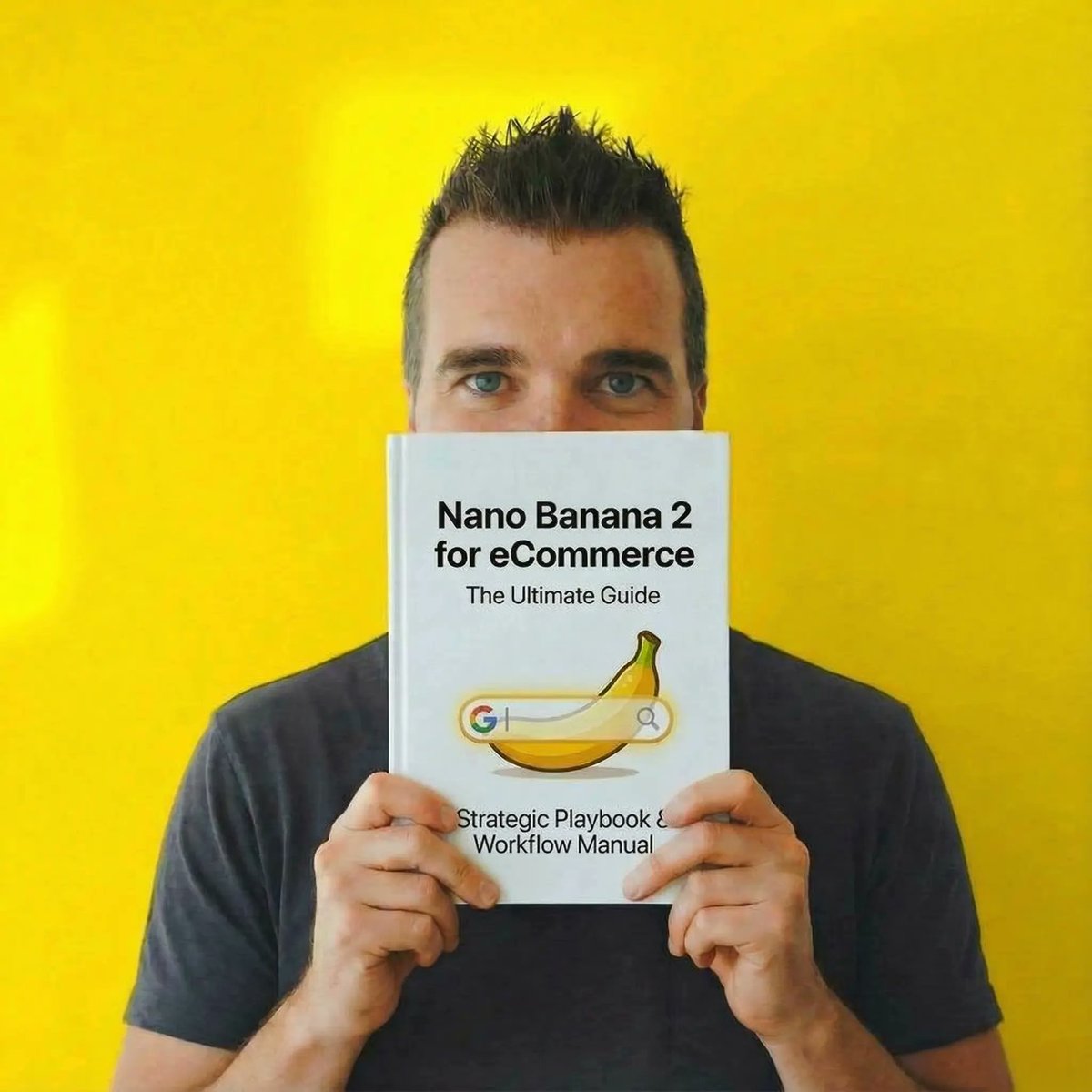
Nano Banana 2 is f*cking ridiculous for DTC ad creative 🤯
One product photo → 50+ campaign-ready images.
Virtual photoshoots, persona testing, text-in-image hooks, infographic ads, relighting to fight fatigue, and instant localization into any language.
Perfect for DTC brands and agencies who are still spending $10K+ on photoshoots that fatigue in 3 days.
If you're booking new shoots every time you want to test a different persona, waiting weeks for basic lifestyle variations, and watching AI-generated text come out looking like a ransom note...
Nano Banana 2 eliminates the entire bottleneck:
→ Upload 14 reference images of your product
→ 100% accuracy on logos, labels, and packaging across every generation
→ Infinite lifestyle shots from a single SKU — place your product in any environment
→ Swap models instantly for persona testing without booking talent
→ Pixel-perfect text rendered inside the image in any language
→ Relight winning ads to fight fatigue without reshooting
No more $10K shoots that die in 72 hours.
No more weeks waiting for basic variations.
No more AI slop with warped logos and gibberish text.
What's in the playbook:
→ "Anchor Stack" for virtual photoshoots
→ "Mannequin Swap" for persona testing
→ "Hook Factory" for native text-in-image ads
→ "Science Ad" for explainer infographics
→ Asset Recycling to refresh fatigued creative
→ Global Scale for instant multilingual localization
→ Format Fluidity for omnichannel output
Want the full Nano Banana 2 playbook for free?
> Like this post
> Comment "NANO"
And I'll send it over (must be following so I can DM)
English

I Broke Down And Analysed An Entire Advertorial.
Word by word...
Why it works.
Which mechanisms it uses.
How it converts cold traffic into buyers.
Without bragging, I am fairly confident to say that it is the best piece of content I wrote yet.
I actually implemented it in my onboarding process for new hires, to get them up to speed fast.
I will give it to you completely for free.
Like + reply "ADVERTORIAL" and I will send it
(must be following so I can DM)
English

We're giving away our Incremental Reach Guide, built for brands spending £10k–£150k/month on Meta who want to scale without recycling the same audience into the ground.
Here's the problem it solves:
Meta's AI is optimising your account into a saturation trap.
Andromeda. GEM. Lattice.
Three systems working together to get better and better at finding people likely to convert.
Until "likely to convert" just means people who've already seen your ads 5+ times.
The algorithm isn't broken. It's doing exactly what it's designed to do.
But without tracking incremental reach, you won't see it coming until your CPA is already up and your ROAS is already down.
Inside the guide:
↳ What incremental reach is and why FTI predicts CPA spikes 2–4 weeks out
↳ How Andromeda, GEM, and Lattice create saturation at scale
↳ The warning signs your account has a reach problem right now
↳ The 6-lever prioritisation framework to fix it — in the right order
↳ A weekly tracking dashboard to stay ahead of the curve
Want it?
Retweet this post
Drop "REACH" in the comments and I'll send it over
GIF
English

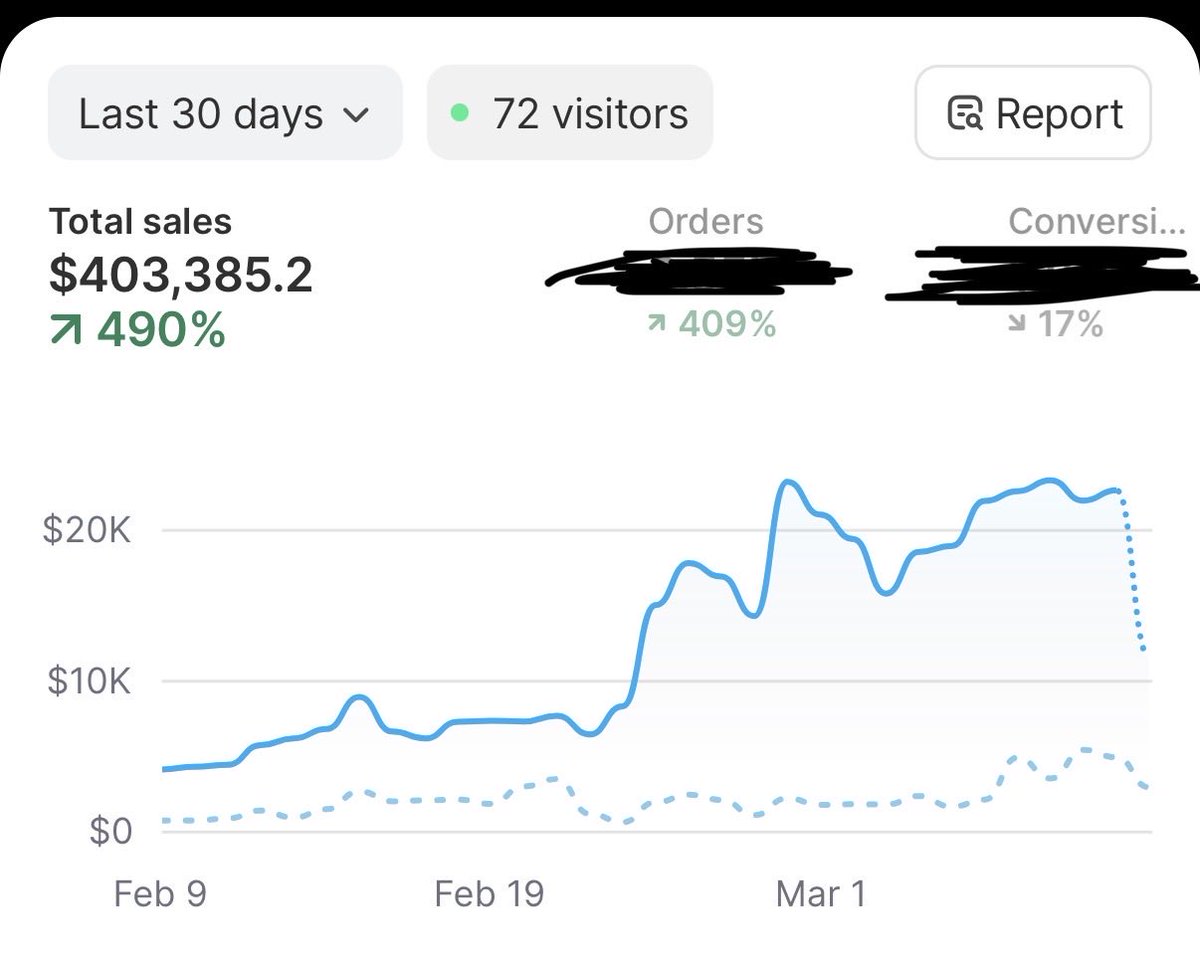
I'm hiring a full-time copywriter for my DTC supplement brand doing $400K+/month in straight sales revenue, running meta ads.
You'd be writing daily:→ Video ad scripts (UGC / talking head / hook variations) → Native long-form Facebook ads → Landing page and advertorial copy
Requirements:
I need someone who will work weekends and is putting full time and effort into the brand. Will pay 5-10% of ads spend on ads that scale past 5k. Don't DM me if you aren't ready to put your heart into something.
Direct response copywriting experience with e-commerce brands
Health/supplement niche experience
You understand hooks, pain points, and writing copy that converts cold traffic
You're writing the ads that drive revenue.
DM me "copy"
English

are you (or do you know) a Creative Strategist?
we’re an 8-figure supplement brand looking for someone who understands Supplements / Direct response / leverage AI
we’re scaling fast and launching new brands + a ton of new angles this year.
could be a great opportunity for the right person.
if you're hungry and dangerous:
DM me + reply “Creative” so I know it's you.
if you know someone who's perfect for this, please tag them or share this
English

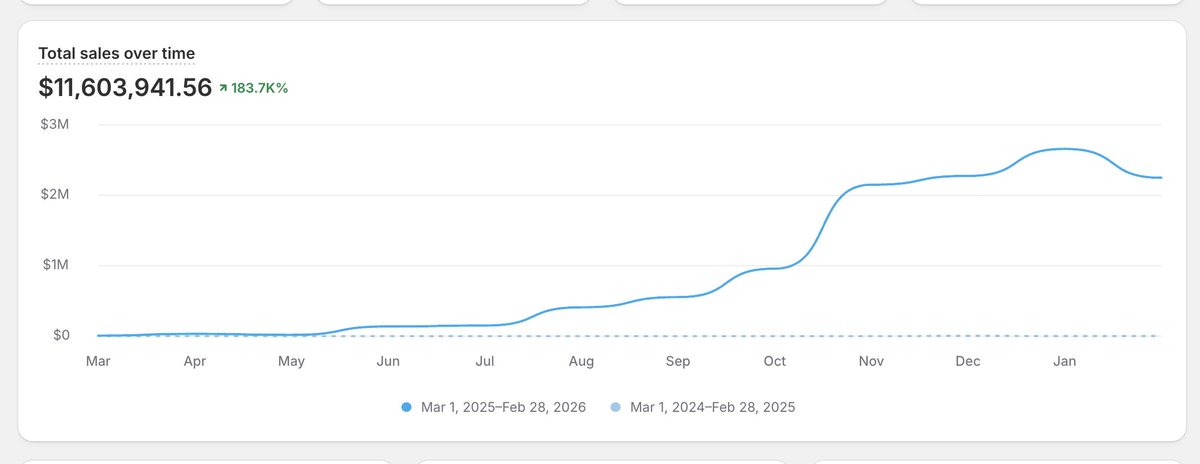
🚨 Hiring 1 Creative Strategist
Come on board to a rapidly growing 8-figure brand
Must be obsessed with research
Your job:
Spend hours studying the customer avatar
Find new angles, hooks, and ideas that convert
Only A players
Bonus on winning creatives
Comment + DM
English

Right now everyone is trying to crack AI static ads the same way.
JSON prompts. 4 different LLMs. Copy-pasting between tools. Tweaking parameters. Debugging hands. Fixing garbled text. Spending 45 minutes on one ad that still needs a designer to clean up.
I know because I built that exact workflow.
I shared it publicly. 859 people wanted it.
And then I stopped using it.
Here is what most people are doing right now:
1. Write a detailed JSON prompt with product specs, persona, angle, layout.
2. Feed it to GPT or Gemini for the image.
3. Realize the text is wrong.
4. Open Canva or Figma to fix it.
5. Try again with a different model.
6. Repeat 10 more times.
6 steps. 4 tools. 45 minutes. One static ad.
Here is what I do now:
Pick a product. Pick a theme. Pick an angle. Click generate. Launch.
3 clicks. Done.
No JSON. No prompt engineering. No bouncing between tools.
The strategic thinking is already built into the system.
Hooks. Layouts. Visual hierarchy. What actually converts on Meta.
Trained on what we have learned managing millions in ad spend across 150+ brands.
This is the difference between engineering a prompt and engineering a system.
One makes you feel productive. The other makes you profitable.
I put together a breakdown showing exactly how the old prompt workflow compares to the 3-click system we use now.
Comment "STATIC" and I will send it over.
English