Angehefteter Tweet
The Georgetown Conclave: A New Kind of Pakistan Conversation
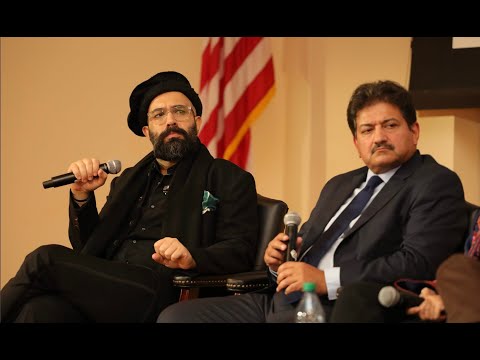
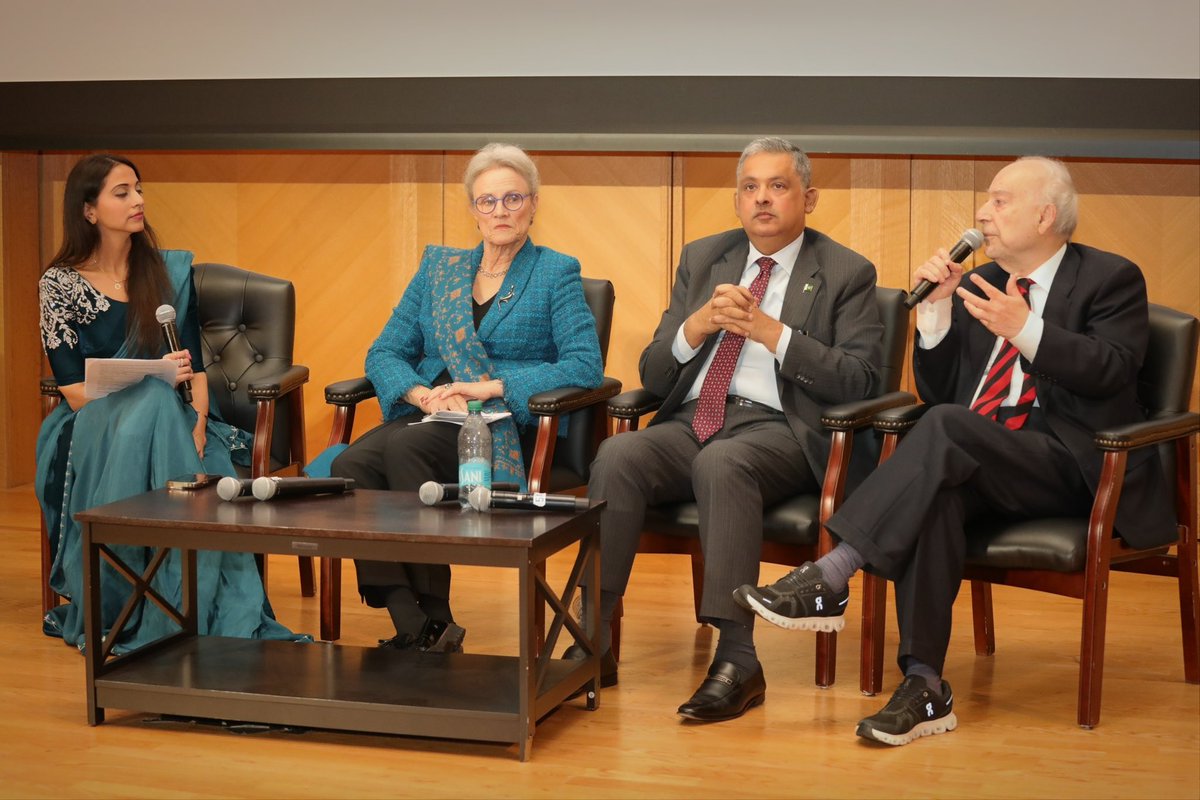
The inaugural Georgetown Pakistan Public Policy Conclave (GP3C) opened last weekend (date?) with the kind of focus and momentum that is increasingly rare in diaspora spaces. Conceived and executed by Georgetown students and Wajahat Saeed Khan’s Pak Futures Foundation, the conclave involved the McCourt School of Public Policy, the Walsh School of Foreign Service, and Georgetown’s School of Health—three anchors of one of the world’s most powerful policy/academic ecosystems.
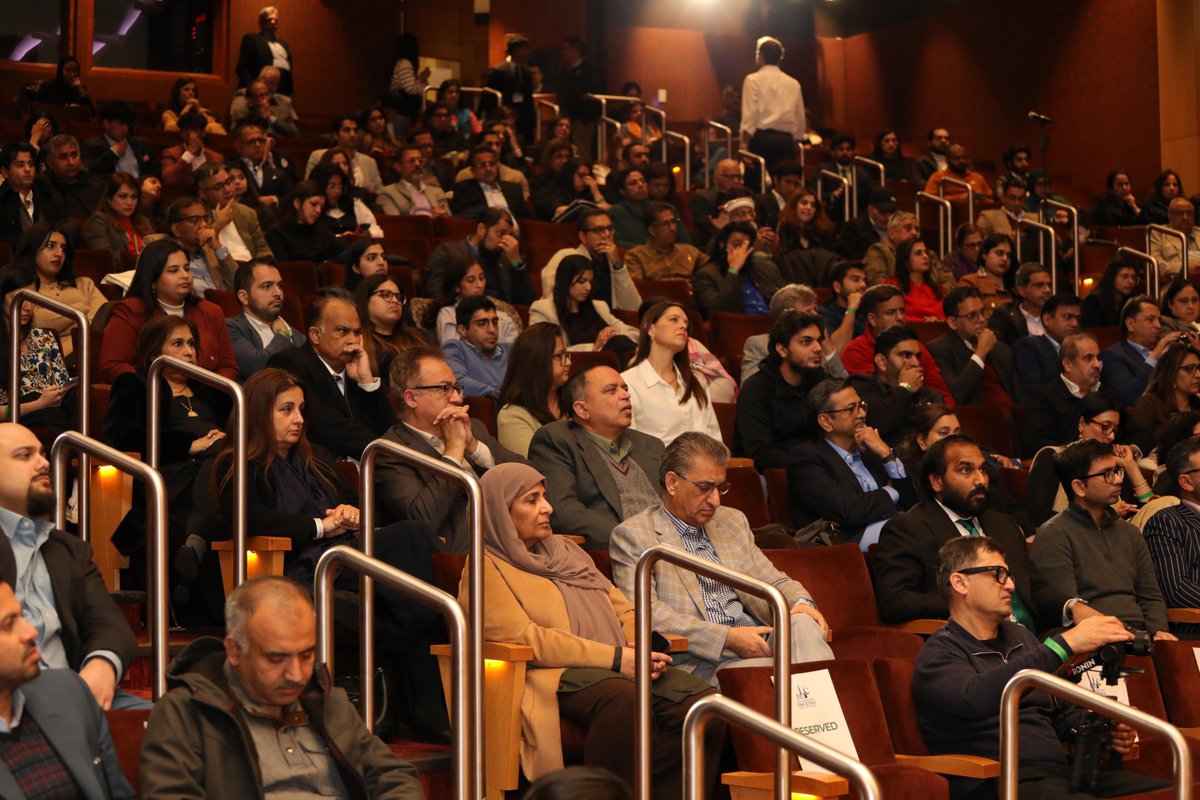
With standing room only capacity, more than 450 people packed themselves in for a full day of sharp debate, tough questions, and a candid reckoning with Pakistan’s political and civic crises, both inside the 1.4-million-strong American diaspora and back home. By the time the doors closed, a simple reality had come into focus: a new generation had stepped into the arena of discourse and debate, without waiting for permission or precedent.
What these Gen-Zers—-(who’s student leaders range from Nankana Sahib to Chicago, and from Boston to Lahore) created at Georgetown was more than an event. It was the emergence of a collective voice of a majority that has not been allowed a seat at the table, and has been missing in this discourse for far too long.
A Success Measured in Ideas, Not Optics
The scale of GP3C’s ambition was matched only by its execution. More than forty-five panelists—spanning public health, public policy, law, media, geopolitics, climate science, human rights, and diaspora leadership—filled Georgetown’s halls. Every one of them arrived, in person or online. And even when former PTI provincial minister Taimur Saleem Jhagra was stopped by authorities at Peshawar Airport and prevented from boarding his flight, he joined remotely, the disruption absorbed by student organizers with unflinching composure.
The intellectual weight of the day came from a roster that cut across disciplines and generations. Speakers included Dr. Sohail Agha, founder of the Behavioral Insights Lab; Dr. Saud Anwar, Connecticut State Senator and public-health leader; Dr. Junaid Abdul Razzak, emergency-medicine scholar at Weill Cornell; Sabrina Siddiqui Ahmed, national political correspondent at The Wall Street Journal; Ambassador Akbar S. Ahmed, scholar, author, and former diplomat; Ahmad Rafay Alam, environmental lawyer; Dr. Omar Atiq, distinguished oncologist and former ACP president; Dr. Rana Jawad Asghar, CEO of Global Health Strategists; Zulfikar Bukhari, former SAPM for Overseas Pakistanis; Dr. Rashid Chotani, epidemiologist; Judge Zia M. Faruqui, U.S. Magistrate Judge; Mareyba Fawad, federal health-policy professional; Sahar Habib Ghazi, journalist and community builder; Maheen Ghani, psychotherapist and mental-health advocate; Ayaan Sohail, medical trainee and former Division I athlete; Senator Mushahid Hussain Sayed, journalist and geo-strategist; Junaid Iqbal, tech entrepreneur; Miftah Ismail, former finance minister; Sadaf Jaffer, New Jersey state legislator; Dr. Sarah Kureshi, professor of family medicine at Georgetown; Rai Hasan Masoud Kharal, SFS student and policy organizer; Shaezmina Khan, congressional foreign-policy staffer; Sahar Khan, security analyst; Dr. Syra Madad, epidemiologist and biopreparedness leader; Michael Kugelman, South Asia analyst; Kalsoom Lakhani, venture-capital leader; Ambassador Maleeha Lodhi, former ambassador to the UN, U.S., and U.K.; Hamid Mir, journalist and national-security commentator; Wajahat Ali, author and columnist; Mehlaqa Samdani, human-rights advocate; Dr. Adil Najam, global climate and policy scholar; Asher A. Qazi, corporate lawyer; Raza Rumi, author and policy thinker; Manar Waheed, civil-rights attorney; Tamanna Salikuddin, Indo-Pacific security strategist; Dr. Erum Sattar, water-governance scholar; Mustafa Hyder Sayed, BRI and Pakistan–China relations expert; Aqil Shah, SFS professor; Wajahat S. Khan, journalist and CEO of Pak Futures Foundation; Uzair Younus, economist; Yumna Rizvi, policy analyst; and Dr. Zulfiqar Bhutta, global health leader.
Together, they turned the conference into a panoramic interrogation of Pakistan’s challenges: political transitions, judicial breakdown, demographic strain, constitutional overreach, minority rights, media repression, enforced disappearances, climate devastation, public-health vulnerabilities, and an economy under structural siege. No subject was softened. No question was deflected.
The keynote presence of Georgetown alumnus Senator Mushahid Hussain Sayed, along with diplomatic figures like Ambassador Akbar S. Ahmed and Ambassador Maleeha Lodhi, and the unmistakable force of veteran journalist Hamid Mir, anchored the day with the weight of experience. Their participation—and the quality of expertise surrounding them—made one truth unmistakable: when credible platforms exist, serious people engage with seriousness.
The university’s imprimatur reinforced that legitimacy. Georgetown—founded in 1789, with a $3.7 billion endowment and an alumni network that includes twelve heads of state—approved every speaker, every theme, and every panel. Christopher J. King, Dean of the Georgetown School of Health, attended in person — as did Joel Hellman, Dean of the Walsh School of Foreign Service, who has extensive experience working on Pakistan. Faculty advisors remained closely involved from conception to execution. Conceived in the summer, GP3C was transparent in design, audited in financing, and academically grounded at every stage.
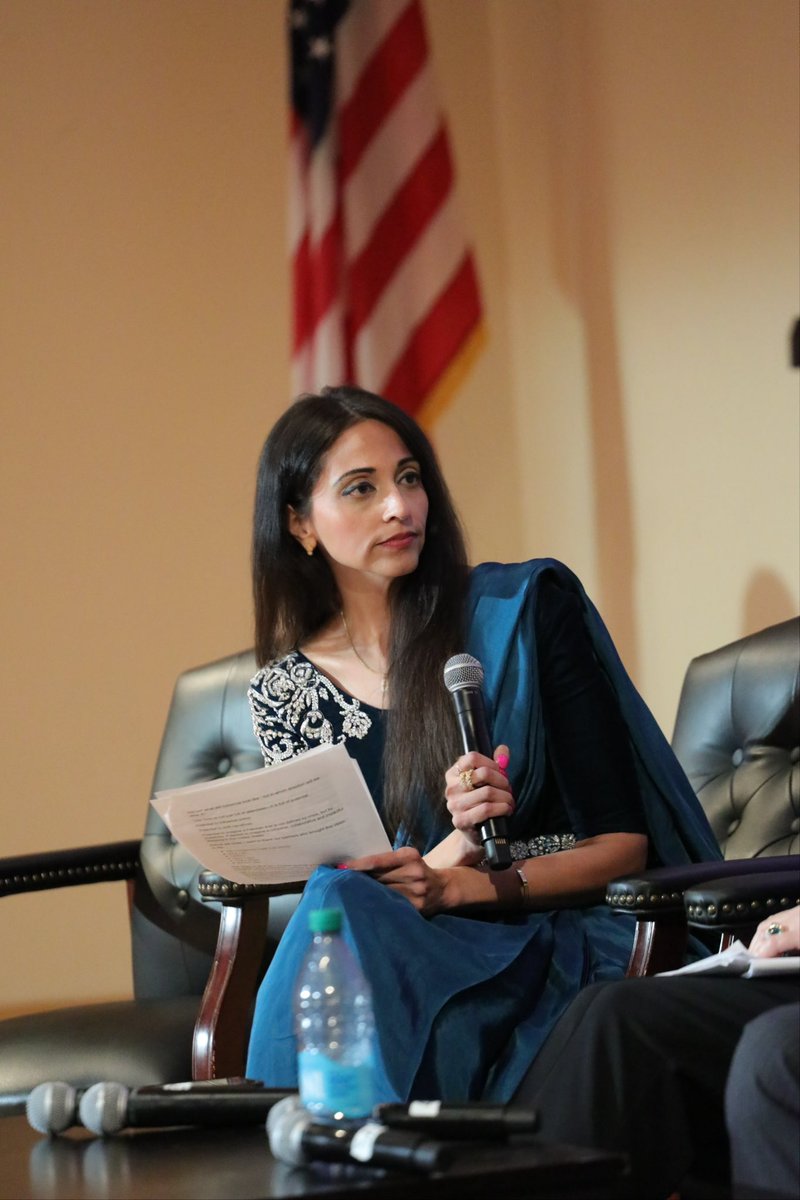
Yet the spirit of the day remained defiantly grassroots. Students ran registration, managed panel transitions, coordinated desi catering, monitored livestreams, handled remote participation, and welcomed speakers with warmth rather than protocol. There were no entourages, no VIP theatrics, no gatekeeping—only substance, and a generation proving it can build the spaces it has long been denied.
A Platform with Deep Roots, Not Hidden Agendas
If GP3C felt unusually coherent for a first-time event, that is because it wasn’t improvised. It was the product of a years-long evolution in how Pakistani students across the United States have sought to reclaim academic and policy space.
The initiative builds on a long lineage that starts with activism and student journalism days of its founder, Wajahat S. Khan. As an undergrad at the University of Michigan in the late 90s, Khan led and organized campus debates on the Musharraf coup, India and Pakistan’s nuclear weapons test and even the anti-Muslim pogrom in Indian Gujarat. He went on to host and win debates as a fellow at Harvard and as the student president of the Columbia Journalism School, and built the Pak Futures Foundation model at Yale in 2024, where the first women-led, DEI-centered team went on to win the Yale Cultural Event of the Year Award for the Ivy Future of Pakistan Conference, proving that Pakistan-focused scholarship could be both rigorous and inclusive.
Today, the platform operates under a fully audited 501(c)(3) with zero foreign funding—no embassies, no GHQ, no political parties, no corporate lobbies. Its donors are students, families, small businesses, and partner nonprofits.
Totally non-partisan and focused on the next generation of Pakistani and Pakistani-American policy makers, GP3C is not a policy arm of any state. It is an academic project with a clear mandate: to give the younger generation of the 1.4 million Pakistani-Americans the intellectual infrastructure they have never had.
The Critique—and the Facts
In Pakistan’s public sphere, success rarely arrives without suspicion. As word of GP3C’s turnout spread, so did claims of state influence, hidden funding streams, narrative engineering, and diaspora manipulation. The allegations were loud, but the evidence was nonexistent.
The facts, by contrast, are entirely public.
Hundreds of people attended in person. Dozens of speakers participated openly. The panels confronted, without hesitation, the very topics that entrenched power centers traditionally avoid: military overreach, the centralization of command under the 27th Amendment, the erosion of judicial independence, enforced disappearances, media repression, and the systematic silencing of dissent. If this had been an influence operation, it would have been an extraordinary failure — because every discussion that Pakistan’s establishment is most allergic to occurred not in whispers but on stage, on camera, and in front of a live audience.
The record speaks for itself. The livestreams are public. The questions are unedited. Senior diplomats were pressed on issues they preferred to sidestep. Analysts debated constitutional manipulation. Activists spoke about disappearances. Journalists criticized state coercion. Conspiracy collapses the moment one watches even a few minutes of the program.
The Stakes — and What Comes Next
Strip away the noise and a deeper truth becomes clear: this was never a story about institutions; it was a story about the youth. The organizers were largely between eighteen and twenty-two. Some held part-time jobs. Some volunteered quietly, worried their parents might fear the attention. A few now hesitate to travel to Pakistan because of the online climate detractors and trolls have created around them. And yet, in a political culture defined by cynicism, polarization, and fatigue, it was these students who chose to build something constructive.
These students did not inherit a civic ecosystem—they assembled one. They did not wait for safer conditions—they created responsible ones. They did not replicate the old models—they rejected them, opting instead for openness, transparency, and serious engagement. Criticism is healthy; conspiracy is corrosive. And the cost of the latter is borne not by institutions or commentators, but by the young people who dared to step forward and attempt something principled.
What happened at Georgetown was not accidental. It was the first visible expression of an emerging intellectual network—diaspora-driven, academically anchored, structurally transparent, and unapologetically led by youth. This weekend revealed that Pakistani-American students are prepared to embrace complexity over ideology, policy over propaganda, and community over factionalism. When given space, they filled it with rigor, courage, and a sense of civic responsibility that much of the older political class relinquished long ago.
The next chapters remain unwritten, but one reality is already undeniable: if this is what a generation can build at eighteen to twenty-two, then the future of Pakistani-American engagement—in diplomacy, academia, medicine, journalism, public health, law, and civic leadership—will look profoundly different from the decades that preceded it.
The Georgetown conclave did not claim to fix Pakistan. It promised something more durable: a generation willing to ask sharper questions, demand cleaner institutions, and build intellectual spaces that cannot be bought, silenced, or intimidated.
For the first time in a long time, that feels like the beginning of something real.


English