

Paul Earnden | The HubSpot Agency Leader
1K posts

Paul Earnden | The HubSpot Agency Leader
@paulearnden
MD of @fuelius_agency, a global Elite @HubSpot Partner.
England, UK Beigetreten Ağustos 2014
209 Folgt2.6K Follower

I’ve NEVER seen a B2B company fail to scale with ABM when they build signal infrastructure that automatically scores, routes, and alerts.
That said…
I just built this ABM playbook for you to steal.
8 steps from ICP model to realtime CRM updates with intent signals and dedicated Slack channels for warm leads.
I recorded a full video breaking down the entire workflow.
It covers:
• The 8-step framework from ICP to activation
• How we track 1st, 2nd, and 3rd party signals
• The awareness scoring model (5 stages)
• CRM automation structure
• How Slack channels keep reps focused on warm leads
And a WHOLE lot more.
Comment "ABM" and I'll DM you the guid3.
PS - This is the same playbook we deploy for clients with $60K+ ACV deals.
GIF
English

A two-person GTM team at a Series B SaaS company closed $2.4M in pipeline in one quarter.
No SDRs. No demand gen agency. No paid ads.
Signal-based outreach. Intent scoring. AI-sequenced follow-up. Automated reporting.
Two GTM engineers running the whole motion - for one quarter.
I pulled it apart.
Compared it to every system we've built across the GTM teams we've worked with.
Then asked myself one question:
If I had to reverse engineer this from scratch - what would it actually look like?
Turns out the architecture isn't that complicated.
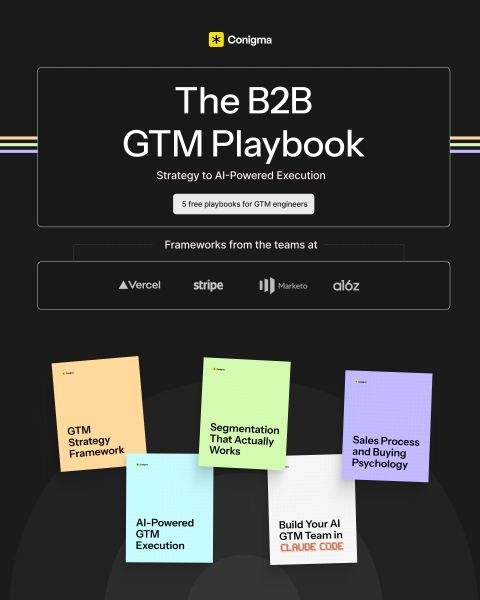
I mapped the whole thing into a step-by-step playbook you can upload directly to any LLM.
It walks you through building your own version from GTM strategy to fully AI-powered execution.
Comment "GTM" and I'll send it over.
English

we helped a SaaS company rank #1 in ChatGPT
• $1.8M+ total revenue
• 8,200%+ traffic growth
• $35K+ monthly SEO traffic value
all powered by our LLM SEO framework.
most companies have no idea this is even happening:
buyers are rapidly moving to LLM-driven discovery tools like ChatGPT, Claude, and Gemini
if your brand isn’t showing up there, your competitors are straight up stealing your traffic and conversions.
I broke down our entire methodology into a 800-word guide:
• how we structure content LLMs consistently surface
• data from the 8,200% growth case study
• the step-by-step system that drove the $1.8M+ revenue lift
• the AI-first keyword discovery framework we use across LLM platforms
• the on-page signals that unlock visibility in ChatGPT, Claude, and Gemini
this SaaS company's entire organic engine was built through this new AI-first SEO method
now you can just steal it
want the full breakdown?
1. like + follow
2. comment “LLM”
and I’ll send it to you

English
@bcherny Doesn’t sound as exciting as dangerously-skip-permissions lol
English

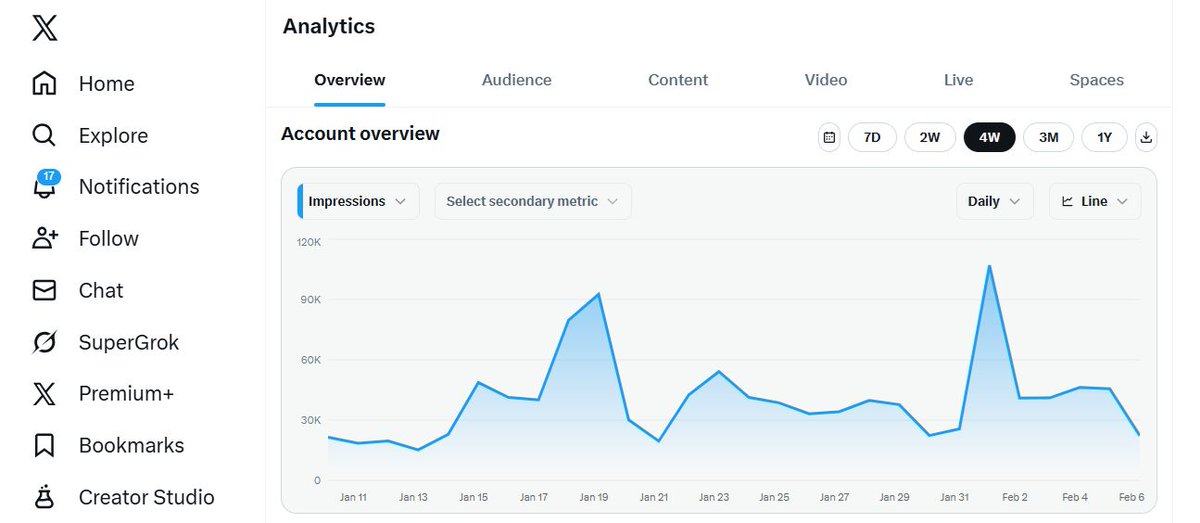
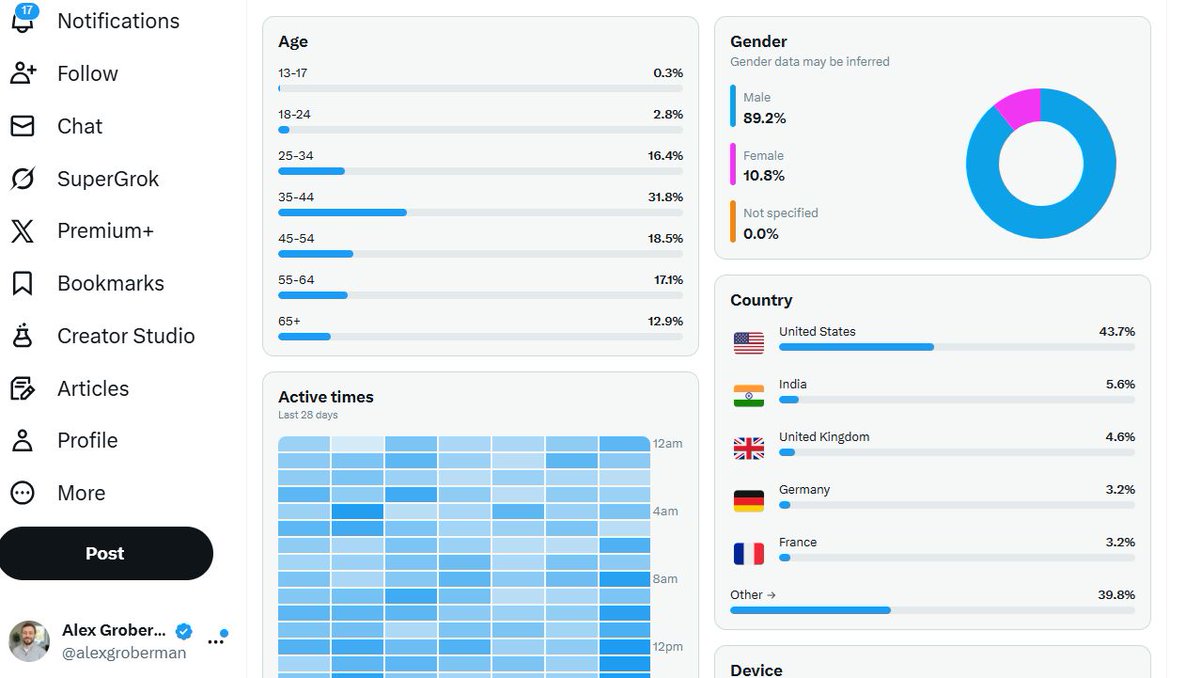
I started my X account 60 weeks ago.
In January alone it drove more than $35,000 in SEO Stuff revenue directly from X.
Such an easy algo to crack.
Here's the current version of the system that is working right now:
Oh, and if you want the full playbook with posting formats, DM workflows, and engagement loops that convert into inbound, follow me, repost this, and comment “X Growth Guide 2026.”
First, a quick update on Articles:
As I mentioned last week, the reach on these was off the charts initially.
Then slowly it started to cool.
Now I have regular posts that do better than Articles.
Also, Articles never converted as well as regular posts for me, even when they had tremendous reach.
Do with that information what you will.
Alright, now let's talk posting schedule:
I post 2 to 3 times per day, 7 days per week.
Morning is proof or a strong point of view tied to a real outcome.
Afternoon is a short thread or image post with a framework, teardown or screenshots.
Evening is a repost, reply driven post or short insight designed to spark conversation.
If I stop posting for 24 to 48 hours, reach drops immediately.
This pattern has not changed in more than a year.
Content formats that are working right now:
Short proof threads in the 3 to 6 post range do well.
Long threads underperform unless every line earns/keeps attention.
Multi image posts with a clear narrative flow are also doing well.
Image 1 sets the hook.
Images 2 to 3 explain the system, example or teardown.
Final image drives a specific action.
This continues to outperform text only threads in repeated testing.
Screenshots and real numbers still matter a lot.
Stripe dashboards, analytics, rankings, DMs, prompts, internal systems, client results, etc.
Anything that shows real work beats opinion only content.
Copyable frameworks spread faster too.
If someone can apply it in under 60 seconds, the post travels further.
Timely commentary backed by first hand data works.
Posts reacting to platform changes, niche news or industry shifts perform best when paired with your own metrics or outcomes.
Reposting top performers still works too.
Most followers never saw the original.
Repost every 1 to 3 weeks with a new hook and framing.
What is underperforming:
One line takes with no evidence.
Long threads where the main point is buried.
AI sounding content with generic phrasing.
Frameworks with no screenshots or outcomes.
Posts that send users off platform before engagement starts.
The engagement system driving the most reach:
Reply early to posts already gaining traction in your niche.
Add a specific insight, data point, correction, or extension.
Early replies still get disproportionate visibility.
Quote post daily with a breakdown, disagreement or added context.
This works best when your audience overlaps with the original author.
Repost your best replies.
Replies that gain early likes often outperform main feed posts.
Build reply chains under your own posts.
Posts where replies trigger more replies stay visible longer.
Reply depth matters more than raw like count.
DM system that continues to convert:
Track users who repeatedly engage.
Replies, likes, bookmarks, follows and repeat appearances all count.
DM something genuinely useful like a template, SOP, swipe file, or framework.
If they respond, open a loop by asking if they want the full system.
If they say yes, deliver the relevant offer, whether that is SEO Stuff, a breakdown or a playbook.
The order never changes:
Value first.
Context second.
Offer last.
Profile still matters by the way.
Your bio should be clear and benefit driven.
Your pinned post should show proof and tell people exactly what to do next.
Rotate your pinned post every 2 to 3 weeks based on clicks, replies, and DM volume.
Reply to every DM with real substance.
The only metrics that actually matter on X right now:
Link clicks per post.
New followers per post.
DM replies tied to specific posts.
Repeat commenters.
Reply depth, meaning replies to replies.
Impressions look good in screenshots but do not drive revenue by themselves.
Here is a 30 day X growth plan that still works:
Post 2 to 3 times per day with at least 1 proof based post.
Reply to 5 to 10 posts per day in your niche.
Quote post 1 to 2 times per day with real insight.
Repost your best content every 2 to 3 weeks.
DM 10 or more new engagers each week with value first.
Track link clicks, replies, DMs, and repeat commenters weekly.
Run this system for 30 days.
Screenshot your Day 31 results.
Tag me when inbound starts.
And if you want the full playbook with posting formats, DM workflows, and engagement loops that generate inbound, follow me, repost this, and comment “X Growth Guide 2026.”
You must do all 3 to get the DM.


English
@alexgroberman LinkedIn Growth Guide
English
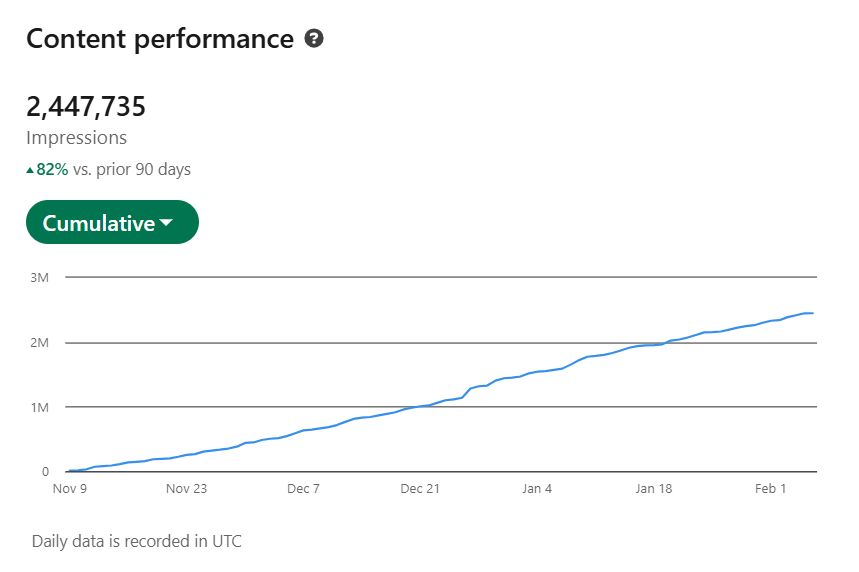
I created my LinkedIn account 60 weeks ago.
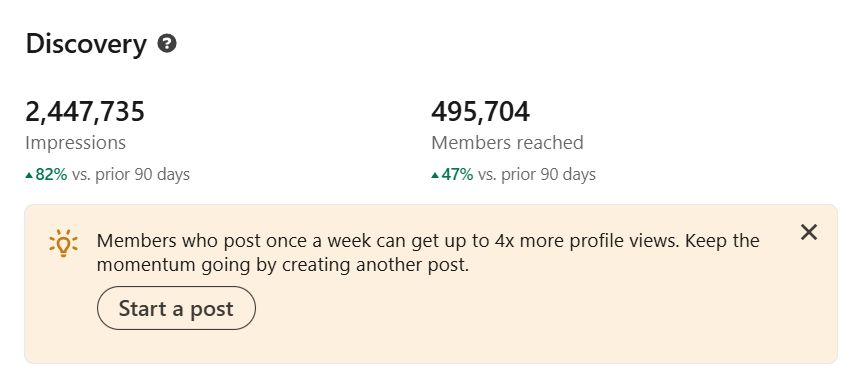
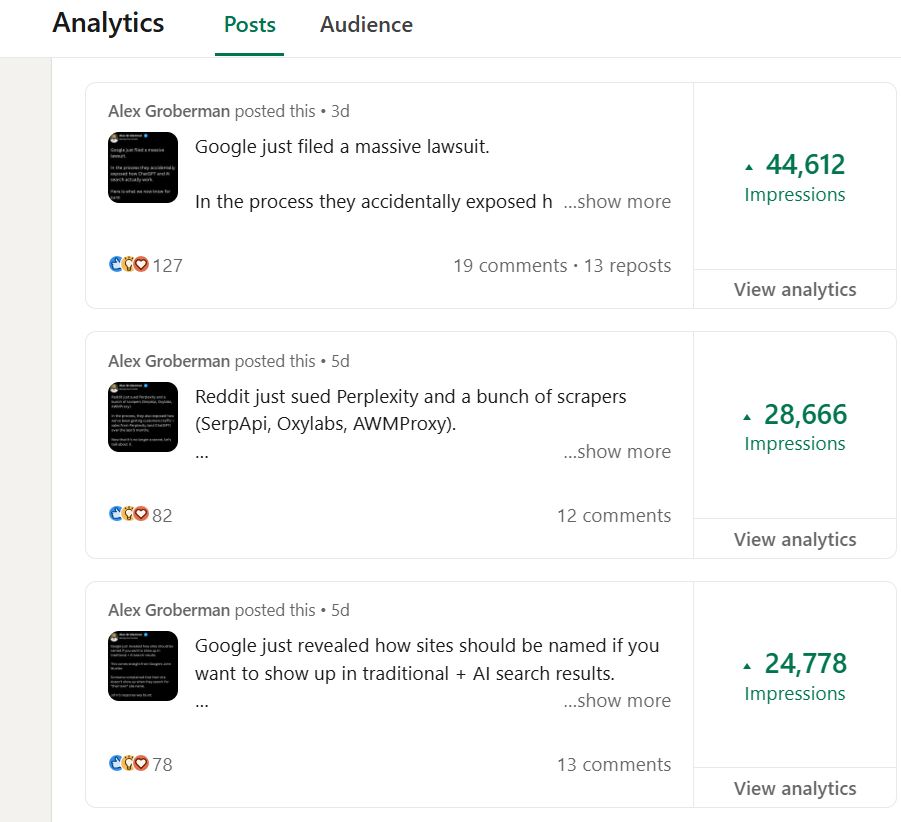
Since then I’ve generated roughly $270,000 in direct revenue from LinkedIn and grown to about 12,500 connections.
Easiest algo to crack by a country mile.
Here is the exact system I’m using right now:
Oh, and if you want my full unfiltered cheat sheet with engagement group templates, carousel structures, DM workflows and my posting system, follow me, repost this, and reply “LinkedIn Growth Guide.”
You must do all 3 to receive the DM.
Let me start with some random notes:
Proof based content continues to outperform everything else on average.
By proof, I mean posts that show a real metric, revenue, traffic, pipeline, conversions and then add concise context and end with a clear business takeaway.
Dwell time still matters a lot too.
When people read the full post, swipe multiple carousel slides or pause on video, the post stays active longer in feeds.
First hour replies from people outside your immediate network remain one of the strongest visibility signals you can influence.
On platform formats still beat outbound links.
Text posts, carousels, and native short video outperform link posts on average.
Link posts without setup consistently underperform.
That said, lower reach link posts can still drive revenue if intent is high.
Distribution and conversion are different problems.
If you include a link, deliver value first and either change the preview image or place the link in the comments.
Topic consistency increases reach.
Posting repeatedly around the same core topic strengthens how LinkedIn categorizes your profile.
Your posts then get shown to people who already engage with that topic.
That leads to higher quality early engagement and better comment depth.
Cross niche engagement still expands early reach.
Engaging consistently in 2 to 3 adjacent topic areas with substantive comments pushes your content into overlapping networks.
Generic likes do very little at this point.
High quality comments that add insight trigger more second level engagement.
Reposting with a new hook still works.
Most of your connections never saw the original post.
Repost after 1 to 3 weeks with a new angle, updated context, or clearer outcome.
Posts with replies to replies stay active longer.
Multi level comment threads extend post lifespan by days compared to shallow comment sections.
My posting routine has not changed:
I post 3 times per day, every day.
Morning is proof driven or a strong point of view.
Afternoon is a carousel, teardown, or case study.
Evening is a lesson, system, or actionable walkthrough.
Skipping even one day reduces reach the following 24 hours.
Formats performing best right now:
Carousels with a bold first slide tied to a clear outcome or pain point, followed by 3 to 6 concise slides with steps or visuals, and a final slide with a specific next step request.
Short native videos under 60 seconds with subtitles.
The hook needs to land in the first 2 to 4 seconds.
Walkthrough and behind the scenes videos continue to outperform polished talking head content when the information is specific and useful.
What is underperforming:
Link out posts with no setup.
Metrics with no narrative context.
Large unspaced text blocks.
Generic observations that could apply to anyone.
Posts where the author does not reply to comments in the first hour.
My engagement strategy:
Comment on 20 to 30 posts per day with real insight tied to the post.
Like 50 or more posts per day.
Reply to every comment on your own posts within the first hour.
DM 5 to 10 people per day with context first value tied to something they posted.
Ask follow up questions inside comment threads to deepen discussion.
Repeat engagement from the same people increases later session distribution.
Hooks performing best right now:
“I started this account 60 weeks ago. Here is what $270,000 in LinkedIn revenue actually looks like.”
“This 4 slide carousel booked 5 calls in 24 hours.”
“If I had to rebuild my LinkedIn from zero today, this is the exact system I would use.”
“My 3 post per day routine for consistent inbound.”
“I made X this month from LinkedIn. Here is the breakdown.”
Every hook must be backed by proof.
Without proof, credibility drops immediately.
Here is a 30 day plan that still works:
Post 3 times per day with at least 1 proof based post.
Comment on 20 to 30 posts daily with substance.
Like 50 or more posts per day.
Reply to every comment within the first hour.
Repost a winner weekly with a new angle.
DM 5 to 10 people per day with context first value.
Track impressions, comment depth, leads, and repeating commenters weekly.
Test hooks, formats, and timing every week.
Run this system for 30 days.
Screenshot your Day 31 results.
Tag me when inbound starts.
If you want the full cheat sheet, follow me, repost this, and reply “LinkedIn Growth Guide.”
You must do all 3 to receive the DM.

English
@sammycodes @trikcode And by multiple I mean a not insignificant number. 6 figure (£) monthly wage bill
English
Not baiting at all, I employ multiple people in development roles who have been C# / .NET developers for 5-10 years. They’re fully embracing Claude code and using the efficiency gain to further build internal IP, internal products and process improvements. We’re delivering more than before.
English

Software engineers are the happiest people on Earth now.
They pay $100/month for Claude Code to do the work.
Their employer pays them $10,000/month for the results.
$9,900 profit for sipping coffee and talking to AI.
The funniest part?
Not a single dev with a full-time job will ever admit this publicly
What a time to be alive.
English

Automation consultants charge $15K for what Claude Code now does in 2 hours.
I know because we're the ones who used to charge it.
Here's the exact process:
Step 1: Discovery (20 min)
→ Paste your org chart, tool stack, and top 3 bottlenecks
→ Claude interviews you with clarifying questions
→ Outputs a full process inventory ranked by time cost
Step 2: Workflow Mapping (15 min)
→ Describe any department's daily operations in plain English
→ Claude builds a complete process map
→ Every manual handoff, redundant step, and automation trigger flagged
Step 3: Opportunity Audit (10 min)
→ Feed it the workflow map output
→ Returns your top 10 automation opportunities
→ Ranked by ROI, complexity, and build time
Step 4: Architecture Design (20 min)
→ Claude designs the full system architecture
→ Which tools connect where, what the data flow looks like
→ Agents for complex logic, linear flows for the repetitive stuff
Step 5: Build (ongoing)
→ Claude writes the actual workflow JSON
→ Self-documents everything as it builds
Step 6: The output.
A live dashboard your whole team can work from.
→ Clickable process maps for every department
→ Automation opportunities ranked by ROI
→ Implementation progress by phase
→ KPIs updated in real time
→ One link you share with clients, freelancers, or your team to execute
This is what we hand every client at the end of discovery.
The .md file is what makes all of it possible.
Without it, Claude guesses.
With it, Claude builds like a $15K consultant.
Like this post, RT and comment "BLUEPRINT" and I'll send you the full prompt stack and the .md file we use internally. (Must be following so I can DM you)
🎁 Bonus: The first 100 people get a real Precision AI Blueprint — an actual sample audit doc from a client engagement so you can see exactly what the output looks like.

English
@WisprFlow what swag we got for #2 in the world user that’s soon to become #1? Who’s my competition at the top?
English
@jonathan_wilke @alexcooldev Can I let it rip on dangerous mode?
English


Is anyone still using Cursor AI instead of switching fully to Claude Code?
Or am I the only one 😅
English
@bcherny @mvanhorn @LurioNineFive Any update on this? Currently use code across Mac Studio and MBP on superset.ssh but would love to be able to continue on the road on cellular iPad Pro. Ideally @superset_sh will build iOS app too 🤤
English

@mvanhorn @LurioNineFive Security is very important and hard to get right. We are working on rolling most of those out securely.
English

@jonathan_wilke @alexcooldev What does your iPad config look like? I’m currently between Mac Studio + MBP, and would love to be able to continue more portably on a iPad Pro
English
@alexcooldev I'm still using Cursor, but I'm moving more and more towards Claude Code. Especially as it allows me to control all my agents from my iPhone and iPad
English
I’ve spent 6 months building the most effective LinkedIn GTM Playbook for B2B founders and GTMEs.
Results it’s designed to deliver: 5-10 qualified calls per week, 7-20k weekly impressions.
It’s built on a repeatable process.
2 key components...
Content engine and conversion layer.
Full breakdown of what you get:
1. LinkedIn Content Engine (5 post types, 3 content pillars, 5x/week cadence)
2. 3-Person Team Structure (copywriter, SDR, designer with hiring tests)
3. Positioning Framework (authority build system, repeatable frameworks, lead magnet integration)
4. PLG Funnel Strategy (Instagram → lead magnet → trial funnel)
Follow me and reply “GTM” and I’ll send it to your DMs.
English

I've used Claude Code to build 20+ projects in the last 6 months. Thousands of new users across them. And I've never written a single line of code.
I just dropped a 24-min video with my top 10 tips for non-developers — the exact playbook I use every day to run multiple AI agents that handle work that used to take me a full week.
This is the best beginner guide to learning and building with Claude Code out right now. Every tutorial I found assumes you're a developer. This one doesn't.
I cover everything from first install to running multi-agent workflows — with live demos and real examples for every single tip. How I set up new projects, how I got Claude to match my writing style, how I automate repeatable workflows with one command, and how I run multiple agents working on different tasks at the same time.
I also built a full resource repo to go alongside the video — curated video tutorials, the best skill libraries, plugin directories, MCP server guides, written docs, community links, and a starter CLAUDE.md template you can copy-paste into your first project today.
Comment "GUIDE" and I'll send you the full guide with everything you need to learn Claude Code!
(make sure we're connected so I can DM you)
English

I’ve generated $5M building an AI-Native agency.
Here’s the exact playbook we used to build with AI from day one:
→ Eliminate founder dependency
→ Convert workflows into decision trees
→ Turn decision trees into software w/ @Lovable
→ Ship internal V1s weekly
→ Install AI as your execution layer
If you're an agency founder working 50+ hours/week and your team is still waiting on you for everything...
You don't have a hiring problem. You have a systems problem.
Follow & comment "AI Native" and I'll DM you the full playbook.
English

Think it. Say it. Done.
The average person spends 3 hours typing + switches 1,000 tabs per day.
That ends today.
Meet Lemon: The first voice-to-action AI agent that turns your voice commands into finished tasks.
RT + Comment "Lemon" to get free access for 30 days.
(must be following so I can DM you)
English