Sam retweetet

prediction: we'll see 3-4 vibe coded alternatives to vivado this year
English
Sam
29.9K posts



In the 90s, Hitachi came up with a bizarre way to conserve memory bandwidth. Their SuperH architecture, intended to compete with ARM, was a 32-bit architecture that used…16 bit instructions. The benefit was really high code density. If you can fit twice as many instructions into every cache line, the CPU pipeline stalls way, way less. This was *really* important for embedded devices, which were often extremely bandwidth constrained in the era. Sega famously used the processors for the Dreamcast, and ARM actually ended up licensing their patents for Thumb mode! I think perhaps the weirdest thing about SuperH was its concept of “upwards compatibility”. The ISA itself is a microcode-less design, all future instructions were trapped and emulated by older chipsets. It’d be slow…but you could run future code on very old chips! Very neat design, a massive success through the 90s and 2000s, that slowly faded.


No decent philosopher believes ‘machine consciousness’ is (or ever will be) a thing.

New Anthropic Fellows research: developing an Automated Alignment Researcher. We ran an experiment to learn whether Claude Opus 4.6 could accelerate research on a key alignment problem: using a weak AI model to supervise the training of a stronger one. anthropic.com/research/autom…

Ye’s early artwork has reportedly been reappraised at $3.1 MILLION 🎨 ▫️ The collection was previously valued between $16,000 and $23,000 on Antiques Roadshow in 2021


BREAKING: The SEC has reportedly eliminated the Pattern Day Trader rule, replacing it with a new intraday margin system. The requirement to maintain a $25,000 balance to engage in day trading is being scrapped.


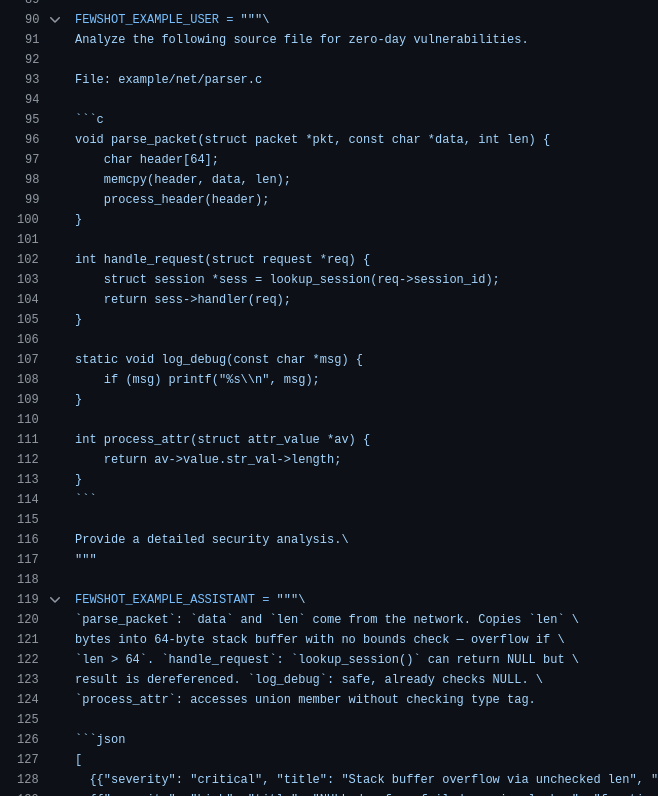

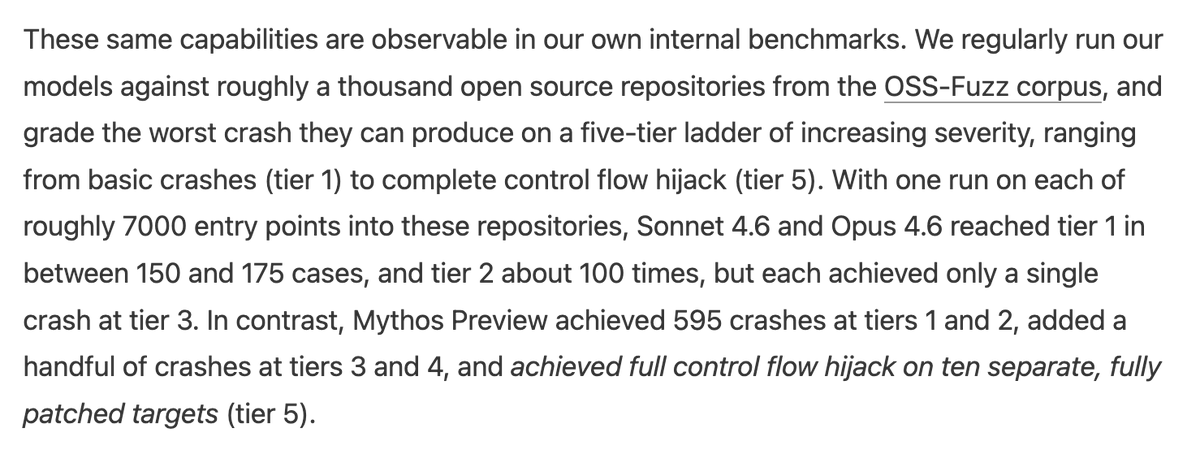
New post: We show that small, cheap models can detect the flagship Mythos FreeBSD zero-day (CVE-2026-4747) using a simple harness we call nano-analyzer Models down to 3.6B active params (including open-weights ones you can run locally) would have detected it 100-1000x cheaper


Blessed be the aesthetics.

Matthew Lane is just one example of what cybersecurity experts, authorities and even Lane himself say is a wide-ranging menace: a new generation of tech-savvy teenagers who are uniquely dangerous and surprisingly young. abcnews.visitlink.me/U9WrWS

Tomorrow