Popoletto del Murs retweetet
Popoletto del Murs
6.2K posts

Popoletto del Murs
@picodechipinque
Get off!!!
Monterrei Nueboleon Beigetreten Aralık 2019
894 Folgt463 Follower
Popoletto del Murs retweetet

EXPERIMENTO INUSUAL
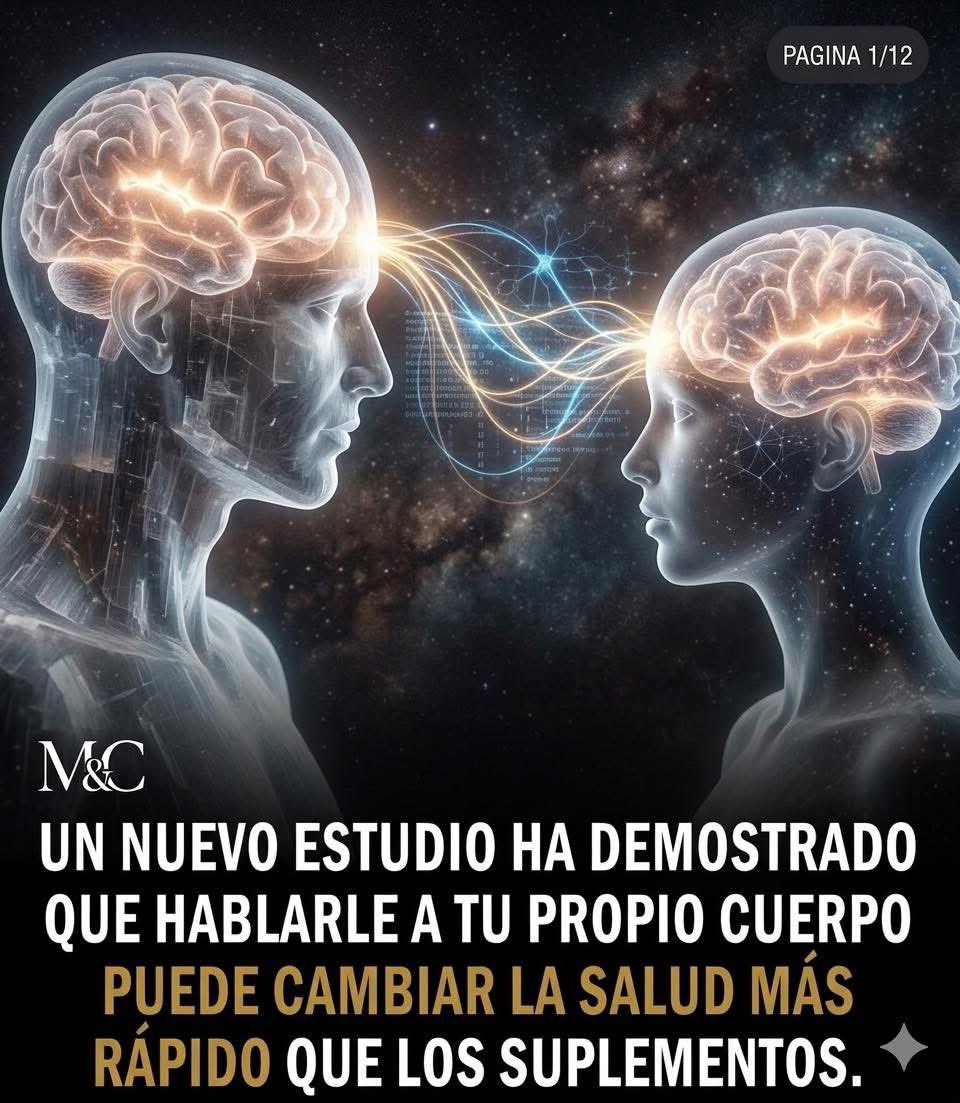
En la Harvard Medical School descubrieron que decirse frases como:
"Estás a salvo"
"Te estás curando",
"Hoy lo hiciste bien"
Provocaban algo en tu cuerpo…
Después de semanas, los escáneres mostraron una disminución medible de los marcadores de inflamación.
Los científicos no estaban probando la magia.
Estaban probando los circuitos de retroalimentación.
Cuando las palabras reducen el miedo, el cortisol disminuye, el flujo sanguíneo mejora y las células inmunitarias se reparan más rápido.
Una paciente con dolor crónico dijo:
"Por primera vez, le dije a mi cuerpo 'gracias' en lugar de 'perdón".
En cuestión de días, la tensión muscular se redujo a la mitad.
La gratitud apagó su sistema de alarma.
El médico dijo:
"Dejó de luchar contra su cuerpo, y el cuerpo dejó de luchar contra ella."
Los investigadores lo llaman "señalización afectiva"
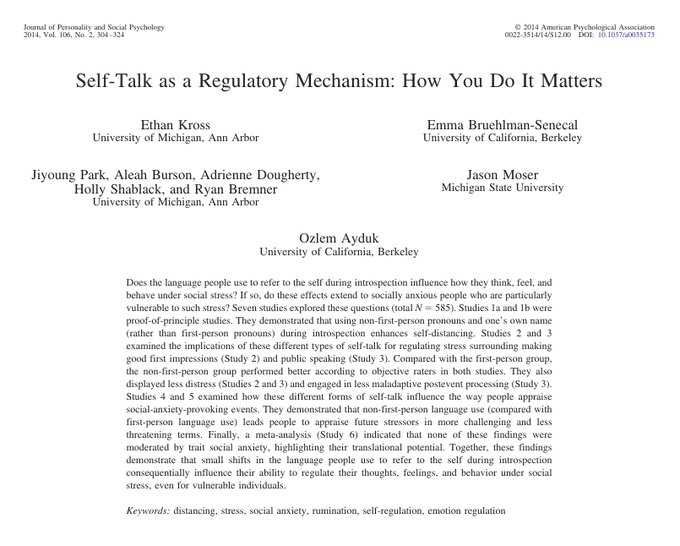
El sistema nervioso procesa el diálogo interno como ondas sonoras provenientes de otra persona.
Así, cada insulto (incluso en silencio) tiene un impacto químicamente real.
La amabilidad hacia uno mismo no es psicología. Es neurobiología.
El investigador principal concluye con una frase que quedó grabada en todos:
"Tu cuerpo escucha todo lo que dice tu mente."
Quizá la medicina más poderosa no se encuentra... se pronuncia.
El cuerpo no está roto ni saboteando... está adaptándose exactamente a las señales que recibe.
Si la señal es amenaza constante, vive en modo supervivencia.
Si la señal es seguridad, activa procesos de equilibrio y reparación.
Por eso, cambiar la narrativa interna no es un acto emocional... es una intervención biológica.

Español
Popoletto del Murs retweetet

> spend 5 hours on a project
> claude does it in 15 minutes
> "yeah but it's not the same"
> it's the same
> you can't tell
> client can't tell
> nobody can tell
> you just lost 5 hours denying ai
> claude won again
darkzodchi@zodchiii
English
Popoletto del Murs retweetet

Train your mind to replay countless repetitions of past success whenever you experience fear or doubt and you automatically become reassured of all the ways you can do it again.

Nicholas Fabiano, MD@NTFabiano
Mentally healthy people are often delusionally optimistic.

English
Popoletto del Murs retweetet

Yo fui ingeniero en Meta, y siempre seguía FAIR desde adentro. Lo que acaban de publicar es la versión que les dejan publicar.
Pero con eso, es más que suficiente para decirles exactamente que es lo que está pasando.
TRIBE v2 predice, vértice por vértice sobre la corteza cerebral, qué zonas activa cualquier video.
Sin escáneres. Sin humanos.
Subes el contenido, obtienes el mapa neural (activación emocional, supresión de razonamiento crítico, modulación prefrontal) antes de que el video lo vea un solo usuario.
Ahora considera la posición de Meta:
1. Tiene años de datos de Reels sobre qué contenido retiene atención, genera enojo, provoca compartir.
2. Saben empíricamente qué funciona. TRIBE v2 les da el mecanismo causal de por qué funciona (a nivel de tejido cortical) Eso convierte correlación histórica en capacidad predictiva sobre contenido nuevo.
3. Internamente hay herramientas que se llaman Gatekeepers y Quick Promotions que sirven para inyectar contenido en el feed de poblaciones arbitrarias a escala.
4. Simulador de respuesta cerebral + conocimiento empírico de contenido efectivo + maquinaria de distribución selectiva. El pipeline está completo.
Y luego está Thiel. Inversor y amigo personal de Zuck. Fundador de Palantir, cuyo negocio es análisis de poblaciones a escala para gobiernos e inteligencia.
NO es descabellado observar que confluyen los incentivos de plataformas construidas por las mismas personas.
La licencia CC BY-NC dice que Meta retiene los derechos comerciales del predictor de respuesta cerebral más preciso jamás construido.
Y recuerda, esto es lo que decidieron hacer público.
AI at Meta@AIatMeta
Today we're introducing TRIBE v2 (Trimodal Brain Encoder), a foundation model trained to predict how the human brain responds to almost any sight or sound. Building on our Algonauts 2025 award-winning architecture, TRIBE v2 draws on 500+ hours of fMRI recordings from 700+ people to create a digital twin of neural activity and enable zero-shot predictions for new subjects, languages, and tasks. Try the demo and learn more here: go.meta.me/tribe2

Español
Popoletto del Murs retweetet

Today I sit down with Enrique De La Madrid – son of a former Mexican president and one of the few people who actually understands how deep the corruption runs. We get into the cartels’ new gas tax scam that mirrors the exact gasoline hustle I ran back in the life, how cartels kidnap opposition and rig elections, why parts of the Mexican government are effectively in business with organized crime, and what that really means for your safety, tourism, and the future of the drug war. This one will change the way you look at Mexico, the cartels, and our own government on both sides of the border.
English
Popoletto del Murs retweetet

POV: You realize the person holding you back has been living rent free in your subconscious for years.
rayane 𓃮@EsotericaHQ
English
Popoletto del Murs retweetet

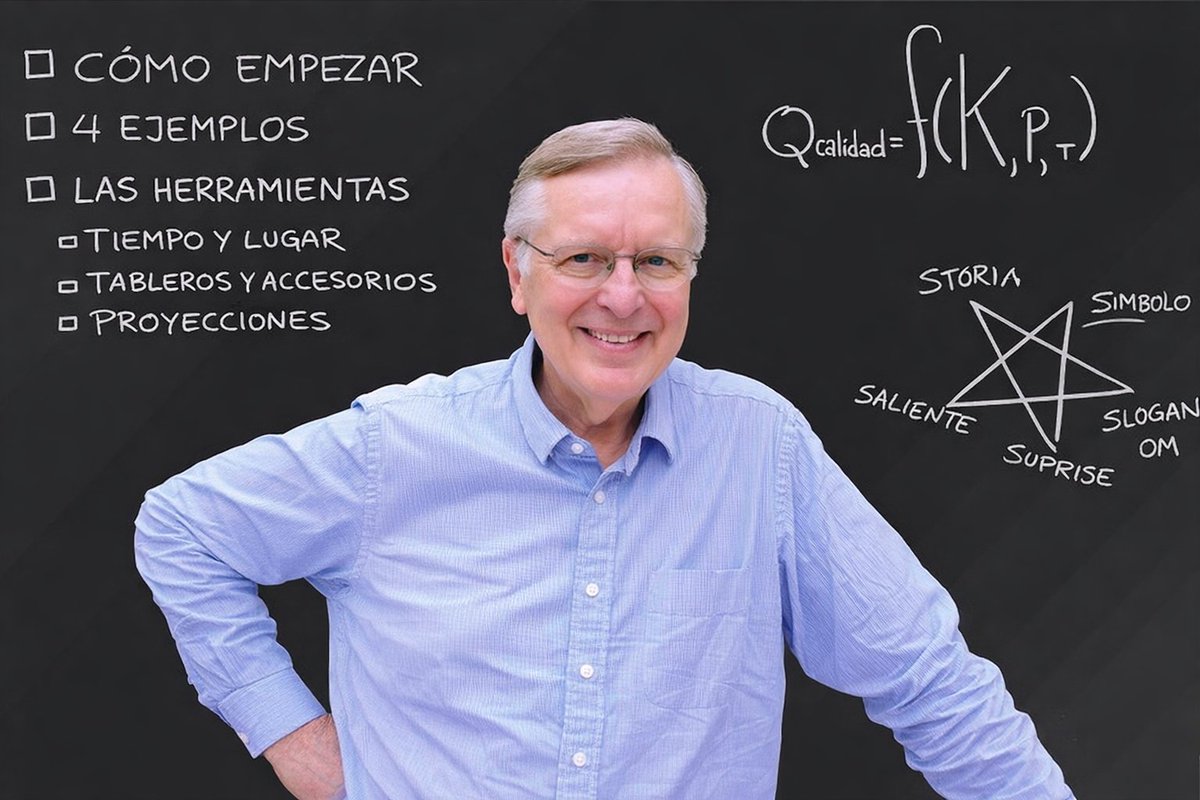
Un profesor del MIT dio la misma conferencia cada enero durante 40 años, y cada una de las veces no cabía ni un alma en el aula.
La vi a las 2 de la mañana y cambió por completo mi forma de entender la comunicación.
Su nombre era Patrick Winston. La conferencia se titula "Cómo hablar" (How to Speak).
Su frase de apertura te golpea como un camión: "Tu éxito en la vida vendrá determinado en gran medida por tu capacidad para hablar, tu capacidad para escribir y la calidad de tus ideas, en ese orden".
Ni tu nota media, ni tus títulos, ni tu coeficiente intelectual. Cómo hablas es lo que separa a las personas que son escuchadas de las que son ignoradas.
Este es el esquema que inculcó a los estudiantes del MIT durante cuatro décadas:
1) Nunca empieces con un chiste: Empieza diciendo a la gente exactamente qué es lo que va a aprender. "Prepara la bomba antes de verter nada". Él lo llamaba la "promesa de empoderamiento": dales una razón para no levantarse del asiento en los primeros 60 segundos.
2) La regla de las 5S: Para que una idea se quede grabada debe ser: Símbolo, Slogan, Sorpresa, Saliente (relevante) e Historia (Story). Cualquier idea que valga la pena recordar cumple al menos tres de estas.
3) La técnica del "casi acierto" (Near Miss): Esta parte me dejó alucinado. No te limites a mostrar lo que está bien; muestra lo que parece estar bien pero no lo está. Ese contraste es lo que hace que el cerebro registre algo de forma permanente.
4) Su regla final: Termina con una contribución, no con un resumen. No recapitules lo que ya dijiste. Dile a la gente qué les has dado que no tenían antes de entrar por la puerta.
He usado este esquema en ventas, entrevistas y presentaciones desde que lo vi, y los resultados no son sutiles.
Patrick Winston falleció en 2019, pero esta clase sigue siendo gratuita en el OpenCourseWare del MIT. Una hora, vista por millones de personas, y no cuesta absolutamente nada.
Video: "How to Speak", Patrick Winston, MIT OpenCourseWare, RES.TLL-005, January IAP 2018.
Fuente: MIT OpenCourseWare.
Licencia: CC BY-NC-SA.
Términos: ocw. mit. edu/ terms

Español
Popoletto del Murs retweetet

Habits so simple you think they’re not worth doing, but have a profound impact on your life:
- Not touching your phone when you wake up
- Not thinking about work after work is done
- Putting a book down once you find an idea worth thinking about
- Setting aside time to do nothing for 10 minutes a day
- Going on a short walk after each meal
- Eating a meal without a screen in front of you
- Saying "I don't know" instead of pretending you do
- Asking "What if this isn't actually a problem?" before trying to solve it
- Letting yourself be bad at something instead of expecting perfection
- Trying to understand something you disagree with instead of looking for flaws
- Defaulting to "no" until you think through the commitment
English
Popoletto del Murs retweetet

1996. Steve Jobs is asked on television what went wrong at Apple. He hasn't worked there in over a decade. Within a year, Apple will buy his company NeXT and bring him back. Within 18 months, he'll be running the place.
He doesn't know that yet. Nobody does. At this point, he's running NeXT, a small software company, and Pixar, which just released Toy Story. Apple is falling apart. The stock is collapsing. The company has lost over a billion dollars. Its market share has dropped from 18% to around 4%. WIRED will put Apple's logo on its cover, wrapped in barbed wire, with the word "Pray."
The interviewer asks Jobs what happened. His answer is one paragraph, and it's basically the entire turnaround strategy he'll execute a year later.
He says when he left Apple ten years earlier, they were ten years ahead of everybody else. It took Microsoft a full decade to copy what Apple had built. But Apple stopped. "Even though it invested cumulatively billions in R&D, the output has not been there, and people have caught up with it." He says Apple's advantage over Microsoft has eroded. And then this: "The way out is not to slash and burn. It's to innovate. That's how Apple got to its glory, and I think that's how Apple could return to it."
When Apple bought NeXT in December 1996 and brought Jobs back as an advisor, things got worse before they got better. By September 1997, Apple was about 90 days from running out of money. The board made Jobs the interim CEO. He cut 70% of the product line, but not to save money. He cut it so the remaining 30% could be great. He launched Think Different. He built the iMac. Then the iPod. Then iTunes. Then the iPhone. Then the iPad. Every single one of those products was the "innovate, don't slash and burn" philosophy from this interview, applied over and over for 14 years.
He also says something in this interview that stands out. He says the most exciting thing in software is the internet, and the reason is "no one owns it. It's a free-for-all. It's much like the early days of the personal computer." He says if any one company gets a dominant position, "the rate of innovation is going to drop precipitously." He's talking about Microsoft. But he could be talking about 2026.
Apple is worth about $3.7 trillion today. When this interview was filmed, Apple was worth about $3 billion and falling fast. Jobs walked back into Apple nine months later with no title, no authority, and the same diagnosis he gave on camera in this clip.
Video: Steve Jobs Television Interview, 1996. Original broadcast footage.
English
Popoletto del Murs retweetet

¿No se le hace raro que los mismos proveedores que venden hielo al Ejército son los que venden ambulancias?
¿No le parece extraño que los mismos proveedores que venden harina al Ejército son los que venden maquinaria para armas?
Son los negocios millonarios de la 4T.
#LatinusInvestiga
@latinus_us
Español
Popoletto del Murs retweetet

@guffocaballero Al contrario, siempre en redes sociales celebran su vida de pendejismos, van al súper y se gastan 11 mil pesos en estulticias; se hacen virales y famosos por eso, su gran ineptitud es aplaudida.Nadie se atreve a ponerles un alto y decirles: eres un inútil que huele a pollo crudo.
Español