Meet Patel

1.9K posts

Meet Patel

Meet Patel

@pmeet_

Experimenting_&_Learning 🌟 Posts about AI, Semiconductor, Hardware, Sales, Neuroscience, Yoga 🌟 Views are my own 🌟 Be Humble, Be Open, Learn the Unknown

Gujarat, India Beigetreten Mayıs 2019
759 Folgt67 Follower
Meet Patel retweetet
Shubham Mishra
Shubham Mishra@brahma_4u·
A traditional 2 wheeler garage in India makes ₹150-300 per service, normally. An EV pack diagnosis from an imported tester costs ₹8,000-15,000 plus a four-day round trip to the OEM service centre. That math doesn't work for any of the 1.4 lakh roadside garages that will inherit India's EV fleet. An imported battery tester like Megger or a Hioki was built for a Tier-1 R&D lab, not a mechanic with a multimeter and a chai stall next door. The unit economics of imported equipment assume a customer who exists in Yokohama and doesn't exist in Surat. EV readiness isn't a hardware problem. It's a price-point problem dressed up as a hardware problem. And thats the reason why we priced EV DOCTOR™ accordingly.
Shubham Mishra tweet media
English
1
6
85
11.2K
Meet Patel
Meet Patel@pmeet_·
@karpathy @grok can you pls explain what Andrej exactly did in the above, explain in such a way that a non-techie can also understand
English
1
0
0
44
Andrej Karpathy
Andrej Karpathy@karpathy·
Three days ago I left autoresearch tuning nanochat for ~2 days on depth=12 model. It found ~20 changes that improved the validation loss. I tested these changes yesterday and all of them were additive and transferred to larger (depth=24) models. Stacking up all of these changes, today I measured that the leaderboard's "Time to GPT-2" drops from 2.02 hours to 1.80 hours (~11% improvement), this will be the new leaderboard entry. So yes, these are real improvements and they make an actual difference. I am mildly surprised that my very first naive attempt already worked this well on top of what I thought was already a fairly manually well-tuned project. This is a first for me because I am very used to doing the iterative optimization of neural network training manually. You come up with ideas, you implement them, you check if they work (better validation loss), you come up with new ideas based on that, you read some papers for inspiration, etc etc. This is the bread and butter of what I do daily for 2 decades. Seeing the agent do this entire workflow end-to-end and all by itself as it worked through approx. 700 changes autonomously is wild. It really looked at the sequence of results of experiments and used that to plan the next ones. It's not novel, ground-breaking "research" (yet), but all the adjustments are "real", I didn't find them manually previously, and they stack up and actually improved nanochat. Among the bigger things e.g.: - It noticed an oversight that my parameterless QKnorm didn't have a scaler multiplier attached, so my attention was too diffuse. The agent found multipliers to sharpen it, pointing to future work. - It found that the Value Embeddings really like regularization and I wasn't applying any (oops). - It found that my banded attention was too conservative (i forgot to tune it). - It found that AdamW betas were all messed up. - It tuned the weight decay schedule. - It tuned the network initialization. This is on top of all the tuning I've already done over a good amount of time. The exact commit is here, from this "round 1" of autoresearch. I am going to kick off "round 2", and in parallel I am looking at how multiple agents can collaborate to unlock parallelism. github.com/karpathy/nanoc… All LLM frontier labs will do this. It's the final boss battle. It's a lot more complex at scale of course - you don't just have a single train. py file to tune. But doing it is "just engineering" and it's going to work. You spin up a swarm of agents, you have them collaborate to tune smaller models, you promote the most promising ideas to increasingly larger scales, and humans (optionally) contribute on the edges. And more generally, *any* metric you care about that is reasonably efficient to evaluate (or that has more efficient proxy metrics such as training a smaller network) can be autoresearched by an agent swarm. It's worth thinking about whether your problem falls into this bucket too.
Andrej Karpathy tweet media
English
964
2.1K
19.5K
3.6M
Computer
Computer@AskPerplexity·
Perplexity Computer replaced $225K/yr in marketing tools in a single weekend. We built an AI marketing agent that scans hourly, manages budgets, detects fatigue, and coordinates several campaigns end to end. In one test run, it made 224 micro-optimizations to our ad stack.
English
274
553
7.6K
3.4M
Meet Patel
Meet Patel@pmeet_·
@XFreeze @grok when did the prediction happen and where did you post it for the public exactly?
English
1
0
0
7
X Freeze
X Freeze@XFreeze·
Grok predicted the future accurately 🤯 On Feb 28 - the exact date Grok predicted - Israel & the US struck Iran This wasn't a lucky guess. When pushed to predict, Grok analyzed geopolitical signals, Geneva talk outcomes, and real-time data to pinpoint the day Grok knows what the world thinks
X Freeze tweet media
English
2.1K
2.3K
13.9K
32.8M
Meet Patel
Meet Patel@pmeet_·
Doomers keep talking about everything that went wrong in the management of the India AI Summit event. (1 time critisism is fine!) Builders, on the other hand, have already learned their lessons and started working on making the event even more productive in 2027. 🚀
English
0
0
0
12
Meet Patel
Meet Patel@pmeet_·
I think if you don't have the exact #GOAL in life, just having/knowing the #DIRECTION is enough. Then I think you enjoy the journey even better. 😊🌞
English
0
0
0
7
Meet Patel
Meet Patel@pmeet_·
Hello world 🌍 What you're gonna learn Today? 😊
English
0
0
0
4
Meet Patel
Meet Patel@pmeet_·
Build for purpose, live for purpose.
English
0
0
0
8
Meet Patel
Meet Patel@pmeet_·
Thanks to the @GoI_MeitY & @AshwiniVaishnaw sir for encouraging the youth of India to share their perspectives on 'The next steps to scale SEMICONDUCTOR Industry in India 🇮🇳' I aim to contribute more towards the nation going forward ✨
Meet Patel tweet media
English
0
0
0
38
sanju royan
sanju royan@royan_sanju·
Indian Gen-z Aerospace Startups are comming and nobody can stop em
English
31
97
1.4K
28.8K
Meet Patel
Meet Patel@pmeet_·
I wonder why YT #Gemini does not have its own memory- like of the main model of Gemini!? Would love to know thoughts of people..
Meet Patel tweet media
English
0
0
0
10
Meet Patel
Meet Patel@pmeet_·
Be grounded, be helpful, keep building.
English
0
0
0
3
Meet Patel
Meet Patel@pmeet_·
Live outside #THOUGHTS as much time as possible; And be helpful to the world 🌍
English
0
0
0
7
Meet Patel retweetet
Deepinder Goyal
Deepinder Goyal@deepigoyal·
Last one on this topic, and I have been holding this in myself for a while. For centuries, class divides kept the labor of the poor invisible to the rich. Factory workers toiled behind walls, farmers in distant fields, domestic help in backrooms. The wealthy consumed the fruits of that labor without ever seeing the faces or the fatigue behind it. No direct encounter, no personal guilt. The gig economy shattered that invisibility, at unprecedented scale. Suddenly, the poor aren't hidden away. They're at your doorstep: the delivery partner handing over your ₹1000+ biryani, late-night groceries, or quick-commerce essentials. You see them in the rain, heat, traffic, often on borrowed bikes, working 8–10 hours for earnings that give them sustenance. You see their exhaustion, their polite smile masking frustration with life in general. This is the first time in history at this scale that the working class and consuming class interact face-to-face, transaction after transaction. And that discomfort with our own selves is why we are uncomfortable about the gig economy. We want these people to look our part, so that the guilt we feel while taking orders from them feels less. We aren't just debating economics. We are confronting guilt. That ₹800 order might equal their entire day's earnings after fuel, bike rent, and app cuts. We tip awkwardly, or avoid eye contact, because the inequality is no longer abstract. It's personal. Pre-gig era, the rich could enjoy luxury without moral discomfort. Labor was out of sight. Now, every doorbell ring is a reminder of systemic inequality. That's why debates explode. It's not just policy. It's emotional reckoning. Some defend the system (“they choose it”), others demand change (“this isn't progress, its exploitation”). And here’s the uncomfortable twist: the unsaid ask of clumsy ‘solutions’ isn’t dignity. It is about returning to invisibility. Ban gig work and you don’t solve inequality. You remove livelihoods. These jobs don’t magically reappear as formal, protected employment the next day. They disappear, or they get pushed back into the informal economy where there are even fewer protections and even less accountability. Over-regulate it until the model breaks, and you achieve the same outcome through paperwork instead of slogans: the work evaporates, prices rise, demand collapses, and the people we claim to protect are the first to lose income. And then what happens? The rich get their old comfort back. Convenience returns without faces. Guilt dissolves. We go back to clean abstractions and moral posturing from a distance. The poor don’t become safer, they become invisible again: back in cash economies, back in backrooms, back in shadows where regulation rarely reaches and dignity isn’t even debated. The gig economy just exposed the reality of inequality to the people who previously had the luxury of not seeing it. The doorbell is not the problem. The question is what we do after opening the door. Visibility is the price of progress. We can either use this discomfort to build something better (which we keep doing continuously as delivery partners are our backbone), or we can ban and over-regulate our way back into ignorance. One of those choices improves lives. The other simply helps the consuming class feel virtuous in the dark.
English
2K
5.2K
25.4K
3.7M
Meet Patel
Meet Patel@pmeet_·
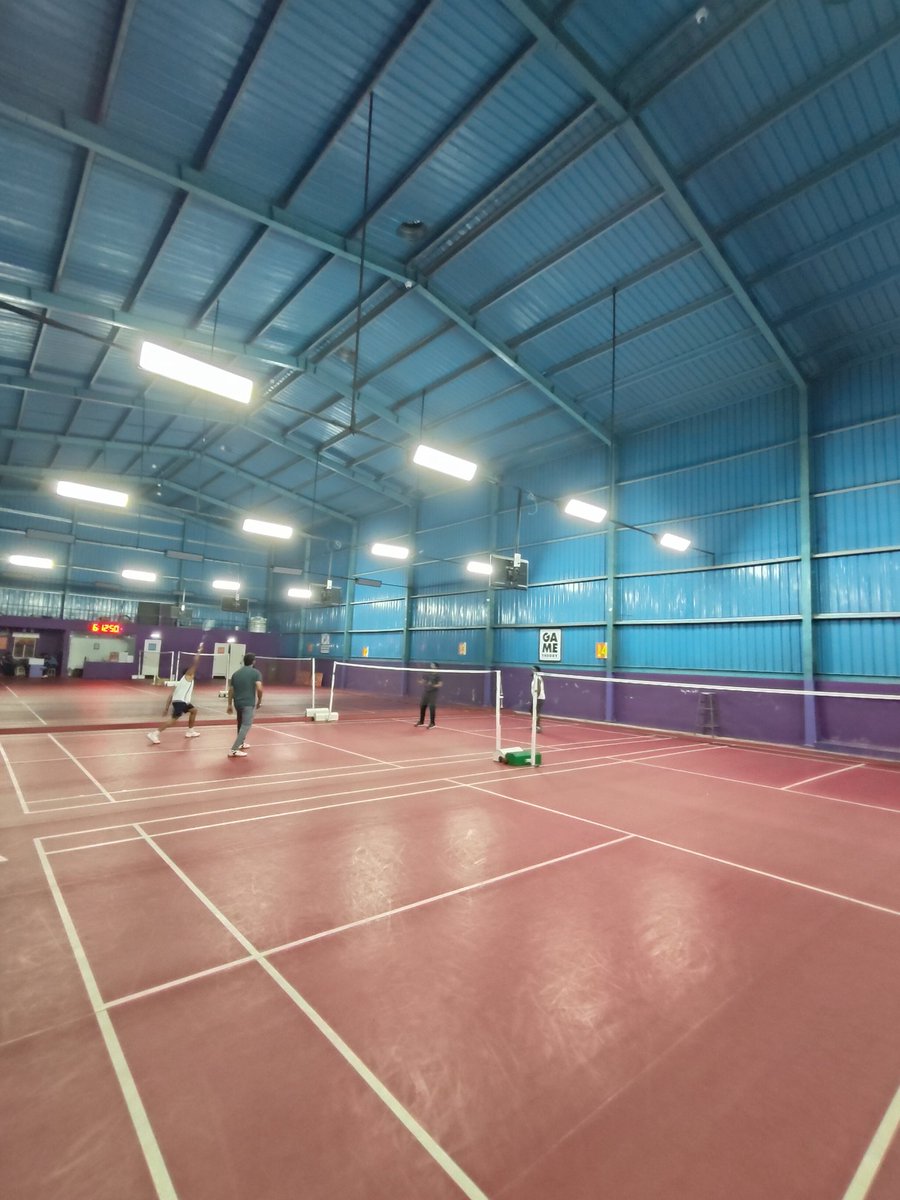
🏸 Let's play
Meet Patel tweet media
English
0
0
1
7