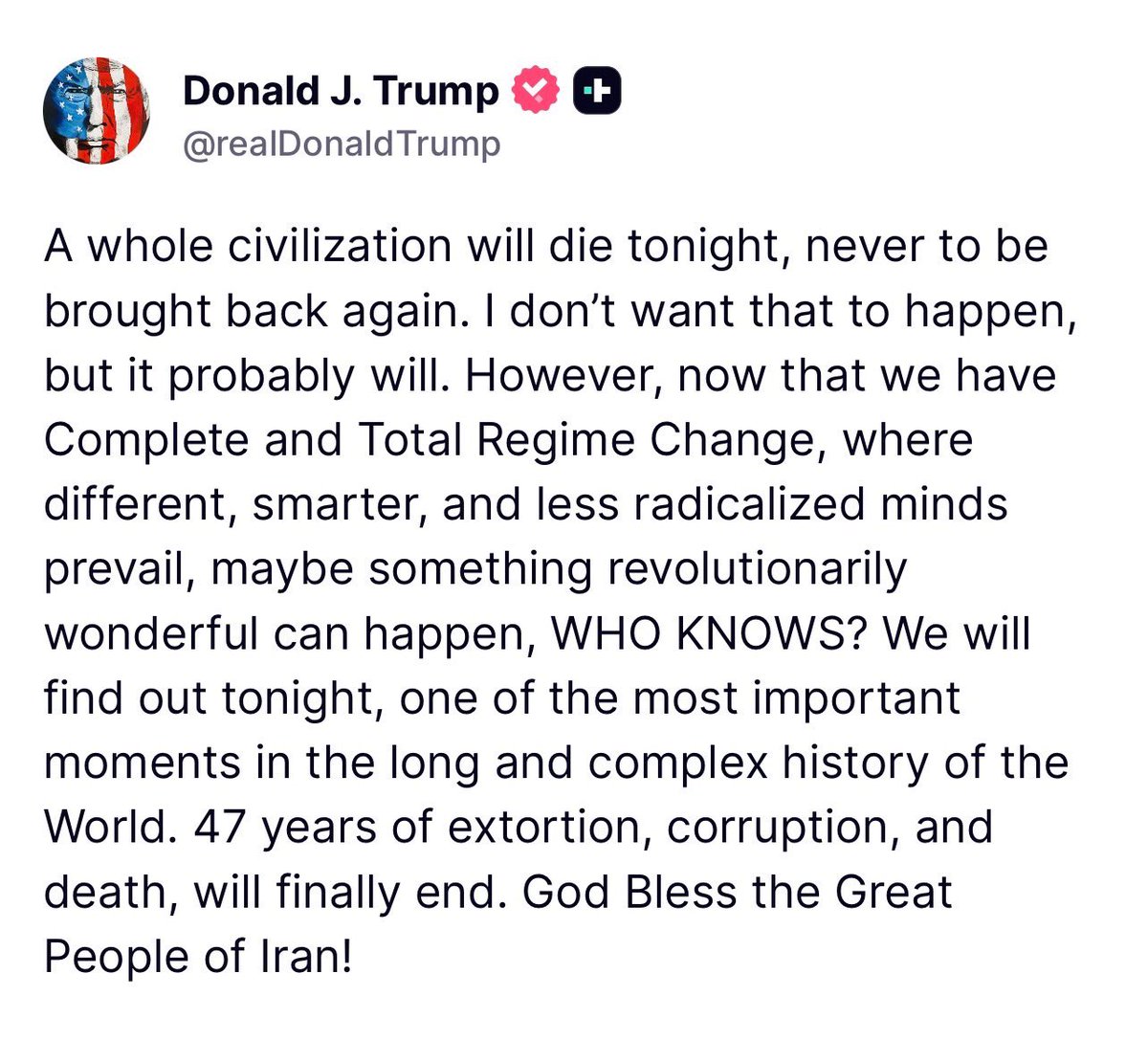
Shut the hell up. You have no clue what you are talking about. As a combat veteran who had to prepare for deployment in 83 because Iran bombed the Marine barracks in Beirut, and a GWOT veteran, I WHOLE HEARTEDLY SUPPORT THE DESTRUCTION OF IRAN. You claim to be a Christian, yet you are totally ignoring the fact that God destroyed civilizations because of their evil.
@dtwelch53@TalbertSwan What about the “when I see a black pilot, my first question to ask is he qualified”?
Or black ppl were better in slavery because they committed less crimes?
What do we call this?
@TalbertSwan What lies, hate and Division are you referring to? You mean that men cannot become women, or women should be encouraged to marry and have families, or that much of the problem with the black community is cultural? Show me the lies and hate.
Somebody died today—somebody who built his platform on provocation, whose influence was rooted in rhetoric that divided, distorted, and demeaned.
Now let me be clear: we live in a violent world, and no one should rejoice in murder. Murder is evil. Murder is sin. Murder is wrong. And we ought to grieve with families in their loss. But what troubles my spirit is this: folk who never said a word about the lies, the hate, and the division he spewed while he lived, now want to condemn those who dare to speak the truth about his legacy in his death.
If words have power—and they do—then words that twist facts, that stir up fear, that target the vulnerable, are not harmless. They are a form of violence. And to stay silent about that violence, while rebuking those who name it, is to tell the world that political hate is acceptable but prophetic truth is out of order.
This is not about politics. This is about moral consistency. If “silence in the face of evil is complicity,” then I’ve got to ask—where was the outcry when the poison was being poured out? Where were the prayers when the seeds of division were being planted? To overlook harm and call it neutrality is not holiness—it is hypocrisy.
Yes, in grief, compassion is needed. But don’t you dare confuse compassion with compromise. Don’t you dare confuse mourning with muzzling. We can honor human loss, and still name the damage that was done.
So hear me: this isn’t a call to celebration, and it isn’t a call to vengeance. This is a call to courage. A call to truth. A call to consistency. If you condemn those who speak truth about the divisive impact of the deceased, you’re not promoting peace—you’re protecting erasure. And the God we serve does not bless erasure. God calls us to truth, to justice, and to light in a dark world.